
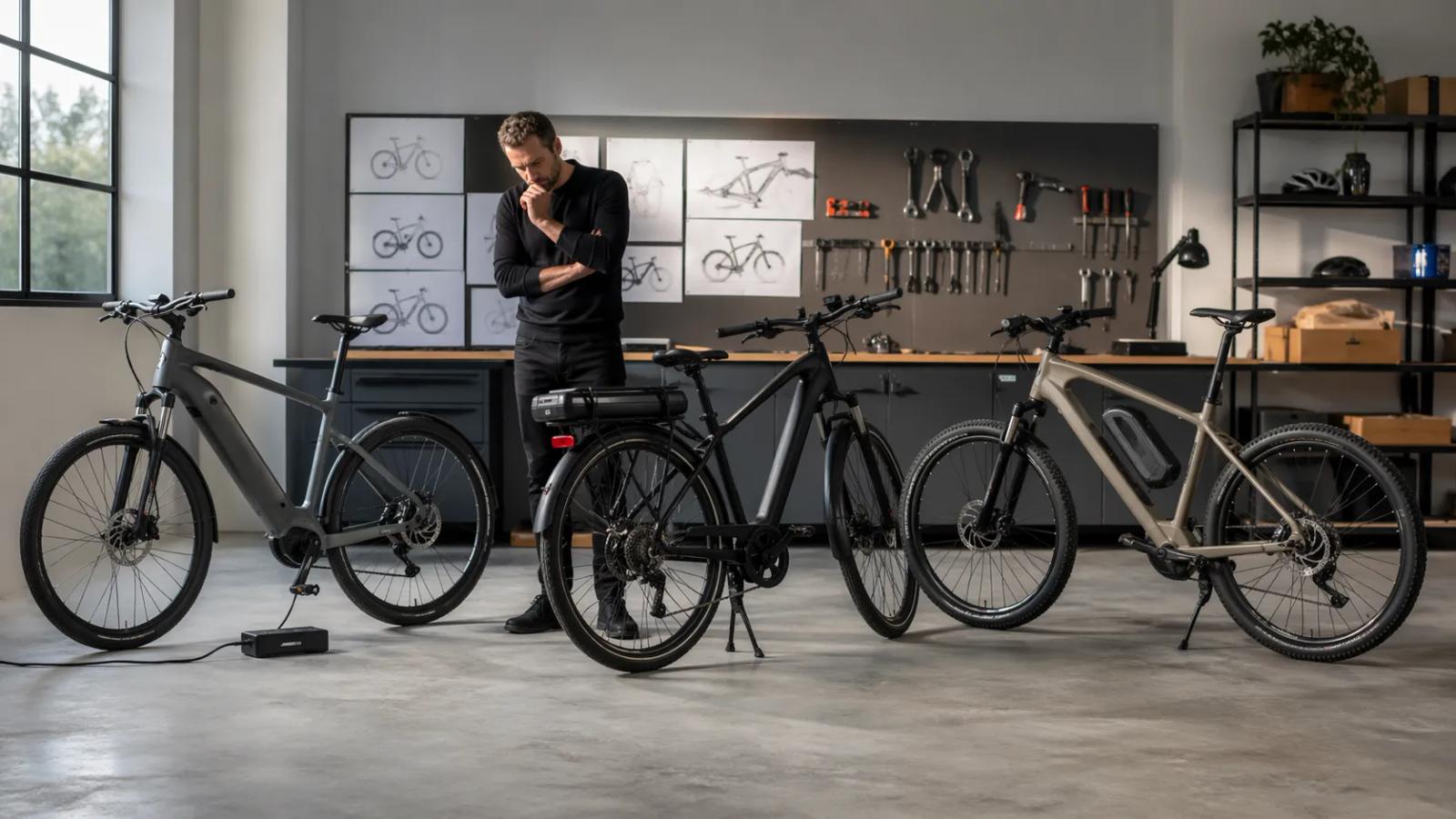
E-Bike Battery Placement & Structural Architecture: Downtube Integration, Dual-Pack BMS & CG Optimization
For most riders, the best electric bike battery placement is low and central because it usually delivers better balance, more natural handling, and fewer compromises in daily use.
For most riders, the best electric bike battery placement is low and central because it usually delivers better balance, more natural handling, and fewer compromises in daily use.
Battery Pack Spatial Packaging: Dynamic Center of Gravity, Thermal Dissipation & Fleet Payload Distribution
Factory Direct Sourcing & OEM/ODM Manufacturing with ClipClop
Commercial partners can inspect our manufacturing infrastructure on our OEM/ODM E-Bike Manufacturing Facility page, review standard configurations on our CS01 Fat Tire & CS04 Commercial Utility Platforms, or directly request volume FOB terms via our Commercial Quote Request Portal (MOQ 20).
Battery positioning dictates the dynamic stability, center of gravity (CG), and frame stress distribution of commercial e-bikes. Rear rack-mounted batteries place heavy mass (4kg to 8kg) high and far behind the rear axle, creating pendulum instability, frame fishtailing, and rapid rear tire wear. For B2B fleet deployments, integrating the battery pack deeply into the downtube achieves an optimal 48:52 front-to-rear weight balance while shielding sensitive cells from side-impact damage.
ClipClop designs commercial cargo and utility frames with modular downtube cavities supporting single or dual-battery configurations (up to 48V 30Ah / 1440Wh). Our structural enclosures feature bottom-drop quick-release latches, isolated internal thermal channels, and automated dual-pack BMS load-balancing that discharges both packs symmetrically to maximize lithium cell longevity across 1,000+ full commercial cycles.
| Battery Mounting Position | Center of Gravity Impact | Payload Balance | Vibration Shock Exposure | Commercial Application |
|---|---|---|---|---|
| Integrated Low-Downtube | Low & Centered (Optimal) | Balanced (48:52 Front/Rear) | Damped by Front Suspension | Urban Delivery & Fleet Sharing |
| Dual Parallel (Downtube + Seat Tube) | Centered Low-Mid | High Capacity (1400Wh+) | Reinforced Triangle Support | Heavy Cargo Logistics (CS01) |
| Rear Cargo Rack Mount | High & Rearward (Unstable) | Rear-Biased (Pendulum Effect) | High Direct Road Shock | Light Consumer City Utility Only |
Battery placement is the location of the battery on the bike frame. On modern e-bikes, the most common layouts are external down tube batteries, integrated in-frame batteries, rear rack batteries, and a smaller group of niche layouts such as seat-tube, vertical, or dual-battery systems.
In practical terms, battery placement changes three things at once: the bike’s center of mass, the front-to-rear weight balance, and the daily service path for charging or replacement. That is why the same battery capacity can feel very different depending on where the pack sits.
This matters because the battery is one of the heaviest single components on an e-bike. Move that mass lower and closer to the center, and the bike usually feels more planted and predictable. Move it higher or farther back, and steering feel, weight transfer, and cargo behavior begin to change.
Common Battery Locations and Their Tradeoffs
External down tube batteries are one of the most balanced all-around options. They keep weight relatively low, work well for sporty or everyday riding, and are common on commuter, hybrid, and mountain e-bikes. The downside is that larger packs can make the frame look bulkier, and some removal systems are less convenient than they first appear.
Integrated in-frame batteries usually clean up the bike visually and can improve weather protection. The tradeoff is service access. Some integrated systems are easy to remove, but others become inconvenient when the battery needs to be carried upstairs, charged indoors, or replaced later.
Rear rack batteries still make sense for practical city bikes. They can be easy to access and may leave more room in the main frame area on certain designs. The tradeoff is that the weight sits higher and farther back, which can make the rear of the bike feel more loaded, especially when a child seat, panniers, or groceries are added.
Other or niche layouts are less common today. They can work well within a specific frame concept, but accessory compatibility, folding mechanisms, and long-term parts availability deserve closer attention.
| Placement | Handling | Charging convenience | Cargo compatibility | Looks | Service access |
|---|---|---|---|---|---|
| External down tube | Usually stable and balanced | Often practical | Usually good | Less clean | Usually easier |
| Integrated in-frame | Usually stable and balanced | Depends on removal design | Usually good | Cleanest look | Can be more complex |
| Rear rack | More rear-biased | Often easy | Can conflict with rear loads | More traditional | Usually straightforward |
| Niche layouts | Highly design-dependent | Varies | Varies | Varies | Varies |
How Battery Placement Affects Handling and Comfort
The difference shows up most clearly during real inputs: starts, slow turns, curb cuts, braking, and walking the bike through narrow spaces. A centrally mounted battery usually helps the bike feel more neutral. Steering tracks more naturally, and the bike often feels less awkward when lifting it off a kickstand or controlling it at low speed.
Rear-mounted batteries are not automatically unstable, but they often exaggerate rearward weight bias. If the bike already carries cargo over the back wheel, that stacked weight can make the front end feel lighter. On smooth commuter routes that may be acceptable. On rough pavement, gravel, or sharper turns, the difference usually becomes more obvious.
Battery position also becomes obvious when lifting the bike onto a car rack, turning it around in a hallway, or balancing it while loading a child seat or groceries. These are small moments, but they strongly influence how practical a bike feels over months of ownership.
For mountain or mixed-terrain use, lower central mass usually works best because it helps the bike feel more predictable when the surface gets rough. For comfort-first city riding, easy battery access can matter almost as much as handling, which is where some rear rack designs still make practical sense.
Charging, Maintenance, and Weather Protection
This is where ownership reality matters more than marketing photos. The best-looking battery location is not always the easiest one to live with. If the battery is charged indoors every day, removal convenience becomes a serious practical issue.
Integrated designs often offer better shielding from splash and grime, although sealing quality matters more than advertising language. Down tube batteries can also be well protected, but they are more exposed to debris from the front wheel. Rear rack batteries avoid some road-spray patterns yet may be more exposed in falls, parking knocks, or loading accidents.
Maintenance also changes with placement. A clean frame-integrated system may rely on more specific replacement parts or frame-matched battery shapes. More conventional external packs can be easier to swap. For most buyers, the key question is not which design looks best, but which one remains practical after years of charging, service, and replacement.
- Before buying, check four things in person if possible:
- How many steps it takes to remove the battery
- Whether the battery can be charged on or off the bike
- Whether the lock and slide path are awkward in tight spaces
- Whether replacement access depends on model-specific parts
Battery Placement by Bike Type
| Bike type | Usually best battery placement | Why |
|---|---|---|
| Commuter e-bikes | Down tube or integrated | Better balance and everyday practicality |
| Mountain e-bikes | Low central placement | Better control on rough terrain |
| Cargo e-bikes | Depends on full frame and load design | Balance matters more than simple rules |
| Folding or compact e-bikes | Packaging-driven | Carrying and rolling matter as much as riding |
For folding and compact e-bikes in particular, buyers should test how the bike feels while carrying and rolling, not just while riding. Packaging constraints often force battery compromises, so day-to-day handling off the bike matters more than many product pages suggest.
How to Choose the Best Electric Bike Battery Placement
Ask these six questions before buying:
- Where will the bike be used most, city streets, hills, trails, or loaded errands?
- Will the battery need to be removed often for charging?
- Will the rear rack already carry cargo, panniers, or a child seat?
- Is a cleaner integrated look worth extra service complexity?
- How important is free space in the frame triangle?
- If the battery needs replacement later, how easy is that process?
If handling confidence is the priority, low and central placement is usually the safest choice. If charging convenience matters most, battery access deserves close inspection rather than trust in product photos. If cargo flexibility is the goal, the battery should be evaluated as part of the whole load system, not as an isolated design detail.
Frequently Asked Questions
Is a down tube battery always better than a rear rack battery?
Not always. A down tube battery usually improves balance, but a rear rack battery can still be a practical choice for upright city riding or bikes designed around easy access. The better option depends on cargo use, riding style, and charging habits.
Why do integrated batteries cost more on some e-bikes?
Integrated systems often require more frame engineering, tighter packaging, and model-specific parts. That cleaner appearance can increase manufacturing and service complexity, which often pushes price upward.
Does battery placement affect range?
Not directly. Battery placement does not change battery capacity, but it can change how stable and efficient the bike feels in real use. In practice, range is influenced more by battery size, speed, terrain, rider weight, tire pressure, and cargo load than by placement alone.
What matters more for daily ownership, battery access or appearance?
For riders who remove the battery every day, access usually matters more than appearance. A clean integrated frame loses part of its appeal if charging becomes a daily inconvenience. If the bike can be charged in place, appearance becomes easier to prioritize.
Final Take
For most buyers, a low and centrally mounted battery is the safest default because it usually delivers the best balance and the least compromise. Rear-mounted layouts can still make sense for some utility or upright city bikes, while integrated designs work best when charging access and long-term service are genuinely convenient, not just visually appealing. For more buyer-side articles and product updates, see the ClipClop news section.
ClipClop Manufacturing Standards & Build Quality
See optimal center-of-gravity battery integration on the ClipClop CS04 Long-Tail Mid-Drive Cargo Bike and our ClipClop L1 Pro Dual-Battery Fat Bike, engineered for confident handling.
About the author
the ClipClop Engineering Team works in international e-bike sales and sourcing, with a focus on product positioning, buyer-side evaluation, and practical use-case analysis for overseas markets.
Commercial Procurement & Fleet Sourcing with ClipClop
Deploying electric bicycle fleets or distributing private-label e-bikes requires a trusted manufacturing partner capable of consistent container-level production, robot-welded frame alignment, and rigorous batch QC. From our 25,000 m² factory in Qingyuan, Guangdong, ClipClop provides end-to-end OEM/ODM electric bike manufacturing services with an accessible MOQ of just 20 units per SKU. Every container order includes dedicated spare parts allocation (2% free warranty backup components), full international compliance documentation (EN 15194, UL 2849, UN38.3), and 15-day sample dispatch.
Ready to evaluate engineering samples for the CS01 Fat Tire & CS04 Commercial Utility Platforms or review container FOB volume pricing? Visit our Commercial RFQ Portal to submit your technical specifications, or speak directly with our engineering sales team via our B2B contact desk.
More OEM field notes.
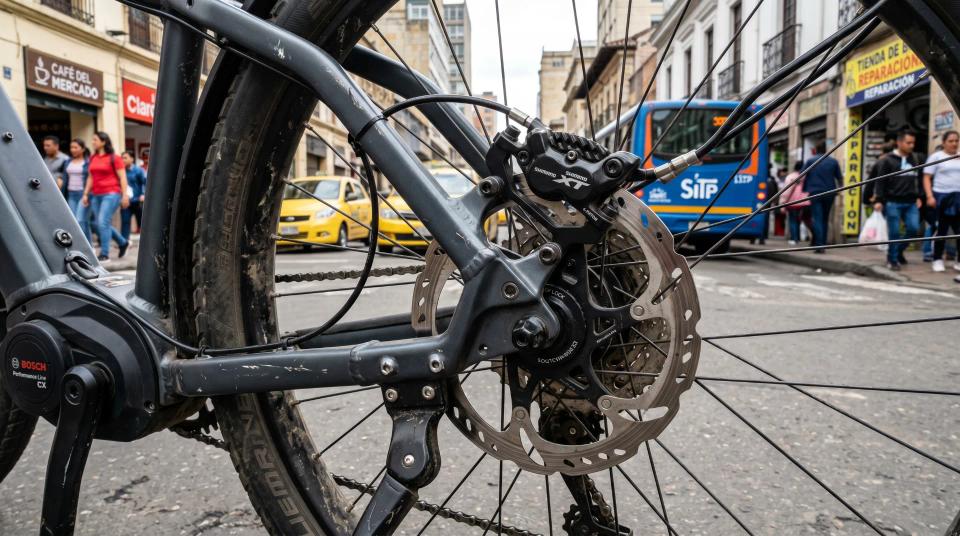
Commercial E-Bike Hydraulic Brakes: Heat Dissipation, 4-Piston Calipers & Mountain Fleets
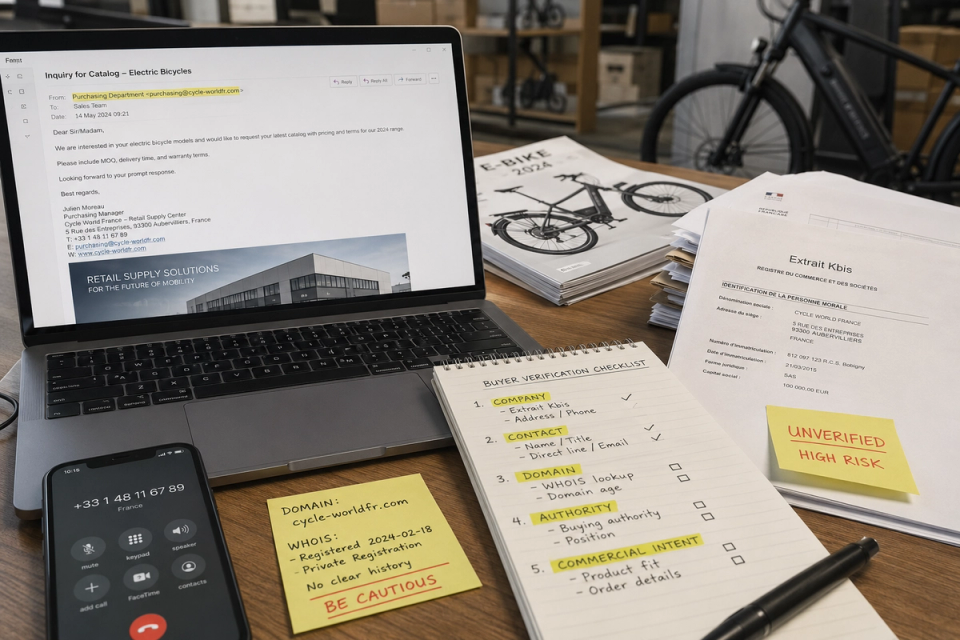
How We Verify B2B Buyers: A Case Study in Preventing Procurement Fraud & Impersonation
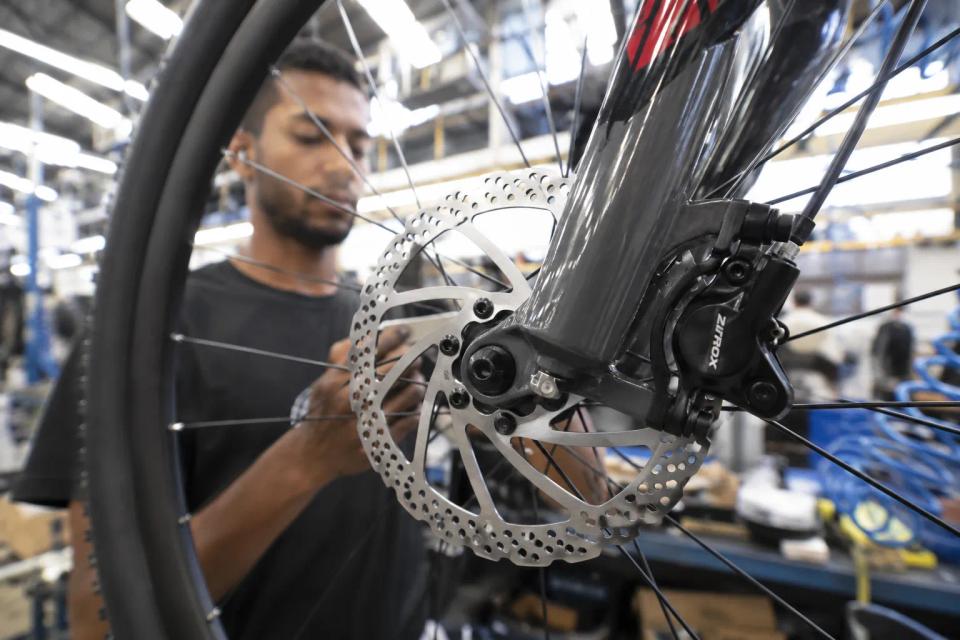
E-Bike Frame Sourcing for Brazil: Corrosion-Resistant 6061-T6 Aluminum for Tropical Fleets
Send your brief. We will field-note back.
Reply includes the feasibility view, sample cost, MOQ, and the next step for your project. We aim to respond within 48 hours.