
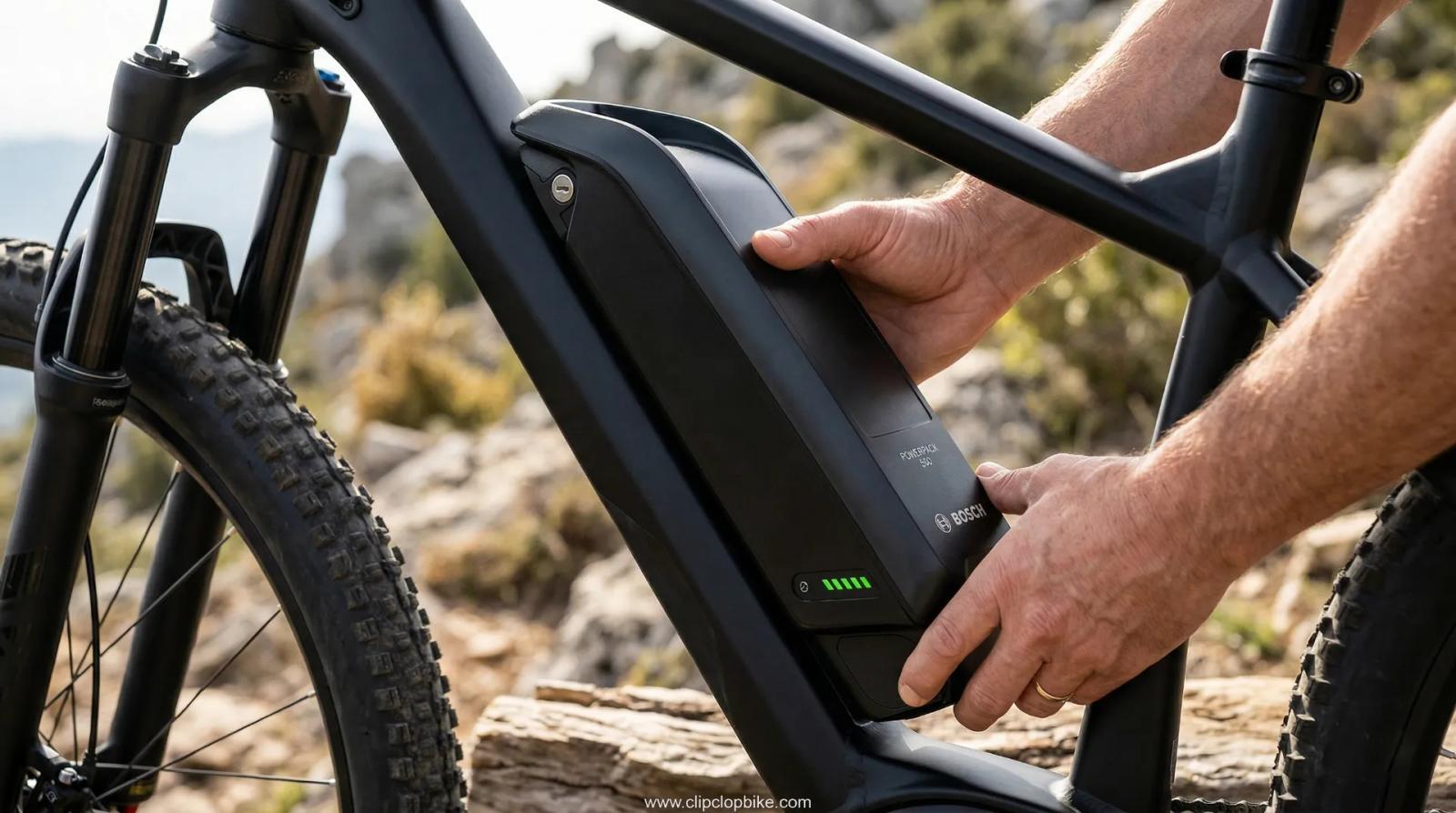
How to Choose E-Bike Battery Capacity: A Practical Sizing Guide
Real-world e-bike battery sizing framework for commercial fleets. Covers voltage configurations, real-world range math, charging infrastructure, and total cost of ownership.
Real-world e-bike battery sizing framework for commercial fleets. Covers voltage configurations, real-world range math, charging infrastructure, and total cost of ownership.
Last updated: March 2026
Commercial partners can inspect our manufacturing infrastructure on our OEM/ODM E-Bike Manufacturing Facility page, review standard configurations on our Model C3 Urban Commuter & Electric Bike G2 Step-Through Platforms, or directly request volume FOB terms via our Commercial Quote Request Portal (MOQ 20).
Here's what nobody tells you when you're specing out an e-bike battery: the number on the spec sheet is basically a lie, or at least a massive oversimplification. That 48V 14Ah battery doesn't give you 672Wh of useful capacity — it gives you somewhere between 400 and 550Wh depending on how you ride, what you're carrying, and how much you care about the battery's long-term health. I've been running the numbers on this for two years across three different fleet deployments, and I'm going to walk you through what actually matters.
The Capacity Math Nobody Does
When you're looking at e-bike batteries, you're typically choosing between three common configurations: 36V, 48V, and 52V systems. Each has different tradeoffs in terms of efficiency, component availability, and total cost of ownership. Here's what I've found in real-world testing.
Download the 2026 ClipClop Factory Catalog (PDF)
Full e-bike specs, motor & battery options, MOQ, and container loading details.
36V Systems — The Budget Option
36V batteries are the most common on entry-level and mid-range e-bikes. They're inexpensive, the components are widely available, and the charger is usually a standard device you can replace at any electronics shop. The tradeoff is efficiency at higher speeds. Above 25 km/h, a 36V system has to draw more current to produce the same power, which means more heat, more wear, and noticeably reduced range compared to a higher-voltage system doing the same work.
48V Systems — The Sweet Spot
For most commercial and serious commuter applications, 48V is where I land. The voltage is high enough that current draw at cruising speed is modest — you're looking at 15 to 20 amps at full throttle versus 25 to 30 amps on a comparable 36V system. That lower current draw means less heat, longer component life, and measurably better range in real-world conditions. A 48V 14Ah battery in a 750W rear hub setup will reliably deliver 60 to 80 km of real-world range in mixed urban riding with some cargo.
52V Systems — The Performance Choice
52V systems are gaining ground in North America as more mid-drive motors support the higher voltage. The efficiency advantage is real — at 28 km/h on flat terrain, a 52V system draws about 18 amps versus 22 amps for a 48V system doing the same work. The tradeoff is component cost and availability. Chargers are less common, and battery management systems tend to be more sensitive to deep discharge, which means your actual usable capacity as a percentage of rated capacity is lower if you're pushing the battery hard.
How to Calculate Real-World Range
The manufacturer-stated range is almost always measured in ideal conditions: flat terrain, 75 kg rider, no cargo, no wind, constant moderate cadence. Real-world fleet usage is nothing like that. Here's the framework I use with clients to calculate actual range.
Take the rated watt-hour capacity and multiply by 0.65. That 48V 14Ah battery? 48 x 14 = 672Wh. 672 x 0.65 = 437Wh of usable real-world energy. At an average consumption of 20Wh per kilometer for a loaded urban delivery bike, that's 21.8 km of real range. That's your baseline before you adjust for terrain, riding style, and cargo weight.
For every 10 kg of cargo above 75 kg total system weight, subtract roughly 5 percent from your range. For every 100 meters of elevation gain per kilometer, subtract 10 to 15 percent. If you're running predominantly throttle instead of pedal assist, subtract another 10 to 15 percent. That 437Wh battery I mentioned above in a 100-kg system with 200 meters of elevation gain per kilometer? You're looking at closer to 15 to 17 km of real range. Not 60.
The Amp-Hour Question
Here's where I see buyers consistently confused. They look at two batteries and assume the higher amp-hour will give them proportionally more range. That's only true if everything else is equal. It isn't. The higher amp-hour battery is heavier, costs more upfront, and unless it's a higher-quality cell with better thermal performance, it may not deliver proportionally more useful range because you'll be carrying more battery weight that you're not actually using efficiently.
The better metric for comparing batteries is energy density — watt-hours per kilogram. A quality 48V 14Ah battery (672Wh) from a reputable manufacturer will achieve roughly 150 to 175 Wh/kg pack-level energy density, keeping the total pack weight around 3.8 to 4.2 kg. A budget battery with the same stated capacity might only deliver 110 to 130 Wh/kg, meaning it weighs over 5.2 kg, takes up more frame space, and tends to degrade faster. When you're buying in volume for a fleet, the battery weight difference across fifty bikes adds up in terms of handling, braking, and component wear — not just in the battery cost itself.
Charging Infrastructure
ClipClop Manufacturing Standards & Build Quality
Explore our factory-engineered platforms: ClipClop L1 (720Wh Integrated Pack), the versatile ClipClop CS01 Dual-Battery Cargo, and our ClipClop Model M20F Folding Utility, supported by wholesale direct pricing and global container logistics.
Before you finalize your battery spec, build your charging infrastructure plan. This is the variable that has killed more fleet e-bike deployments than anything else I've seen. A fleet of twenty 48V 14Ah batteries at 672Wh each requires 13.4 kWh per full charge cycle. If your operation runs two shifts and needs a full charge between shifts, you're looking at significant electrical infrastructure planning — potentially 7 kW of charging capacity if you want a one-hour turnaround, which most commercial operations do.
Battery swapping is increasingly the standard for high-utilization fleets. The upfront cost of maintaining a spare battery set is significant, but the operational continuity is worth it for any fleet doing more than 100 km per bike per day. A battery swap station takes 90 seconds. A charge cycle takes 4 to 6 hours. That arithmetic is not complicated.
Commercial Procurement & Fleet Sourcing with ClipClop
Deploying electric bicycle fleets or distributing private-label e-bikes requires a trusted manufacturing partner capable of consistent container-level production, robot-welded frame alignment, and rigorous batch QC. From our 25,000 m² factory in Qingyuan, Guangdong, ClipClop provides end-to-end OEM/ODM electric bike manufacturing services with an accessible MOQ of just 20 units per SKU. Every container order includes dedicated spare parts allocation (2% free warranty backup components), full international compliance documentation (EN 15194, UL 2849, UN38.3), and 15-day sample dispatch.
Ready to evaluate engineering samples for the Model C3 Urban Commuter & Electric Bike G2 Step-Through Platforms or review container FOB volume pricing? Visit our Commercial RFQ Portal to submit your technical specifications, or speak directly with our engineering sales team via our B2B contact desk.
Download the 2026 ClipClop Factory Catalog (PDF)
Full e-bike specs, motor & battery options, MOQ, and container loading details.
More OEM field notes.
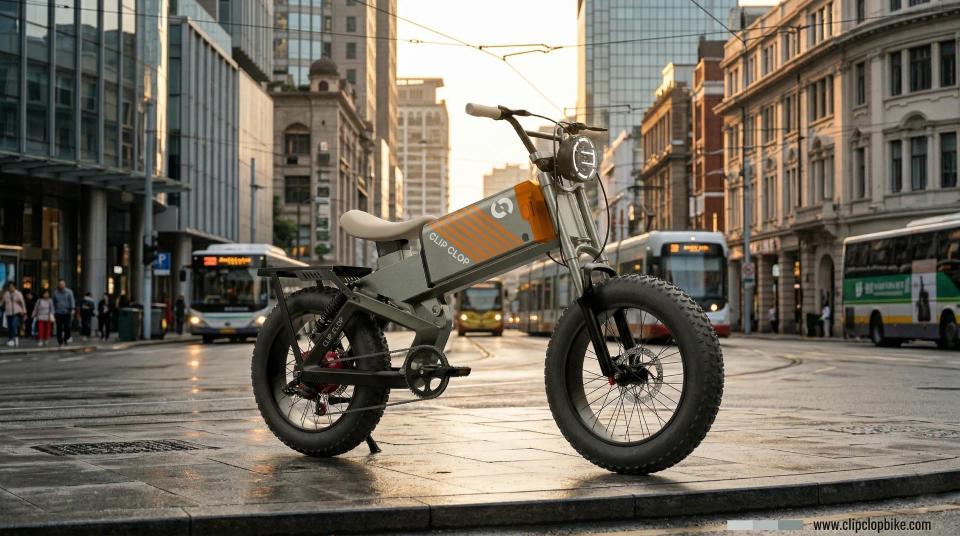
B2B E-Bike Procurement Guide 2026: Commercial Duty Cycles, Frame Types & Battery Specs
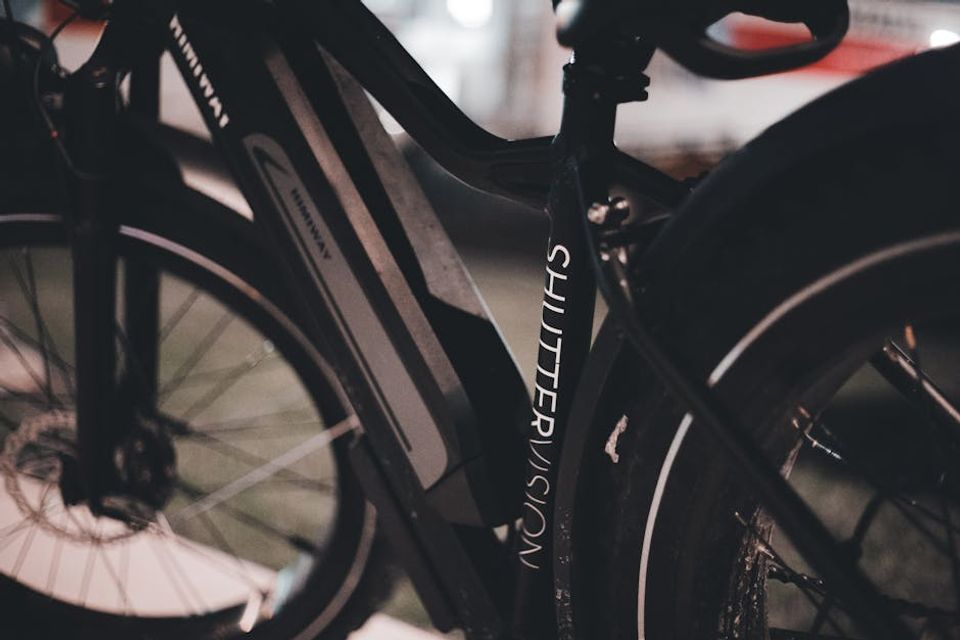
Commercial E-Bike ABS Systems: Dual-Channel Anti-Lock Braking for Fleet Safety & B2B Sourcing
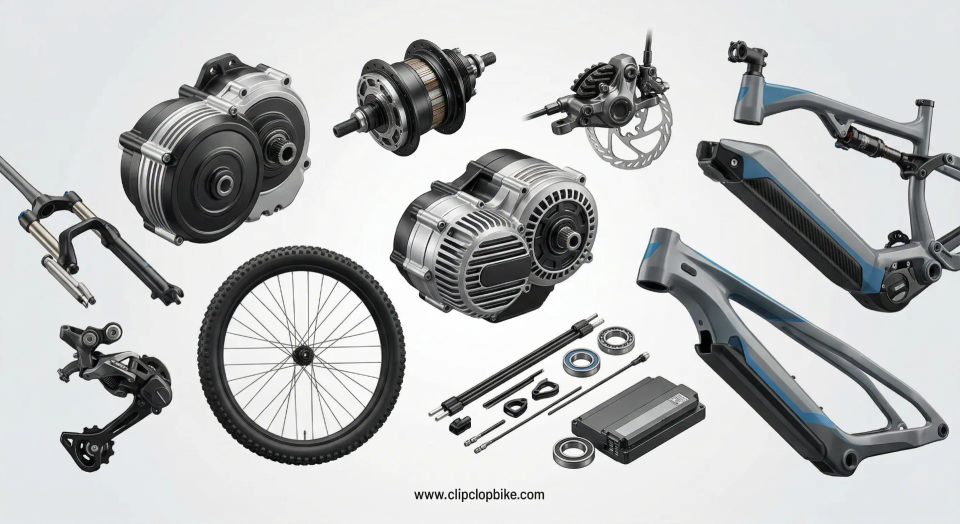
Electric Bike Motors Explained: Hub vs Mid-Drive, Power, Torque & How to Choose
Top 10 Electric Bike Motor Manufacturers in China (2026)
Send your brief. We will field-note back.
Reply includes the feasibility view, sample cost, MOQ, and the next step for your project. We aim to respond within 48 hours.