
Hub Motors for Urban Delivery & Commercial Fleets: Reliability, TCO & Zero-Maintenance Design
Hey, Leo Liang here. I’ve been around electric off-road bikes for years, partly because I’m a nerd for trails, and partly because it’s literally my day job at ClipClop in Guangzhou.
Hey, Leo Liang here. I’ve been around electric off-road bikes for years, partly because I’m a nerd for trails, and partly because it’s literally my day job at ClipClop in Guangzhou.
Powertrain selection is the single most critical engineering specification determining an electric bike's commercial durability, rider experience, and total cost of ownership (TCO). For commercial buyers, fleet operators, and private-label brands, choosing between mid-drive and hub motor systems requires evaluating continuous thermal dissipation, torque-sensor response curves, CAN-Bus integration, and drive-system failure rates under commercial duty cycles. This technical analysis provides an objective engineering comparison to guide high-volume procurement decisions.
Commercial partners can inspect our manufacturing infrastructure on our OEM/ODM E-Bike Manufacturing Facility page, review standard configurations on our CS01 Fat Tire & CS04 Commercial Utility Platforms, or directly request volume FOB terms via our Commercial Quote Request Portal (MOQ 20).
The email I get the most is always about the motor: “Leo, hub or mid-drive?” I get why—this one decision touches ride feel, service time, spare-part planning, and your ROI. And yeah, there’s no single answer that fits everyone. If someone tells you there is, they’re probably selling only one option.
What I’m sharing here isn’t a lab-only teardown or a spec-sheet flex. It’s more like a strategy note built from trail testing around Guangdong, partner fleet data, and a lot of blunt feedback from riders who don’t care about jargon. I’m trying to make the tech less foggy, so you can buy or build the right powertrain for your business model.
We’ll talk real stuff: how power shows up on steep climbs, what breaks first when bikes get abused, and which details quietly change safety and customer reviews. Some bloggers I follow keep saying “ride it, log it, fix it fast”—so I’ll lean into that too. Whether you’re doing mountain rentals or city sharing, the drivetrain choice is step one. Let’s plug in.
What’s the Real Difference Between Hub and Mid-Drive E-Bike Motors?
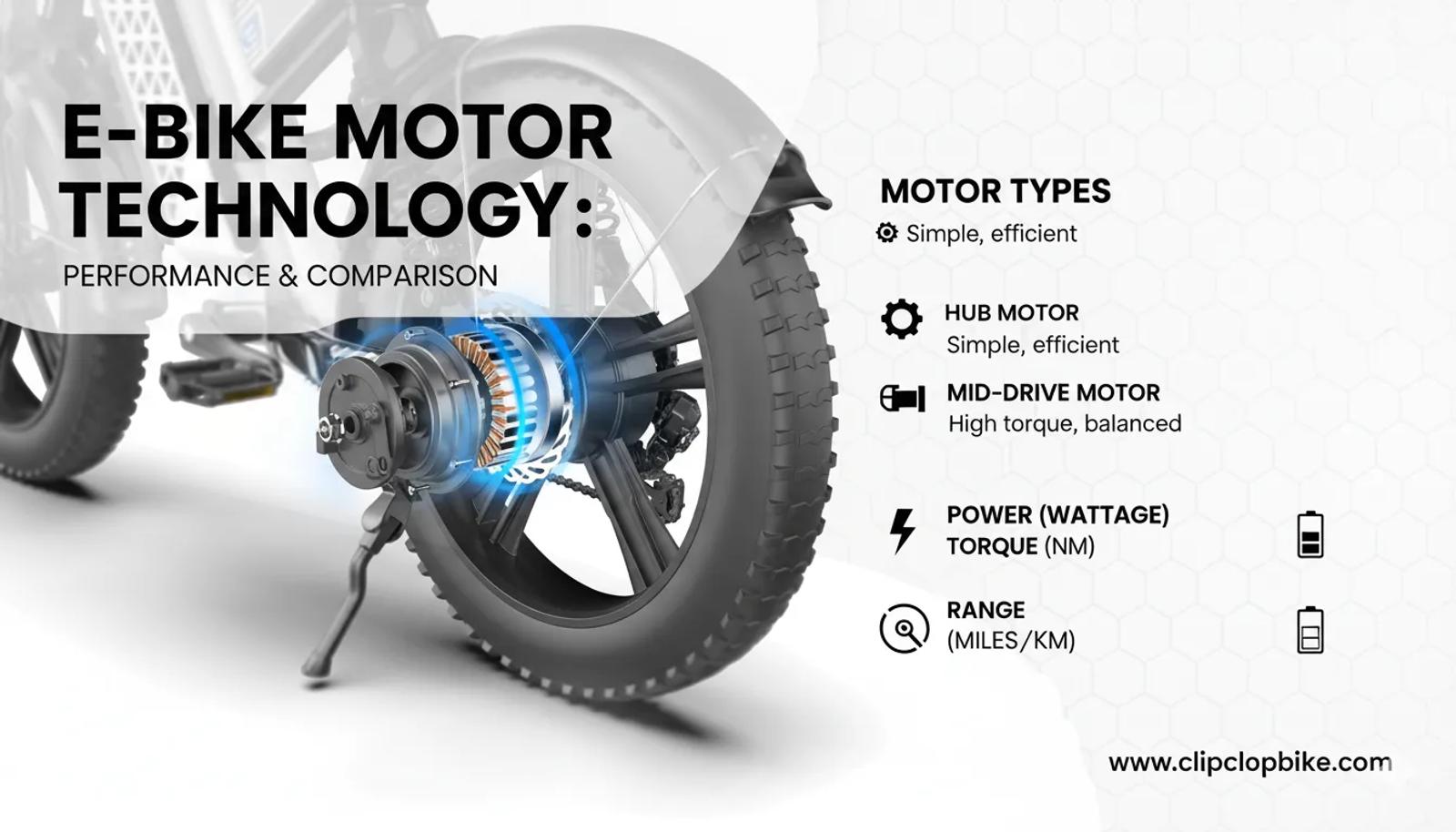
At the simplest level, it’s location. A hub motor sits in the hub of the front or (more often) the rear wheel, and it directly drives that wheel. It’s like a self-contained push right where the tire meets the ground. Because it doesn’t have to route power through the chain and gears, the overall setup can be simpler, with fewer drivetrain interactions.
That simplicity matters in B2B. Fewer linkages usually means fewer weird failure modes, and training a service team can be easier. I’ve seen rental operators love hub systems because they can swap a wheel, check connectors, and get a bike back out fast. The trade-off is that pedaling and motor power aren’t always “in sync,” so the feel can be a bit… mechanical.
A mid-drive motor lives at the bottom bracket, basically where the pedals meet the frame. It doesn’t spin the wheel directly. Instead, it adds power to the crankset, so the bike’s chain and gears carry both your leg power and the motor’s torque. That sounds more complex (because it is), but it also means the motor can “use” the gears the way a rider does.
This gear-leverage thing is the big deal. When you drop into a lower gear for a hill, you’re not only helping your legs—you’re letting the motor spin in a happier RPM range too. In practice, mid-drive bikes often climb smoother and feel more “bike-like,” especially when paired with a good controller tune. A lot of reviewers basically say: shift like you mean it, and the motor rewards you.
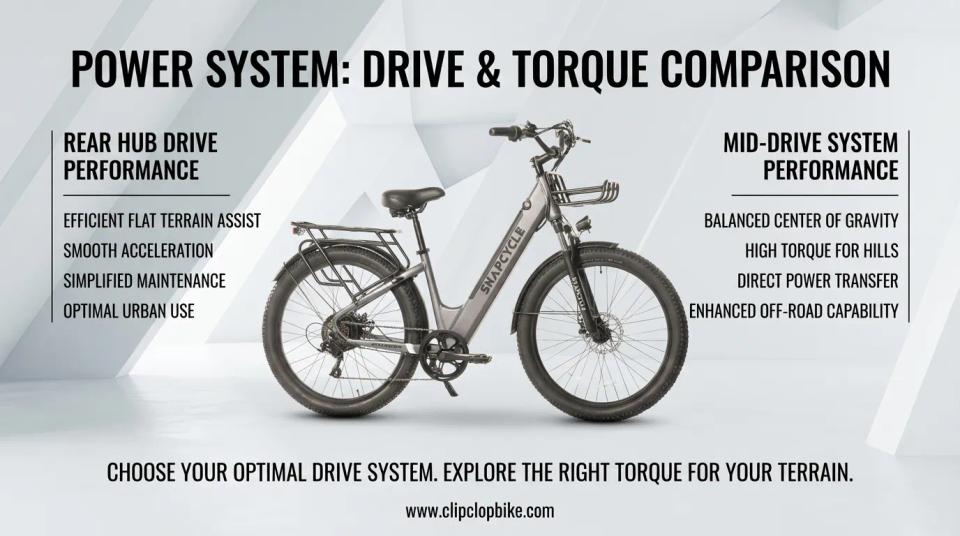
For a flat tourist town fleet, hub motors can be the practical choice: cheaper in bulk, easier to explain, and usually fine for mild grades. But if you’re selling guided mountain tours or high-performance rentals, mid-drive starts to feel non-negotiable. Better efficiency on climbs, better balance, and a premium vibe riders notice. Your brand perception takes a hit if customers keep saying “it struggled.”
Hub vs. Mid-Drive Motor: At-a-Glance Comparison for B2B Fleets
| Feature | Hub Motor | Mid-Drive Motor |
| Placement | In the center of the front or rear wheel. | Low and central in the bike's frame, at the bottom bracket. |
| Power Delivery | Powers the wheel directly, independent of the bike's gears. | Powers the crankset, leveraging the bike's existing gears for optimal efficiency. |
| Riding Feel | Can feel like being 'pushed' or 'pulled'. Power can be abrupt with cadence sensors. | Seamless and intuitive, like an extension of the rider's own power, especially with torque sensors. |
| Weight & Handling | Unbalanced, high unsprung weight. Can negatively impact suspension and traction. | Central and low center of gravity. Provides superior balance, agility, and predictable handling. |
| Hill Climbing | Can struggle on steep, sustained climbs as it operates outside its optimal RPM. Less efficient. | Excellent. Uses the bike's gears to stay in an efficient RPM range, delivering high torque effectively. |
| Drivetrain Wear | Minimal impact on the chain, cassette, and chainrings. | Increases wear on drivetrain components as it transmits high torque through them. |
| Maintenance | Changing a flat tire can be more complex due to motor wiring. | Tire changes are as simple as a non-electric bicycle. |
| Typical Sensor | Often paired with a simpler Cadence Sensor. | Almost exclusively paired with a sophisticated Torque Sensor. |
| Ideal B2B Use Case | Best for flat urban environments, budget-focused rentals, and light commuter fleets. | Essential for mountain/off-road use, hilly terrain, performance rentals, and premium applications. |
| Upfront Cost | Generally lower, making it a budget-friendly option for mass fleets. | Generally higher, reflecting its advanced technology and integration. |
Download the 2026 ClipClop Factory Catalog (PDF)
Full e-bike specs, motor & battery options, MOQ, and container loading details.
How Does Motor Placement Impact Off-Road Handling and Maintenance?
On rough terrain, weight placement isn’t some tiny detail—it changes everything. With a rear hub motor, you’re putting a chunky mass (often 3–6 kg) into the rear wheel. That’s unsprung weight, meaning it’s not supported by suspension the same way frame weight is. On roots and rocks, the wheel can bounce more and track the ground worse, which can mean less traction and a harsher ride.
That loss of traction is not just a “pro rider complaint.” Novice renters feel it too, they just describe it differently: “it slips,” “it feels sketchy,” “it’s hard to control.” Also, flats happen. Fixing a flat on a hub-motor rear wheel often means unplugging cables, dealing with axle hardware, and re-seating everything without pinching wires. That adds downtime, and downtime eats fleet revenue.
Mid-drive flips the handling story. The motor mass is low and centered in the frame, which is basically where you want your center of gravity. The bike corners more predictably, feels less tail-heavy, and both front and rear suspension can work closer to how it was designed. When riders say a bike feels “planted,” this is one of the reasons. On loose climbs, that stability can literally prevent crashes.
Maintenance-wise, mid-drive isn’t “free.” Because the motor sends torque through the chain, cassette, and chainring, those parts wear faster than on many hub setups. Fleet managers should plan more drivetrain replacements, full stop. But here’s my take: chains and cassettes are standardized, globally available, and quick to swap. A dead proprietary hub motor can mean replacing an entire wheel/motor assembly, and that’s not always a fun parts pipeline.
Unpacking the Numbers: What Do Torque and Wattage Ratings Really Mean?
Supplier catalogs love numbers: 250W, 500W, 750W, plus torque like 70Nm. Wattage is basically “how much work over time,” kind of like horsepower. A 250W system is often the street-legal ceiling in Europe and other regions, so it’s tuned for gentle assist. 500W feels punchier for commuters and light trails. At 750W, you’re in serious off-road territory.
We run a 750W setup on our ClipClop L1, and you can feel it in acceleration and in the way it holds speed on steep gradients. For tour operators in hilly areas, that’s not a luxury feature—it’s what keeps customers from dismounting and pushing. Still, I’d never tell a buyer to chase watts alone. High watts can look great on paper and still disappoint in the wrong tune.
Torque (Nm) is the “grunt,” the rotational force that gets you moving and keeps you crawling up steep, technical climbs. You can have decent watts but low torque and end up with a bike that’s fast on flats but sad on hills. For B2B off-road or utility use, torque is often the metric I care about more, because it directly affects start-ups, load handling, and rider confidence.
That’s why a 70Nm system feels so different from a lower-torque setup, even if the wattage looks similar. It can start on an incline with a heavier rider or cargo without drama, which matters for rentals where you can’t pick your customers. Also, don’t ignore the controller. It’s the e-bike’s “brain,” and good partners will tune it: smooth delivery for safety, or aggressive punch for performance, or speed-limited to match local rules.
The Sensor Showdown: Why Torque vs. Cadence Changes Everything
Sensors are underrated, but they’re basically the translator between rider and motor. The basic option is a cadence sensor: it detects crank rotation, and once you’re pedaling, it turns the motor on at a pre-set assistance level. It’s simple and cheap, which is why you see it everywhere. But it’s also kind of binary—pedal equals power, stop equals off.
That on/off feel can get weird. Some cadence systems lurch when they kick in, and they may keep pushing for a moment after you stop pedaling. On technical trails, that’s annoying; for inexperienced riders, it can be unsettling and even risky. I’ve watched first-time renters panic when the bike “keeps going” for a beat. Bloggers often say “test low-speed control,” and yeah, this is exactly why.
Torque sensors are the more natural option. They measure how hard you’re pressing on the pedals and scale motor assistance proportionally. Light pressure gives light help; a hard push triggers a hard response. When it’s done right, it feels like you suddenly have stronger legs, not like you’ve strapped a scooter onto a bike. This is the gold standard for many mid-drive systems.
For performance rentals and guided tours, torque sensing is a safety feature as much as a comfort feature. Riders can feather power, keep traction on loose surfaces, and avoid sudden surges in corners or on climbs. From the business side, yes, torque sensors cost more upfront, but they pay back in fewer complaints, better reviews, and fewer “that bike scared me” stories.
There’s also an efficiency angle. Torque sensing tends to deliver power only when the rider actually demands it, so range can improve compared with a poorly tuned cadence setup that blasts power whenever cranks spin. More range means more uptime, less charging bottleneck, and fewer bikes stuck in the back room. If your operation lives on tight turnaround, this detail stops being “nice” and starts being operational.
Beyond the Motor: Why Your E-Bike Frame is the Unsung Hero
Motors get all the attention, but the frame is the thing that survives (or doesn’t) thousands of miles of mixed riders and mixed abuse. For B2B fleets, frame integrity is non-negotiable because failures are both safety nightmares and financial headaches. Most quality e-bikes use aluminum alloys because they balance strength, weight, and cost pretty well.
But not all aluminum is equal. Many higher-performance frames use 6061 aluminum alloy, and we use it in ClipClop models too. It’s valued for strength, weldability, and corrosion resistance—especially important if your bikes live near the coast or in wet climates. I always tell buyers: ask the factory what alloy they’re actually using, not just “aluminum” as a vague label.
Process matters too. Hydroforming (using high-pressure fluid to shape tubes) lets brands tune stiffness where you need it—like the head tube and bottom bracket—while keeping weight reasonable. And weld quality is a big tell. Clean, consistent welds usually mean stronger joints and better QC. I’ve seen “cheap-looking welds” become “expensive warranty claims” faster than people expect.
For fleet fit, geometry and size range are practical details, not marketing fluff. A rental or subscription fleet needs to cover a wide range of rider heights, so S/M/L options matter. Geometry changes handling: aggressive trail geometry feels different from relaxed city geometry. Our L1 uses a robust 6061 frame aimed at stability and control, and it supports up to 160kg/350lbs, which helps serve more riders safely.
Powering Your Operations: Battery Capacity, Range, and Management
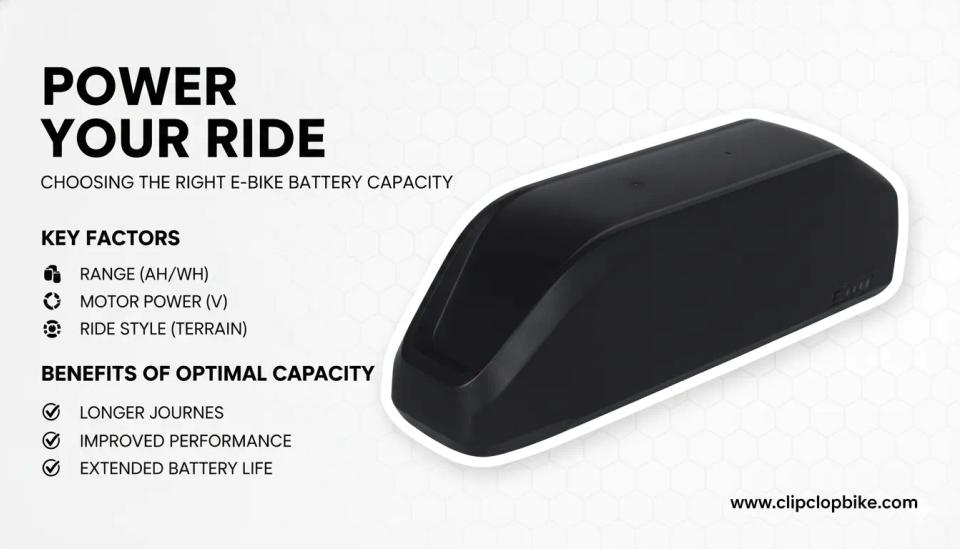
In commercial use, the battery is basically your fuel logistics. Capacity is measured in watt-hours (Wh), which is voltage times amp-hours. So a 48V 15Ah pack is 720Wh (48 × 15). On the ClipClop L1, that size is there for a reason: longer rentals, fewer mid-day charges, more time earning money instead of sitting on a charger.
Range claims like “30–60 km” should always be treated like a weather forecast—useful, but not guaranteed. Terrain, rider weight, assist level, tire pressure, and even wind matter. In real fleets, you want a buffer, not a marketing best-case. A good blogger tip is “track real range by route,” so you can schedule charging and swap plans around what actually happens, not what the brochure says.
Cell quality inside the battery is huge for safety and long-term value. Reputable packs often use cells from Samsung, LG, or Panasonic because they hold capacity better across more charge cycles and usually have more reliable safety characteristics. A cheap, unbranded pack might save upfront cost, but I’ve seen them fade fast under heavy rental use—and the worst-case risk is thermal events, which nobody wants.
Battery management is also about workflow. Are batteries removable? Removable packs let you charge off-bike and stack charging in a smaller space, which is gold for fleet operations. Charging time matters too: our 720Wh pack hits full in around 5 hours, which supports overnight turnaround. And please, insist on a solid BMS; it protects against overcharge, over-discharge, and overheating, and it extends pack life.
Essential Components for Safety and Performance: Brakes and Suspension
For B2B fleets, safety isn’t a slogan—it’s a cost center and a reputation risk. With e-bikes being heavier and faster, brakes have to be serious. Hydraulic disc brakes are the standard for quality off-road setups because they deliver stronger stopping power and better modulation than mechanical cable systems. That lever feel consistency helps riders brake with control instead of panic-grabbing.
Suspension matters for both comfort and control, especially off-road. A decent fork absorbs hits from rocks and roots, keeps the front tire planted, and improves steering accuracy. Travel tells you intent: around 120mm suits rougher mountain trails, while ~100mm can be a smart balance for mixed terrain or utility riding. My practical advice is simple: buy forks you can service and source seals for.
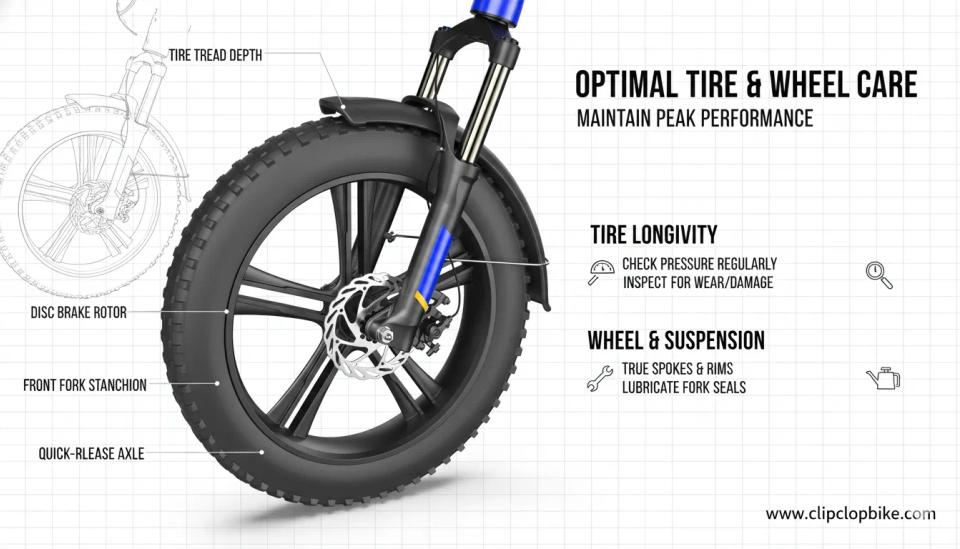
Other parts quietly affect usability. A reliable drivetrain like a Shimano 7-speed helps riders find the right gear and lets the motor work efficiently. Fat tires—like the 20"×4.0 setup on the L1—add traction and stability on sand, snow, gravel, and loose dirt, plus they provide a bit of “passive suspension.” And lighting isn’t optional: headlight, rear signals, and reflectors keep users visible in real-world conditions.
Making the Smart Choice: A Sourcing Checklist for Your B2B E-Bike Fleet
After all the tech talk, the buying decision still starts with your use case. Who are you serving—mountain trail riders, city tourists, corporate commuters, delivery teams? Terrain is the fastest way to filter choices. A hub motor that’s totally fine in a flat town can become a daily complaint machine in steep cities. I like the blunt comparison: Amsterdam isn’t San Francisco.
Next, build a spec checklist that goes beyond “motor type.” Look at battery Wh and cell brands, demand hydraulic disc brakes, and verify frame material and construction quality. Decide on sensor style: torque sensors cost more but usually feel safer and more premium. Also plan maintenance: mid-drives eat drivetrains faster, so budget chains and cassettes like consumables, not surprises.
Finally, evaluate the supplier, not just the bike. A good B2B partner acts like a consultant: they ask questions, share data, and help you tune things. Can they customize controller settings, add your branding, and keep spare parts flowing? What does warranty really cover, and how fast do they respond? The cheapest unit price can become the most expensive option if downtime spikes and reviews tank.
Choosing hub vs mid-drive is a strategic move, not a forum argument. When you understand placement, torque, sensors, frames, batteries, and safety components, you can build a fleet that’s reliable and actually enjoyable to ride. That shows up in fewer incidents, happier customers, and better long-term profitability. That’s the goal, at least from where I sit.
If you want to talk specs, fleet configuration, or OEM customization, reach out. We specialize in manufacturing and exporting electric off-road bicycles, and we support dealers, wholesalers, and brand partners with end-to-end services—from technical guidance to complete vehicle solutions. I’d rather help you spec it right once than troubleshoot it forever.
If you’re sourcing right now and you want a second set of eyes on the spec, just ping us. Bring your terrain, rider profile, and local rules, and we’ll help you pick the motor, sensor, battery, and safety parts without guessing. I’d rather have a quick, honest chat upfront than watch your fleet get stuck in repair mode. Yep—contact us today.
Frequently Asked Questions (FAQ)
Q1: For a rental fleet in a very hilly city, is a mid-drive vs hub motor choice really that important?
A1: Absolutely. This is a scenario where a mid-drive motor is vastly superior. A mid-drive motor leverages the bike's gears, allowing it to stay in its optimal power band, providing consistent and efficient torque for climbing steep hills. A hub motor, especially a direct-drive one, can struggle and overheat on prolonged, steep ascents, leading to poor performance and potential damage. The balanced weight distribution of a mid-drive also makes the bike safer and more stable on descents.
Q2: Are hub motors less reliable than mid-drive motors?
A2: Not necessarily less reliable, but they present different maintenance challenges. Geared hub motors are generally robust and self-contained. However, if one fails, it often requires replacing the entire wheel assembly. A mid-drive motor puts more stress on the chain and cassette, meaning these parts will need more frequent replacement. However, these are standard bicycle components that are easy to source and replace. The choice depends on whether you prefer dealing with standard drivetrain wear or the potential for a more complex wheel/motor replacement.
Q3: Can a 250W mid-drive motor be more powerful than a 500W hub motor?
A3: In certain situations, yes. While the 500W hub motor has a higher peak power output, a 250W mid-drive motor with high torque (e.g., 85Nm) can feel more powerful when starting from a stop or climbing a steep hill. This is because the mid-drive's torque is multiplied through the bike's gearing, providing superior leverage at low speeds. The hub motor might have a higher top speed on flat ground, but the mid-drive will win in a hill-climbing contest.
Q4: What's the biggest mistake B2B buyers make when choosing an e-bike based on its motor?
A4: The most common mistake is focusing solely on maximum wattage while ignoring torque, sensor type, and integration with the overall bike design. A high-wattage motor paired with a basic cadence sensor and a poorly balanced frame will provide a terrible rider experience compared to a bike with a lower wattage motor that has a high-quality torque sensor and a well-designed chassis. As a B2B e-bike buyer, focusing on the quality of the ride experience and long-term durability will yield a much better return on investment.
Q5: How does the controller affect the performance of hub and mid-drive motors?
A5: The controller is the brain of the e-bike and plays a huge role in shaping the motor's personality. Controller settings dictate how quickly the power is delivered (the acceleration curve), the maximum current the motor can draw, and the top speed. For B2B applications, we can customize controller settings to create different modes—for instance, an "eco" mode for maximum range and a "turbo" mode for maximum performance. This allows businesses to tailor the bike's performance to their specific needs, whether it's for regulatory compliance, extending battery life across a rental day, or providing a thrilling experience for tour customers.
References:
- Bosch E-Bike Systems. (n.d.). Drive Unit: The power within. Bosch. Retrieved from https://www.bosch-ebike.com/en/products/drive-unit
ClipClop Manufacturing Standards & Build Quality
Commercial Procurement & Fleet Sourcing with ClipClop
Deploying electric bicycle fleets or distributing private-label e-bikes requires a trusted manufacturing partner capable of consistent container-level production, robot-welded frame alignment, and rigorous batch QC. From our 25,000 m² factory in Qingyuan, Guangdong, ClipClop provides end-to-end OEM/ODM electric bike manufacturing services with an accessible MOQ of just 20 units per SKU. Every container order includes dedicated spare parts allocation (2% free warranty backup components), full international compliance documentation (EN 15194, UL 2849, UN38.3), and 15-day sample dispatch.
Ready to evaluate engineering samples for the CS01 Fat Tire & CS04 Commercial Utility Platforms or review container FOB volume pricing? Visit our Commercial RFQ Portal to submit your technical specifications, or speak directly with our engineering sales team via our B2B contact desk.
Download the 2026 ClipClop Factory Catalog (PDF)
Full e-bike specs, motor & battery options, MOQ, and container loading details.
More OEM field notes.
E-Bike Battery Pack Sourcing: Tier-1 Cells (Samsung/LG/EVE), Smart BMS & UL 2271 Standards
Mid-Drive Motors for Heavy Cargo & Mountain E-Bikes: Torque Multiplication & Gradients
Unlocking Peak Performance: Real-World Tips for Fat Tire E-Bike Wheel and Tire Maintenance
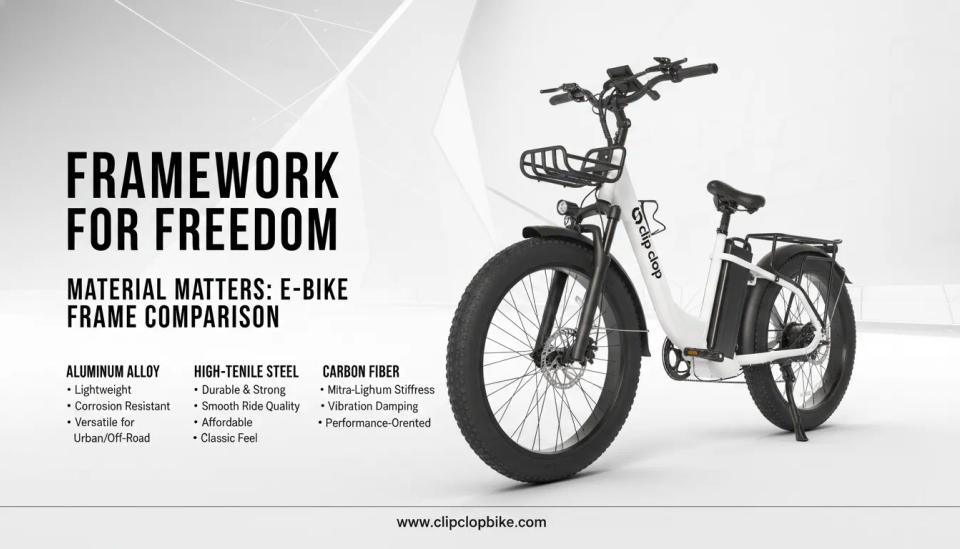
E-Bike Frame Material Selection Guide: 6061 Aluminum vs Steel vs Carbon for B2B Importers
Send your brief. We will field-note back.
Reply includes the feasibility view, sample cost, MOQ, and the next step for your project. We aim to respond within 48 hours.