
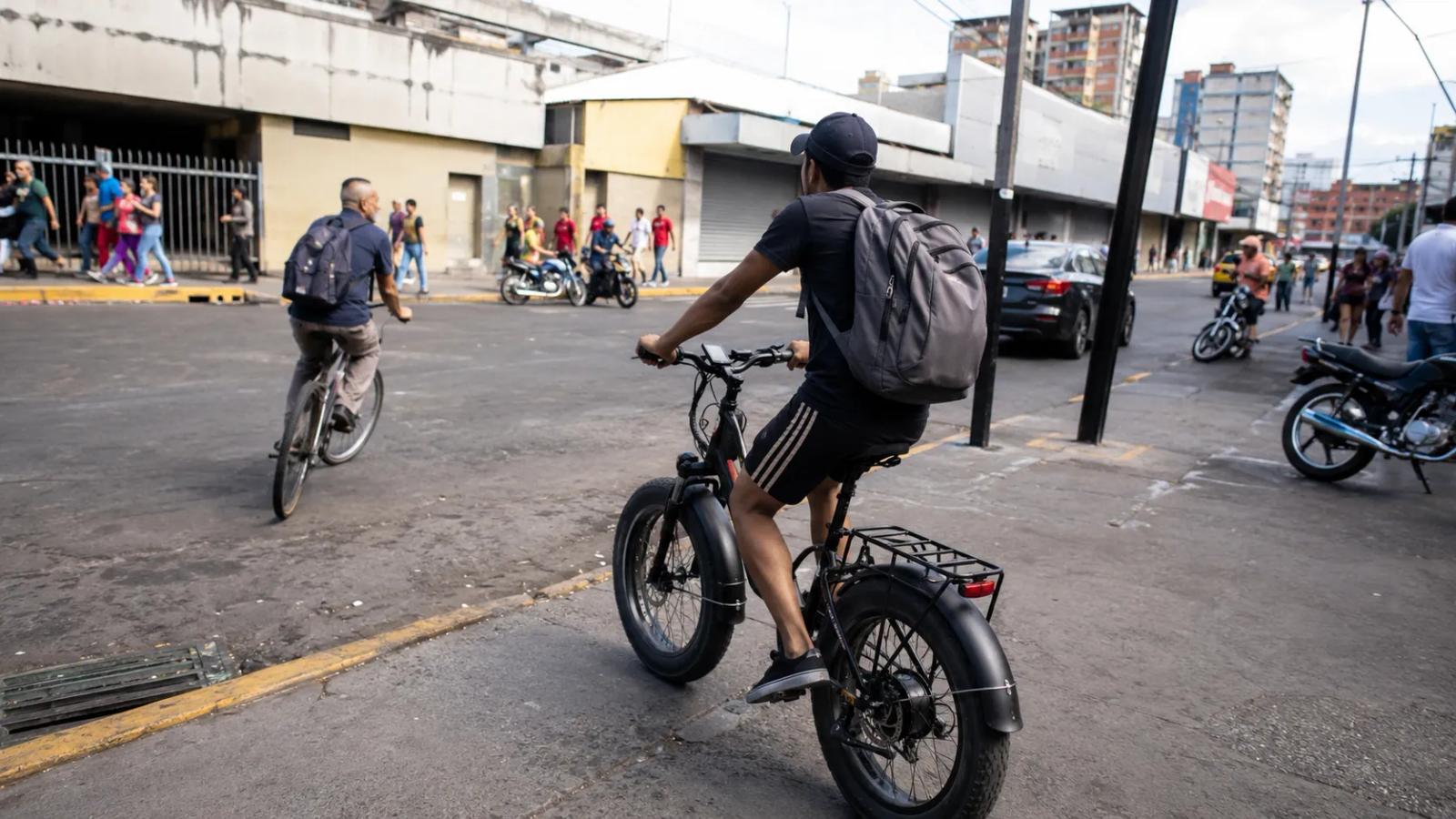
Latin American Electric Mobility 2026: Commercial Fleet Sourcing for Developing Grids, Gradients & TCO
I’ll say this first: I like regular bikes. I really do. They are simple. No battery, no charger, no display telling you something strange at the worst moment. You pump the tires, oil the chain, and
I’ll say this first: I like regular bikes. I really do. They are simple. No battery, no charger, no display telling you something strange at the worst moment. You pump the tires, oil the chain, and
Commercial E-Bike Fleets in Latin America: High-Torque Hub Powertrains, Grid Volatility & CKD Assembly
Commercial partners can inspect our manufacturing infrastructure on our OEM/ODM E-Bike Manufacturing Facility page, review standard configurations on our CS01 Fat Tire & CS04 Commercial Utility Platforms, or directly request volume FOB terms via our Commercial Quote Request Portal (MOQ 20).
Deploying two-wheeled mobility solutions across Latin American metropolitan hubs (such as Caracas, Bogota, Mexico City, and Sao Paulo) presents distinct operational challenges: steep mountainous topography, erratic municipal power grids, high road-surface abrasion, and import tariff barriers on fully assembled e-bikes. Comparing electric bikes to traditional bicycles in developing Latin American markets is not a lifestyle debate; it is an industrial total-cost-of-ownership (TCO) calculation for commercial logistics couriers, municipal police patrols, and food delivery platforms.
At ClipClop's 25,000 m² manufacturing base in Qingyuan, we engineer robust, ruggedized e-bikes specifically configured for Latin American fleet operators: high-torque 85Nm rear hub motors with external waterproof junction boxes, dual 48V 15Ah lithium batteries equipped with surge-protected chargers resilient to voltage spikes, heavy-gauge 6061-T6 aluminum step-through frames, and knock-down (CKD/SKD) export packaging that reduces Latin American import duties from 35% down to under 10%.
| Fleet Architecture | Motor / Torque | Power Grid Protection | Import Format | TCO Advantage |
|---|---|---|---|---|
| ClipClop Latin Fleet Spec | 85Nm Geared Hub (Waterproof) | 100V–260V Surge-Protected BMS | SKD/CKD Container Pack | Lowest TCO / -65% Duty Savings |
| Standard Consumer Import | 45Nm Light Commuter | Basic 110V Linear Charger | CBU (Fully Built Bike) | High Duty (35%) / Frequent Burnout |
| Traditional Non-Electric Fleet | Human Pedal Only | None Required | CKD Carton Pack | Extreme Fatigue / 50% Fewer Deliveries |
That is where an e-bike starts to make sense.
And yes, I work with ClipClop Bike, so I am not pretending to be neutral. I have a bias. I like e-bikes with fat tires, stronger motors, and real brakes. But I also think some people buy too much bike for the wrong reason. So let me explain it like a normal person, not like a brochure.
Download the 2026 ClipClop Factory Catalog (PDF)
Full e-bike specs, motor & battery options, MOQ, and container loading details.
The regular bike is still the cheapest answer
If your route is short, flat, and you are not carrying much, a regular bicycle is hard to beat.
No charging. No battery aging. No controller issue. No “where do I find the right charger?” problem. A simple bike is also easier for a local mechanic to fix. In many Venezuelan cities and towns, that matters more than people admit.
A blogger I follow once gave very simple advice: “Buy the bike you can keep running, not the bike that only looks cool on day one.”
I agree with that. Mostly.
Because if your daily ride is 3 km to 5 km, and you enjoy pedaling, I would not push you into an electric bike. A regular bike is honest. It asks your legs to do the work. That is all.
But once the route gets longer, hotter, hillier, or you start using the bike for work, the story changes quickly.
Where e-bikes win in Venezuela
An e-bike is not just a lazy bike. I know some people still say that. I don’t buy it.
For many riders, an e-bike is a tool. More like a small transport machine.
In Venezuela, I see three situations where an e-bike makes more sense than a regular bike.
First, commuting. If you need to ride across town and still arrive looking like a human being, pedal assist helps. A normal bike can get you there, sure, but you may arrive tired and sweaty before the real work even starts.
Second, delivery or small business use. If you carry food, packages, tools, groceries, or samples, speed and less fatigue matter. A normal bicycle can do it, but after 20 or 30 stops, your legs will hate you.
Third, rough streets. This is where I personally care a lot. I don’t like thin tires for mixed roads. They feel efficient on perfect pavement, but real roads are not perfect. Potholes, broken edges, dust, uneven concrete — that stuff makes small tires annoying fast.
That is one reason I like the ClipClop L2 setup.
Why I think the ClipClop L2 fits this market
The L2 is not a tiny city toy. It has a 48V 15Ah lithium battery, 20×4.0 fat tires, dual suspension, Shimano 7-speed gearing, hydraulic disc brakes, and peak power up to 1200W. The listed max speed is around 50 km/h, and the estimated range is about 50–60 miles per charge.
Now, let me say the quiet part: range numbers are always optimistic.
Every brand does this. Riders are heavier or lighter. Roads are flat or ugly. Wind exists. Tires may be under-inflated. You may ride full throttle because, well, it is fun. So I would not tell a Venezuelan customer, “You will always get 60 miles.” That would be fake.
What I would say is this: the battery size is serious enough for daily use, and the bike is built more for mixed city riding than for perfect bike-lane fantasy.
The fat tires are important. Some people think fat tires are only for looks. I disagree. They add weight, yes, but they also give more comfort and confidence when the road is bad. In places where the road surface changes every few blocks, I will take comfort over a few grams of efficiency.
The hydraulic brakes also matter. I am a little biased here. Mechanical brakes are okay. But when the bike is heavy, the rider is heavy, or the road is downhill, I prefer hydraulic brakes. They feel more controlled. Not magic, but better.
But e-bikes are not perfect
Let’s not act like an e-bike is always the answer.
The first problem is price. A regular bike is cheaper to buy and cheaper to repair.
The second problem is charging. You need a stable place to charge. Not everyone has that. If you live in an apartment or you cannot park the bike near a plug, think twice. A removable battery helps, but still, charging becomes part of your routine.
The third problem is weight. The L2 is around 39 kg net weight. That is not something you casually carry upstairs every day. If your building has no elevator and you live on the fourth floor, please do not ignore this. You will regret it.
One reviewer once said something like, “Before buying an e-bike, imagine the worst day you have to move it.” That advice is not sexy, but it is very useful.
Also, spare parts and service matter. A good e-bike should not be treated like a disposable gadget. Brakes, tires, chain, controller, battery — you need a plan for maintenance.
The fuel argument is more complicated than people think
Some people say, “Venezuela has cheap gasoline, so why buy an e-bike?”
That sounds smart for five seconds. Then real life walks in.
Fuel price is one thing. Fuel availability, waiting time, currency pricing, maintenance of motorcycles, and daily convenience are different things. Even when fuel is cheap on paper, transportation can still be annoying, unpredictable, or expensive in other ways.
I am not saying an e-bike replaces every motorcycle. It does not. A motorcycle is faster, stronger, and better for long-distance travel.
But for short urban trips, small deliveries, commuting, campus use, neighborhood errands, and local business movement, an e-bike can be a very practical middle option. Cheaper to run than a motorcycle, faster than a normal bike, and less exhausting than pedaling everywhere.
That is the sweet spot.
My simple advice for buyers in Venezuela
Do not buy an e-bike only because the motor number looks big.
Ask better questions.
Where will you ride every day?
Can you charge it easily?
Will you carry cargo?
Are your roads smooth or broken?
Do you need comfort more than top speed?
Who will fix the bike when something small goes wrong?
For a student or casual weekend rider, a regular bicycle may be enough.
For a delivery rider, small business owner, or commuter who rides longer routes, I would seriously look at an e-bike like the ClipClop L2.
Not because it is perfect. It is not. It is heavy, it needs charging, and it costs more than a basic bicycle.
But because the L2 is built for the kind of imperfect riding that many people actually do. Fat tires, dual suspension, hydraulic brakes, rear rack, color display, NFC unlock — these are not just decoration when your daily route is rough and you still need to get things done.
Final thought
If you ask me, “Leo, should I buy an electric bike or a regular bike in Venezuela?”
My honest answer is:
If you ride short distances and want the cheapest, simplest thing, buy a regular bike.
If you ride often, carry things, deal with hills or rough streets, or want to save energy for work instead of spending it all on the road, buy an e-bike.
And if you want something that feels more like a small utility vehicle than a cute bicycle, then yes, the ClipClop L2 is the one I would put on the list.
I know that sounds biased.
ClipClop Manufacturing Standards & Build Quality
Discover our high-reliability urban commuter models: ClipClop Model C3 City Commuter and our ClipClop C1 Step-Through E-Bike, available for wholesale dealership ordering.
It is.
But it is also what I would tell a friend who actually needs to ride every day, not just take photos beside the bike.
Commercial Procurement & Fleet Sourcing with ClipClop
Deploying electric bicycle fleets or distributing private-label e-bikes requires a trusted manufacturing partner capable of consistent container-level production, robot-welded frame alignment, and rigorous batch QC. From our 25,000 m² factory in Qingyuan, Guangdong, ClipClop provides end-to-end OEM/ODM electric bike manufacturing services with an accessible MOQ of just 20 units per SKU. Every container order includes dedicated spare parts allocation (2% free warranty backup components), full international compliance documentation (EN 15194, UL 2849, UN38.3), and 15-day sample dispatch.
Ready to evaluate engineering samples for the CS01 Fat Tire & CS04 Commercial Utility Platforms or review container FOB volume pricing? Visit our Commercial RFQ Portal to submit your technical specifications, or speak directly with our engineering sales team via our B2B contact desk.
Download the 2026 ClipClop Factory Catalog (PDF)
Full e-bike specs, motor & battery options, MOQ, and container loading details.
More OEM field notes.
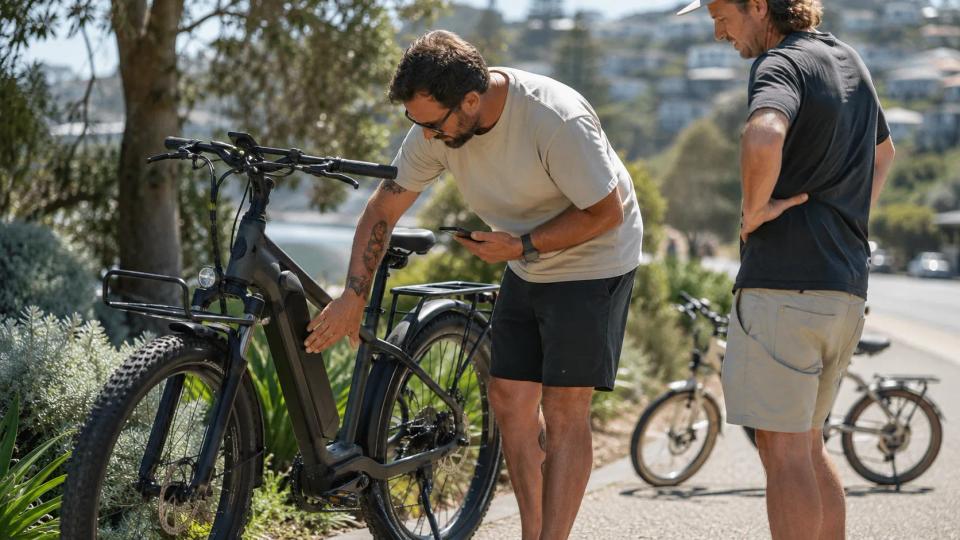
Importing E-Bikes to Australia: B2B Sourcing, Landed Cost Economics & ADR Compliance (2026)
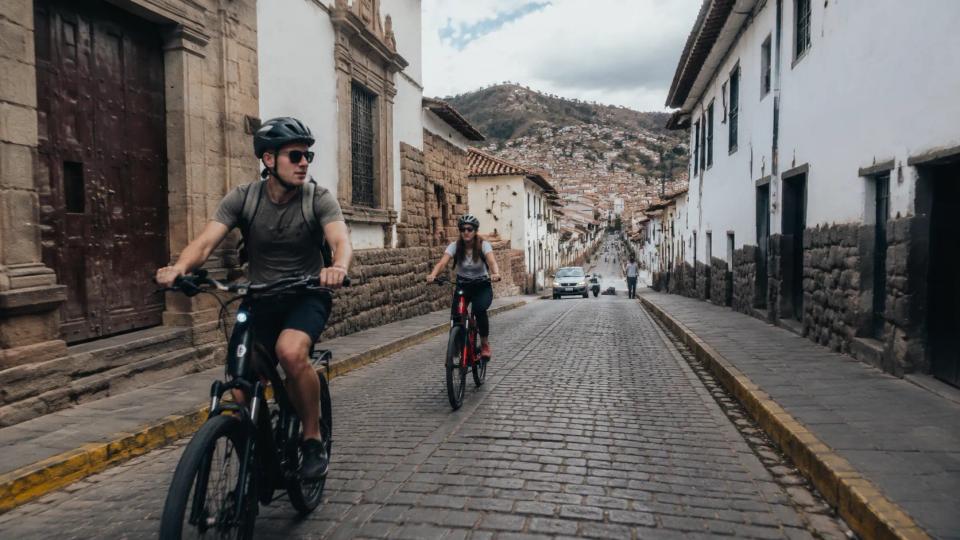
All-Terrain E-Bike Sourcing for Latin America: High-Torque Climbing & Suspension Specs
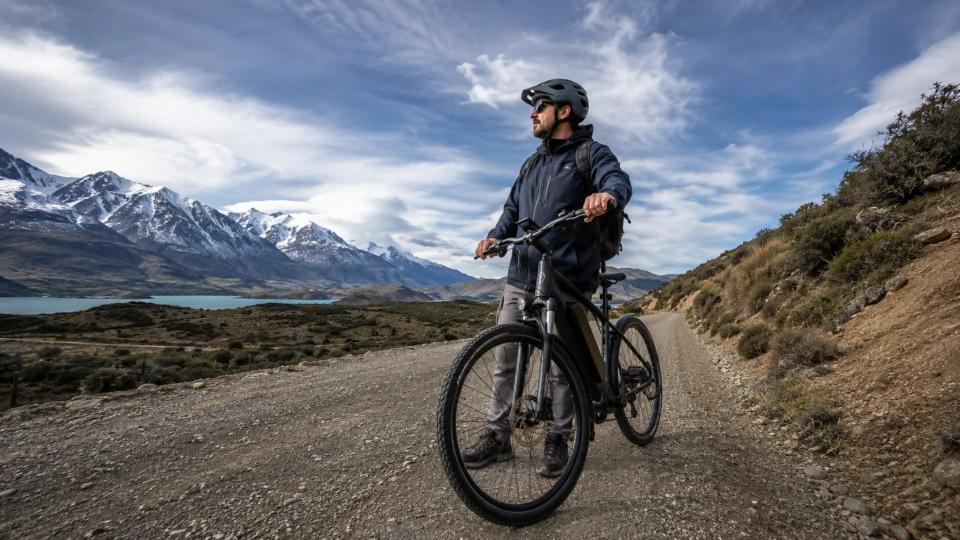
Chile Electric Bike Market 2026: B2B Sourcing, Import Tariffs & Urban Fleet Opportunities
Mid-Drive vs. Hub Motors for B2B Fleets: Engineering, BOM Cost & Maintenance Breakdown
Send your brief. We will field-note back.
Reply includes the feasibility view, sample cost, MOQ, and the next step for your project. We aim to respond within 48 hours.