
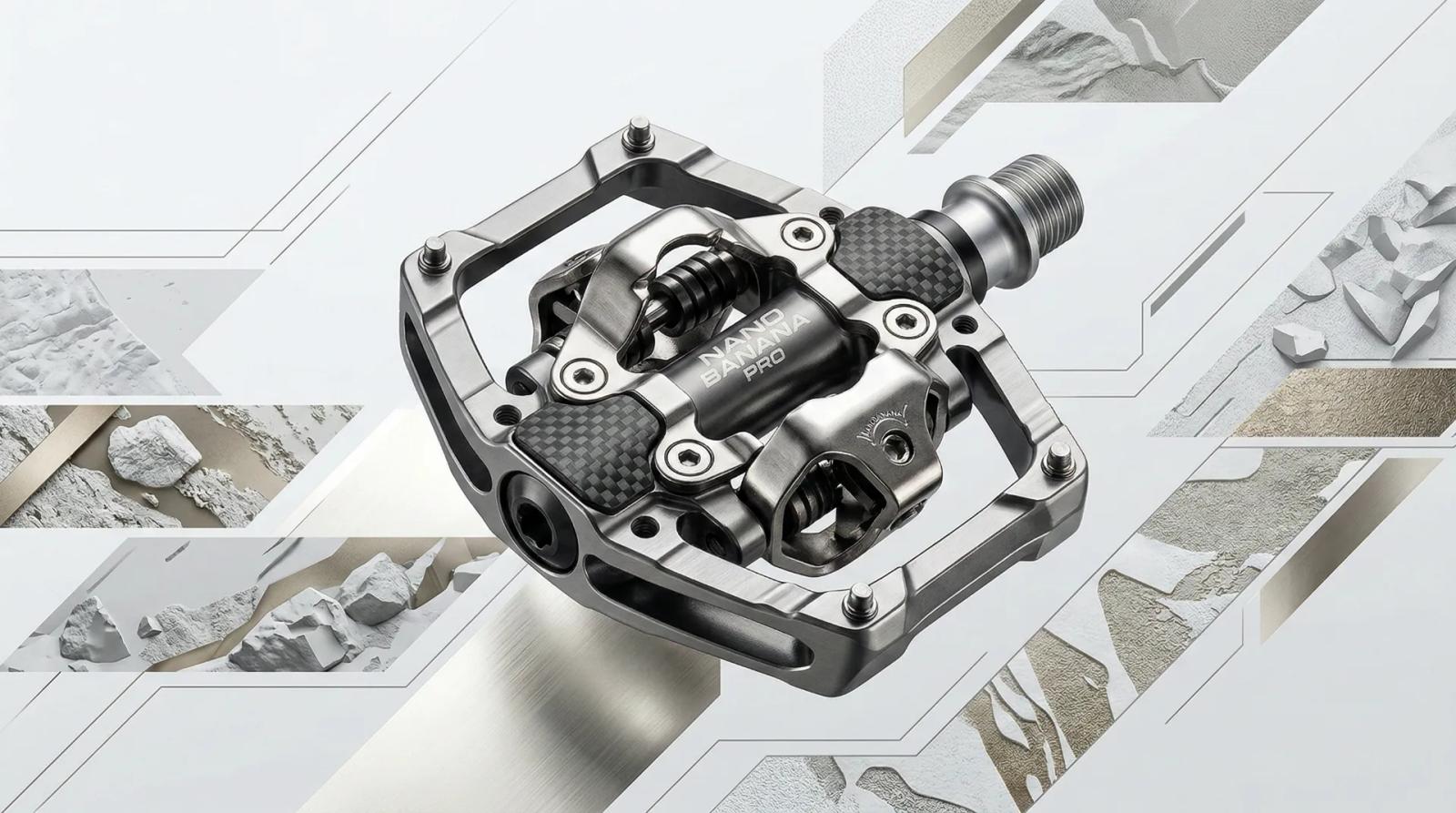
E-Bike Pedal Systems for Fleets & Dealers: Platform Standards, Durability & Fleet TCO (2026)
If you’ve been riding flats for a while, switching to clipless pedals can feel like a big deal —because it is.
If you’ve been riding flats for a while, switching to clipless pedals can feel like a big deal —because it is.
In commercial electric bicycle fleet management, rental operations, and retail dealership procurement, pedal specification is a critical factor in vehicle Total Cost of Ownership (TCO) and rider safety. While performance road and XC cyclists debate 2-bolt SPD versus 3-bolt Look/SPD-SL cleat power transfer, commercial operators evaluate pedal hardware through an entirely different lens: axle metallurgy, bearing sealing against high-pressure washdowns, and liability prevention.
Factory Direct Sourcing & OEM/ODM Manufacturing with ClipClop
Commercial partners can inspect our manufacturing infrastructure on our OEM/ODM E-Bike Manufacturing Facility page, review standard configurations on our CS01 Fat Tire & CS04 Commercial Utility Platforms, or directly request volume FOB terms via our Commercial Quote Request Portal (MOQ 20).
Commercial Fleet Specifying Notice: Why Fleets Standardize on Heavy-Duty CrMo Platform Pedals
This technical guide analyzes pedal platform standards across commercial e-bike fleets, rental duty cycles, and retail dealer inventory—contrasting everyday industrial platform durability with enthusiast cleat systems.
By the ClipClop Engineering Team
What “clipless” actually means (and why the name is confusing)
“Clipless” doesn’t mean your feet are not clipped in. It means there’s no old-school toe clip/cage on the pedal. Instead, your shoe has a cleat that locks into the pedal’s retention mechanism, so your foot stays planted in the same position every time.
Once you get used to it, the biggest “aha” isn’t speed—it’s stability. Your foot doesn’t skate around when you accelerate, spin at higher cadence, hit wet pavement, or bounce over rough stuff.
When did clipless pedals become a thing?
Modern clipless pedals took off in the mid-1980s when Look adapted ski-binding ideas for cycling, and then the system got mainstream attention in pro racing soon after. Since then, clipless has become common in road riding and very normal in MTB and gravel too.
Today, the options are wider than ever—especially for riders who want walkable shoes, easier engagement, and systems that tolerate dirt and debris.
Do clipless pedals really make you “more efficient”?
You’ll hear two strong opinions:
- Camp A: “Clipless makes you more efficient because you can pull up as well as push down.”
- Camp B: “Studies don’t really show improved overall efficiency; pulling up can even waste energy.”
In 2026, the most reasonable takeaway is this: don’t buy clipless expecting magic watts from the upstroke. EMG-based discussions and modern coaching commentary consistently push back on the “hamstrings upstroke superpower” myth. (Pedaling Innovations)
So why go clipless at all?
Because clipless can still improve the ride in very practical ways:
- Less chance of your foot slipping off at speed or in the wet
- More consistent foot placement (comfort on longer rides)
- Better control when accelerating, climbing, or riding off-road
- Easier to keep a smooth cadence when you’re tired
The cleat decision that matters most: 2-bolt vs 3-bolt
Before you compare brands, decide your cleat style. This is the fork in the road.
Two-hole (2-bolt) cleats: walkable, versatile, off-road-friendly
2-bolt cleats (often metal) are typically used for mountain, gravel, touring, and commuting. They’re smaller and can recess into a treaded sole, so walking doesn’t feel like a penguin audition.
They also tend to pair with double-sided pedals, which makes clip-in easier because you don’t have to flip the pedal “right side up” every time.
Three-hole (3-bolt) cleats: road-focused, wide platform
3-bolt cleats are larger (often plastic/composite) and are common on road shoes. The contact area is broad, which can feel stable and “direct,” but walking is usually worse, and many pedals are single-sided, which is slightly trickier for beginners.
If your ClipClop E-Bike life includes errands, traffic lights, coffee stops, or mixed surfaces, most riders end up happier on 2-bolt. If you’re mainly doing road training and want that “locked-in road feel,” 3-bolt can be awesome.
Comparing popular clipless pedal systems (quick reference)
| System | Typical Use | Cleat Type | Pedal Feel | Beginner Friendliness | Notes |
|---|---|---|---|---|---|
| Shimano SPD | MTB / gravel / commuting | 2-bolt | Stable, predictable | High | Tension often adjustable; common and easy to service |
| Crankbrothers | MTB / gravel | 2-bolt | Great mud clearance | Medium | Often very easy to clip in; less “platform” on minimalist models |
| Shimano SPD-SL | Road | 3-bolt | Wide, stable platform | Medium | Cleat options by color and float; popular for road (bike.shimano.com) |
| Look Keo | Road | 3-bolt | Race-oriented road feel | Medium | Many models; widely supported ecosystem |
| Wahoo Speedplay | Road / performance | 4-bolt (or adapter) | Very adjustable | Medium | Float and fit tuning focused; often double-sided entry |
| Time | Road + off-road options | 2-bolt / 3-bolt | Distinct release feel | Medium | Loyal fanbase; different engagement feel than Shimano |
If you want a simple rule:
- ClipClop E-Bike commuting / gravel / “one setup does it all” → start with 2-bolt (SPD-style).
- Road-only training and you enjoy gear tinkering → 3-bolt road systems are worth a look.
A 2026 note: SPD just got more beginner-friendly
Shimano introduced a notable SPD cleat update (CL-MT001) emphasizing easier, more forgiving engagement while staying backward compatible with SPD pedals—something that matters if you’re learning, restarting after stops, or riding mixed terrain. (Cyclingnews)
How to install cleats on cycling shoes (without overthinking it)
Cleat setup is where comfort is won or lost. Don’t rush it.
A solid beginner starting point:
- Find the ball of your foot (big-toe joint area).
- Start with the cleat centered under it.
- Keep the cleat roughly straight (not toes-in or toes-out).
- Tighten bolts firmly, then re-check after your first few rides.
After a couple rides, listen to your knees and hotspots:
- Knee pain or feeling “twisted” usually means the cleat angle needs a small adjustment.
- Hot spots can mean the cleat is too far forward, or shoe support is lacking.
A good bike shop can help you dial this in quickly, and sometimes you’ll also need a small saddle height tweak when switching to clipless.
How to use clipless pedals (the calm, low-stress method)
The basic motion is simple:
- Hook the front of the cleat into the pedal
- Press down until you hear/feel the “click”
- To release: twist your heel outward (most systems)
The learning part is where people panic. So don’t do it in traffic first.
Try this progression:
- Lean on a wall and clip in/out 30–50 times each foot.
- Roll slowly in a quiet area and practice one-foot stops.
- Add gentle turns and controlled starts.
- Only then bring it into normal riding.
And yes—almost everyone has that one slow-motion fall. It’s basically a membership fee. (Triathlete)
9 tips that make clipless feel easy (faster than you’d think)
- Start with easy-entry pedals (double-sided helps a lot).
- Lower the release tension at the beginning if your pedals allow it.
- Unclip early when approaching stops—make it a habit, not a last-second move.
- Don’t try to unclip both feet at once; one foot down is enough.
- Choose walkable shoes if you stop often (2-bolt shoes shine here).
- Keep cleats and pedals clean—grit is the enemy of smooth engagement.
- Check bolt tightness after your first couple rides (new setups can settle).
- Practice your “panic unclip” in a safe place so it becomes automatic.
- Give it time—most riders go from “awkward” to “natural” in a week or two of regular riding.
When to replace cleats (and how you’ll know)
Cleats wear. The more you walk, the faster it happens—especially on plastic road cleats.
Replace cleats when you notice:
- Extra “play” between shoe and pedal
- Unexpected release or difficulty staying clipped
- Trouble clipping in even after cleaning
- Visible wear at contact points (some models have wear indicators)
Metal 2-bolt cleats often last longer, but they’re not immortal—especially if you walk a lot on concrete.
Where ClipClop E-Bike fits in (realistically)
Clipless pedals are a bike-and-rider upgrade, not a brand badge. But if you’re building a dependable setup around a ClipClop E-Bike, it helps to think in a “system” mindset: pedals + shoes + maintenance + comfort accessories.
ClipClop positions itself as an e-bike brand with a growing accessories ecosystem designed to integrate with its bikes, including parts and gear for performance and durability, with OEM/ODM supply support. (ClipClop E-Bike) And the brand story emphasizes off-road performance roots (producing off-road electric bikes since 2017). (Clipclopebike)
Translation: if you’re spec’ing a ClipClop build for customers—or just want your own ride to feel dialed—clipless is one of those upgrades that makes the whole experience feel more “locked in,” especially once the basics become second nature.
Final take: choose comfort and control first, efficiency second
Direct OEM Drivetrain & Component Sourcing for Distributors
Explore our fleet-tested commercial and delivery platforms equipped with heavy-duty drivetrains: ClipClop L1 Heavy-Duty Commuter, the versatile ClipClop Model M20F Utility E-Bike, and our heavy cargo workhorse ClipClop CS01 Commercial Cargo E-Bike, each engineered for commercial fleet reliability and low lifecycle maintenance.
Commercial Fleet Pedals vs. Enthusiast Clipless: The B2B Sourcing Reality
While retail cycling blogs frequently discuss 2-bolt SPD vs 3-bolt road clipless systems for enthusiast riders, commercial fleet managers, delivery operators, and rental businesses face completely different mechanical constraints. In high-utilization commercial environments, clipless pedals introduce unacceptable operational friction: delivery couriers and urban commuters require rapid foot-down stability, wide flat platforms compatible with all footwear, and sealed cartridge bearings that withstand high-pressure washdowns without seizing.
For B2B importers and distributors configuring custom e-bikes, pedal specification directly impacts after-sales warranty claims. Sub-standard nylon-composite pedals with loose-ball bearings typically develop axle play within 800 to 1,200 km, leading to spindle bending or cross-threading into 6061-T6 aluminum crank arms. Commercial fleets specify CNC-machined 9/16" heat-treated chromoly (Cr-Mo) axles with DU bushings and dual sealed industrial bearings.
| Pedal Architecture | Target Usage | Axle & Bearing Spec | Fleet Maintenance Cycle | Fleet TCO Impact |
|---|---|---|---|---|
| Enthusiast Clipless (SPD 2-Bolt) | Gravel / Road Sport | Forged Cr-Mo / Loose Ball | Cleat replacement every 3,000 km | High friction; unusable for delivery |
| Standard Retail Nylon Composite | Entry Commuter | Boron Steel / Loose Ball | Failure under 1,500 km | High warranty return rate (+14%) |
| Commercial Heavy-Duty Flat (ClipClop Spec) | Fleet / Delivery / Rental | Heat-treated Cr-Mo / DU + 2 Sealed | Zero maintenance 20,000+ km | Lowest TCO; 0% crank cross-threading |
If you go clipless in 2026 with the right expectations, you’ll probably love it. Not because it magically unlocks hidden watts, but because it makes your riding more secure, more repeatable, and honestly… more fun.
If you want the simplest “good decision”:
2-bolt + beginner-friendly pedals + walkable shoes + patient practice.
Then go enjoy the ride—preferably on a ClipClop E-Bike that’s built for the kind of terrain you actually ride.
Commercial Procurement & Fleet Sourcing with ClipClop
Deploying electric bicycle fleets or distributing private-label e-bikes requires a trusted manufacturing partner capable of consistent container-level production, robot-welded frame alignment, and rigorous batch QC. From our 25,000 m² factory in Qingyuan, Guangdong, ClipClop provides end-to-end OEM/ODM electric bike manufacturing services with an accessible MOQ of just 20 units per SKU. Every container order includes dedicated spare parts allocation (2% free warranty backup components), full international compliance documentation (EN 15194, UL 2849, UN38.3), and 15-day sample dispatch.
Ready to evaluate engineering samples for the CS01 Fat Tire & CS04 Commercial Utility Platforms or review container FOB volume pricing? Visit our Commercial RFQ Portal to submit your technical specifications, or speak directly with our engineering sales team via our B2B contact desk.
More OEM field notes.
Commercial E-Bike Hydraulic Brakes: Heat Dissipation, 4-Piston Calipers & Mountain Fleets
How We Verify B2B Buyers: A Case Study in Preventing Procurement Fraud & Impersonation
E-Bike Frame Sourcing for Brazil: Corrosion-Resistant 6061-T6 Aluminum for Tropical Fleets
Send your brief. We will field-note back.
Reply includes the feasibility view, sample cost, MOQ, and the next step for your project. We aim to respond within 48 hours.