

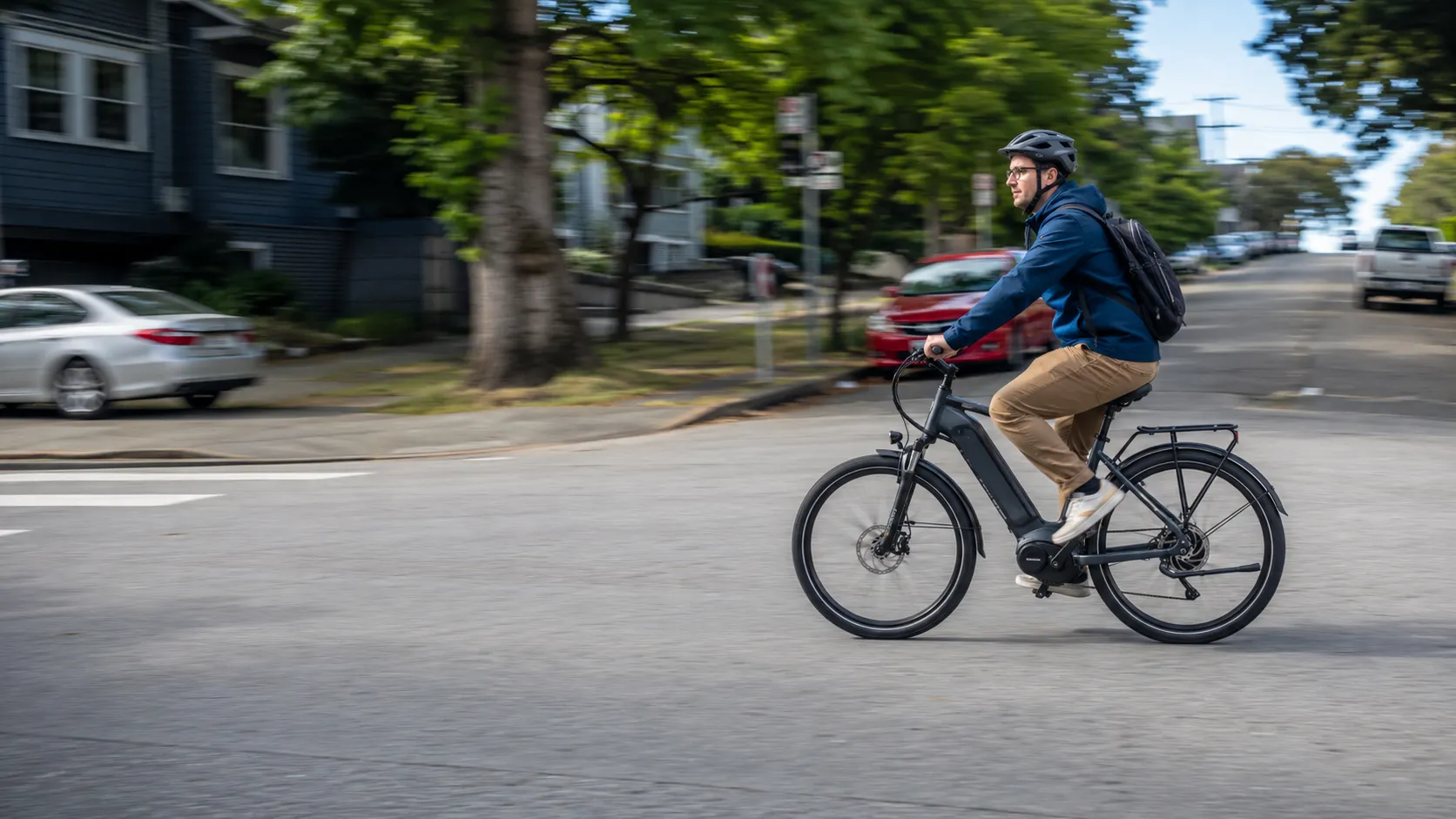
People ask me this a lot: “How fast can this e-bike go?”
It sounds simple. But in real e-bike business, it is not simple. If you buy one bike for fun, maybe you only care about the number on the display. But if you are a dealer, distributor, rental operator, or brand owner, speed is only one part of the problem.
At ClipClop, we work more from the supplier side. We deal with sample bikes, bulk orders, OEM/ODM requests, different motors, different batteries, and different rules in different countries. So when someone asks me about speed, I do not only answer “25 km/h” or “28 mph.” I want to know where the bike will be sold, who will ride it, and whether the buyer wants a legal city bike or something for private land.
My view is a little biased: I do not think the fastest e-bike is always the best e-bike. Sometimes it is just the easiest one to film.
Speed is not the full story
Many new buyers ask for a bigger motor first. 500W, 750W, sometimes even higher. I understand it. Bigger numbers look stronger. Some bloggers also push this because top speed is easy content. They ride in a straight line, show the display, and the video looks exciting.
But after working with real buyers, I think this is too shallow.
A bike that reaches a high speed once on a clean flat road is not automatically a good product. I care more about whether it can keep a stable speed, climb a normal hill, stop safely, and still feel good after the battery drops below half. Boring, yes. But more useful.
ClipClop has different product directions, including fat tire e-bikes, electric mountain bikes, electric city bikes, and folding e-bikes. These bikes should not be judged with the same speed logic. A folding e-bike should be practical and easy to store. A fat tire e-bike should feel stable on mixed roads. A city e-bike should be smooth and not scary in traffic. (ClipClop E-Bike)
What speed should a normal e-bike have?
For many public-road markets, the legal speed is not very high.
In the UK, an EAPC needs pedals, the motor must not exceed 250W continuous rated power, and electrical assistance must cut off at 15.5 mph. In the U.S., the common three-class system defines Class 1 as pedal assist under 20 mph, Class 2 as throttle on demand under 20 mph, and Class 3 as pedal assist under 28 mph. NSW in Australia is also getting stricter, with enforcement around the 25 km/h limit and action against throttle-only or modified high-powered bikes. (GOV.UK)
So when a customer asks, “Can this bike go faster?” my first reaction is not “yes.” My first reaction is: “Do you want to sell it legally?”
My simple advice: decide the target market first, then choose the speed setup.
Motor power matters, but not in the childish way
The motor affects acceleration, hill climbing, load capacity, and how strongly the bike feels. No doubt. But too many people talk about motor power like it is a bodybuilding contest. Bigger is not always smarter.
A 250W pedal-assist bike can be the right choice for UK-style compliance. A 500W or 750W setup may be more suitable for some U.S. use cases. A higher-power off-road model may work for private land or special use. But if you sell a non-compliant bike into the wrong market, you are not being brave. You are creating risk.
Some reviewers tell riders to look at torque, not just wattage. I agree. A bike with a well-matched motor, controller, gearing, and battery can feel better than a bike with a big number but poor tuning.
Battery decides more than many people think
A lot of riders judge the bike at full charge. That is not enough.
At full battery, almost every e-bike feels better. The real test starts after riding for a while. When the battery drops, does the bike still climb decently? Does it still feel stable? Does the range claim still feel realistic?
I have seen nice-looking bikes that feel good in the first ten minutes and then become weak later. That is bad for dealers because customers do not explain it technically. They just say, “The bike is not powerful” or “the battery is bad.”
For sample testing, I suggest buyers ride longer than they want to. Do not test only around the warehouse. Ride the bike on real roads. Use a heavier rider. Try hills. Stop and start again. Basic, but many people skip it.
Speed also eats battery fast. The faster you ride, the more power the motor needs, especially against wind. A bike ridden at medium assist can feel totally different from the same bike ridden at high assist all the time. This is why one range number on a product page is never the whole truth.
Rider weight, road, and wind change everything
This is where many product pages are too clean.
A 60 kg rider and a 95 kg rider will not get the same result. Add a backpack, cargo box, child seat, or delivery bag, and the speed changes again. Flat road is easy. Hills are the real test. Headwind can also make a good bike feel slower.
Rain and cold weather matter too. Wet roads reduce confidence. Cold weather can affect battery performance. Low tire pressure can make the bike feel heavy and slow.
Some cycling bloggers keep saying, “Check your tire pressure before blaming the bike.” That advice is not sexy, but it is correct. Many speed and range complaints start from simple things: soft tires, brake rubbing, dirty chain, wrong assist level, or unrealistic rider weight.
Different e-bikes should feel different
This is my personal opinion: not every e-bike should chase an aggressive ride feel.
A city e-bike should be friendly. It should start smoothly. The motor should not jump too hard. Riders use it near cars, pedestrians, and traffic lights. If the bike feels too aggressive, it may look powerful in a short demo, but normal customers may not like it.
A folding e-bike should be practical first. For ClipClop’s folding direction, I think more about storage, easy handling, and daily convenience. It does not need to act like a monster bike.
A fat tire e-bike is different. It can look stronger, and honestly, that helps selling. People like the visual confidence. Fat tires also feel stable on rough roads and mixed surfaces. But they are not always the most efficient. They can use more battery and feel heavier. Still, for leisure riding and some overseas markets, fat tire e-bikes are easier to explain and easier to market. I am slightly biased toward them for recreational buyers.
Electric mountain bikes are another case. For this type, I care less about top speed and more about torque, brake quality, suspension, and control. On rough ground, stupid speed is not impressive. It is just unsafe.
For delivery or fleet e-bikes, I become even more conservative. A fleet buyer should not chase top speed. They need low failure rate, easy service, predictable riding, battery management, and enough spare parts.
About unlocking speed
Let me be direct: I do not like making “unlock speed” the selling point.
Yes, people search for it. Yes, tuning kits exist. Yes, some riders want to remove the limiter. I am not pretending this does not happen.
But for public-road use and B2B selling, unlocking speed creates too many problems. The bike may no longer match local law. The motor and controller may run hotter. The brake system may not be suitable. The battery drains faster. Warranty becomes unclear. And when something goes wrong, the seller often gets blamed.
Some bloggers say unlocking speed is fine if you know what you are doing. Maybe for a private rider on private land, that is their choice. But for dealers and distributors, I would not build a business on that message.
I prefer a bike that is set correctly from the factory for the target market. If it is for UK-style road use, keep it compliant. If it is for U.S. Class 3, configure it properly. If it is for private off-road use, say that clearly.
What I would test before buying samples
If I were a dealer choosing a ClipClop model, I would not only ask for the top speed video.
I would test acceleration from zero. E-bikes spend a lot of time starting from traffic lights, corners, parking areas, and uphill sections.
I would test hill climbing with a real rider. Not a tiny rider on a perfect slope. Use someone closer to the target customer.
I would test braking from higher speed. A fast bike with weak brakes is not a product advantage. It is a problem waiting to happen.
I would also check battery performance after some riding. Check the bike when the battery is not full. That tells you more.
Then check comfort and control. Does the bike feel nervous? Is the handlebar stable? Does the motor cut in smoothly? Does the assist feel natural?
How I think about ClipClop’s role
ClipClop is not only trying to say “we have e-bikes.” That is too generic. China has many e-bike suppliers. Everybody says they have good quality, good price, fast delivery. Buyers have heard this too many times.
The better role for us is to help buyers choose a configuration that actually fits their market. That includes product type, speed setting, motor and battery combination, branding, packaging, and compliance direction.
If a buyer wants to build a small e-bike line, we should not just push the most expensive model. We should ask what they sell now, who their customer is, what price range they target, what laws they need to follow, and whether they want samples first or bulk supply.
This is where OEM/ODM work is useful. One buyer may need a fat tire model with their logo. Another buyer may want a folding e-bike for urban commuters. A fleet buyer may care more about battery and maintenance. Different answer. Different bike. Different speed logic.
My final take
E-bike speed matters, but I think people overrate it.
A good e-bike should be fast enough for its use case, not fast just for showing off. It should climb well, brake well, hold battery well, and match the law of the market where it will be sold.
For riders, my advice is simple: do not judge the bike only by top speed. Ride it longer. Test it with your real body weight, your real road, your real weather, and your real habits.
For dealers, I would be more strict. Ask about compliance. Ask about controller settings. Ask about battery quality. Ask about brake system. Ask how the model fits your customer, not just how fast it goes in a video.
At ClipClop, this is how I prefer to look at e-bike speed. Not perfect, not fancy, but practical. Speed is useful only when the rest of the bike can support it.
A bike that is a little slower but legal, stable, and easy to sell is often better than a bike that is very fast and creates problems later.
That is my honest opinion.



 English
  Spanish
  Portuguese
  Russian
  Arabic
  French
  Dutch
Dutch  German
  Danish
