

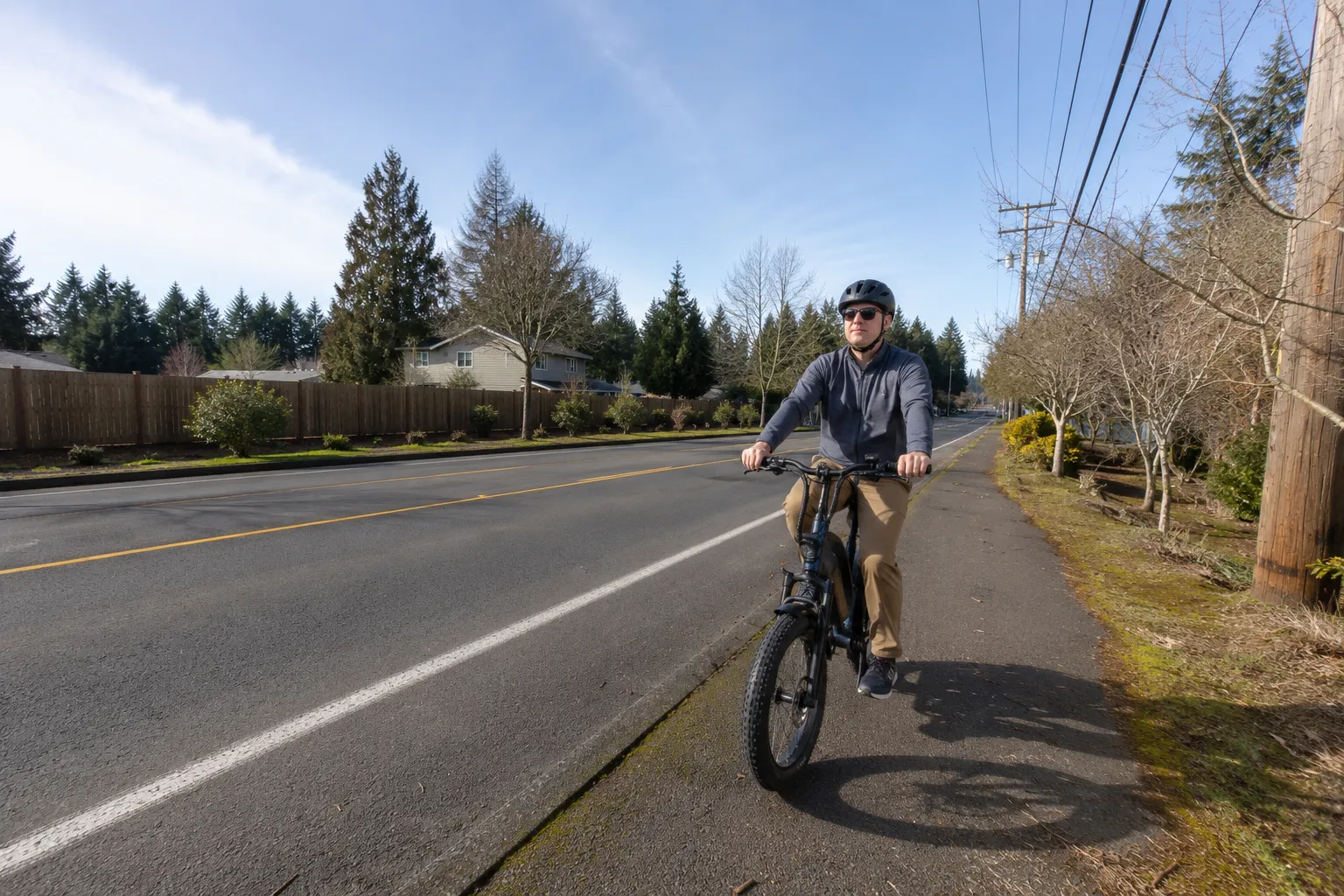
Look, I get this question probably three times a week in my inbox. Someone in Portland, or Eugene, or sometimes way out in Bend, emails me asking: “Leo, do I need a driver’s license for the L1?” And honestly? I used to copy-paste the same boring legal paragraph back at them. But after shipping hundreds of these units to Oregon in 2025 and watching the rules actually shift in 2026, I figured it’s time I just sit down and write the real story. No corporate speak. Just what I know, what I’ve seen go wrong, and what a few YouTube mechanics I actually trust keep shouting about.
First, the headline you actually care about: if you’re riding a standard Class 1, Class 2, or Class 3 e-bike in Oregon, you do not need a driver’s license. You don’t need registration. You don’t need insurance. Period. Oregon Revised Statute § 814.405 treats a compliant e-bike as a bicycle, not a motor vehicle, which means the DMV can keep their paperwork to themselves. That alone makes Oregon way more reasonable than states like Alabama or New Jersey, where they still want you to treat a 750W pedal-assist rig like a damn scooter. I’ve always told my distributors that the Pacific Northwest gets it. They understand that slapping a small motor on a bicycle doesn’t magically turn it into a Harley.
But—and this is where I start getting a little heated—”compliant” is the word that trips people up. Hard.
Oregon adopted the three-class system back in 2024 through HB 4103, and by 2026 most local police departments and trail rangers have finally caught up. Here’s the breakdown in plain English, because the government PDFs make my eyes bleed. Class 1 is pedal-assist only, cuts out at 20 mph. Class 2 adds a throttle, also capped at 20 mph. Class 3 is pedal-assist up to 28 mph, needs a speedometer, and riders must be at least 16 years old. That’s the framework. Stay inside those lines, and you’re golden. No license, no plates, no annual fees.
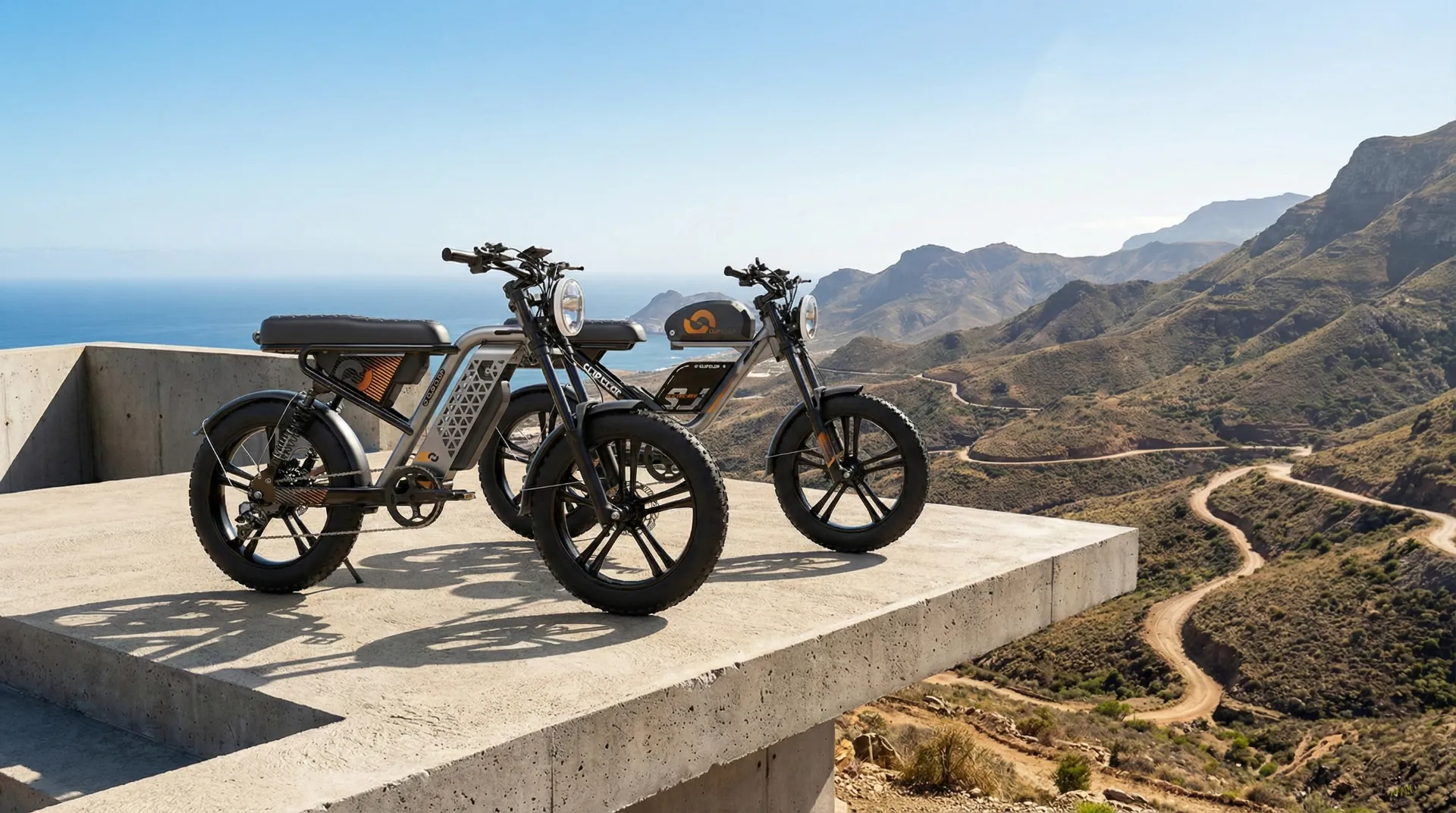
Now let me talk about my own bike, the ClipClop L1, because this is where things get messy and real. The L1 ships from our factory in Guangdong with a 48V 750W nominal motor that peaks at 1200W. It has a throttle. It has a color LCD. The spec sheet says top speed is 50 km/h, which is about 32 mph. And right there, if you’re paying attention, you see the problem. Thirty-two miles per hour with a throttle puts the unregulated L1 well outside Oregon’s Class 2 ceiling of 20 mph, and it blows past the Class 3 limit of 28 mph too. It’s not even close.
So do you need a license to ride an L1 in Oregon? It depends on whether you—or your dealer—bother to configure the thing correctly before you hit the road.
This is the part where I get slightly controversial, and I don’t care. A lot of manufacturers, especially the ones flooding Amazon with cheap fat-tire bikes, ship their controllers unlocked and pretend it’s the customer’s problem. I’ve seen it. A guy in Portland—let’s call him “Mike” because that’s not his name—bought a different brand last year, unboxed it, hit 35 mph on the Springwater Corridor, and got pulled over by a park ranger who was not amused. The bike had no class label, no speed limiter, and a throttle that could’ve powered a go-kart. Mike ended up with a ticket for operating an unregistered motor vehicle. Not a good Saturday.
When we ship the L1 to Oregon, we actually ask our buyers: “Do you want this locked to Class 2, or are you planning to ride private land only?” Because I’m not trying to get angry phone calls from someone’s uncle who got fined $400 in Multnomah County. We set the controller to cap assist at 20 mph if they want street-legal Class 2 compliance. We can also disable the throttle entirely and set the PAS ceiling to 28 mph for Class 3, though honestly, most of our Oregon dealers just go Class 2 because it’s simpler and covers more trail access. The LCD display on the L1 makes this pretty painless—you can toggle between modes, see your speed, check battery level, and know exactly where you stand. But the factory default? Yeah, that default is fast. Too fast for Oregon public roads if you want to stay in the “bicycle” category.
Here’s where I lean on some voices I respect. There’s a mechanic in the e-bike YouTube space—I’ll just call him “the wrench guy from the channel with the red background” because I’m not trying to namedrop—who keeps hammering this point: “Unlock your controller after you understand what class your state wants.” And he’s right. Oregon doesn’t ask for a license, but it absolutely asks for compliance. The law says your e-bike must have pedals that can propel it with human power, the motor can’t exceed 1,000W, and the bike can’t go over 20 mph under motor power alone if you want the broadest bicycle treatment. Wait, actually, I need to correct myself there. The old Oregon statute said 1,000W and 20 mph, but the newer three-class framework adopted in 2024 and refined by 2026 tweaks that slightly for Class 3. The 1,000W limit still hovers in the background as a hard ceiling, though. Our L1 peaks at 1200W, which means even in Class 2 mode, that peak surge during hill climbs technically nudges past the statutory wattage if some overzealous prosecutor wanted to be a jerk about it. Has anyone in Oregon been prosecuted for a 200W peak overshoot? Not that I’ve heard. But I’m telling you the truth because I build these things. The nominal rating is 750W. The peak is 1200W. Draw your own conclusions.
Age limits in Oregon are another thing that catches families off-guard. As of early 2026, you need to be 16 or older to operate any class of electric assisted bicycle on public roads or paths. There was a bill floating around in February 2026 to drop Class 1 down to 14, and honestly I hope it passes because a 14-year-old on a slow pedal-assist bike is way less dangerous than a 16-year-old in a 3,000-pound Honda Civic. But right now, the line is 16. If you’re under 16, you gotta wear a helmet anyway, and honestly, you should just wear one regardless. The L1 has 20×4.0 fat tires and 180mm hydraulic disc brakes that can stop you hard even in wet Portland winters, but physics doesn’t care about your hair. I’ve seen a rider in Salem—let’s call her “J”—skid through an intersection because she underestimated the braking power. The bike stopped fine. She just wasn’t ready for how fast it stopped. No injury, but she told me later she bought a MIPS helmet the next day. Smart move.
Trail access is where Oregon gets a little weird, and I have opinions. Class 1 and Class 2 e-bikes are generally allowed anywhere a regular bicycle goes, including shared-use paths, unless some local ordinance specifically bans them. Class 3, though, gets pushed onto roads and bike lanes and is technically not allowed on multi-use paths. In practice, I think this rule is enforced about as consistently as Portland weather. Some trailheads have signs, some don’t. Some rangers care, some are just happy you’re not on a dirt bike. My advice? If you’re on the L1 and you’ve got it configured as Class 2, you’re probably fine on most paths. If you’re running it unlocked at 32 mph on a family trail? You’re the reason they’re going to ban e-bikes next year. Don’t be that guy.
A blogger I follow—she runs a small Pacific Northwest outdoor gear site—posted something last month that stuck with me. She wrote: “Oregon wants e-bikes to succeed, but they want you to stay in your lane. Literally.” And that’s the vibe I get too. The state passed HB 4103 because they recognize that e-bikes cut traffic and reduce emissions, especially in cities like Portland where the bridges get clogged every morning. But they also don’t want a 28 mph throttle bike weaving through joggers on the Esplanade. Fair enough. The L1 in Class 2 mode, capped at 20 mph with the throttle active, feels like the sweet spot for Oregon. You still get the 48V 15Ah battery giving you 50 to 60 miles of range, you still get the seven-speed Shimano for climbing the hills around Mount Tabor, and you still get that cushy front suspension with lockout. But you’re not terrorizing pedestrians.
Let me address the insurance question because people always slide into my DMs about it. Oregon does not require e-bike insurance. Not for Class 1, not for Class 2, not for Class 3. But here’s my slightly biased manufacturer take: if you’re riding a 75-pound fat-tire bike with hydraulic brakes and a 1200W peak motor, maybe consider a rider’s policy? Not because the state says so. Because if you clip someone’s ankle on the Waterfront Park path and they decide to sue, your renter’s insurance might shrug and say “motorized vehicle exclusion.” I’ve read enough Reddit threads from Oregon riders to know this happens. It’s rare, but it happens. One guy in Eugene—let’s call him “R”—told me his homeowner’s policy covered his stolen e-bike but explicitly excluded liability if he was “operating a motorized vehicle.” The insurer eventually backed off because Oregon classifies compliant e-bikes as bicycles, but do you really want to have that argument while some angry pedestrian is waving their medical bill in your face? Get the coverage. Or at least call your agent and ask the question. It’s twenty minutes.
What about sidewalks? Don’t. Just don’t. Oregon law says e-bikes are not allowed on sidewalks. I don’t care if your battery is dying and the bike lane is blocked by a delivery truck. Walk it. I’ve ridden in enough countries where sidewalk e-bike chaos is normal, and it’s miserable for everyone. The L1 has walk-assist mode if you really need to crawl along next to yourself. Use that. Or better yet, plan your route like an adult. Portland’s bike lane network isn’t perfect—God knows the gaps on Powell Boulevard are embarrassing—but it’s good enough that you don’t need to terrorize pedestrians on the sidewalk.
So here’s my messy, imperfect summary after building and shipping these things for years. Do you need a license to ride an e-bike in Oregon in 2026? No. Not if your bike is compliant. Is the ClipClop L1 compliant out of the box? Kind of. The hardware is there. The motor is capable. The battery is solid. The brakes are overbuilt for the job. But the factory default settings push it into a gray zone that a strict cop or an angry land manager could argue is a motor vehicle. So you—or your dealer—need to take ten minutes with the LCD display, set the speed limiter, pick your class, and maybe slap a class label on the frame. We include those labels in the shipping box for exactly this reason. Most dealers throw them in a drawer and forget. Ask for it. Put it on.
One last thing. I keep seeing these forum posts where someone says, “Oregon is so chill, you can ride anything.” That’s half-true. Oregon IS chill compared to, say, New York or Massachusetts. But “chill” doesn’t mean “lawless.” The three-class system is real. The 16-year age minimum is real. The helmet rule for under-16 riders is real. And if you modify your L1 to bypass the speed limiter and then post a video of yourself doing 35 mph down the Burnside Bridge, don’t act shocked when the comments section fills up with people tagging Portland Police. I’ve seen it. It ain’t pretty.
Ride the L1 as a Class 2 in the city. Unlock it for private land or wide-open rural roads if that’s your thing. Keep a helmet in your pannier even if you’re 40 and think you’re invincible. And for the love of God, stay off the sidewalks. Oregon gave e-bike riders a pretty generous deal with no licenses, no registration, and no insurance mandates. Don’t ruin it for everyone else by pretending the rules don’t exist.
If you’re an Oregon dealer reading this and you want the exact controller settings we recommend for Portland versus Bend versus Eugene, just email me. I actually answer. And if you’re a rider who already bought an L1 and you’re confused about which mode you’re in, check the color LCD—tap through the settings menu, look for the speed limit parameter, and make sure it matches where you plan to ride. It takes two minutes. Save yourself the headache.
References
- ClipClop Bike. (n.d.). ClipClop L1 Electric Bike.
https://clipclopbike.com/products/clipclop-l1/ - eVehicleSpecs. (2026). Oregon E-Bike Laws.
https://evehiclespecs.com/oregon-e-bike-laws/ - eVehicleSpecs / OregonLaws.org. (2026). Oregon Electric Bike Laws 2026.
https://evehiclespecs.com/oregon-e-bike-laws-2026/ - TrustedChoice / eVehicleSpecs. (2026). E-Bike Insurance in Oregon.
- PeopleForBikes. (n.d.). Oregon E-Bike Law.
https://peopleforbikes.org/e-bike-laws/oregon/



 English
  Spanish
  Portuguese
  Russian
  Arabic
  French
  Dutch
Dutch  German
  Danish
