

# Electric Bike Conversion Kit: The Complete 2026 Buyer’s Guide
I still remember the exact moment I decided to convert my old Trek FX 7.2 instead of dropping three thousand dollars on a new e-bike. My commute is fourteen miles each way, and the headwinds off the river in the mornings were slowly killing my enthusiasm for cycling altogether. I figured I’d spend maybe five hundred bucks and be done with it. Six months later, I’ve converted three bikes, made enough mistakes to fill a small guidebook, and learned more about lithium batteries than I ever expected to know. This is that guidebook.
If you’re here, you’re probably somewhere between “curious” and “ready to buy.” Maybe you’ve got a beloved old bike sitting in the garage. Maybe gas prices make you wince every time you drive to work. Or maybe you just want to see what the fuss is about without committing to a full e-bike purchase. Either way, this guide covers everything you need to know about electric bike conversion kits in 2026 — without the fluff, without the affiliate-bait superlatives, and without pretending there’s one perfect kit for everyone.
What Is an Electric Bike Conversion Kit, Exactly?
Here’s the simplest way to think about it: an electric bike conversion kit turns the regular bicycle you already own into an electrically assisted one. Instead of buying a whole new bike, you replace or add specific components — a motor in the wheel hub, a battery pack, a controller, and a throttle or pedal-assist sensor. The rest of your bike stays exactly as it is.
I mention this because the first question I get whenever I talk about my conversions is “but doesn’t it ruin your bike?” It doesn’t. You can reverse every conversion I’ve done. The motor wheel comes out, the battery disconnects, and you’ve got your original bike back. No cutting, no welding, no permanent modifications to speak of. Which brings us to something I want to be clear about upfront: not all conversion kits are created equal, and the cheap ones you find on certain marketplaces can be genuinely dangerous. We’ll get to that.
The Core Components You Need to Understand
Before comparing kits, you need to know what you’re actually buying. There are five main components in any e-bike conversion kit, and each one matters.
The Motor. This is the heart of the system. It sits either in the front wheel hub, rear wheel hub, or at the bottom bracket (where your pedals connect). Each position has trade-offs — I’ll cover those in a moment.
The Battery Pack. This is where most of your budget goes, and where most people try to cut corners they shouldn’t. A lithium-ion battery is the non-negotiable standard in 2026. Lead acid batteries are cheaper upfront but they’re heavy, short-lived, and honestly not worth the hassle. A decent 48V lithium battery with 14Ah of capacity will typically set you back between three and five hundred dollars on its own.
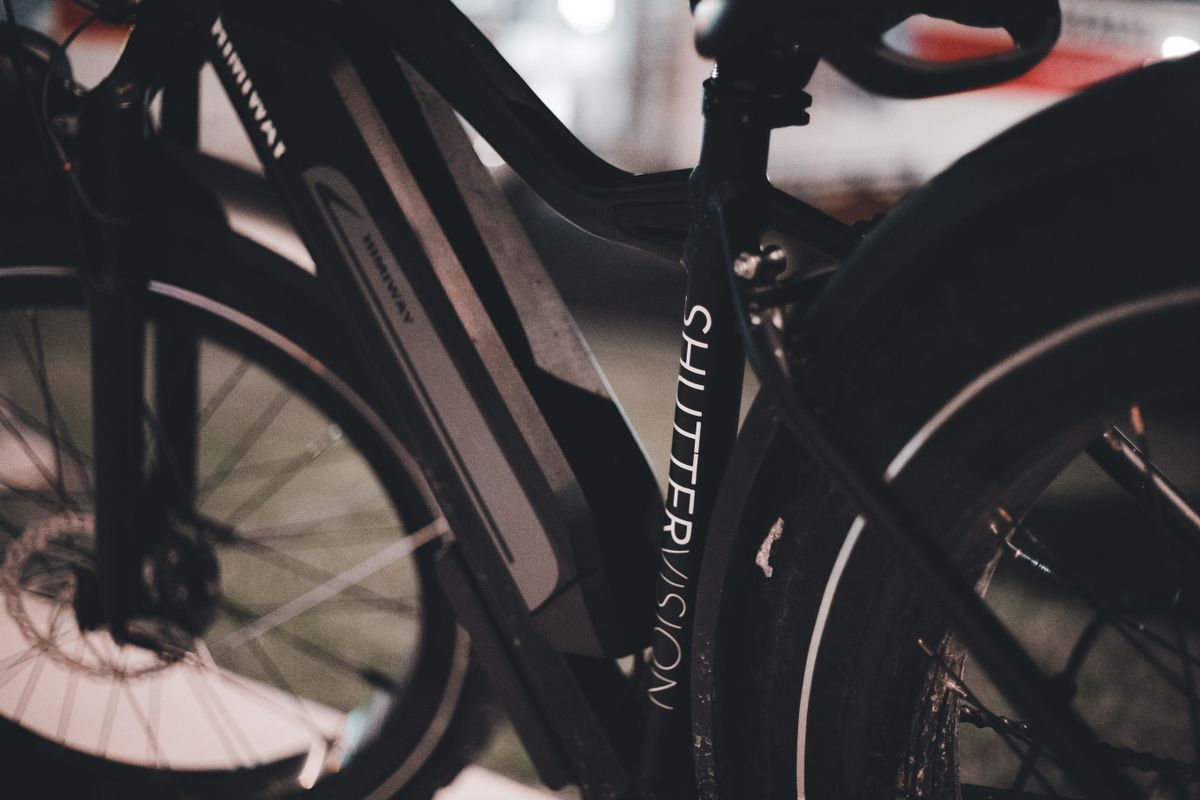
The Controller. Think of this as the brain — it manages the power flow from the battery to the motor, and it connects to your throttle or pedal-assist sensor. Most kits include this as part of a wiring harness that comes pre-installed.
The Throttle or Pedal-Assist Sensor (PAS). Some kits give you a thumb throttle that works like a motorcycle grip. Others use a pedal-assist system that detects when you’re pedaling and adds motor power proportionally. Most people, in my experience, end up wanting both — you don’t realize how useful a throttle is until you’re stopped at a red light and just want to take off without standing.
The Display. A small screen on your handlebars that shows your speed, battery level, and sometimes which assist mode you’re in. Most decent kits include this. The cheap ones often don’t, which is a red flag.
Hub Motors vs. Mid-Drive: The Fundamental Choice
This is the decision that drives everything else, and I see people get it wrong all the time. Let me break it down honestly.
Hub Motor Kits
A hub motor kit replaces one of your wheels — usually the rear — with a wheel that has the motor built into the hub. Installation is about as simple as changing a tire, minus the electrical connections. You can typically do a front hub conversion in under an hour if you’re reasonably handy.
The motor drives the wheel directly, which means it doesn’t interact with your bike’s gears. On flat terrain, this is perfectly fine. On hills, you start to feel the limitation — the motor is pushing a fixed gear ratio, and if you’re in a gear that’s too easy for the坡度, you’re just spinning the motor without much thrust. I hit this problem constantly on the hill leading up to my neighborhood. There’s only so much a 500W rear hub can do when you’re in a high-rear-gear situation and the坡度 kicks up to eight percent.
The other thing nobody tells you: a rear hub motor makes the wheel you’re pedaling on heavier and changes the bike’s balance. On a bike with already aggressive handling, this can feel weird. On a commuter bike or a cruiser, it’s mostly a non-issue.
Front hub motors are easier to install because you’re not dealing with the cassette and derailleur, but they can feel like they’re pushing the bike rather than pulling it. Some people notice this and don’t like it. I did, initially.
Mid-Drive Kits
A mid-drive motor sits at the bottom bracket where your pedals attach, and it drives the chain directly — using the bike’s existing gears. This is a fundamentally different experience.
Because the motor can leverage your bike’s gear ratios, you get dramatically better hill-climbing performance for a given motor power. A 750W mid-drive will climb a steep hill better than an 1,100W hub motor, full stop. The motor syncs with how you’d naturally ride, and it feels more intuitive once you’re used to it.
The installation is more involved. You’ll need to remove the bottom bracket and install the motor there, which means special tools — specifically a bottom bracket wrench and possibly a headset press. I’m not going to pretend this is a beginner job, but it’s also not mechanic-level complexity. A competent weekend hobbyist can do it. The YouTube tutorials for BBS02 and BBSHD installations are genuinely excellent.
The downside is drivetrain wear. Your chain and cassette will need replacing more often because the motor is putting more torque through the system. I went through my first chain at around eight hundred miles, which is faster than I’d have liked.
Which brings us to the real question: which is right for you? If you’re riding mostly flat roads and want the simplest possible install, a hub motor is plenty. If you’ve got real hills to contend with, or you’re converting a mountain bike for trail use, spend the extra money and the extra install time on a mid-drive. I made the mistake of starting with a hub motor on a hilly route, and within two weeks I was already eyeing mid-drive kits.
How to Choose the Right Kit for Your Bike
The number one mistake people make when buying a conversion kit is ordering based purely on price and motor power, without checking whether the kit will even fit their bike. I’ve done this. The kit showed up, I spent twenty minutes trying to figure out why it wouldn’t fit, and then I had to pay return shipping on a three-hundred-dollar motor. Not fun.
Here’s what you need to check before you buy anything.
Wheel size. Your bike almost certainly uses 26-inch wheels, 27.5-inch, 700c (which is roughly the same as 29er), or occasionally 24-inch on smaller frames or kids’ bikes. Every quality kit manufacturer offers multiple wheel sizes. Measure your rim — it’s written on the tire sidewall — and match it exactly.
Dropout width. Front hub motors typically work with 100mm wide forks. Rear hub motors need 135mm. These are standards, but some bikes — particularly older ones or certain non-standard frames — deviate. Check before you order.
Brake type. This one trips people up constantly. If your bike has disc brakes, your motor hub needs to be compatible with disc rotors. Most are. Some cheaper kits that come with pre-built wheels only offer rim brake compatible rims. If you’ve got disc brakes, confirm the kit supports them. It’s not always obvious from the product listing.
Bottom bracket width for mid-drive kits. Most modern bikes use a 68mm or 73mm threaded bottom bracket. Mid-drive kits are designed around these standards. If your bike is older or uses a press-fit bottom bracket, you may need adapters or a different kit entirely. BB86 press-fit frames, for instance, don’t work with most standard mid-drive setups without modification.
Battery mounting space. Where will you put the battery? Most kits use a bottle-cage style battery that mounts on the down tube. Some frames don’t have the tube space or the bosses for this. Others use rear rack batteries, which are a good alternative if your frame doesn’t accommodate a down-tube mount. Know your frame’s battery mounting options before you commit.
The Top Electric Bike Conversion Kits of 2026
I’m going to be straight with you: there is no single best kit. The right choice depends entirely on your terrain, your bike, your technical comfort level, and your budget. What I can do is tell you which kits are worth your attention in 2026, and for what circumstances.
Swytch Bike Air — Best Overall Hub Motor Kit
The Swytch Bike Air has been my daily driver for the past four months, and I keep coming back to it as the easiest recommendation for most people. The system uses a front hub motor, which means installation is genuinely straightforward — you replace your front wheel, connect the controller, strap the battery to your handlebars, and you’re riding. Total install time for me was about seventy minutes, including a false start because I initially connected the speed sensor backward.
The battery is compact and removable, which matters more than you’d think. I charge mine at my desk. The system puts out 250W of continuous power with peaks higher, which sounds modest on paper but the pedal assist is well-tuned and makes the system feel more powerful than the numbers suggest. Top speed on flat ground with minimal pedaling is around twenty miles per hour in the highest assist mode.
The honest limitation: twenty miles per hour is fine for commuting and casual riding, but if you’re looking for something that can keep up with faster traffic or want Class 3 performance, this isn’t the kit for you. Also, the front hub push can feel a bit odd at first if you’re used to rear-wheel-drive bikes.
Price-wise, the Swytch Air kit without battery starts around five hundred dollars, with a battery pack adding another three to five hundred depending on capacity. All-in, you’re probably looking at eight hundred to a thousand dollars. Still cheaper than a comparable purpose-built e-bike.
TongSheng TSDZ2 — Best Mid-Drive Kit for the Money
The TongSheng TSDZ2 is the mid-drive kit I’d recommend to most people who are serious about their riding. I’ve installed this on my mountain bike and the difference in hill-climbing ability compared to my previous hub motor setup was one of those “okay, I get it now” moments. The torque on tap when you need it, using your existing gears, changes the entire character of the bike.
The TSDZ2 uses an open-source controller, which means there are firmware upgrades available that unlock more power, different assist curves, and various refinements. If you’re the type who likes to tinker — and I am, for better or worse — this is a significant advantage over locked-down proprietary systems. You can tune the assist levels, adjust torque sensor sensitivity, and eke out performance improvements that other kits simply don’t allow.
Installation is more involved than a hub motor kit, as you’d expect. Removing the bottom bracket and fitting the motor takes a couple of hours, and you’ll need a bottom bracket wrench. The Chinese-manufactured motor itself is generally reliable, though quality control can be inconsistent. I’ve heard stories of units arriving with loose connectors, though my personal experience has been fine.
One thing I keep seeing people get wrong: they buy the motor without budgeting for a battery, and then end up with a cheap, under-specced battery that holds them back. Budget at least four hundred dollars for a quality 48V battery from a reputable seller. A TongSheng kit with a good battery is a genuinely excellent e-bike. The same kit with a cheap battery is frustrating.
Skarper DiscDrive — Best for Compatibility
The Skarper DiscDrive earns its spot here primarily on compatibility, which sounds boring until you try to convert a bike with non-standard dropout spacing or a frame that doesn’t have the usual mounting points. If you’ve got an unusual frame — certain full-suspension mountain bikes, some cargo bikes, bikes with thru-axles instead of quick releases — the Skarper is often the only viable conversion option.
It also looks cleaner than most conversion setups. The motor integrates more seamlessly, and the battery mounting is more refined than the bottle-cage style that’s become standard. For people who care about aesthetics, this matters.
The trade-off is price. The Skarper system costs significantly more than comparable kits from Swytch or TongSheng, and for most standard-frame bikes, the performance advantage doesn’t justify the premium. Buy this if you have a compatibility issue that rules out other options, or if the aesthetic integration really matters to you. Otherwise, save the money.
Voilamart 48V 1000W — Best Budget Option
I have to be careful how I frame this, because “best budget” is not the same as “good at any price.” The Voilamart 48V rear wheel kit is the kit I’d recommend if you have a tight budget and you’re comfortable with a more hands-on approach to assembly.
For around three hundred dollars, you get a 1000W rear hub motor, a controller, a throttle, a display, and all the wiring. That’s genuinely impressive value. The motor is powerful — it will take you to twenty-eight miles per hour or beyond on flat ground. And the community support is strong; if something breaks or needs troubleshooting, there are forums and YouTube videos covering just about every issue.
But here’s what I want you to understand: the Voilamart kit is not plug-and-play in the same way the Swytch is. The components feel cheaper. The instructions are not great. The battery is not included, and finding a quality battery that works well with this system requires some research. I’ve seen people buy this kit and spend as much on a battery as they did on the kit itself, negating the cost advantage.
If you’re technically inclined and patient, the Voilamart kit is a legitimate path to an affordable e-bike conversion. If you want something that works reliably out of the box without troubleshooting, look at the Swytch instead.
Understanding Battery Capacity and Range
Range anxiety is real, and I spent my first few weeks with my first conversion kit constantly watching the battery indicator like a hawk. Here’s what I’ve learned.
The range on any conversion kit depends almost entirely on the battery, not the motor. A 48V 14Ah battery will take you roughly thirty to forty miles in mixed terrain with light pedaling. Drop to a 36V 10Ah battery and you’re looking at twenty to twenty-five miles. Throttle-heavy riding at full power will cut those numbers significantly — I’ve seen my actual range drop to fifteen miles on hilly routes where I was using the throttle constantly.
The formula that actually helps: Watt-hours (Wh) equals Volts times Amp-hours. A 48V 14Ah battery is 672Wh. Divide that by your average energy consumption per mile — roughly twenty to twenty-five Wh per mile for an average rider on mixed terrain — and you’ll get a realistic range estimate. At 672Wh and 22Wh per mile, you’re looking at about thirty miles.
Lithium battery lifespan is measured in charge cycles. A quality lithium battery will deliver eight hundred to one thousand full charge cycles before you start noticing capacity degradation. If you charge daily, that’s roughly two to three years before the battery holds noticeably less charge. Most people upgrade or replace by then anyway.
Installation: What to Expect
I installed my first hub motor conversion with zero prior experience with e-bike systems, and it took about two hours including reading the instructions twice. Front wheel hub motor conversions are genuinely beginner-friendly. You need basic tools — hex keys, a spanner if your wheel uses nuts, and possibly a chain whip for rear wheel work — but nothing specialized.
Mid-drive installation requires more confidence in your mechanical skills. Removing the bottom bracket means dealing with the bike’s drivetrain in a way that hub motors don’t. The special tool requirement is real: you’ll need a bottom bracket wrench, which costs about fifteen dollars on Amazon. I’d also strongly recommend a torque wrench for the motor mounting bolts, because overtightening here can damage the motor housing.
Either way, budget two to four hours for a first installation if you’re being careful. I’ve gotten my hub motor installs down to forty-five minutes now that I’ve done a few, but don’t let that set your expectations for your first attempt.
One thing I always do after installation: take the bike for a five-minute test ride at low speed before loading it up. Check that the motor cuts out when you stop pedaling, that the throttle responds smoothly, and that the brakes — which you’ll rely on heavily with an extra twenty pounds of bike beneath you — engage firmly.

How Much Does It Actually Cost in 2026?
Let’s talk numbers honestly, because I see a lot of “convert your bike for under $200” articles that are doing you a disservice.
A quality hub motor conversion with battery, installed by yourself, will run between seven hundred and eleven hundred dollars in 2026. A quality mid-drive conversion with battery will run between nine hundred and sixteen hundred dollars. These are realistic figures for systems that will perform reliably and last more than a season.
Breaking it down:
- Hub motor kit only: $250 to $600
- Mid-drive kit only: $400 to $800
- Quality 48V 14Ah lithium battery: $350 to $600
- Tools and accessories (throttle, display, wiring): often included, $50-$100 if not
You’re also going to want to budget for a new chain and possibly a new cassette within the first thousand miles, especially on a mid-drive. That’s another fifty to one hundred dollars.
The comparison that matters: a purpose-built e-bike with comparable components will cost two to four thousand dollars. So even at eleven hundred dollars all-in, you’re still saving significant money versus buying new. And you get to keep riding the bike you already love.
Legal Considerations in the US and UK
This matters more than most conversion kit buyers realize, and I see people get it wrong constantly.
In the United States, e-bike regulations vary by state, but the federal framework classifies e-bikes into three classes. Class 1 provides pedal-assist only up to twenty miles per hour. Class 2 adds a throttle with the same twenty mph limit. Class 3 offers pedal assist up to twenty-eight mph but typically excludes throttles. Most conversion kits, as sold, fall into Class 1 or Class 2 depending on configuration.
The federal limit for a “low-speed e-bike” that doesn’t require licensing or registration is 750W and twenty mph on motor power alone. Kits that exceed this are technically not street-legal without additional licensing in most states, though enforcement is inconsistent. I’d suggest sticking with kits that are clearly labeled as compliant with federal standards unless you’re building an off-road-only machine and understand the implications.
In the UK, the rules are different. E-bikes must have a maximum continuous rated power of 250W and a top speed of 15.5 mph from motor power alone. The motor must only activate when the rider is pedaling. Most conversion kits can be configured to comply with these limits, but some kits sold with higher power settings are technically not legal for road use in the UK without modification.
Always check your local regulations before riding. This isn’t legal advice — I’m a cyclist, not a lawyer — but it’s also not something you want to discover after a police stop.
Frequently Asked Questions
How long does an e-bike battery last on a conversion kit?
A quality lithium battery typically delivers eight hundred to one thousand full charge cycles before significant capacity degradation. In practical terms, if you’re commuting fifteen miles per day and charging every two to three days, that’s roughly three to five years of reliable use. After that, you’ll notice the range dropping, and eventually you’ll need to replace the battery. Most batteries aren’t user-serviceable — when they fail, you replace the whole pack.
Can I convert any bike to an e-bike?
Almost any standard bicycle can be converted, with a few notable exceptions. Fixie bikes with no brake levers on the non-drive side need additional consideration. Bikes with carbon fiber frames or forks require careful weight and torque analysis before installing a motor, because the added stress can exceed what some carbon frames are rated for. And bikes with proprietary wheel standards — certain high-end road bikes, some cargo bikes, some full-suspension mountain bikes — may require specific kit configurations or may not be convertible at all without adapters.
Is it worth converting an old bike vs. buying a purpose-built e-bike?
This is the question I get most, and the honest answer is: it depends what you value. Converting an existing bike is significantly cheaper if you already own the bike. You also get to keep riding something you’re attached to, which matters more than I expected it to. The trade-off is that purpose-built e-bikes have cleaner integration, better weight distribution, and typically higher-quality components for a given price point. If your existing bike is worth converting — meaning it’s in good structural condition and fits you well — the conversion makes excellent sense. If your existing bike is low-quality or doesn’t fit you properly, buy a purpose-built e-bike instead.
Do conversion kits void the bike manufacturer’s warranty?
Generally, no warranty on your original bike covers wear and tear from a conversion, and any reputable bike manufacturer will tell you that modifications void their warranty on the modified components. In practice, if you convert a Trek FX and the frame breaks two years later, Trek isn’t going to cover it. That said, frame failures on bikes used for e-bike conversions are rare if you’re not exceeding the motor’s rated weight capacity and you’re not putting extreme stress on the frame. The conversion itself, done properly, doesn’t create unusual stress on a bike frame.
How fast can a converted e-bike go?
Most conversion kits sold in the US are limited to twenty mph on throttle-only power to comply with federal regulations. With vigorous pedaling in high assist modes on flat terrain, you can often reach twenty-five to thirty mph depending on the kit. Some kits can be configured for Class 3 twenty-eight mph operation. Beyond that, you’re getting into a grey area legally, and frankly, you’re also pushing beyond what most bicycle frames and components are really designed for at speed.
Final Thoughts
I’ve now converted three bikes over the past eighteen months, and I stand by every one of those decisions. The conversions cost less than half what comparable purpose-built e-bikes would have, and I’ve got exactly the bikes I wanted rather than the best available pre-built option in my price range.
The biggest lesson I learned: the battery is where you should invest the most, not the motor. A good battery with a mediocre motor will outperform a great motor with a cheap battery every single time. The cheap battery will die faster, lose charge faster, and ultimately frustrate you enough that you stop riding.
The second biggest lesson: measure your bike before you order anything. I know I already said this, but it bears repeating. Wheel size, dropout width, bottom bracket shell width — all of these need to match. The return shipping on a motor that doesn’t fit your frame is not a fun afternoon.
If you’ve got questions I haven’t answered here, the DIY e-bike conversion community is genuinely helpful and active. The electricbikereview.com forums and the Endless Sphere community are both excellent resources for troubleshooting, component selection, and honest real-world performance reports from people who’ve been running these systems for years.
Now get out there and start riding.



 English
  Spanish
  Portuguese
  Russian
  Arabic
  French
  Dutch
Dutch  German
  Danish
