

I’m Leo Liang. I sell bikes for ClipClop in Guangzhou. Not the fancy corner office type. I’m the guy who checks WhatsApp at midnight and yells at the warehouse when they forget to pack the chargers. That’s my job. That’s me.
And I need to tell you something about Brazil in 2026 that nobody else is saying: the e-bike boom there is messy. Like, really messy. I shipped 400 L1s to a distributor in São Paulo last quarter. A guy in Rio swore he only needed 50 units “to test the market.” Three weeks later he’s begging for 500 more. I’m not naming names. He knows who he is. But this is the energy right now. It’s chaotic. It’s real. And if you’re a Brazilian importer reading this, you need to hear the unpolished version, not the marketing fluff those Berlin agencies keep pumping out.
The Market Is Hot, But It’s Weird
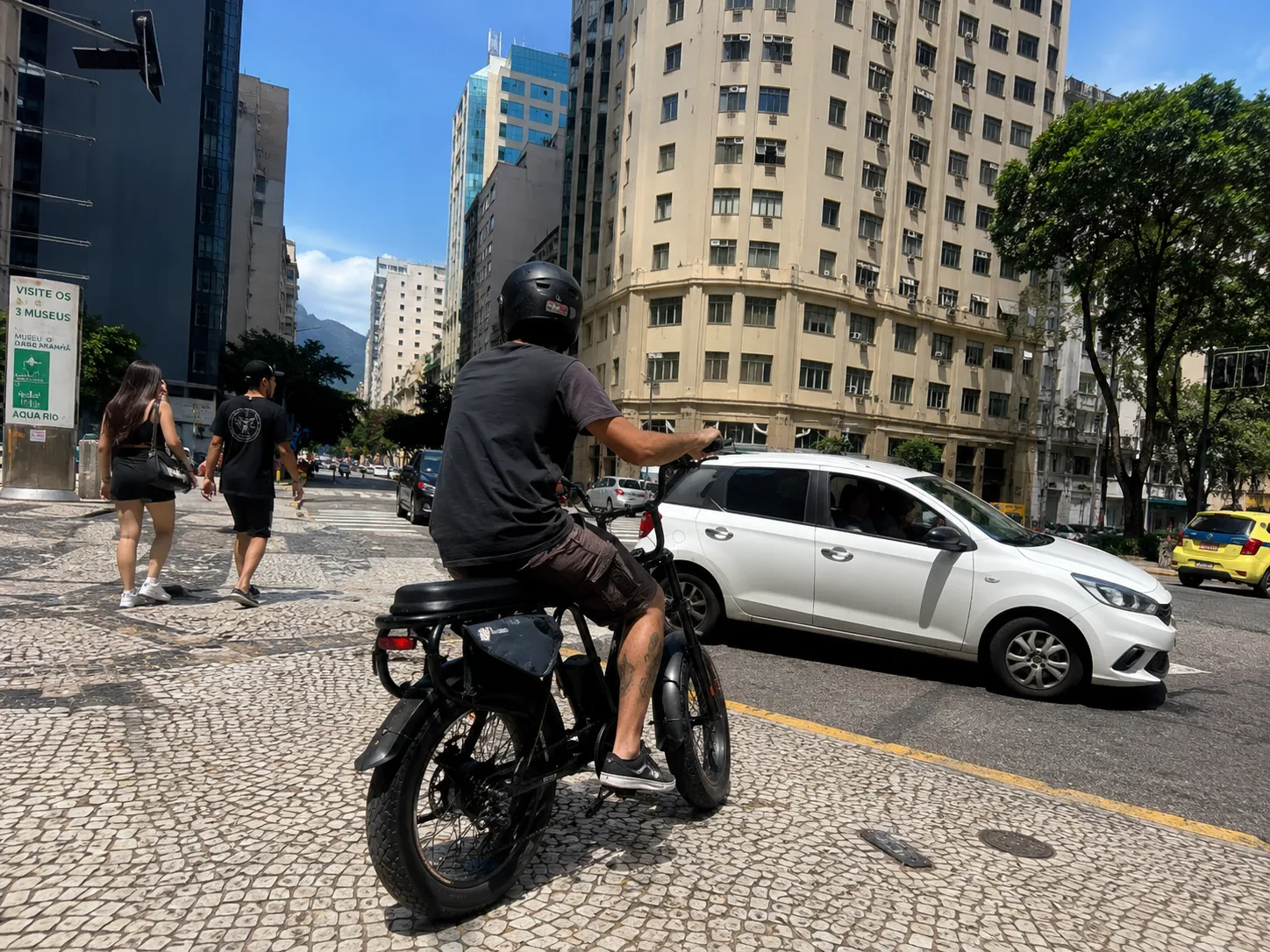
Look, Brazil is not Europe. I learned this the expensive way. My first client there — let’s call him Carlos, because that’s not his real name — ordered 30 of our sleek city commuters. Narrow tires, lightweight frame, very Amsterdam, very Instagram-friendly. He sold four. Four out of thirty. The rest gathered dust in his garage for six months until he finally called me, voice shaking with frustration, asking if I could swap them for fat-tire bikes.
“Leo,” he said, “my customers look at those skinny tires and they see death. They see potholes. They see broken concrete.”
He was right.
I’d never been to Brazil, but I’d seen enough photos and heard enough horror stories. Brazilian roads eat narrow tires for breakfast.
So we sent him the L1.
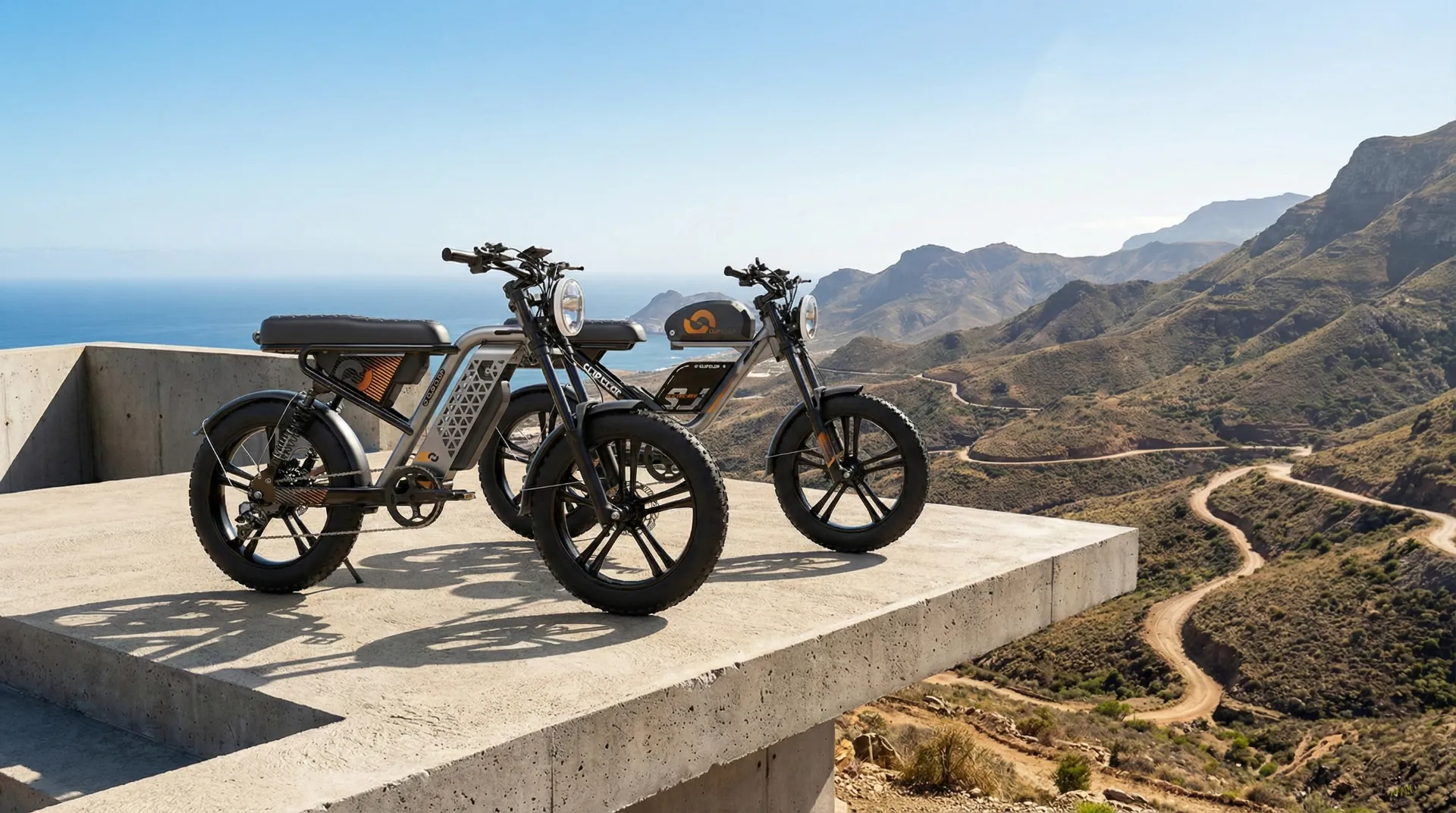
Twenty-inch by four-inch fat tires. 750W nominal motor that peaks at 1200W when you really need it. 48V 15Ah battery, about 720Wh, which in real Brazilian riding — hills, heat, heavy riders — gets you roughly 60 to 80 kilometers.
It’s not light. It’s 39 kilograms of aluminum and rubber.
It’s not elegant.
But Carlos sold through his first batch in two weeks.
Two weeks.
That’s when I knew: Brazil doesn’t want what Amsterdam wants. Brazil wants survival on two wheels.
What the L1 Actually Is (No Marketing Speak)
I hate reading product pages that sound like they were written by robots. So here’s the real deal on the L1, the bike that’s been moving fastest to Brazil lately.
The motor is a 48V 750W brushless hub motor. Peaks at 1200W. Top speed is 50 km/h, which is about 32 mph.
Honestly, most Brazilian riders I talk to cruise at 25–30 km/h.
The battery is 48V 15Ah lithium, 720Wh. Charging takes about five hours.
Range?
We say 50–60 miles on the website, but that’s optimistic. In Brazil, with hills and heat, figure 60–80 km. Maybe less if you’re heavy on the throttle.
I’m not going to lie to you about range. Too many factories do that.
It’s got a 7-speed Shimano drivetrain.
Yeah, I know, Shimano Tourney.
The hardcore cyclists roll their eyes.
But here’s the thing: your average Brazilian customer is not doing mountain trails. They’re commuting to work, running errands, riding to the beach on weekends.
They need gears that shift without drama and don’t cost a fortune to replace when they wear out.
The L1 delivers that.
It shifts.
It holds up.
That’s enough.
Brakes are hydraulic disc, 180mm rotors front and rear.
This is where I get opinionated.
I’ve seen the cheap junk flooding Mercado Livre. Mechanical disc brakes that fade after two weeks. Rim brakes on a 39kg e-bike.
That’s dangerous.
One Brazilian blogger — she runs a channel called E-Bike Realidade — tested a competitor bike and the brake pads were toast after fourteen days of São Paulo traffic.
Fourteen days.
Our L1 uses proper hydraulic brakes with metal-ceramic pads.
They cost us more to make.
I don’t care.
I sleep better knowing our bikes can actually stop.
The display is a color LCD.
Speed, battery level, odometer.
Four riding modes:
- Pure electric
- PAS
- Pedal-only
- Cruise control
That cruise control feature?
Weirdly popular with Brazilian delivery riders.
A guy in Recife told me he uses it on long straight stretches to rest his wrist.
I didn’t design it for that, but hey, it works.
Battery is IPX5 rated.
Rain is fine.
Tropical downpour?
Probably fine if you’re not submerging the thing.
The whole bike is IPX6.
I don’t recommend pressure-washing the electronics, but I know customers do it anyway.
What Bloggers and Buyers Are Actually Saying
I follow a few Brazilian e-bike content creators because my clients keep sending me their links.
One guy, Ricardo, runs a YouTube channel with maybe 80,000 subscribers.
He did a comparison video last year of three fat-tire e-bikes.
Ours wasn’t in it because, honestly, we didn’t send him a free sample.
He mostly reviews brands with local Brazilian distribution who can afford to ship him bikes.
Fair.
But in the comments, people kept asking about “those Chinese bikes on Mercado Livre.”
His answer was basically:
Some are good. Some are garbage. Check the battery cells and brake quality.
He specifically warned against no-name batteries and mechanical brakes.
I read that and wanted to DM him saying “thank you,” but that would be creepy.
Another blogger, writing for a site called Mobilidade Elétrica, posted in March 2026 that the Brazilian market is splitting hard.
On one side:
- Premium European brands with Bosch motors
- Selling for 8,000+ reais
On the other:
- Value Chinese imports
- Selling in the 3,000–5,000 reais range
She predicted the value camp wins on volume because Brazil’s middle class is massive and they want affordable mobility.
I agree with her.
But I think she’s too optimistic about quality.
For every decent Chinese e-bike coming in, there’s three that are pure trash.
If Brazilian buyers get burned too many times, the whole category suffers.
That’s why I’m picky about who we sell to.
I’d rather move fewer units to serious distributors than flood the market with junk that breaks in a month.
The Part Nobody Talks About: Logistics
Shipping to Brazil is a headache.
I’m just going to say it.
Import duties are brutal.
ICMS, IPI, PIS, COFINS — I don’t even fully understand the alphabet soup, and I’ve been doing this for years.
One of our containers sat in Santos port for three weeks because of a paperwork mismatch on the battery MSDS documents.
Three weeks of storage fees.
Another shipment got flagged because a customs agent decided our bikes were “electric motorcycles” instead of “pedal-assisted bicycles.”
That would have put them in a completely different tax bracket.
We had to send:
- Technical drawings
- Certifications
- Formal explanations
And a very polite letter explaining that yes, the pedals actually work as primary propulsion.
It was a nightmare.
My advice?
Find a good Brazilian customs broker before you even start talking to me.
Seriously.
The bike is the easy part.
Getting it through customs without losing your sanity is the real battle.
Warranty and Spare Parts
We offer:
- One-year motor warranty
- One-year battery warranty
Standard stuff.
But shipping replacement parts from Guangzhou to Brazil is slow and expensive.
So I started packing extra spare parts into every container:
- Brake pads
- Inner tubes
- Displays
- Common service items
Costs me almost nothing at factory level.
Saves clients weeks of downtime later.
One distributor in Minas Gerais told me this alone convinced him to place a second order.
“Leo, you actually think ahead.”
I don’t know if I think ahead.
I just got tired of paying $200 shipping for a $15 replacement part.
My Honest, Biased Opinion on the L1 for Brazil
Should you import the L1?
It depends.
And I’m not going to give you the safe corporate answer.
If you’re selling in São Paulo or Rio, where the roads are somewhat paved and traffic is insane, the L1 might be overkill.
It’s:
- Heavy
- Fat
- Space-consuming
A slimmer urban model may perform better.
But if you’re selling anywhere with:
- Rough roads
- Hills
- Rural regions
- Beach towns
- Tourist rental fleets
The L1 is money.
The fat tires eat potholes for lunch.
The 1200W peak motor climbs hills that would make a 250W European bike cry.
The range covers a full day of delivery work or recreational riding.
And the pricing still leaves distributors room to make a profit after taxes and margins.
I had a client in Florianópolis with a beach rental fleet.
He bought 60 L1s.
Three months later the bikes were still running.
One tourist apparently rode one straight into the ocean.
The bike survived.
I do not recommend saltwater testing.
But durability wasn’t the issue.
Another client, a delivery company in Brasília, purchased 80 units for couriers.
They average:
- 40–50 km per bike daily
- Overnight charging
- Six months of continuous use
Battery capacity is still holding up.
What I’d Tell My Brother If He Was Importing to Brazil
If you’re a Brazilian entrepreneur entering the e-bike business in 2026:
Start Small
Order:
- 10 units
- 20 units
Test them yourself.
Let your harshest critic ride one.
See what breaks first.
Brazilian humidity, dust, and road conditions reveal weaknesses fast.
Better to discover problems on 20 units than 200.
Don’t Trust Specs on Paper
I’ve seen:
- “1000W motors” that were really 350W motors
- “Samsung batteries” that were generic cells in fancy cases
Ask:
- Cell brand
- Motor manufacturer
- Certification details
If the supplier gets defensive, walk away.
Transparency costs nothing.
Think About Service Before Sales
E-bikes are not normal bicycles.
They have:
- Controllers
- Wiring
- Displays
- Batteries
Brakes wear faster because of weight.
Tires get flats.
Electronics occasionally fail.
If you import 100 bikes without a technician who understands electrical systems, you’re creating 100 future customer complaints.
Stock spare parts.
Build service capability.
Understand Regulations
Brazil has regulations regarding:
- Motor power
- Assisted speed
- Classification
My understanding from customers is that pedal-assisted bikes under 750W with assistance cut-off around 25 km/h are generally treated as bicycles.
But enforcement varies.
Regulations change.
I’m a sales guy in Guangzhou.
I’m not a Brazilian lawyer.
Talk to local professionals before importing.
The Bottom Line
Brazil in 2026 is an e-bike market that’s growing quickly, becoming crowded, and still figuring out what it wants.
There’s money to be made.
There’s also money to lose.
Import the wrong bike, partner with the wrong factory, ignore service support, and things get expensive fast.
I’m not going to tell you ClipClop is the best e-bike company on Earth.
We’re not.
We’re a mid-sized factory in Guangzhou with:
- Decent bikes
- Fair pricing
- Responsive support
The L1 is not perfect.
Its weaknesses:
- Heavy
- Not foldable
- Saddle could be better
But for Brazilian roads, Brazilian pricing expectations, and Brazilian riders who need dependable transportation, it hits a practical sweet spot.
If you want to talk, my email is on the website.
Or find me on WhatsApp.
I’m the guy answering messages at 2 AM because Brazil is 11 hours behind Guangzhou and apparently everyone loves sending voice notes while I’m trying to sleep.
I’ve learned to keep my phone on silent.
Mostly.
That’s all I’ve got.
No polish.
No corporate filter.
Just what I see from the factory floor.



 English
  Spanish
  Portuguese
  Russian
  Arabic
  French
  Dutch
Dutch  German
  Danish
