
E-Bike Battery Life: How to Maximize Your Range in 2026
I'll be completely honest — I spent way too many hours staring at my battery indicator, willing it to show one more kilometer. The panic when one bar becomes none halfway up a hill? Yeah, I know that
I'll be completely honest — I spent way too many hours staring at my battery indicator, willing it to show one more kilometer. The panic when one bar becomes none halfway up a hill? Yeah, I know that
I'll be completely honest — I spent way too many hours staring at my battery indicator, willing it to show one more kilometer. The panic when one bar becomes none halfway up a hill? Yeah, I know that feeling real well. That's exactly why I dug deep into e-bike battery life, and most of what I found contradicts the usual advice. Here's the guide I wish I'd had from the start.
We're covering: how batteries actually work, what kills range, how to charge properly, storage tips, and — because this is ClipClop's backyard — real specs from our own 48V 15AH lithium battery. If you're wondering whether your battery is dying, jump to the storage section. Otherwise, stay.
What "Battery Life" Actually Means — And Why Everyone Gets It Wrong
Most people use "battery life" to mean one thing. Actually, it refers to two completely different concepts:
Range — how far you go on one charge. Lifespan — how many charge cycles before capacity noticeably fades. These interact but aren't the same. A battery can have amazing range but degrade quickly, or modest range that holds up for five-plus years.
I got burned on this early. Bought a bike "with great battery life" — they meant range. I needed longevity. Yeah, I know. Lesson learned, and it shaped how I think about every battery we make at ClipClop now.
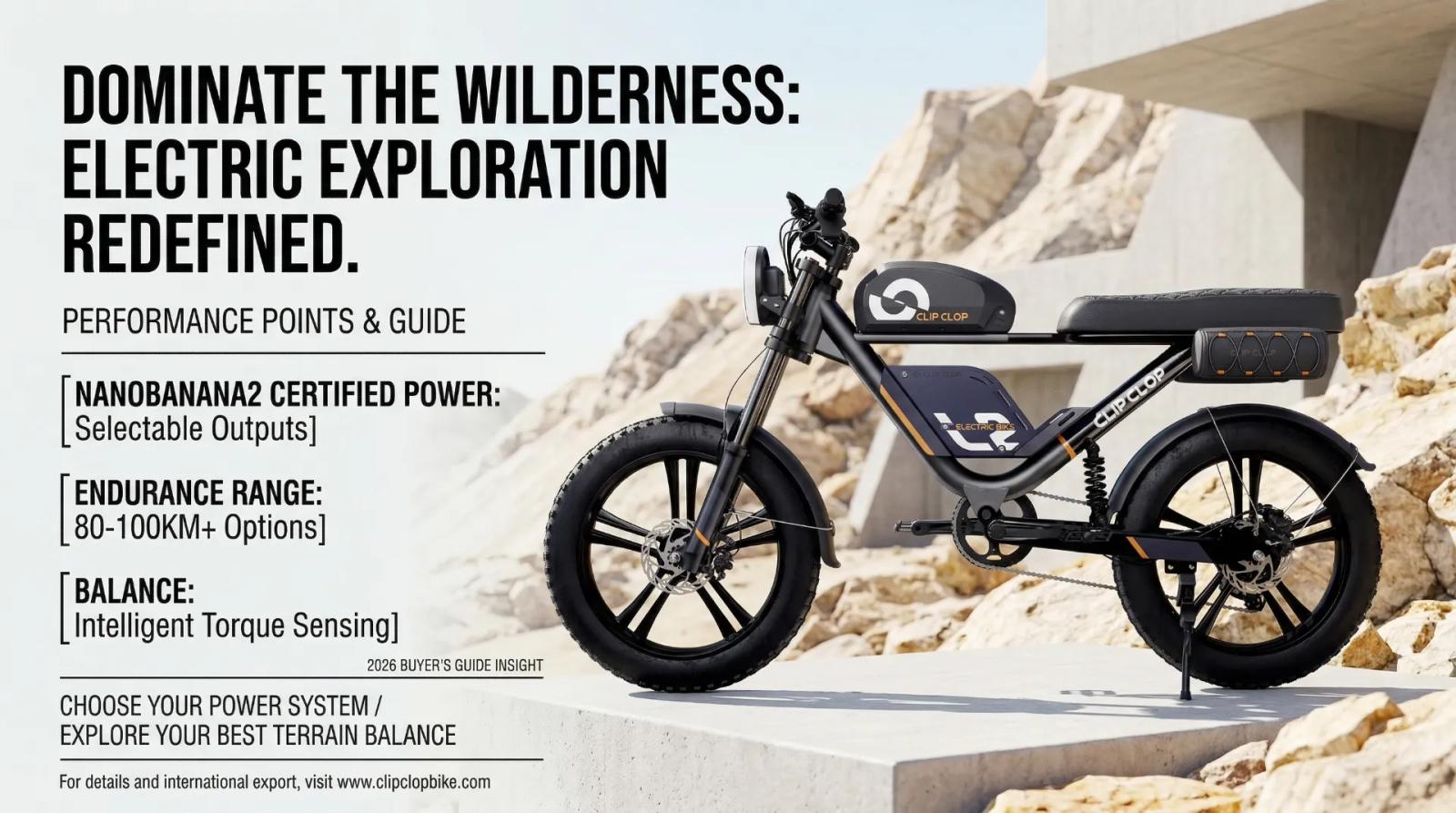
For our flagship ClipClop L1, the 48V 15AH lithium battery delivers 60–80KM per charge under typical conditions. The L2, with dual 48V 15AH batteries, reaches 80–100KM. Those numbers are projections under ideal conditions — real-world range varies significantly based on how, where, and where you ride.
The math behind it all is simple: 48V × 15AH = 720 watt-hours (Wh). L2 doubles to 1,440Wh. Higher Wh means more energy storage, full stop. But also more weight and more cost.
"When we spec a battery at ClipClop, we're making trade-offs between weight, cost, range, and longevity. Bigger isn't always better — sometimes it's just the wrong question to ask."
— ClipClop R&D team, Jiangmen facility
The 4 Factors That Determine Real-World Range
1. Assist Level and Motor Power
The L1 offers motor options ranging from 250W all the way to 1000W. More power equals more current draw from the battery. Using 1000W on flat city streets? You're wasting range for no reason. I use Level 1–2 for commuting and bump up only when genuinely needed. This habit alone probably adds 15–20% to my effective range compared to max-assist riding.
2. Terrain and Elevation
Every hill meter costs energy. Flat terrain at 25 km/h might use 8–10Wh per kilometer. Hilly routes can easily double that — sometimes more. The L1's 20×4.0 fat tires give great traction and comfort, but they create more rolling resistance on smooth asphalt than narrower tires would. I'm not saying fat tires are wrong — the grip is worth it — but it's a trade-off worth knowing.
3. Rider Weight and Cargo
Physics doesn't negotiate here. A 75kg rider versus a 100kg rider on identical settings will see meaningfully different range. If you're regularly hauling cargo — delivery riders, I'm especially looking at you — the L2's extended dual-battery setup might be worth the weight and cost premium. The alternative is mid-day charging anxiety, and honestly, that's no way to run a business.
4. Weather and Temperature
Below roughly 10°C, lithium batteries lose effective capacity. Not permanently in the short term, but your range drops 15–25% in cold weather. I've experienced this firsthand — January rides that should have been 65KM delivered 45KM instead. Heat is the longer-term threat: parking in direct summer sun accelerates the chemical aging process that reduces total lifespan over years. Shade, indoor storage, and room-temperature charging — these matter more than most guides admit.
The Charging Mistakes That Are Probably Killing Your Battery
Stop Draining to Zero
Old habit from NiMH batteries — fully discharge before charging. Lithium-ion? Completely wrong approach. Deep discharges actually accelerate capacity loss over time. The sweet spot is 20–30% remaining. I charge my L1 the way I charge my phone: top up before it hits 20%, unplug at around 90% unless I genuinely need the full 80KM for a longer ride. That last 10% of a charge cycle is the most chemically stressful part for the battery. Weird to say out loud, maybe, but the cycle data backs it up.
Use the Correct Charger
Third-party chargers are cheaper. They're also riskier. The BMS inside the battery works with the matched charger to prevent overcharging and overheating. A mismatched charger can bypass these protections. For the 48V 15AH battery, "compatible" isn't the same as correct. I've seen what cheap third-party chargers do to battery packs — the repair costs far exceed the savings.
Charge at Room Temperature
Charge your battery indoors, at room temperature, on a non-flammable surface. Very cold = inefficient chemistry and potential permanent capacity loss. Very hot = genuine thermal runaway risk. I charge mine in the hallway on a shelf. Looks boring. Completely safe and in the right temperature range. That's really all there is to it.
Storage: How to Keep Your Battery Healthy Over Winter
Stored a battery at full charge in a cold garage for six months and lost 30% of its range? I've heard this story more times than I can count. Lithium-ion batteries need active care even when the bike isn't being ridden. This isn't optional if you want the battery to last.
Store at 50–70% charge. Neither full nor empty — that range minimizes chemical stress during idle periods. Check the battery every 4–6 weeks if stored long-term; if it's dropped below 40%, top up to around 60%. Keep it cool and dry — 10–25°C is the target range. After any extended storage, charge to 80%, let it rest for an hour to normalize, then ride gently on low assist before any hard use. The chemistry needs time to wake up properly.
When Is It Time to Replace the Battery?
Quality lithium-ion batteries — like the cells in ClipClop's 48V 15AH pack — typically deliver roughly 500–1,000 full charge cycles. By cycle 800, you're usually sitting at 70–80% of original capacity. That means your 70KM range might now be 55KM. Still works, just differently.
Physical warning signs matter most: Any swelling, warping, or cracking of the battery casing. Swelling can lead to thermal runaway — don't ride the bike if you see deformation. Leaks, chemical smells, or unusual heat during charging are all immediate stop-use signals. The L1 and L2 batteries are serviceable through ClipClop's dealer network — explore repair before buying new.
ClipClop L1 vs L2: Which Battery Setup Do You Actually Need?
The L1's single 48V 15AH battery — 60–80KM range — is sufficient for maybe 70% of riders out there. Less weight, simpler management, lower price point. The L2's dual-battery setup — 80–100KM — adds weight and cost. Honestly, if your daily commute is under 30KM round trip, you're probably paying for range you'll never actually use.
The L2 makes sense for long-distance commuters, rural riders with fewer charging opportunities, commercial users who can't afford mid-day downtime, and riders in consistently hilly terrain. For everyone else? The L1 has more than enough headroom for typical urban use.
ClipClop Battery Specs at a Glance
Frequently Asked Questions About E-Bike Battery Life
How many years does an e-bike battery actually last?
Quality lithium-ion — like the cells in ClipClop's 48V 15AH — typically gives you 3–5 years of regular use, or about 500–1,000 charge cycles. By cycle 800, expect roughly 70–80% of original capacity remaining. Charge habits, storage temperature, and avoiding deep discharges can mean the difference between a 3-year battery and a 6-year one. I'm being honest: consistent good habits are worth two extra years of service life, easy.
Is it okay to charge my e-bike battery every day?
Yes — and better than deep cycling in most cases. Partial charges don't cause "memory effect" in lithium-ion batteries the way they did with older NiMH tech. Charge at room temperature, use the correct charger, and avoid leaving it at 100% for days on end. If you're commuting daily, charge to 80–90% after each ride. Topping up is genuinely better than waiting for a full drain.
Does regenerative braking meaningfully extend e-bike range?
It's real but modest — maybe 5–10% recovery in stop-and-go city riding. It won't transform a 60KM bike into 80KM. Managing your assist level will have more impact.
48V vs 36V — which is right for me?
The 48V platform delivers more peak power — better for hills and heavier loads. The 36V systems are lighter and more efficient for lighter riders on flat terrain. If you want headroom for hills or cargo, go 48V. Otherwise, 36V handles urban routes well.
Bottom line: The best battery is the one you maintain consistently. Partial charges, correct charger, proper storage temperature, and regular tire pressure checks — none of this is exciting. All of it works. The ClipClop L1 with its 48V 15AH battery is genuinely capable. What you get out of it depends on what you put in.
Read your owner's manual. The engineers who designed your bike put real thought into those charging and storage recommendations. They're not hiding anything.
More OEM field notes.
E-Bike Frame Materials in Brazil: Why the ClipClop L1 Uses 6061 Aluminum Instead of Carbon Fiber or Steel
Best E-Bike Brakes for Colombia in 2026

Stop Sending Skinny Bikes to Brazil: What I Learned the Hard Way at ClipClop

Best E-Bike Types for New York City in 2026
NYC E-Bike Laws 2026: What Importers Must Know
Send your brief. We will field-note back.
Reply includes the feasibility view, sample cost, MOQ, and the next step for your project. We aim to respond within 48 hours.