
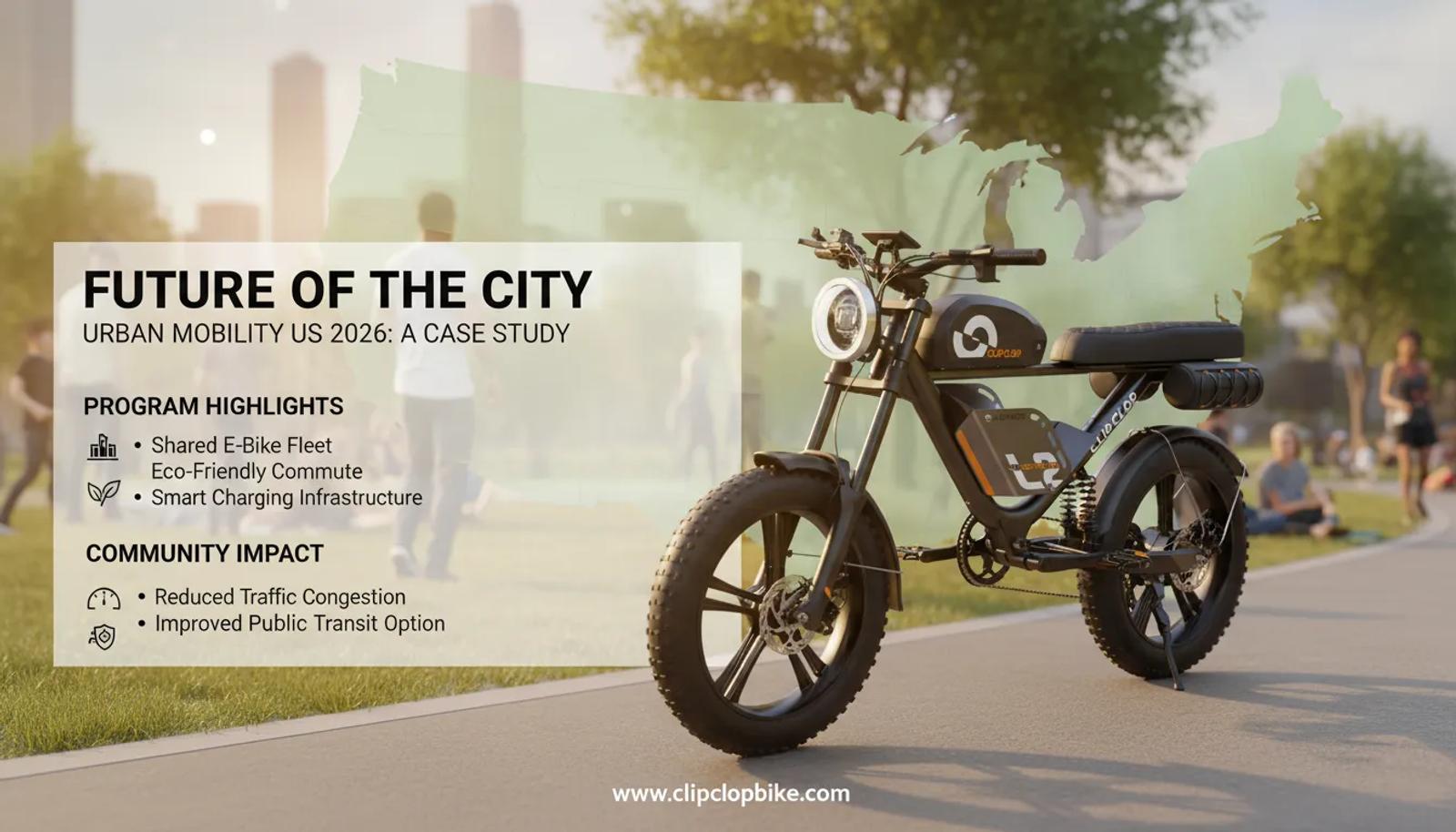
Wholesale City Commuter E-Bikes: European EN 15194 Fleet & Dealer Sourcing (2026)
Hey folks, Leo Liang here from ClipClop e-bike. I’m genuinely happy you’re reading our blog. My ride in the e-bike world—especially building stuff with the team in Guangzhou—has been kinda wild in a
Hey folks, Leo Liang here from ClipClop e-bike. I’m genuinely happy you’re reading our blog. My ride in the e-bike world—especially building stuff with the team in Guangzhou—has been kinda wild in a
For commercial electric bicycle distributors, fleet managers, and private-label brands, wholesale city commuter e-bikes: european en 15194 fleet & dealer sourcing represents a critical engineering and operational decision. This comprehensive B2B technical guide analyzes the performance parameters, regulatory compliance frameworks, and factory-direct sourcing strategies required to maximize fleet uptime and commercial margins.
Commercial partners can inspect our manufacturing infrastructure on our OEM/ODM E-Bike Manufacturing Facility page, review standard configurations on our Model C3 Urban Commuter & Electric Bike G2 Step-Through Platforms, or directly request volume FOB terms via our Commercial Quote Request Portal (MOQ 20).
Working hands-on like this gives me a pretty direct view of what matters in an urban mobility program. It’s not only about the bike specs (though yeah, those matter). It’s the whole setup: riders need confidence, operators need control, and the city needs fewer headaches. I’ve watched the right B2B city e-bike program change how a place moves, and I want to share what I’ve learned—even the messy parts.
Today I’m walking you through a case-study-style breakdown based on successful urban mobility programs across the U.S., then I’ll project what an “ideal” framework could look like by 2026. I’m going to cover the unglamorous stuff too: vehicle choice, infrastructure, policy, and what partners struggle with in real life. This isn’t theory—I’m pulling from data we’ve seen and what ClipClop partners keep asking for.
Why Are Cities and Corporations Turning to E-bike Fleets?
Urban mobility in the U.S. is shifting fast. Cities are seeing micromobility ridership spike, and shared e-bike/scooter trips are stacking up into the millions each year. It’s not random. Congestion is brutal, air quality isn’t improving fast enough, and climate targets keep getting tighter. City teams and corporate leaders are basically forced to look for alternatives that people will actually use.
Here’s the value prop in plain terms: parking is expensive, driving-only commuting is expensive, and losing talent because commuting sucks is also expensive. A commuter e-bike program tackles those pain points more directly than people expect. You get fewer single-occupancy car trips, lower Scope 3 emissions, and a commute option that feels more like freedom than punishment. Bloggers in this space always say: name the pain, then offer the simple swap.
At ClipClop, I’ve had a lot of “okay but what about…” conversations with partners. They don’t just need bikes—they need low-maintenance, predictable, safe commuter machines, plus a way to manage everything without chaos. Liability worries are real, rider safety is real, fleet logistics are real. My bet for 2026: integrated e-bike programs become a standard line item in corporate benefits and city transit strategies, because the ROI story gets easier to prove.
Download the 2026 ClipClop Factory Catalog (PDF)
Full e-bike specs, motor & battery options, MOQ, and container loading details.
What Defines the Ideal Commuter E-bike for a B2B Program?
Fleet selection is not like buying a personal bike. In B2B, nobody cares about “my favorite colorway” if the frame cracks or maintenance eats the budget. The focus is durability, safety, and total cost of ownership. A city fleet bike is basically a workhorse: lots of riders, lots of stops, weird weather, potholes, and constant handling. That’s exactly why we obsess over boring-but-critical build choices.
Frame-wise, we use a 6061 aluminum alloy frame because it balances strength, weight, and corrosion resistance pretty well. I’ve seen fleets lose money just because bikes rust out early or get fatigued from constant use. You want a frame that handles rough streets and doesn’t slowly fall apart under daily abuse. It’s not sexy marketing, but it’s the difference between a program that scales and one that quietly dies.
The powertrain is where adoption can win or fail. If the bike feels weak on hills or sluggish at lights, people stop using it—simple as that. Our L2 runs a 48V 750W brushless motor with 70Nm torque, which helps with quick starts and climbs that would scare off new riders. With a 48V 18.2Ah battery, you’re looking at about 30–60km per charge, which cuts “range anxiety” and reduces charging drama.
Safety and comfort aren’t optional in cities—urban riding can be chaotic. Hydraulic disc brakes matter because stopping power and control stay more consistent, especially in wet conditions. Comfort helps adoption too: the 20"×4.0 fat tires smooth out rough pavement and add stability, which makes first-timers less nervous. Put it together and you get the kind of fleet bike that’s reliable, approachable, and honestly more fun than people expect.
How Does a Bike-to-Work Scheme Drive Measurable CO2 Reduction?
The strongest argument for bike-to-work is measurable environmental impact, not vibes. Companies and cities are being pushed harder to report carbon footprints and show real reductions. E-bikes help because they trigger a modal shift—people swap some car trips for e-bike trips. Every time that happens, emissions drop for that journey. Multiply it across hundreds or thousands of commutes and the results stop being “small.”
One common benchmark people cite: a typical passenger vehicle emits around 4.6 metric tons of CO2 per year. Commutes vary, sure, but replacing car miles with e-bike miles is basically cutting direct tailpipe emissions for those trips to zero. Bike-to-work programs in multiple countries have shown big annual CO2 savings at scale. The key is participation—so the program design has to make riding feel easy, safe, and worth it.
At ClipClop, I push partners to track impact like grown-ups, not guess. Bloggers constantly advise: measure what you want to brag about—so we help teams set up simple tracking via telematics, check-ins, or structured surveys. Track trips, distance, frequency, and compare against equivalent car journeys. Then you can show real CO2 offset numbers, not fuzzy estimates. In 2026, success won’t just be ridership—it’ll be evidence.
What Are the Key Challenges in Commuter E-bike Adoption?
Even with clear benefits, adoption isn’t automatic. The biggest fear I hear: “Fleet operations will become a mess.” Charging schedules, maintenance cycles, safety checks, repairs—people worry they’ll need a mini engineering department. That fear is valid. It’s why partner support matters so much. We don’t just ship bikes; we provide maintenance training, spare parts planning, and workflows that reduce downtime.
The second hurdle is upfront cost. Buying a high-quality fleet isn’t cheap, and decision-makers want a clear return path. That’s where total cost of ownership thinking helps. Compare against parking expansion costs, transport allowances, potential incentives, and the ongoing cost of car-heavy commuting habits. Durability matters here: a longer-lasting bike with fewer failures makes the math look a lot better over time.
Then there’s the human side: confidence and culture. Some employees think cycling is unsafe, inconvenient, or “not for people like me.” You have to lower the psychological barrier. Offer safety training, create incentives, gamify participation, and get leadership to actually use the program instead of only announcing it. Also, pick bikes that feel friendly—step-through options, strong assist, stable tires—so riding feels like an upgrade, not a test.
How Does Infrastructure Impact the Success of a City Micromobility Program?
Micromobility can’t succeed in a vacuum. If riders feel unsafe, they just won’t ride—doesn’t matter how good the bikes are. For B2B partners, aligning with infrastructure improvements is one of the smartest moves. Protected bike lanes are the biggest deal because physical separation from cars changes perceived and real safety. When lanes are protected, injury risk tends to drop and ridership tends to rise.
Connectivity is the next pain point. A lane that ends randomly or dumps riders into a scary intersection kills confidence fast. Cities that invest in continuous routes—linking residential areas to business districts and transit hubs—tend to get better usage. Intersections need special attention too: bike signals, refuge islands, high-visibility crossings. And because e-bikes can move faster than regular bikes, the design details matter even more.
Support infrastructure is the quiet hero. Secure parking is non-negotiable—people won’t use a commuter e-bike if they expect theft or damage. For corporate campuses, that means covered, secure parking, and ideally charging points. Looking toward 2026, charging integration in both public and private spaces will feel more normal. I like telling partners: don’t buy bikes without buying “home” for the bikes.
What Role Does Policy and Regulation Play in E-bike Adoption?
Policy can speed up adoption or slow it down hard. In the U.S., rules vary across federal, state, and city levels, so fleet operators deal with a patchwork. Compliance is a big anxiety point: partners want to know the bikes are legally usable where they’re deployed. That includes motor power limits, speed caps, equipment requirements, and local restrictions on where different e-bike classes can ride.
At the federal level, people often reference the low-speed e-bike definition around 750W and 20 mph assisted speed, but states commonly layer in a class system (Class 1/2/3) that affects access to paths and lanes. For B2B fleets, the risk isn’t theoretical—non-compliance can mean fines, bad PR, or program shutdowns. We design configurations so models like the L2 can match regional rules more cleanly.
Supportive policy also changes the economics. Rebates, tax incentives, bike parking requirements in zoning rules, and employer subsidies can shift adoption from “maybe” to “let’s go.” My personal view: by 2026 we’ll see more standardization and stronger pro-micromobility policies, because cities are realizing e-bikes can plug into public transit as first/last-mile transport, not just as a lifestyle accessory.
How Can a Partnership with ClipClop Maximize Program ROI?
Launching an e-bike program is a strategic move, not a casual purchase. ROI depends on execution: fleet uptime, safety outcomes, adoption, and ongoing operations. The biggest fear partners tell me—pretty bluntly—is “we don’t want surprises.” They worry about breakdowns, rider incidents, parts delays, and staff not knowing what to do. That’s why a real partnership beats a simple supplier relationship.
We start by matching the build to the environment and use-case. A hilly campus isn’t the same as a flat urban grid, and a rental fleet isn’t the same as employee commuting. The L2 platform—48V 750W motor, 6061 alloy frame—covers a lot, but configuration matters. Then we add practical training: routine maintenance, troubleshooting, parts planning. The goal is to handle small issues in-house and keep bikes rolling.
ROI isn’t only “hard savings,” even though reduced parking pressure and operational efficiencies can be huge. There’s also brand image, employee wellness, and recruiting benefits—stuff that’s harder to put in a spreadsheet but still very real. I’ve learned to follow a blogger’s advice here: tell both stories—numbers plus human impact. When partners work with us, we share best practices, engagement tips, and provide fleet-ready bikes that support long-term wins.
What Is the Future Outlook for Urban Commuter Solutions?
Looking toward 2026 and beyond, micromobility feels like it’s moving from “pilot projects” into the default toolbox. Battery tech keeps improving, sustainability pressure keeps rising, and smart-city planning keeps leaning on data. I expect e-bikes to become a normal part of integrated networks—especially as first/last-mile connectors to buses and trains. The winners will be programs that feel seamless, not scattered.
For B2B players, the opportunity gets bigger—but also more technical. We’ll see more data-driven fleet management: IoT for real-time status, AI to predict maintenance, smarter rebalancing so bikes are where riders actually need them. Business models will diversify too: subscriptions, fleet-as-a-service, and other setups that lower barriers for smaller organizations. On the product side, we’re pushing lighter materials, better diagnostics, and more built-in safety features.
The future “best” program won’t just have good bikes. It’ll connect hardware, software, policy, and infrastructure into one user experience. Private providers and public agencies will need to collaborate more—on lanes, charging, parking, and consistent regulations. I’m not pretending it’s easy, but the direction is clear. ClipClop wants to stay in the messy middle of building that future with partners, not just talking about it.
Call to Action
If you’re thinking about changing how your organization handles commuting, I’d love to talk. Whether you’re choosing a fleet e-bike model, planning a city program, or figuring out a custom rollout, we can help you avoid common mistakes. We support distributors, wholesalers, rental operators, and brand partners with end-to-end services—product configuration, technical support, and complete vehicle solutions. Reach out to the ClipClop team and let’s build a better commute.
Frequently Asked Questions (FAQ)
Q1: What is the typical lifespan of a B2B city e-bike used in a commercial fleet?
A: The lifespan of a commercial e-bike depends heavily on usage intensity, maintenance schedules, and the quality of its components. A well-maintained e-bike built with high-quality parts, such as a 6061 Aluminum Alloy Frame and a reputable motor and battery system, can be expected to last for many years and tens of thousands of kilometers. At ClipClop, we focus on durability, ensuring our bikes are engineered to withstand the high-utilization demands of a B2B environment, maximizing your investment.
Q2: How does the 750W motor perform in cities with steep hills?
A: A 48V 750W brushless motor, especially one with high torque like the 70Nm in our L2 model, is exceptionally well-suited for hilly urban environments. This power level provides the necessary assistance to help riders climb steep inclines without excessive physical strain, which is a key factor for encouraging commuter e-bike adoption among a diverse range of employees. It ensures a consistent and comfortable riding experience, regardless of the city's topography.
Q3: What are the main differences between hydraulic and mechanical disc brakes for a fleet?
A: The primary difference lies in performance and maintenance. Hydraulic disc brakes, which we use on our L2 model, use fluid to actuate the braking mechanism. This results in superior stopping power, better modulation (finer control), and more consistent performance, especially in wet weather. Mechanical disc brakes use a steel cable and are generally less expensive and simpler to maintain with basic tools. For a B2B fleet where rider safety and reliability are paramount, we strongly recommend hydraulic brakes due to their significantly higher and more reliable performance.
Q4: Can your e-bikes be integrated with third-party fleet management software?
A: Yes. We understand that data is crucial for managing a modern city micromobility program. Our e-bikes can be equipped with telematics devices (IoT) that are compatible with various third-party fleet management platforms. This allows you to track vehicle location, monitor battery status, analyze usage patterns, and manage maintenance alerts, providing you with the data you need to optimize your operations and maximize ROI.
Q5: What kind of support do you offer to a new ClipClop partner?
A: Becoming a ClipClop partner means gaining a dedicated support system. We provide comprehensive onboarding, including technical training for your maintenance staff. You will have access to our expert technical support team for troubleshooting and a streamlined process for ordering spare parts to minimize fleet downtime. We also share best practices on program implementation, from promoting rider safety to strategies for increasing user engagement, ensuring you have the knowledge and tools for a successful launch and long-term operation.
References:
ClipClop Manufacturing Standards & Build Quality
Looking for verified B2B e-bike manufacturing? Check out our ClipClop L1 Pro Dual-Battery System (1,440Wh) and our ClipClop L1 All-Terrain Fat Bike, backed by factory-direct warranties and flexible 10-unit MOQ.
Commercial Procurement & Fleet Sourcing with ClipClop
Deploying electric bicycle fleets or distributing private-label e-bikes requires a trusted manufacturing partner capable of consistent container-level production, robot-welded frame alignment, and rigorous batch QC. From our 25,000 m² factory in Qingyuan, Guangdong, ClipClop provides end-to-end OEM/ODM electric bike manufacturing services with an accessible MOQ of just 20 units per SKU. Every container order includes dedicated spare parts allocation (2% free warranty backup components), full international compliance documentation (EN 15194, UL 2849, UN38.3), and 15-day sample dispatch.
Ready to evaluate engineering samples for the Model C3 Urban Commuter & Electric Bike G2 Step-Through Platforms or review container FOB volume pricing? Visit our Commercial RFQ Portal to submit your technical specifications, or speak directly with our engineering sales team via our B2B contact desk.
Download the 2026 ClipClop Factory Catalog (PDF)
Full e-bike specs, motor & battery options, MOQ, and container loading details.
More OEM field notes.
Brazil Last-Mile Delivery E-Bike Fleet Case Study: 65% Operating Cost Reduction (2026)
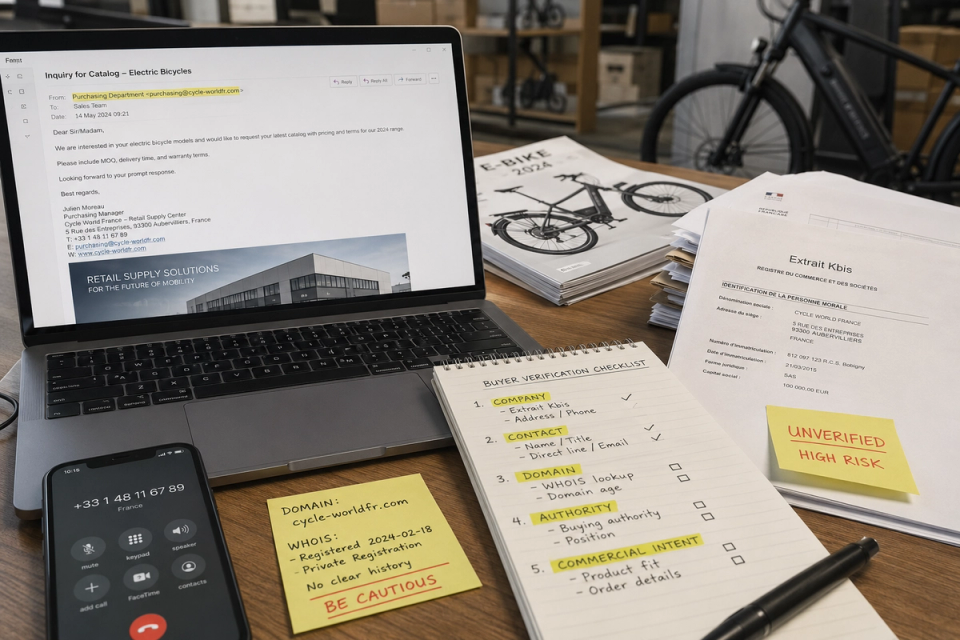
How We Verify B2B Buyers: A Case Study in Preventing Procurement Fraud & Impersonation

Commercial E-Bike Rental & Tour Fleet Case Study: ROI & Maintenance in South Africa
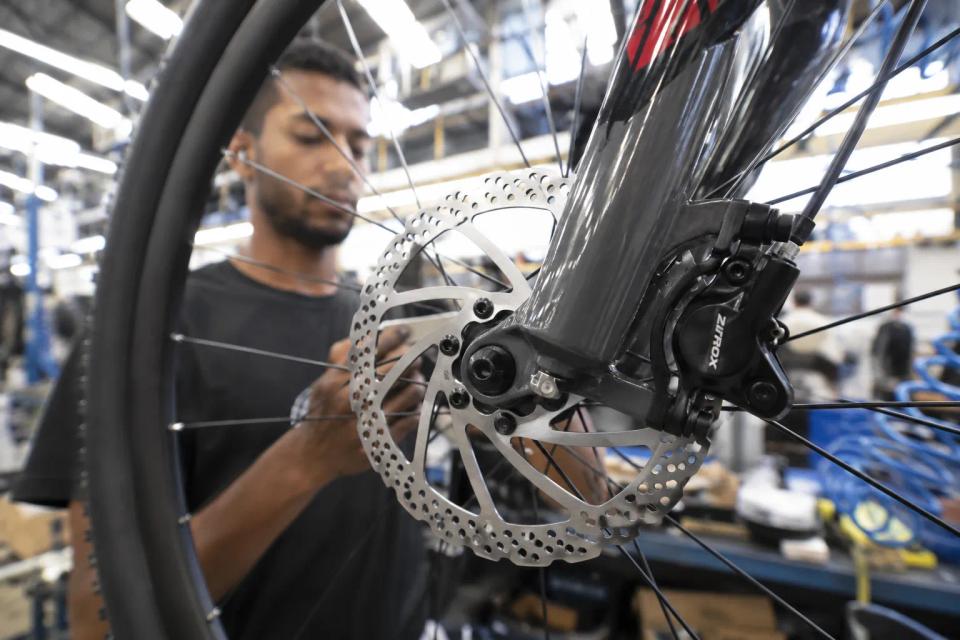
E-Bike Frame Sourcing for Brazil: Corrosion-Resistant 6061-T6 Aluminum for Tropical Fleets
Send your brief. We will field-note back.
Reply includes the feasibility view, sample cost, MOQ, and the next step for your project. We aim to respond within 48 hours.