


Hallo zusammen, hier ist Leo Liang von ClipClop E-Bike. Ich freue mich wirklich, dass Sie unseren Blog lesen. Meine Reise in die Welt der E-Bikes – insbesondere die Produktentwicklung mit dem Team in Guangzhou – war auf positive Art und Weise ziemlich aufregend. An den meisten Tagen spreche ich mit Distributoren, Flottenbetreibern im Verleih und Mobilitätsteams von Unternehmen, und wir alle versuchen, dasselbe Problem zu lösen: täglicher Transport, der wirklich funktioniert.
Diese praktische Arbeit gibt mir einen sehr direkten Einblick, was in einem städtischen Mobilitätsprogramm wirklich zählt. Es geht nicht nur um die technischen Spezifikationen der Bikes (obwohl die natürlich wichtig sind). Es ist das gesamte Setup: Die Fahrer brauchen Vertrauen, die Betreiber brauchen Kontrolle, und die Stadt braucht weniger Kopfschmerzen. Ich habe erlebt, wie das richtige B2B-Stadt-E-Bike-Programm die Mobilität eines Ortes verändert, und ich möchte teilen, was ich gelernt habe – auch die unordentlichen Teile.
Heute führe ich Sie durch eine fallstudienartige Analyse basierend auf erfolgreichen städtischen Mobilitätsprogrammen in den USA und werde dann projizieren, wie ein “ideales” Framework bis 2026 aussehen könnte. Ich werde auch über die weniger glamourösen Themen sprechen: Fahrzeugauswahl, Infrastruktur, Richtlinien und mit welchen Herausforderungen Partner im echten Leben zu kämpfen haben. Das ist keine Theorie – ich beziehe mich auf Daten, die wir gesehen haben, und auf das, was ClipClop-Partner immer wieder anfragen.
Warum wenden sich Städte und Unternehmen E-Bike-Flotten zu?
Die städtische Mobilität in den USA verändert sich schnell. Städte verzeichnen einen sprunghaften Anstieg der Mikromobilitätsnutzung, und geteilte E-Bike-/Scooter-Fahrten summieren sich auf Millionen pro Jahr. Das ist kein Zufall. Staus sind brutal, die Luftqualität verbessert sich nicht schnell genug, und die Klimaziele werden immer strenger. Stadtverwaltungen und Unternehmenslenker sind praktisch gezwungen, nach Alternativen zu suchen, die die Menschen auch wirklich nutzen werden.
Hier ist der Wertvorschlag in einfachen Worten: Parkplätze sind teuer, reines Autopendeln ist teuer, und der Verlust von Talenten, weil das Pendeln schlecht ist, ist ebenfalls teuer. Ein Pendler-E-Bike-Programm bekämpft diese Schmerzpunkte direkter, als die Menschen erwarten. Man erhält weniger Fahrten mit Einzelpersonen im Auto, niedrigere Scope-3-Emissionen und eine Pendeloption, die sich eher nach Freiheit als nach Strafe anfühlt. Blogger in diesem Bereich sagen immer: Benenne den Schmerz, biete dann den einfachen Tausch an..
Bei ClipClop hatte ich viele “Okay, aber was ist mit...”-Gespräche mit Partnern. Sie brauchen nicht nur Bikes – sie brauchen wartungsarme, vorhersehbare, sichere Pendlerfahrzeuge und eine Möglichkeit, alles ohne Chaos zu verwalten. Haftungsbedenken sind real, die Sicherheit der Fahrer ist real, Flottenlogistik ist real. Meine Wette für 2026: Integrierte E-Bike-Programme werden zu einem Standardposten in den Unternehmensleistungen und städtischen Verkehrsstrategien, weil die ROI-Geschichte einfacher zu belegen wird.
Was definiert das ideale Pendler-E-Bike für ein B2B-Programm?
Die Flottenauswahl ist nicht wie der Kauf eines persönlichen Fahrrads. Im B2B-Bereich interessiert sich niemand für “meine Lieblingsfarbe”, wenn der Rahmen bricht oder die Wartung das Budget auffrisst. Der Fokus liegt auf Langlebigkeit, Sicherheit und Gesamtbetriebskosten. Ein Stadtflotten-Bike ist im Grunde ein Arbeitstier: viele Fahrer, viele Stopps, komisches Wetter, Schlaglöcher und ständige Handhabung. Genau deshalb sind wir besessen von langweiligen, aber kritischen Konstruktionsentscheidungen.
Rahmen-seitig verwenden wir einen 6061-Aluminiumlegierungsrahmen, weil er Festigkeit, Gewicht und Korrosionsbeständigkeit gut ausbalanciert. Ich habe gesehen, wie Flotten Geld verloren haben, nur weil Bikes früh rosten oder durch ständigen Gebrauch ermüden. Man will einen Rahmen, der raue Straßen verkraftet und unter täglichem Missbrauch nicht langsam auseinanderfällt. Es ist kein sexy Marketing, aber es macht den Unterschied zwischen einem Programm, das skaliert, und einem, das leise stirbt.
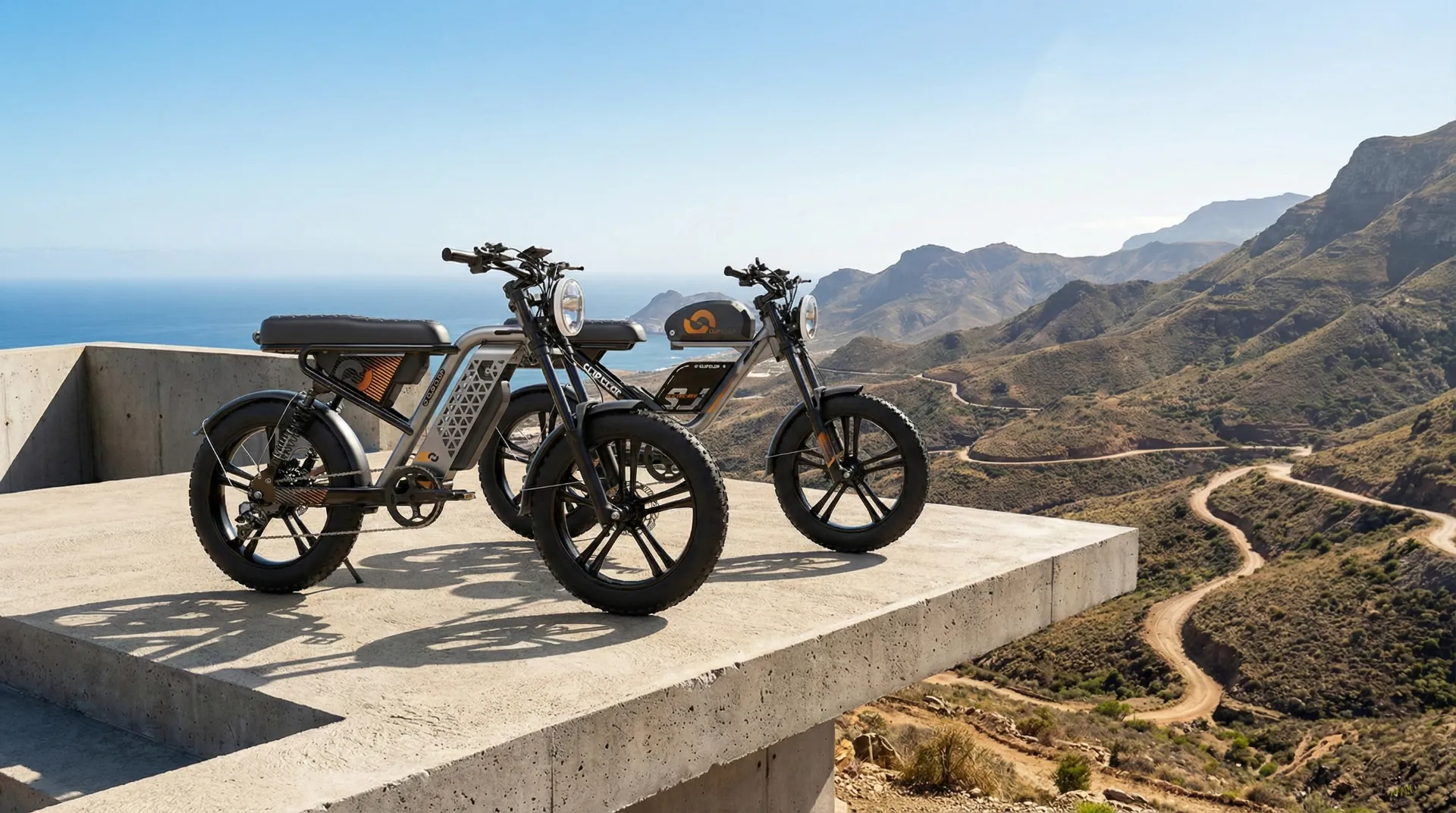
Der Antriebsstrang ist, wo die Akzeptanz gewinnen oder scheitern kann. Wenn das Bike bei Steigungen schwach wirkt oder an Ampeln träge ist, hören die Leute auf, es zu nutzen – so einfach ist das. Unser L2 verfügt über einen 48V 750W bürstenlosen Motor mit 70Nm Drehmoment, was bei schnellen Starts und Steigungen hilft, die neue Fahrer abschrecken würden. Mit einem 48V 18,2Ah-Akku hat man etwa 30–60 km pro Ladung, was “Reichweitenangst” verringert und das Ladedrama reduziert.
Sicherheit und Komfort sind in Städten nicht optional – das städtische Fahren kann chaotisch sein. Hydraulische Scheibenbremsen sind wichtig, weil die Bremskraft und Kontrolle konsistenter bleiben, besonders bei Nässe. Komfort fördert auch die Akzeptanz: Die 20″×4.0-Fettreifen glätten raues Pflaster und erhöhen die Stabilität, was Neulinge weniger nervös macht. Zusammengenommen erhält man die Art von Flotten-Bike, die zuverlässig, ansprechend und ehrlich gesagt spaßiger ist, als die Menschen erwarten.
Wie trägt ein Bike-to-Work-Programm zu messbaren CO2-Einsparungen bei?
Das stärkste Argument für Bike-to-Work ist messbare Umweltauswirkung, nicht Vibes. Unternehmen und Städte werden stärker unter Druck gesetzt, ihre CO2-Bilanz zu berichten und echte Reduktionen zu zeigen. E-Bikes helfen, weil sie eine Modalverschiebung auslösen – Menschen ersetzen einige Autofahrten durch E-Bike-Fahrten. Jedes Mal, wenn das passiert, sinken die Emissionen für diese Fahrt. Multipliziert man das mit Hunderten oder Taus“
One common benchmark people cite: a typical passenger vehicle emits around 4.6 metric tons of CO2 per year. Commutes vary, sure, but replacing car miles with e-bike miles is basically cutting direct tailpipe emissions for those trips to zero. Bike-to-work programs in multiple countries have shown big annual CO2 savings at scale. The key is participation—so the program design has to make riding feel easy, safe, and worth it.
At ClipClop, I push partners to track impact like grown-ups, not guess. Bloggers constantly advise: measure what you want to brag about—so we help teams set up simple tracking via telematics, check-ins, or structured surveys. Track trips, distance, frequency, and compare against equivalent car journeys. Then you can show real CO2 offset numbers, not fuzzy estimates. In 2026, success won’t just be ridership—it’ll be evidence.
What Are the Key Challenges in Commuter E-bike Adoption?
Even with clear benefits, adoption isn’t automatic. The biggest fear I hear: “Fleet operations will become a mess.” Charging schedules, maintenance cycles, safety checks, repairs—people worry they’ll need a mini engineering department. That fear is valid. It’s why partner support matters so much. We don’t just ship bikes; we provide maintenance training, spare parts planning, and workflows that reduce downtime.
The second hurdle is upfront cost. Buying a high-quality fleet isn’t cheap, and decision-makers want a clear return path. That’s where total cost of ownership thinking helps. Compare against parking expansion costs, transport allowances, potential incentives, and the ongoing cost of car-heavy commuting habits. Durability matters here: a longer-lasting bike with fewer failures makes the math look a lot better over time.
Then there’s the human side: confidence and culture. Some employees think cycling is unsafe, inconvenient, or “not for people like me.” You have to lower the psychological barrier. Offer safety training, create incentives, gamify participation, and get leadership to actually use the program instead of only announcing it. Also, pick bikes that feel friendly—step-through options, strong assist, stable tires—so riding feels like an upgrade, not a test.
How Does Infrastructure Impact the Success of a City Micromobility Program?
Micromobility can’t succeed in a vacuum. If riders feel unsafe, they just won’t ride—doesn’t matter how good the bikes are. For B2B partners, aligning with infrastructure improvements is one of the smartest moves. Protected bike lanes are the biggest deal because physical separation from cars changes perceived and real safety. When lanes are protected, injury risk tends to drop and ridership tends to rise.
Connectivity is the next pain point. A lane that ends randomly or dumps riders into a scary intersection kills confidence fast. Cities that invest in continuous routes—linking residential areas to business districts and transit hubs—tend to get better usage. Intersections need special attention too: bike signals, refuge islands, high-visibility crossings. And because e-bikes can move faster than regular bikes, the design details matter even more.
Support infrastructure is the quiet hero. Secure parking is non-negotiable—people won’t use a commuter e-bike if they expect theft or damage. For corporate campuses, that means covered, secure parking, and ideally charging points. Looking toward 2026, charging integration in both public and private spaces will feel more normal. I like telling partners: don’t buy bikes without buying “home” for the bikes.
What Role Does Policy and Regulation Play in E-bike Adoption?
Policy can speed up adoption or slow it down hard. In the U.S., rules vary across federal, state, and city levels, so fleet operators deal with a patchwork. Compliance is a big anxiety point: partners want to know the bikes are legally usable where they’re deployed. That includes motor power limits, speed caps, equipment requirements, and local restrictions on where different e-bike classes can ride.
At the federal level, people often reference the low-speed e-bike definition around 750W and 20 mph assisted speed, but states commonly layer in a class system (Class 1/2/3) that affects access to paths and lanes. For B2B fleets, the risk isn’t theoretical—non-compliance can mean fines, bad PR, or program shutdowns. We design configurations so models like the L2 can match regional rules more cleanly.
Supportive policy also changes the economics. Rebates, tax incentives, bike parking requirements in zoning rules, and employer subsidies can shift adoption from “maybe” to “let’s go.” My personal view: by 2026 we’ll see more standardization and stronger pro-micromobility policies, because cities are realizing e-bikes can plug into public transit as first/last-mile transport, not just as a lifestyle accessory.
How Can a Partnership with ClipClop Maximize Program ROI?
Launching an e-bike program is a strategic move, not a casual purchase. ROI depends on execution: fleet uptime, safety outcomes, adoption, and ongoing operations. The biggest fear partners tell me—pretty bluntly—is “we don’t want surprises.” They worry about breakdowns, rider incidents, parts delays, and staff not knowing what to do. That’s why a real partnership beats a simple supplier relationship.
We start by matching the build to the environment and use-case. A hilly campus isn’t the same as a flat urban grid, and a rental fleet isn’t the same as employee commuting. The L2 platform—48V 750W motor, 6061 alloy frame—covers a lot, but configuration matters. Then we add practical training: routine maintenance, troubleshooting, parts planning. The goal is to handle small issues in-house and keep bikes rolling.
ROI isn’t only “hard savings,” even though reduced parking pressure and operational efficiencies can be huge. There’s also brand image, employee wellness, and recruiting benefits—stuff that’s harder to put in a spreadsheet but still very real. I’ve learned to follow a blogger’s advice here: tell both stories—numbers plus human impact. When partners work with us, we share best practices, engagement tips, and provide fleet-ready bikes that support long-term wins.
What Is the Future Outlook for Urban Commuter Solutions?
Looking toward 2026 and beyond, micromobility feels like it’s moving from “pilot projects” into the default toolbox. Battery tech keeps improving, sustainability pressure keeps rising, and smart-city planning keeps leaning on data. I expect e-bikes to become a normal part of integrated networks—especially as first/last-mile connectors to buses and trains. The winners will be programs that feel seamless, not scattered.
For B2B players, the opportunity gets bigger—but also more technical. We’ll see more data-driven fleet management: IoT for real-time status, AI to predict maintenance, smarter rebalancing so bikes are where riders actually need them. Business models will diversify too: subscriptions, fleet-as-a-service, and other setups that lower barriers for smaller organizations. On the product side, we’re pushing lighter materials, better diagnostics, and more built-in safety features.
The future “best” program won’t just have good bikes. It’ll connect hardware, software, policy, and infrastructure into one user experience. Private providers and public agencies will need to collaborate more—on lanes, charging, parking, and consistent regulations. I’m not pretending it’s easy, but the direction is clear. ClipClop wants to stay in the messy middle of building that future with partners, not just talking about it.
Call to Action
If you’re thinking about changing how your organization handles commuting, I’d love to talk. Whether you’re choosing a fleet e-bike model, planning a city program, or figuring out a custom rollout, we can help you avoid common mistakes. We support distributors, wholesalers, rental operators, and brand partners with end-to-end services—product configuration, technical support, and complete vehicle solutions. Reach out to the ClipClop team and let’s build a better commute.
Häufig gestellte Fragen (FAQ)
Q1: What is the typical lifespan of a B2B city e-bike used in a commercial fleet?
A: The lifespan of a commercial e-bike depends heavily on usage intensity, maintenance schedules, and the quality of its components. A well-maintained e-bike built with high-quality parts, such as a 6061 Aluminum Alloy Frame and a reputable motor and battery system, can be expected to last for many years and tens of thousands of kilometers. At ClipClop, we focus on durability, ensuring our bikes are engineered to withstand the high-utilization demands of a B2B environment, maximizing your investment.
Q2: How does the 750W motor perform in cities with steep hills?
A: A 48V 750W brushless motor, especially one with high torque like the 70Nm in our L2 model, is exceptionally well-suited for hilly urban environments. This power level provides the necessary assistance to help riders climb steep inclines without excessive physical strain, which is a key factor for encouraging commuter e-bike adoption among a diverse range of employees. It ensures a consistent and comfortable riding experience, regardless of the city’s topography.
Q3: What are the main differences between hydraulic and mechanical disc brakes for a fleet?
A: The primary difference lies in performance and maintenance. Hydraulischen Scheibenbremsen, which we use on our L2 model, use fluid to actuate the braking mechanism. This results in superior stopping power, better modulation (finer control), and more consistent performance, especially in wet weather. Mechanical disc brakes use a steel cable and are generally less expensive and simpler to maintain with basic tools. For a B2B fleet where rider safety and reliability are paramount, we strongly recommend hydraulic brakes due to their significantly higher and more reliable performance.
Q4: Can your e-bikes be integrated with third-party fleet management software?
A: Yes. We understand that data is crucial for managing a modern city micromobility program. Our e-bikes can be equipped with telematics devices (IoT) that are compatible with various third-party fleet management platforms. This allows you to track vehicle location, monitor battery status, analyze usage patterns, and manage maintenance alerts, providing you with the data you need to optimize your operations and maximize ROI.
Q5: What kind of support do you offer to a new ClipClop partner?
A: Becoming a ClipClop partner means gaining a dedicated support system. We provide comprehensive onboarding, including technical training for your maintenance staff. You will have access to our expert technical support team for troubleshooting and a streamlined process for ordering spare parts to minimize fleet downtime. We also share best practices on program implementation, from promoting rider safety to strategies for increasing user engagement, ensuring you have the knowledge and tools for a successful launch and long-term operation.
Quellen:



 English
  Spanish
  Portuguese
  Russian
  Arabic
  French
  Dutch
Dutch  German
  Danish
