

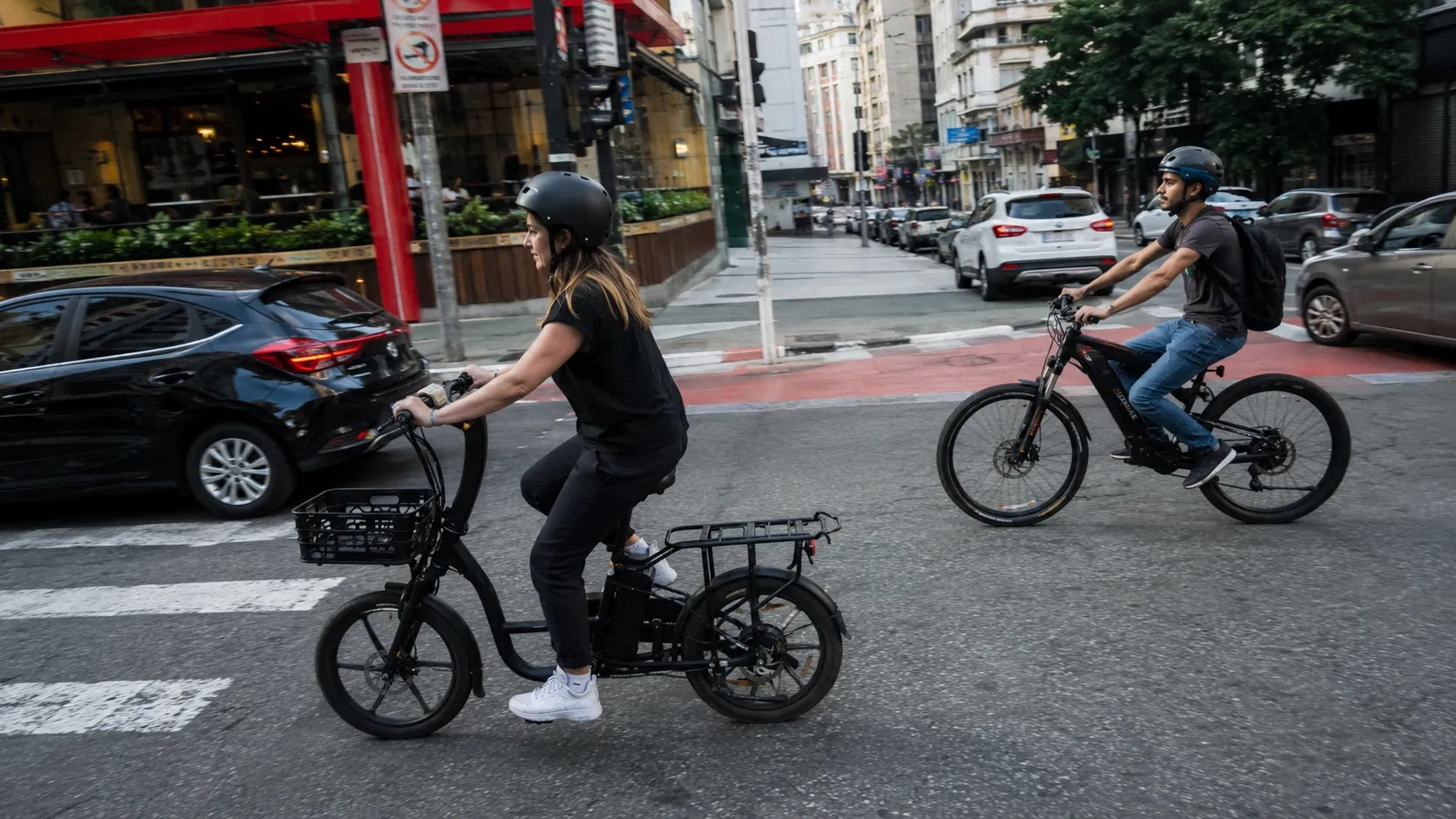
Step-through vs step-over e-bikes in 2026, from my ClipClop Bike B2B point of view
I will say something a little boring first: in Brazil, frame style is not just a “nice design choice” anymore.
For a normal consumer, step-through vs step-over means comfort, looks, and maybe whether your jeans get stuck when you get on the bike. Fine. But for a dealer, distributor, rental operator, or delivery-fleet buyer, it is more serious. It affects who can ride the bike, how often people complain, what kind of photos sell better online, how the bike feels with cargo, and even how you explain the product to local buyers.
I read a lot of frame comparison articles. Most of them say the same thing: step-through is easy to mount, step-over is stronger and sportier. I agree, mostly. The article also frames it this way: step-through is more about access and comfort, while step-over is more about strength, rigidity, and varied terrain. That basic idea is still useful.
But in Brazil in 2026, I would not stop there.
Because Brazil buyers are not just asking, “Which frame is better?” They are asking things like:
Can I sell this to delivery riders?
Can I use it in São Paulo traffic?
Will customers understand if it needs registration?
Can it carry a backpack, food box, groceries, or a second battery?
Will the rider feel safe on bad roads?
That is the real question.
First, let’s be clear: what is a step-through e-bike?
A step-through e-bike has a low frame opening. You do not need to swing your leg high over the rear of the bike. You just step in and ride.
Sounds simple. And honestly, it is.
This is why I like step-through models for city users, older riders, female riders, short-distance delivery, hotel rentals, and “first e-bike” customers. If a rider stops 30 times a day, mounting and dismounting matters. Some bloggers always say “test the bike before buying,” and I think they are right, but for B2B I would change that advice a bit: test the bike with cargo, in bad shoes, in a hurry, and when you are tired. That is when frame design becomes obvious.
For Brazil, step-through can be a strong retail story. It looks friendly. It reduces fear. It is easy to explain in a store or WhatsApp chat: “You don’t need to lift your leg high.”
Not very poetic, but it sells.
The weakness? Step-through frames can look less aggressive. Some buyers still think they are “soft” bikes. I do not fully agree, because modern step-through e-bikes can be solid, but the perception is there. For a younger buyer who wants a rugged fat-tire look, step-through may feel too calm.
Then what is a step-over e-bike?
A step-over bike has a higher top frame area. It is the more classic bike shape. You lift your leg over the frame or saddle.
This type usually feels more sporty. It gives the bike a stronger visual line. Many riders connect it with mountain bikes, fat tire bikes, and “I can ride over ugly roads” kind of energy.
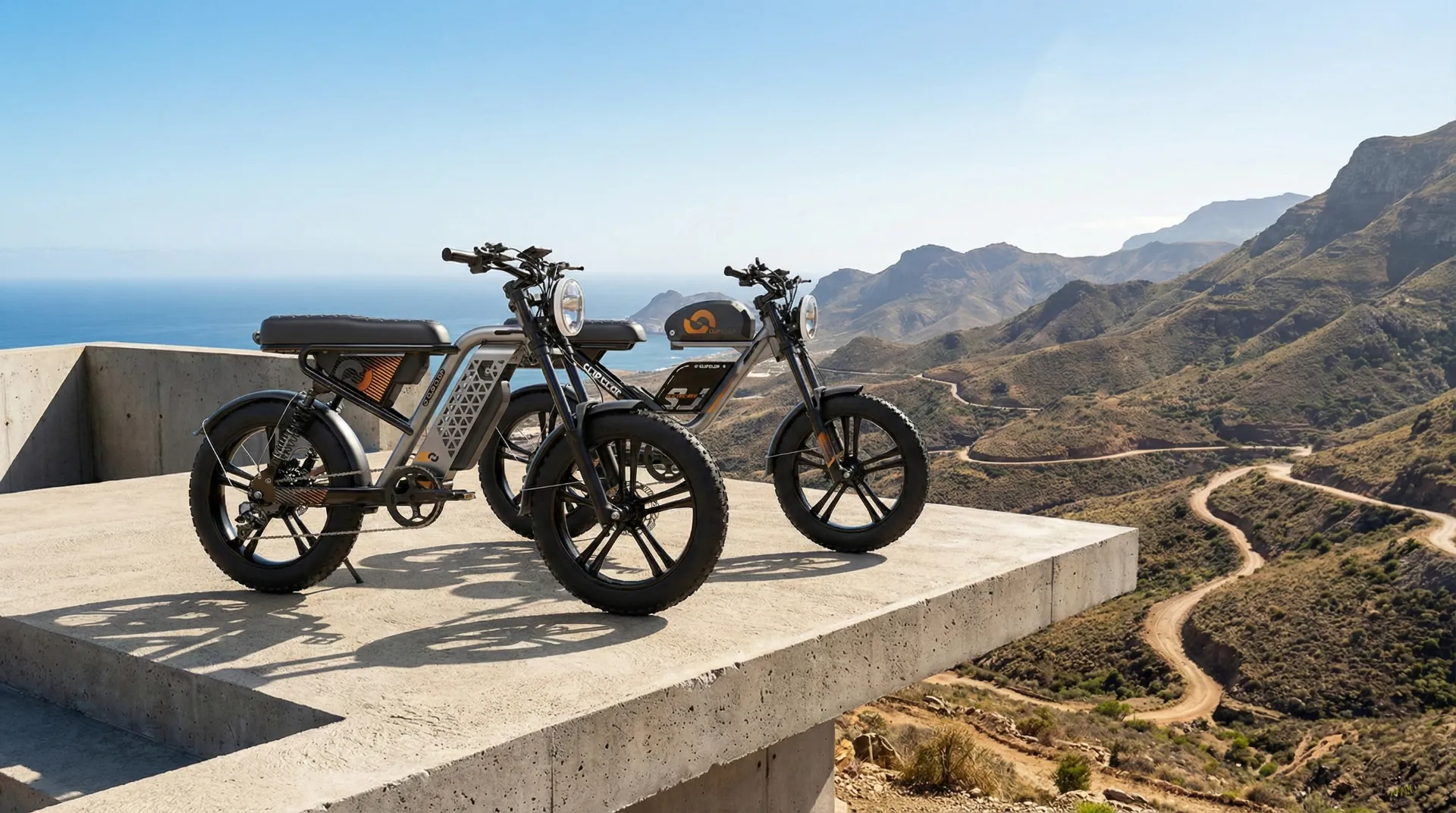
This is where ClipClop L2 fits better in my mind. L2 is not trying to be a tiny city bike. It uses 20×4.0 fat tires, dual suspension, Shimano 7-speed gearing, hydraulic disc brakes, and a rear rack. The L2 page positions it for city commuting and light trails, which is exactly the middle zone many Brazil dealers ask about.(ClipClop E-Bike)
My honest bias: I like this kind of bike for Brazil B2B more than a very delicate city e-bike.
Why? Because the road conditions are not always beautiful. Delivery riders do not baby the bike. Some customers want one bike for weekday commuting and weekend beach-road riding. Fat tires and suspension are easier to sell when the buyer says, “Our roads are not perfect.”
But step-over has one problem: it is not for everyone.
If the rider is older, short, carrying a box, wearing work pants, or stopping every few minutes, lifting the leg again and again is annoying. Not dangerous every time, but annoying. And annoying becomes bad reviews.
My B2B answer for Brazil: do not choose by gender, choose by use case
Some old articles still make it sound like step-through is for women and step-over is for men. I really dislike that. It is lazy selling.
For Brazil dealers, I would separate customers like this:
For delivery and utility fleets, choose the frame that makes repeated stops easier. If riders are constantly getting on and off, step-through has a real advantage. Add a rear rack, fenders, lights, and practical accessories. Do not over-sell speed.
For lifestyle retail, step-over often photographs better. It looks tougher. A bike like ClipClop L2 has that fat-tire, strong-road presence. Customers may not read every spec, but they understand the shape.
For rental and tourism, I lean step-through unless the route is rough. Rental users are mixed: different ages, different heights, different confidence levels. A bike that is easier to mount will usually create fewer small problems.
For dealers selling to young riders, step-over still wins many times. It feels more fun. It looks less like a “city helper” and more like a toy that also gets you to work.
Not every market needs the same frame. Brazil is big. A reseller in a beach city and a fleet buyer in a dense city should not buy the same mix.
The 2026 Brazil compliance part nobody should ignore
Here is where I get more serious.
In Brazil, Detran-SP explains that an electric bicycle is pedal-assist, has no throttle, uses up to 1000W, and is limited to 32 km/h. That category does not need registration, plate, or CNH. A ciclomotor is different: it can go up to 50 km/h, but it needs registration, plate, ACC or CNH A, and helmet.(DETRAN-SP)
So for B2B buyers, do not just ask the factory, “How fast is it?”
Ask better questions:
Can the speed be configured for Brazil?
Can the throttle be removed or disabled if needed?
Can the invoice and technical documents match the intended category?
Can the controller setting be stable, not just changed for one sample?
Can spare parts be supplied for 12 months or more?
This is not legal advice. Importers should check with local authorities and their own compliance team. But from a factory side, I think the safe B2B mindset is simple: sell the bike in the category you can actually support.
ClipClop L2 has strong specifications, including 48V 15Ah battery, 750W motor, 1200W peak power, 20×4.0 tires, dual suspension, and hydraulic brakes.(ClipClop E-Bike) For Brazil, that means dealers should be careful with positioning. Do not casually sell a performance configuration as a no-problem city e-bike if the local classification says otherwise.
Short-term hype creates long-term trouble. I am not a fan of that.
What I would tell a Brazil distributor
If you are testing e-bikes for Brazil in 2026, I would not fill the first container with only one frame style.
I would build a small but clear lineup.
One step-through or easy-access model for urban riders, rentals, and delivery customers who care about convenience.
One stronger step-over or moped-style fat tire model like L2 for customers who want comfort, road presence, and a more rugged look.
Then test which one gets fewer questions, fewer returns, and better repeat orders.
That sounds less exciting than “best e-bike for Brazil,” but it is more real.
A real B2B buyer does not win by choosing the most beautiful frame. They win by choosing a bike that local customers understand quickly, riders can use daily, and mechanics can service without calling the factory every two days.
Why I still like L2 for Brazil
L2 is not perfect for every buyer. No bike is.
It is heavier than a small city e-bike. It is not foldable. It is not the lowest-step frame. If your customer only wants a light bike to ride 2 km to a café, maybe this is too much bike.
But for Brazil B2B, I like the direction.
The 20×4.0 tires give the bike a stable look and feel. Dual suspension helps when roads are not smooth. Hydraulic brakes matter when the bike is heavier or carrying cargo. The rear rack is not decoration; for many customers, it is the reason the bike becomes useful. The NFC display is also a nice retail talking point, because customers can understand it in five seconds: tap, unlock, ride.(ClipClop E-Bike)
And this is important: B2B buyers need products that are easy to explain.
If your sales team needs 20 minutes to explain why the bike is good, the product is probably not ready for that market.
My final answer
Step-through is better when access, comfort, and repeated stops matter more.
Step-over is better when strength, appearance, and a more active riding feel matter more.
For Brazil in 2026, I would not say one is always better. I would say this:
Choose step-through when your customer is practical.
Choose step-over when your customer wants confidence and style.
Choose L2 when you want a fat-tire utility e-bike that can look good in the store, feel stable on mixed roads, and carry daily-use value beyond just “riding around.”
That is my not-too-perfect answer.
And honestly, for B2B, “not perfect but clear” is often better than pretending every bike fits every rider.



 English
  Spanish
  Portuguese
  Russian
  Arabic
  French
  Dutch
Dutch  German
  Danish
