
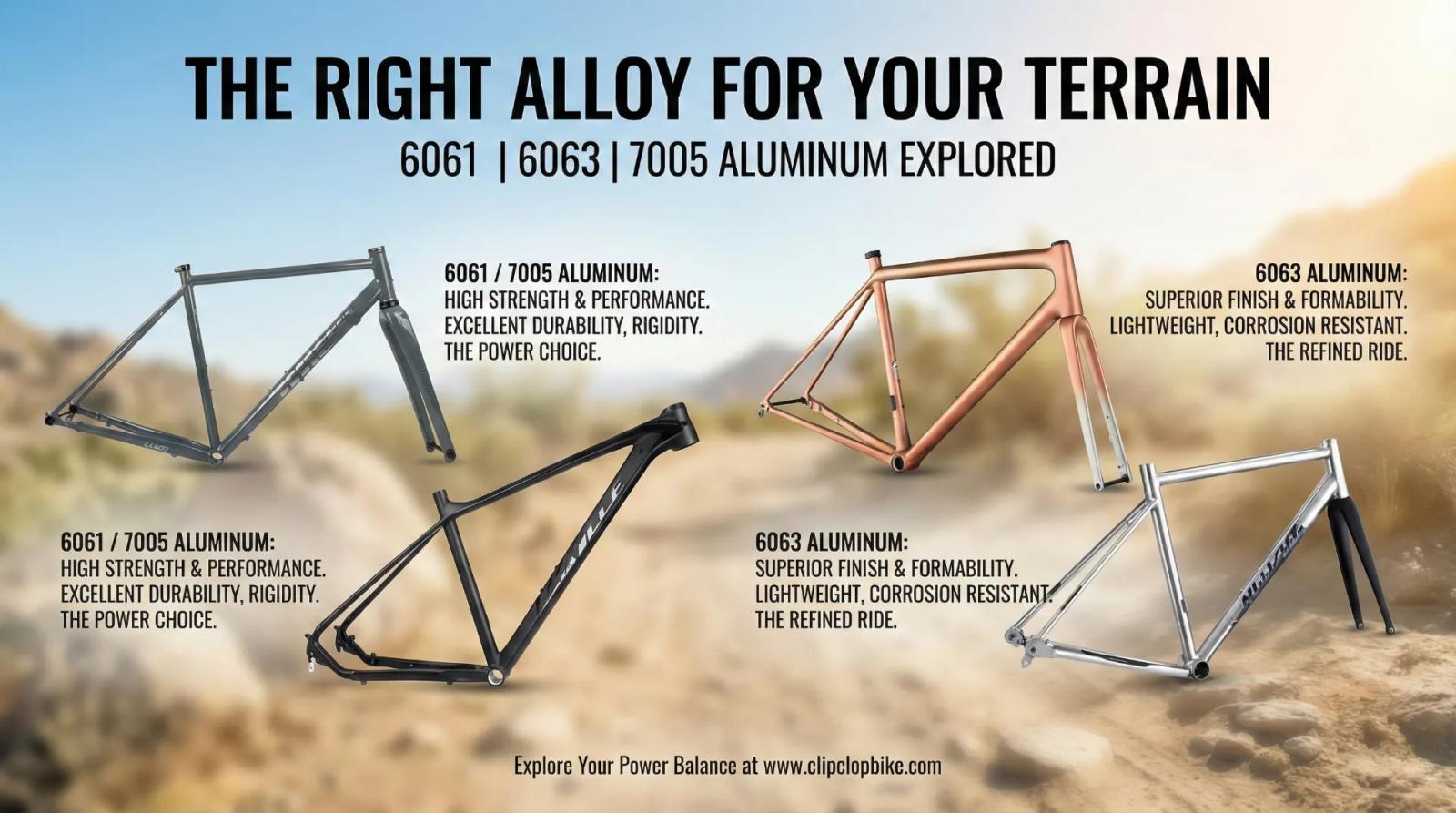
The Real Story on E-Bike Frame Alloys: What Dealers Should Actually Know About 6061, 6063, and 7005
When I’m on a showroom floor or trying to lock in a bulk order for the next season, frame material always pops up sooner or later.
When I’m on a showroom floor or trying to lock in a bulk order for the next season, frame material always pops up sooner or later.
When I’m on a showroom floor or trying to lock in a bulk order for the next season, frame material always pops up sooner or later. Sometimes it’s a smart customer asking, “Can this thing handle my weight?” Other times it’s my own team asking why two bikes look basically the same, but one is like 15% more expensive. And yeah—on e-bikes, “aluminum” isn’t one simple thing. It’s a whole range of alloys with different strength, different production headaches, different costs, and honestly different “best use” situations.
Commercial partners can inspect our manufacturing infrastructure on our OEM/ODM E-Bike Manufacturing Facility page, review standard configurations on our CS01 Fat Tire & CS04 Commercial Utility Platforms, or directly request volume FOB terms via our Commercial Quote Request Portal (MOQ 20).
I’ve been in the electric off-road bike world in Guangzhou for years, working on manufacturing and exporting our ClipClop brand, so I’ve watched alloy choice decide whether a bike lives a long happy life… or comes back with cracks and drama. For B2B buyers, knowing the difference between 6061, 6063, and 7005 isn’t nerd trivia—it’s how you position products, protect your reputation, and avoid those painful after-sales arguments. I’m gonna break it down in a practical way, like how you’d explain it to a customer without sounding like a metallurgy textbook.
Factory Engineering Standard: Why 6061-T6 Dominates High-Volume E-Bike Frame Fabrication
B2B Frame Sourcing: Heat Treatment, Hydroforming Molds & OEM Durability
For e-bike brands designing proprietary frame geometries, alloy selection directly impacts tooling lead times, weld crack susceptibility, and long-term fleet reliability. ClipClop provides full-service OEM frame engineering—from mold fabrication and hydroformed butting profiles to automated TIG welding and durable electrostatic powder coating.
Download the 2026 ClipClop Factory Catalog (PDF)
Full e-bike specs, motor & battery options, MOQ, and container loading details.
Why Does the Specific Aluminum Alloy Grade Even Matter for Your Inventory?
The frame is the spine of any e-bike. And compared to a normal bike, an e-bike frame gets hit with way more stress because you’ve added a motor, a battery, extra weight, and that punchy torque when people accelerate hard. Pick the wrong alloy for the wrong job and you’re basically inviting fatigue, cracks, and in the worst case, a safety recall that can wreck a distributor’s name fast.
For dealers, the alloy choice also connects straight to international safety standards like EN 15194 and ISO 4210. These standards push frames through brutal fatigue testing—think hundreds of thousands of stress cycles, again and again, until weak designs show their true face. A 6061 T6 e-bike frame doesn’t behave the same way as a 6063 one under those tests, and that difference matters when you’re promising “safe” and “built to last” to a customer.
And it’s not only about passing tests on paper—ride feel is real, too. Stiffer alloys can transfer power better, but they can feel kind of harsh on rough roads or trails. More compliant alloys can feel smoother, but they might flex too much under a strong 1000W motor. I’ve seen bloggers straight-up tell riders to match the frame to the motor, and I agree—if you sell a heavy-duty delivery rider a leisure-style frame, you’re basically buying yourself future warranty claims.
What Makes 6061 Aluminum the Industry Standard for Most Electric Bicycles?
If you scan the higher-quality e-bike market (including our ClipClop Model L2), you’ll notice 6061 aluminum everywhere. This alloy mainly uses magnesium and silicon, and people call it the “jack of all trades” for a reason. It balances tensile strength, weldability, and corrosion resistance in a way that just makes sense for most real-world e-bike use, not just “perfect lab conditions.”
That “T6” label you keep seeing (like 6061 T6 e-bike frame) is about heat treatment. After welding, the frame goes through solution heat treatment and artificial aging, which basically helps the metal structure “settle” into a stronger state. From a sales angle, the simple message is reliability. A properly treated 6061 frame can take long rides—like 60–80KM range—and handle speeds around 25–55KM/H (like what our L2 is built for) without getting tired and giving up early.
Manufacturing-wise, 6061 also plays nicely with hydroforming, which is a big deal for modern frame shapes. It lets us create more complex tubes and integrate things cleanly—like hiding a 48V 15AH lithium battery inside the downtube without making it look clunky. If a customer asks me, “Is it tough though?” I usually say yes, and I’ll point right at 6061 as the backbone choice for general-purpose and off-road riding.
Is 6063 Aluminum a Cost-Effective Solution or a Compromise on Quality?
You’ll often see 6063 aluminum used for entry-level city bikes, and also for parts like handlebars, racks, and other components. Composition-wise it’s close to 6061 (still magnesium + silicon), but the alloying amounts are a bit lower. In real life that means it’s softer and more ductile, which can be good or bad depending on what you’re building.
The biggest upside of 6063 is how well it extrudes and how nice the surface finish can look. It’s great for smooth, clean tubes that anodize beautifully—so if you’re selling lifestyle bikes where looks are a big part of the pitch, 6063 can totally work. But here’s the catch: because it has lower yield strength than 6061, manufacturers often compensate by using thicker tube walls. That’s the weird part—sometimes you end up with a heavier frame even though the alloy feels “softer.”
If I’m being blunt, the dealer “warning label” matters here. 6063 usually isn’t what I’d recommend for high-performance e-MTBs or cargo bikes hauling serious weight. If you’re pushing a 750W or 1000W motor, a 6063 frame can twist more under torque, and that flex can turn into long-term fatigue. I’d position 6063 more for the “leisure rider” crowd: low speed, comfy cruising, style-first buyers, and people who aren’t trying to launch up steep trails like a maniac.
When Should You Recommend 7005 Aluminum Frames to High-Performance Clients?
On the higher end, we’ve got 7005 aluminum, part of the 7000 series that uses zinc as a main alloying element. This series is noticeably harder and stronger than 6000-series alloys, and historically it’s been popular in racing and premium electric mountain bike builds. If a customer is hunting that “tight, fast, responsive” feel, 7005 usually comes into the conversation.
One major technical difference is heat treatment behavior. 6061 typically needs that more complex post-weld solution heat treatment, while 7005 can air-harden and naturally age over time (though artificial aging can still help). The result is a stiffer frame. For the rider, stiffness usually feels like instant response—pedal or throttle and the power transfer feels immediate. On aggressive trails, that responsiveness is not just nice, it’s kinda the whole point.
But from a dealer side, yeah, there’s a price hit. 7005 costs more, it’s trickier to manipulate, and welding needs higher skill—because if the heat-affected zone is handled poorly, you can invite stress corrosion cracking. So you tend to see 7005 mainly in premium models where the customer expects to pay more. My “sales language” for 7005 is basically: performance, stiffness, and serious riding intent. If the buyer is semi-pro or just refuses to compromise, 7005 can justify the higher price with better fatigue resistance and sharp power transfer.
How Do Strength and Durability Compare Across These Three Popular Alloys?
To compare these alloys without getting too lost, I usually focus on Ultimate Tensile Strength and Yield Strength. Ultimate strength is when the metal finally breaks. Yield strength is when it permanently bends and doesn’t spring back—this is the one that matters a lot for real-world “oops moments.”
- 6061-T6: Yield strength is typically around 276 MPa. It’s tough and resistant to cracking, and when it fails, it often gives warning signs first (bending or deformation) instead of snapping in a sudden, scary way.
- 6063-T6: Yield strength is roughly 214 MPa, so yeah, it’s clearly weaker than 6061. To reach similar durability, you usually need more material, which adds weight and can mess with the “light bike” marketing story.
- 7005-T6: Yield strengths can hit 290 MPa or higher. It’s stronger per gram than many 6000-series setups, which can allow thinner tube walls and potentially lighter frames—but only if the engineering and welding are done properly, no shortcuts.
For B2B buyers, I treat these numbers like a “trust anchor.” When someone asks why ClipClop L2 uses 6061, I tell them it sits in that Goldilocks zone—stronger than 6063 for safety (especially with 20*4.0 fat tires), but more cost-effective and supply-chain-friendly than 7005. Plus, it gives a ride that isn’t brutally stiff for long cruising, which honestly matters more than some people admit.
What Are the Real Differences in Manufacturing Costs and Welding Processes?
A lot of people think e-bike pricing is just raw material cost, but processing cost is a huge piece of it. With 6061, you usually need that full T6 process after welding, meaning the whole frame goes into a big oven for heat treatment. That adds time, energy cost, and planning to the manufacturing line. The upside is that 6061 is so common that the supply chain is massive and efficient, so total cost stays pretty reasonable for what you get.
7005 is different. It doesn’t strictly need the same solution heat treatment step (though aging still helps), but the material is more expensive and the welding is more demanding. You need skilled welders who know how to avoid cracking risks around the heat-affected zone. So the premium price isn’t just “because 7005 sounds fancy”—you’re paying for harder material plus higher labor requirements, and less room for mistakes.
6063 is usually the cheapest to extrude because the metal flows easier and the dies tend to last longer. That’s why it shows up a lot in mass-market bikes and low-stress frames. And as a dealer, knowing this is useful—you can explain price gaps in a way that feels real. You’re not charging more for a random number; you’re charging for manufacturing steps that help a bike survive things like a hard hydraulic disc brake stop from 55KM/H without weird shuddering or frame stress issues.
Which Alloy Matches Which Customer Profile to Maximize Your Sales Conversions?
One of the easiest ways to lose money as a distributor is mismatching specs to the market. Sell a casual rider an overbuilt bike, and your price looks bloated next to competitors. Sell a high-torque user an underbuilt bike, and you’ll drown in warranty claims and angry calls. I’ve seen both happen, and neither is fun.
Here’s a quick reference guide I’d give to a sales team (and yeah, I’d actually print this out and stick it near the desk):
| Customer Type | Typical E-Bike Category | Recommended Alloy | Why? |
|---|---|---|---|
| Daily Commuter / Delivery | City E-Bike / Cargo | 6061 | Strong balance for heavy loads, durable for daily abuse and curb hits. |
| Leisure / Senior Rider | Step-through / Comfort | 6063 | Cheaper, good enough for lower speeds, plus a smoother “pretty” finish. |
| Sport / Trail Rider | E-MTB / Trekking | 7005 or 6061 | Needs stiffness for torque + rough terrain; 7005 for premium feel, 6061 for balanced builds. |
| Budget Conscious | Entry-level Folding | 6063 | Keeps retail price down for price-sensitive markets. |
| All-Terrain Adventurer | Fat Tire E-Bike (Like L2) | 6061 | Tough enough for off-road vibration, impact resistance, and mixed surfaces. |
If you look at that table and then look at our Model L2—250W to 1000W motor options, off-road capability—yeah, 6061 is the logical choice. It gives the safety margin needed so the suspension fork and fat tires can do their job on rough ground without the frame becoming the weak link.
How Does ClipClop Ensure Frame Quality Regardless of the Chosen Material?
At ClipClop, we’re pretty strict about one thing: material is only half the battle. Engineering and QC decide whether the bike survives real riders. Even a “fancy” 7005 frame can fail if weld penetration is bad or geometry is poorly designed. And on the flip side, a well-engineered 6061 frame can outlast a sloppy premium build. I’ve seen it, so I’m not just saying it for marketing.
In our Guangzhou facility, we run QC steps that are honestly a bit annoying but necessary. We test tubing batches for chemical composition before they even hit production. After welding, our 6061 frames go through T6 heat treatment to restore strength lost during welding. Then we run sample frames through vibration testing to simulate years of riding on uneven surfaces—because real roads are messy, not perfect.
For B2B partners, this basically means fewer surprises. Whether you’re ordering a container of L2 models or customizing a rental fleet, you can feel confident the geometry, welds, and mounting points are designed around electric-drive stress. We also keep mounting points for LCD displays, controllers, and brakes precise, because if assembly is a pain for your mechanics, that becomes your hidden cost every single week.
Summary for Dealers: Your “One-Sentence” Sales Pitch
Alright, quick wrap-up—these are the simple lines you can actually use in a conversation without boring someone to death:
- 6061 Aluminum: “Industry standard. Strong, reliable, good weight/price balance—great for commuting and all-terrain riding.”
- 6063 Aluminum: “Budget-friendly. Smooth finish, comfortable for casual riding, keeps the bike affordable.”
- 7005 Aluminum: “Performance pick. Stiffer, more premium, built for aggressive riding and fast power transfer.”
Choosing the right alloy is basically choosing the right market position. It affects how you price the bike, who it fits, and how many headaches you get after the sale.
If you’re a distributor or wholesaler looking for a partner that actually understands the engineering side (not just the sales brochure side), ClipClop can help. We focus on high-performance electric off-road bikes like the Model L2, and we push for the right spec for the right user, not random upgrades that don’t match real needs.
Contact us today to discuss your fleet needs or request a sample of our 6061-engineered e-bikes. Let’s build an inventory that’s strong on paper and strong out on the road.
FAQ (Frequently Asked Questions)
Q1: Will a 6061 aluminum e-bike frame rust?
No, aluminum naturally forms a protective oxide layer that prevents rust. However, corrosion can occur in salty environments (like coastal areas). Both 6061 and 6063 have excellent corrosion resistance, especially when painted or powder-coated.
Q2: Is 7005 aluminum lighter than 6061?
Not necessarily. While 7005 is stronger, allowing for thinner walls, the weight difference in a finished e-bike frame is often negligible (a few hundred grams) compared to the weight of the motor and battery. The primary benefit is stiffness, not just weight.
Q3: Can I weld a cracked aluminum frame?
It is difficult. 6061 frames require heat treatment after welding to restore their strength. A local repair shop usually cannot replicate the T6 process, meaning the repaired area will be significantly weaker. We always recommend replacing a damaged frame for safety.
Q4: Why does ClipClop use 6061 for the Model L2 instead of 7005?
We chose 6061 for the Model L2 because it offers the best durability-to-cost ratio for a fat-tire adventure bike. It absorbs trail vibrations better than the ultra-stiff 7005, providing a more comfortable ride for long-range cruising (60-80KM) without driving up the wholesale cost for our dealers.
Q5: Are these alloys compliant with EU regulations?
Yes. When properly engineered and tested, frames made from 6061, 6063, and 7005 can all pass EN 15194 and ISO 4210 standards. At ClipClop, we ensure all our export models meet the strict safety requirements of the European and North American markets.
- MatWeb Material Property Data - Aluminum 6061-T6 vs 7005-T6. (https://www.matweb.com)
Explore our factory-engineered platforms: ClipClop L1 6061-T6 Commuter, the versatile ClipClop M26 Mountain E-Bike, and our OEM/ODM Frame Customization Services, supported by wholesale direct pricing and global container logistics.
- ISO 4210-6:2023 Cycles — Safety requirements for bicycles — Part 6: Frame and fork test methods. (https://www.iso.org)
- The Welding Institute (TWI) - Weldability of Aluminum Alloys. (https://www.twi-global.com)
Commercial Procurement & Fleet Sourcing with ClipClop
Deploying electric bicycle fleets or distributing private-label e-bikes requires a trusted manufacturing partner capable of consistent container-level production, robot-welded frame alignment, and rigorous batch QC. From our 25,000 m² factory in Qingyuan, Guangdong, ClipClop provides end-to-end OEM/ODM electric bike manufacturing services with an accessible MOQ of just 20 units per SKU. Every container order includes dedicated spare parts allocation (2% free warranty backup components), full international compliance documentation (EN 15194, UL 2849, UN38.3), and 15-day sample dispatch.
Ready to evaluate engineering samples for the CS01 Fat Tire & CS04 Commercial Utility Platforms or review container FOB volume pricing? Visit our Commercial RFQ Portal to submit your technical specifications, or speak directly with our engineering sales team via our B2B contact desk.
Download the 2026 ClipClop Factory Catalog (PDF)
Full e-bike specs, motor & battery options, MOQ, and container loading details.
More OEM field notes.
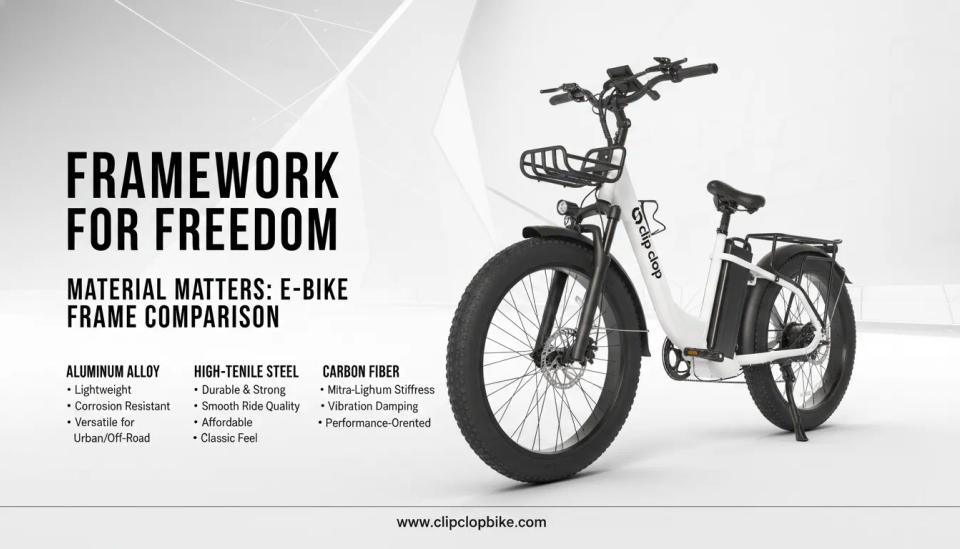
E-Bike Frame Material Selection Guide: 6061 Aluminum vs Steel vs Carbon for B2B Importers
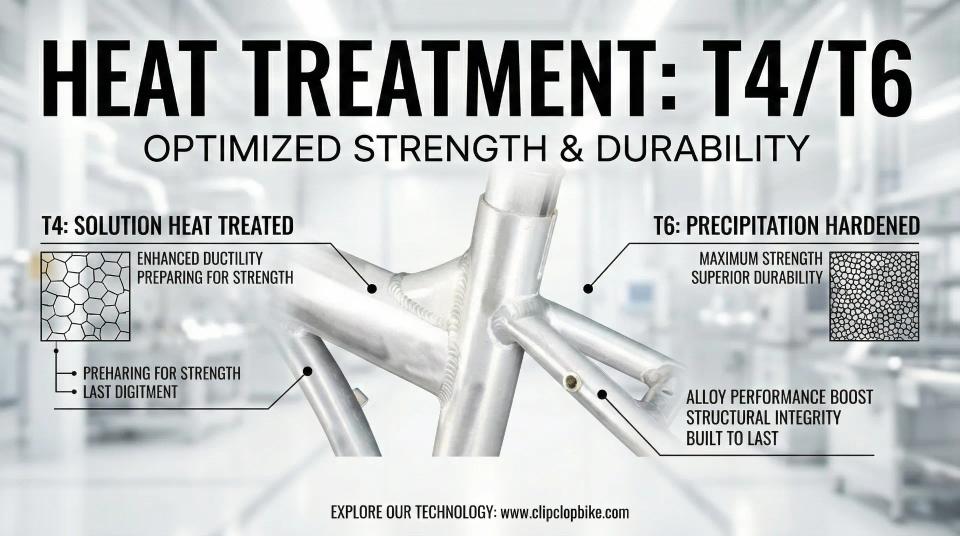
T4 Solution Heat Treatment vs. T6 Artificial Aging: Yield Strength, Webster Hardness & ISO 4210 Fatigue Life
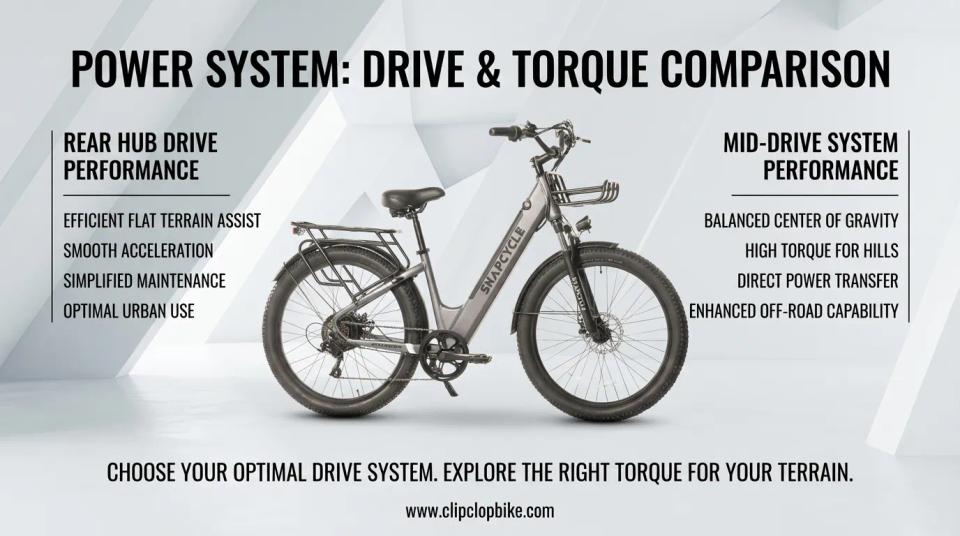
Mid-Drive Motors for Heavy Cargo & Mountain E-Bikes: Torque Multiplication & Gradients
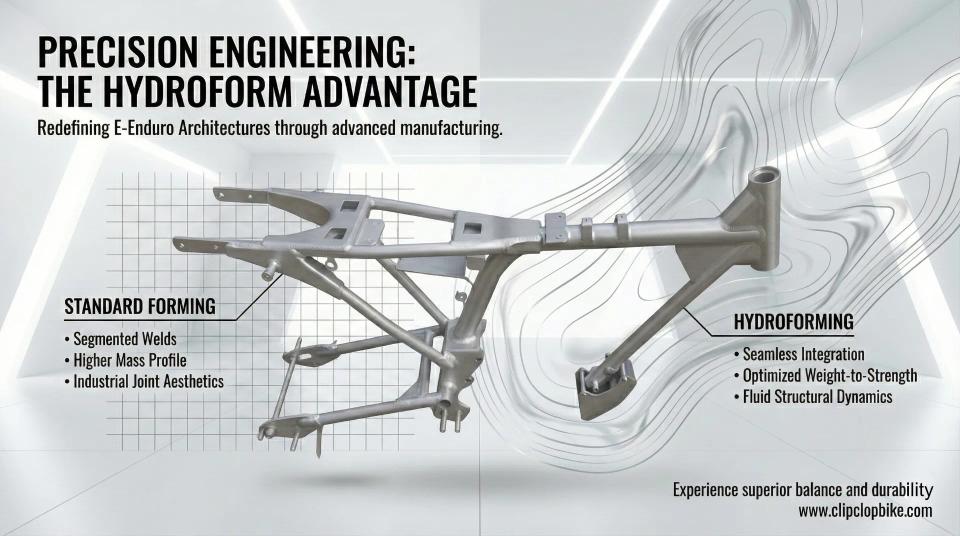
Procurement Strategy Overview: Hydroforming vs. Traditional Shaping
Send your brief. We will field-note back.
Reply includes the feasibility view, sample cost, MOQ, and the next step for your project. We aim to respond within 48 hours.