
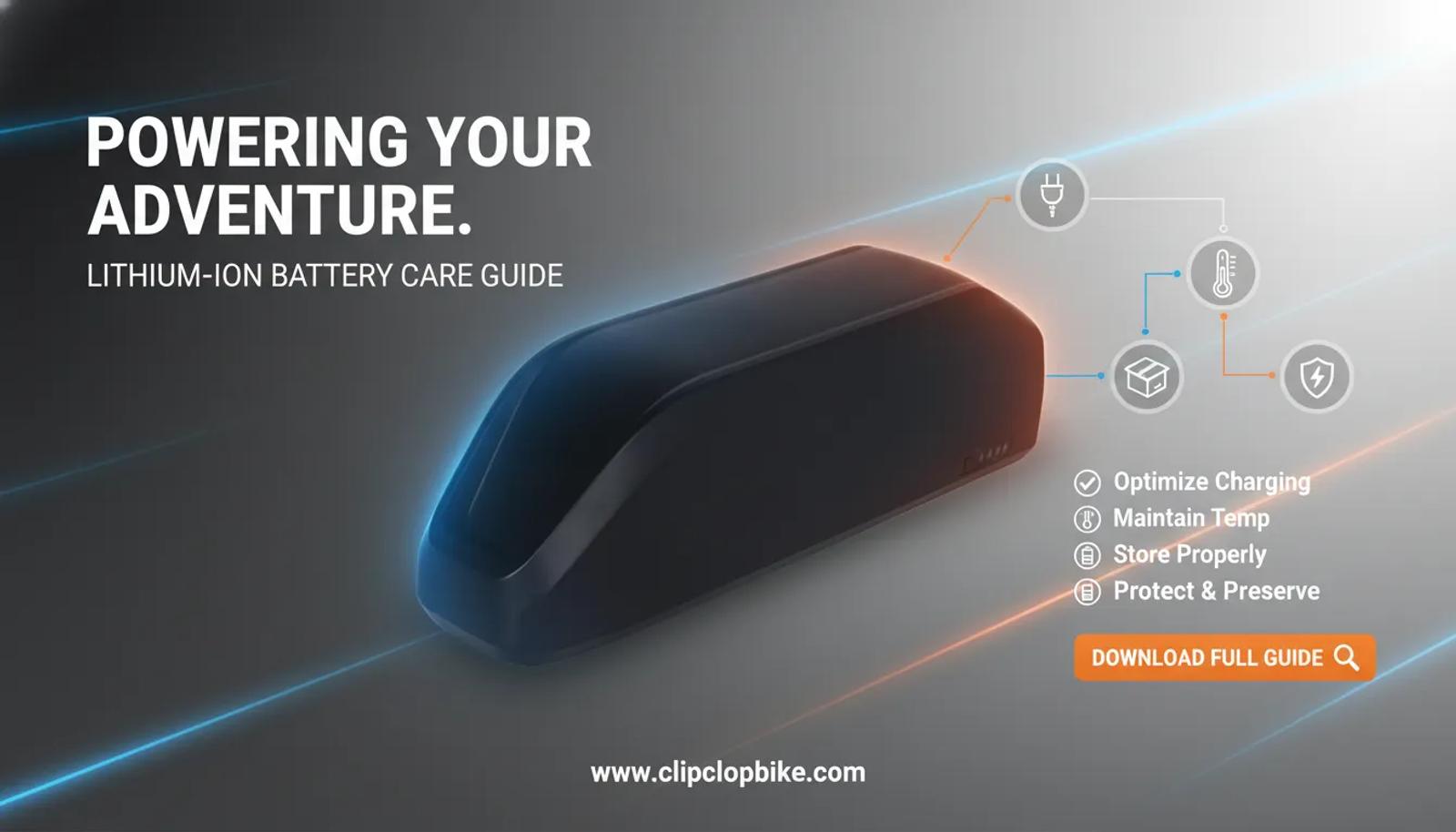
Commercial E-Bike Battery Care Guide: Charging Protocols, Storage & Cycle Life Maximization
Hello everyone, I am Leo Liang, and welcome to our journey into the world of electric off-road bikes here at Clipclop, Guangzhou.
Hello everyone, I am Leo Liang, and welcome to our journey into the world of electric off-road bikes here at Clipclop, Guangzhou.
In commercial electric bicycle deployments, battery pack architecture, BMS cycle life, and thermal dissipation directly dictate fleet uptime and return on investment (ROI). For wholesale distributors, fleet managers, and OEM brands, sourcing e-bike power systems requires evaluating certified cell chemistry (Grade-A NMC or LFP), automated ultrasonic wire bonding, and international compliance standards including UL 2271, EN 15194, and UN38.3 transport certification. This engineering guide examines the technical criteria required for reliable, high-margin commercial battery procurement.
Commercial partners can inspect our manufacturing infrastructure on our OEM/ODM E-Bike Manufacturing Facility page, review standard configurations on our CS01 Fat Tire & CS04 Commercial Utility Platforms, or directly request volume FOB terms via our Commercial Quote Request Portal (MOQ 20).
Through literally thousands of conversations with partners and a dedicated in-house testing process, I've seen first-hand how proper battery management can mean the difference between a profitable, reliable fleet and a costly, problematic one. Going beyond more basic charging approaches, it is a comprehensive process based on preserving the most expensive single component of your e-bikes. Herein, I'd like to share the essential strategies we have found to be impactful in the real world at Clipclop. We'll go beyond the user manual basics into the science and practical steps behind such systems of battery preservation, making every bike in your inventory perform with greater consistency and longevity, ultimately protecting your investment for years to come.
Why Does Your Battery's State of Charge (SoC) Matter So Much?
For any business operating a fleet of electric bikes, the term battery state of charge, or SoC, should be about as familiar as the current profit and loss statement. It's the direct equivalent of a fuel gauge, but with one critical difference: how you manage this "fuel level" has a direct impact on the battery's long-term health and, therefore, your bottom line. Most modern e-bikes, including our ClipClop models, employ advanced lithium-ion batteries. These power packs are praised for their energy density and longevity, but they have a decided preference as to how they're charged and stored. A major concern for fleet managers is the premature degradation of batteries, which means a loss of range and expensive replacement costs. The root cause of such issues can often be traced to improper management of the SoC.
Unlike older battery technologies, lithium-ion cells have the most stress at the extremes—fully charged (100%) or fully discharged (0%). Consistently charging a battery to 100% and leaving it there, or draining it completely before recharging, accelerates chemical aging. This results in a quicker capacity drop-off, meaning your rental bikes can't complete the same long routes they once did, and thus leaving customers unhappy. For optimal health, the ideal SoC range for regular use is between 20% and 80%. This "sweet spot" minimizes stress on the internal components of the battery. For our partners, this means a remarkably simple yet powerful directive: encourage riders to return their bikes before they are completely dead and train your staff to avoid leaving them on the charger overnight after they've reached full capacity. Implementing this strategy across a fleet of bikes equipped with a robust 48V 15Ah lithium battery can greatly extend their usable cycle life and delay pricey replacements, thereby maximizing your return on your initial investment.
Download the 2026 ClipClop Factory Catalog (PDF)
Full e-bike specs, motor & battery options, MOQ, and container loading details.
What is the best charge protocol for fleet operations?
Going beyond just avoiding the extremes of 0% and 100% SoC, the adoption of a specific charge protocol, 80–90%, is arguably one of the most effective things a B2B operator can do. Why not 100%? That extra 10-20% may seem necessary for maximizing single-ride range, but the long-term cost to battery health is immense. Charging to 100% puts the highest voltage stress on the cells, which accelerates the degradation of the cathode material and the breakdown of the electrolyte. For a rental business or a dealership, maximizing the battery’s overall lifespan is far more valuable than maximizing the range of a single trip. The core business need is for reliability and longevity across hundreds of cycles, not just one.
In real-world use, an 80-90% charge protocol is a practical compromise. This gives ample range for the vast majority of users while greatly reducing the strain on the battery. This simple adjustment can nearly double the number of charge cycles a battery can endure before its capacity falls to a critical threshold. A battery consistently charged to 100%, for instance, may last only 500 full cycles, while the same battery charged to 80% has the potential to exceed 1,000. For a business with dozens or hundreds of e-bikes, this means thousands of dollars saved in replacing batteries. This is where smart chargers and a disciplined operational procedure become critical. Many modern chargers have features to stop charging at a certain percentage, and training staff to unplug batteries once they hit the target threshold is a crucial piece of battery maintenance. This isn't about compromising on the user experience; this is intelligent asset management to make sure your fleet stays profitable and dependable in the long term.
How Does Temperature Affect Your E-Bike Investment?
Temperature is the silent killer of lithium-ion batteries. It goes without saying that knowing and understanding storage temperature for B2B partners, especially in extreme climate zones, is non-negotiable in the care and protection of your e-bike fleet. The ideal temperature for the ambient environment, both when operational and during storage, is approximately 20°C (68°F). High temperatures are especially damaging. For example, if a battery is exposed to heat-such as in a hot vehicle or in direct sunlight-the internal chemical reactions accelerate. This results in faster capacity loss, greater internal resistance, and in extreme conditions, thermal runaway. In the scenario of a rental business, a whole fleet of bikes, stored improperly during a heatwave, could suffer irreparable damage, crippling operations and leading to huge, unplanned costs.
On the other hand, very low temperatures also pose a challenge. Though not as permanently destructive as heat, low temperatures substantially lower the efficiency and available power in a battery. A fully charged battery might yield a fraction of its expected range in freezing conditions because the cold significantly slows down the electrochemical process. Charging a frozen battery is especially hazardous and can lead to permanent internal damage due to lithium plating. The takeaway for our partners is strict protocols for storage. Indoor storage in a climate-controlled environment, away from direct sunlight and heat sources, is the minimum. At the very least, correct temperature and 40-60% state-of-charge storage when not in use for extended periods, such as in the off-season, is the gold standard for maintaining health. This simple discipline of battery maintenance will ensure that at the start of the season, your fleet is ready to perform at its best, protecting your investment and your brand's reputation.
Can You Trust Your Battery Management System?
In every well-built lithium-ion battery pack, including the 48V 15Ah lithium battery in our ClipClop L1, there sits a silent guardian-the Battery Management System, or BMS for short. The BMS is your first, and most important, line of defense against battery damage for our B2B customers. It is an intelligent electronic circuit board that's always watching over and taking care of the battery. Core functions of a BMS include protection against overcharging, over-discharging, overcurrent, short circuits, and extreme temperatures. One common pain point that fleet operators have to face is inconsistency in the batteries of different bikes. Many times this happens because of the imbalance between the individual cells within the battery pack. This is where the balancing by BMS comes in.
A lithium-ion battery pack is a bundle of many individual cells connected in series and parallel. Over time, tiny differences in manufacturing and usage cause some cells to develop a slightly higher or lower voltage than others. This is a big problem because, upon charging, the highest-voltage cell will hit its limit first, at which time the BMS stops the charge for the whole pack, even though other cells may not be full. During discharge, the weakest cell empties first, causing the BMS to cut power-even if other cells have energy left. This reduces the usable capacity of the pack. An advanced BMS will actively perform cell balancing by bleeding a small amount of energy from the higher-charged cells or redirecting charge to the lower-charged cells, making sure all the cells are at a uniform voltage. This maximizes the pack's capacity and lifetime. When selecting a B2B electric bike supplier, the quality and sophistication of the BMS are paramount. It is the unseen technology that ensures the reliability and extended cycle life of your fleet.
What is Deep-Discharge, and Why Is It Your Enemy?
For any business reliant on a fleet of electric bikes, deep-discharge protection is one of the most important features that can directly impact your operational costs. A deep discharge happens whenever a battery is used to very low voltages, often beneath the 20% threshold and sometimes close to zero. This is one of the worst things you could do to a lithium-ion battery. When a battery is left in such a deeply discharged state for too long, irreparable chemical reactions may take place. Inside the cells, the copper current collectors will dissolve, and when the battery is subsequently charged, this will lead to internal short circuits, irreparably damaging the cell and rendering the battery useless. This can be a real sore spot for rental businesses: a customer may leave a bike hidden away with a dead battery, not to be found for days or weeks.
This is where the BMS again plays a vital role. A well-designed BMS will have a low-voltage cutoff, a form of deep-discharge protection, which puts the battery into a "sleep" mode before it is completely drained. This preserves a tiny amount of charge necessary to keep the internal protection circuits alive and prevent the cells from falling to a critically low voltage. But even with this protection, a battery will still self-discharge slowly over time. If a "sleeping" battery is left unattended for months, it can still enter a state of deep discharge. Therefore, operational procedures are just as important as the technology. For our B2B partners, we emphasize the need for a regular battery maintenance schedule. This includes checking the state of charge on all bikes in storage at least once a month and giving a partial charge to any that have fallen below the recommended storage level. This proactive approach prevents the costly scenario of discovering that a significant portion of your fleet's batteries has been permanently damaged during the off-season.
How Do You Maximize the Cycle Life of Your Fleet?
Cycle life is a crucial metric for any B2B electric bike operator. It's the number of full charge-and-discharge cycles that a battery can support before its capacity falls to a predetermined percentage of its original capacity, usually 80%. This means longer cycle life translates to longer service life for your bikes, less total cost of ownership, and higher ROI. The challenge for fleet managers, however, is that cycle life isn't a fixed number; it is a variable highly dependent upon how well the batteries are treated. Every decision you make in handling them, from charging habits to storage conditions, contributes to the longevity of your assets. Maximizing cycle life is a result of all the best practices we've discussed so far.
It starts with intelligent charging. Employing the charge protocol 80–90% avoids the high-stress conditions that degrade battery cells most quickly. It continues with temperature control: storing and charging batteries in a cool, stable environment prevents the accelerated chemical aging caused by heat. It involves avoiding deep discharges-never letting batteries sit empty for long. Then there is the physical construction of the e-bike itself. A robust frame made from materials like 6061 Aluminum Alloy, as used in our Clipclop models, makes sure the battery is well-protected from physical shocks and vibrations that can damage internal connections. For operators managing fleets across diverse terrains and application scenarios-from smooth city paths to rugged mountain trails-physical protection is just as crucial as the electronic kind provided by the BMS. Take a holistic approach to caring for your batteries, and you are not just caring for a component-you are managing the financial health and operational readiness of your entire business.
| Aspect of Battery Care | Best Practice (DO) | Common Mistake (AVOID) |
|---|---|---|
| Daily Charging | Implement a charge protocol 80–90% for regular use to minimize cell stress. | Routinely charging to 100% and leaving the battery plugged in overnight. |
| State of Charge (SoC) | Maintain the battery between 20% and 80% during typical operations. | Allowing frequent deep-discharge by running the battery to 0%. |
| Operating Temperature | Use the e-bike in moderate ambient temperatures, ideally around 20°C (68°F). | Operating the bike in extreme heat, which accelerates battery degradation. |
| Charging Temperature | Always charge the battery in a cool, indoor environment. | Charging a battery that is either very hot (after a long ride) or frozen. |
| Long-Term Storage | Store at a 40-60% SoC in a cool, dry place. Check the charge every 1-2 months. | Storing the battery fully charged (100%) or completely empty for the off-season. |
| System Integrity | Rely on the BMS balancing and protection features. Ensure the battery is housed in a robust frame like 6061 Aluminum Alloy. | Using unapproved third-party chargers or ignoring physical damage to the battery casing. |
What Are the Best Practices for Long-Term Storage?
For many B2B electric bike businesses, especially those in seasonal tourist destinations, long-term storage during the off-season is a reality. This period poses a serious risk to your fleet's batteries if not managed correctly. Probably the most common - and expensive - mistake is to simply charge all the bikes to 100% and leave them in a shed until spring. As we've established, storing a lithium-ion battery at a full charge for months is incredibly stressful for the cells. Equally damaging is storing them empty, which risks deep discharge. The professional protocol for long-term storage is precise and important for preserving your investment.
The first rule is to attain the appropriate SoC. The optimal percentage for long-term storage is between 40% and 60%. This range represents the lowest energy state for the battery's chemistry, minimizing the rate of degradation. Charge or discharge every battery to this target level before storage. The second most important factor to consider is temperature. Storage should be cool, dry, and protected from fluctuations in extreme temperatures; the ideal range will fall between 10-20°C (50-68°F). Never store batteries in any location that could freeze or become extremely hot. Finally, maintenance does not stop once bikes are stored. Lithium-ion batteries naturally self-discharge over time. It is important to check the SoC of every battery at least once every 1-2 months. If any have fallen below the 40% threshold, they will need to be briefly charged to bring them back within the best storage range. Following these rigorous storage practices goes a long way to ensure that when the season begins, your batteries are healthy and balanced to handle the performance demands of your customers.
How Does Frame and Component Choice Affect Battery Health?
While our focus has been on the battery itself, it's crucial for B2B buyers to understand that the overall design of the electric bike impacts battery longevity and performance. The battery doesn't operate in a vacuum; it is part of an integrated system. The choice of frame material, for example, has implications for battery protection. A well-engineered frame, for example, one made from high-grade 6061 Aluminum Alloy, is both rigid and protective for the battery. This helps absorb shocks and dampen vibrations across terrains and application scenarios, thus shielding the battery from impacts. A flimsy frame, on the other hand, can flex and vibrate uncontrollably, tending over time to strain the battery's mounting points and internal connections, leading to premature failure.
Moreover, the efficiency of other components, such as the motor and tires, would affect the load on the battery. An efficient 48V 750W brushless motor combined with low-rolling-resistance fat tires, such as the 20"*4.0 fat tire on our L1 model, would result in less current being drawn from the battery to reach a certain speed and thus reduce strain for an extended range. In other words, the battery experiences less stress during a typical ride, hence contributing to longer overall cycle life. When considering a B2B electric bike partnership, it is important to look beyond the battery specifications alone. Consider the bike as a complete system. The quality of the frame, the efficiency of the motor, and even the choice of derailleur, such as a reliable Shimano 7-speed, all contribute to a more efficient and durable machine. It is this holistic approach to engineering that can make sure every component, especially the critical battery, can perform optimally for years and become a reliable and profitable asset for your business.
The battery is the heart of your electric bike fleet, and its health is directly connected with the health of your business. By adopting a more professional and strategic approach to the care of lithium batteries beyond the basic charging level, you will be able to drastically prolong the service life of your most valuable assets. Protocols such as maintaining an optimal battery state of charge, understanding the ideal storage temperatures, and the protective role that the BMS plays are not just technical tasks; these are about core business practices that work toward reducing costs, enhancing reliability, and improving customer satisfaction.
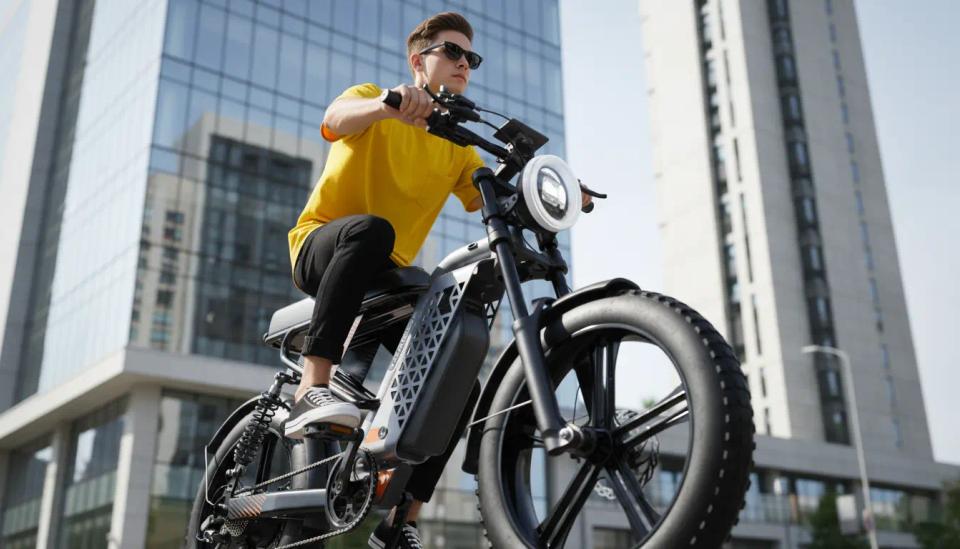
At ClipClop, we are much more than a manufacturer; we are your partners in success. We build our bikes, such as this L1 model with its robust 6061 Aluminum Alloy Frame, combined with the powerful 48V 15Ah lithium battery, for commercial use. But our care and commitment do not stop at the factory gate. We are here to support you with expertise as you take care of your fleet.
For questions regarding the right choice of electric off-road bikes, developing a personalized fleet configuration, or implementing a holistic battery maintenance program, feel free to get in touch with us. As professional manufacturers and exporters of electric off-road bikes, we offer comprehensive solutions from technical support to full vehicle solutions to dealers, wholesalers, and brand partners worldwide. Let's work together to power your success.
Frequently Asked Questions (FAQ)
Q1: Why is storing an e-bike battery at 100% charge bad for its long-term health?
Storing a lithium-ion battery at a high battery state of charge (SoC), especially 100%, keeps the cells at a high voltage. This high-voltage state accelerates chemical degradation, including the breakdown of the electrolyte and oxidation of the cathode. Over time, this leads to a permanent loss of capacity and a shorter cycle life. For optimal lithium battery care, especially for long-term storage, a charge level of 40-60% is ideal as it minimizes this stress.
Q2: What is the real-world benefit of a "charge protocol 80–90%" for a B2B electric bike fleet?
For a B2B electric bike operation, like a rental service, the primary goal is maximizing the asset's lifespan to increase ROI. While charging to 100% provides maximum single-trip range, it significantly shortens the battery's total service life. By consistently charging to only 80% or 90%, you can often double the number of charge cycles the battery can handle before significant degradation. This means delaying costly battery replacements for your entire fleet, resulting in substantial long-term savings.
Q3: How does the BMS help in day-to-day operations for a fleet manager?
The Battery Management System (BMS) is the unseen workhorse of battery maintenance. Its BMS balancing function ensures all cells in the pack are charged and discharged evenly, maximizing the usable capacity on every ride. For a fleet manager, this means more consistent range and performance across all bikes. Its protection features also prevent damage from common user errors, like attempting to charge in extreme temperatures or leaving a battery on a faulty charger, reducing maintenance headaches and preventing catastrophic failures.
Q4: Can we use a third-party charger for our e-bike fleet to save costs?
We strongly advise against it. Every battery and BMS is designed to work with a specific charging algorithm and voltage/current profile provided by the original manufacturer's charger. Using a non-approved charger can lead to improper charging, which may not only fail to balance the cells correctly but can also bypass safety protocols. This can damage the battery, shorten its cycle life, and in the worst case, create a fire hazard. Using the OEM charger is a critical aspect of safe and effective battery maintenance.
Q5: What is the most critical factor for preserving batteries during the winter off-season?
The two most critical factors are storage temperature and battery state of charge (SoC). Before storage, ensure every battery is charged to between 40-60%. Then, store them in a location that is dry, insulated, and maintains a stable temperature, ideally between 10-20°C (50-68°F). Avoid unheated sheds or garages where temperatures can drop below freezing. Finally, schedule a monthly check-in to top up any batteries that have self-discharged below the target range. This disciplined approach prevents both deep-discharge damage and the degradation caused by improper storage SoC.
References:
- OKAI B2B. (n.d.). How Do I Keep My E-bike Battery Healthy? Retrieved from https://b2b.okai.co/blogs/the-truth-about-charging-how-to-maximize-your-e-bike-battery-life
- Ekolife. (2025). Maximizing Your Wonderful Ebike’s Battery Life: Essential Tips for Singapore Riders 2025. Retrieved from https://ekolife.asia/maximizing-ebikes-battery-life-great-tips-for-riders/
ClipClop Manufacturing Standards & Build Quality
Looking for verified B2B e-bike manufacturing? Check out our ClipClop CS04 Long-Tail Mid-Drive Cargo Bike and our ClipClop C1 Step-Through Fleet Commuter, backed by factory-direct warranties and flexible 10-unit MOQ.
- Rictor. (2025, May 5). Electric Bike Battery Care: Extend Life by 40% with Simple Practices. Retrieved from https://rictor.com/blogs/news/electric-bike-battery-care
Commercial Procurement & Fleet Sourcing with ClipClop
Deploying electric bicycle fleets or distributing private-label e-bikes requires a trusted manufacturing partner capable of consistent container-level production, robot-welded frame alignment, and rigorous batch QC. From our 25,000 m² factory in Qingyuan, Guangdong, ClipClop provides end-to-end OEM/ODM electric bike manufacturing services with an accessible MOQ of just 20 units per SKU. Every container order includes dedicated spare parts allocation (2% free warranty backup components), full international compliance documentation (EN 15194, UL 2849, UN38.3), and 15-day sample dispatch.
Ready to evaluate engineering samples for the CS01 Fat Tire & CS04 Commercial Utility Platforms or review container FOB volume pricing? Visit our Commercial RFQ Portal to submit your technical specifications, or speak directly with our engineering sales team via our B2B contact desk.
Download the 2026 ClipClop Factory Catalog (PDF)
Full e-bike specs, motor & battery options, MOQ, and container loading details.
More OEM field notes.
Maximize Fleet Uptime & Profit: Your Essential Guide to B2B E-Bike Maintenance
eMTB vs City Commuter E-Bikes: Wholesale Line Selection & Dealer Margin Comparison
B2B Electric Bike Sourcing Guide 2026: OEM Specifications, FOB Pricing & Margins
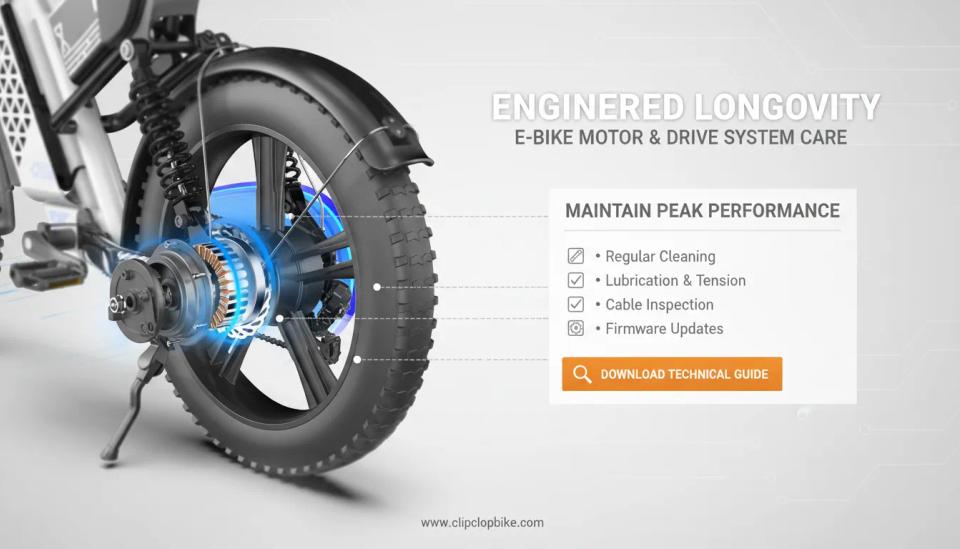
Commercial E-Bike Motor Maintenance: Planetary Gear Greasing, Hall Sensors & Fleet TCO
Send your brief. We will field-note back.
Reply includes the feasibility view, sample cost, MOQ, and the next step for your project. We aim to respond within 48 hours.