

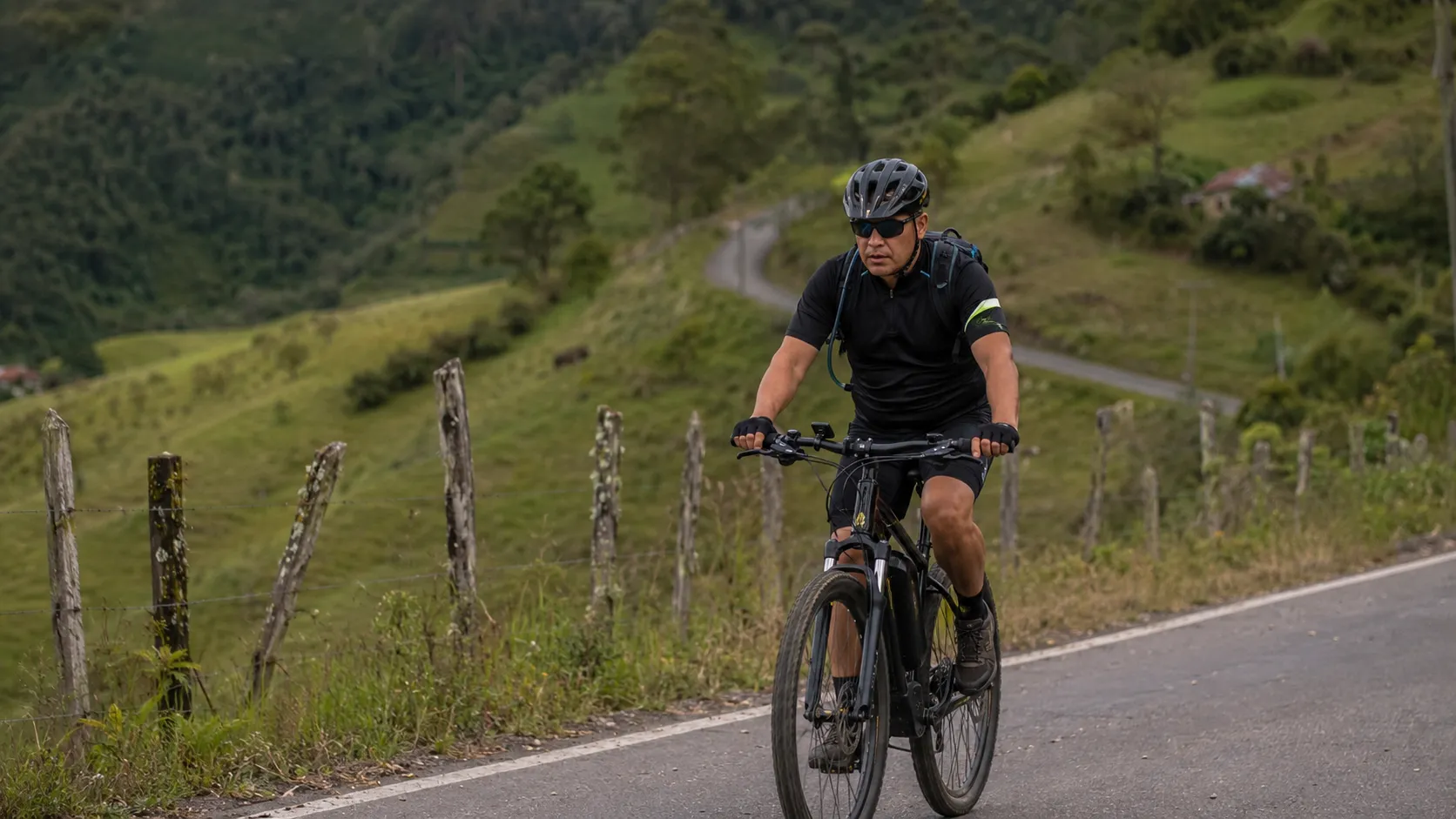
People ask me one question all the time: “How fast can this electric bike go?”
I get it. Speed is easy to understand. 25 km/h, 40 km/h, 50 km/h — simple numbers. But honestly, after working around e-bikes for a while, I don’t think top speed is the most important number. Not in Colombia. Not in 2026.
What matters more is this: where are you riding, who is using the bike, and can the bike still feel stable when the road is not perfect?
Because Colombia is not one flat test road in a factory video. Bogotá is different from Medellín. Cartagena is different from Cali. Some roads are smooth, some are broken, some climbs are not friendly at all. So when I talk about e-bike speed for Colombia, I try not to sell a fantasy.
Let’s be practical.
First, legal speed and real speed are not the same thing
This is where many sellers make the article too clean. They say, “This bike can go 50 km/h,” and stop there.
I don’t like that.
In Colombia, the legal discussion is more serious now. For light electric mobility vehicles, the common limit is 25 km/h on cycle infrastructure and up to 40 km/h on permitted roads. Also, helmet, lights, and local rules matter. In Bogotá, the rules can feel even more sensitive, especially around ciclorrutas.
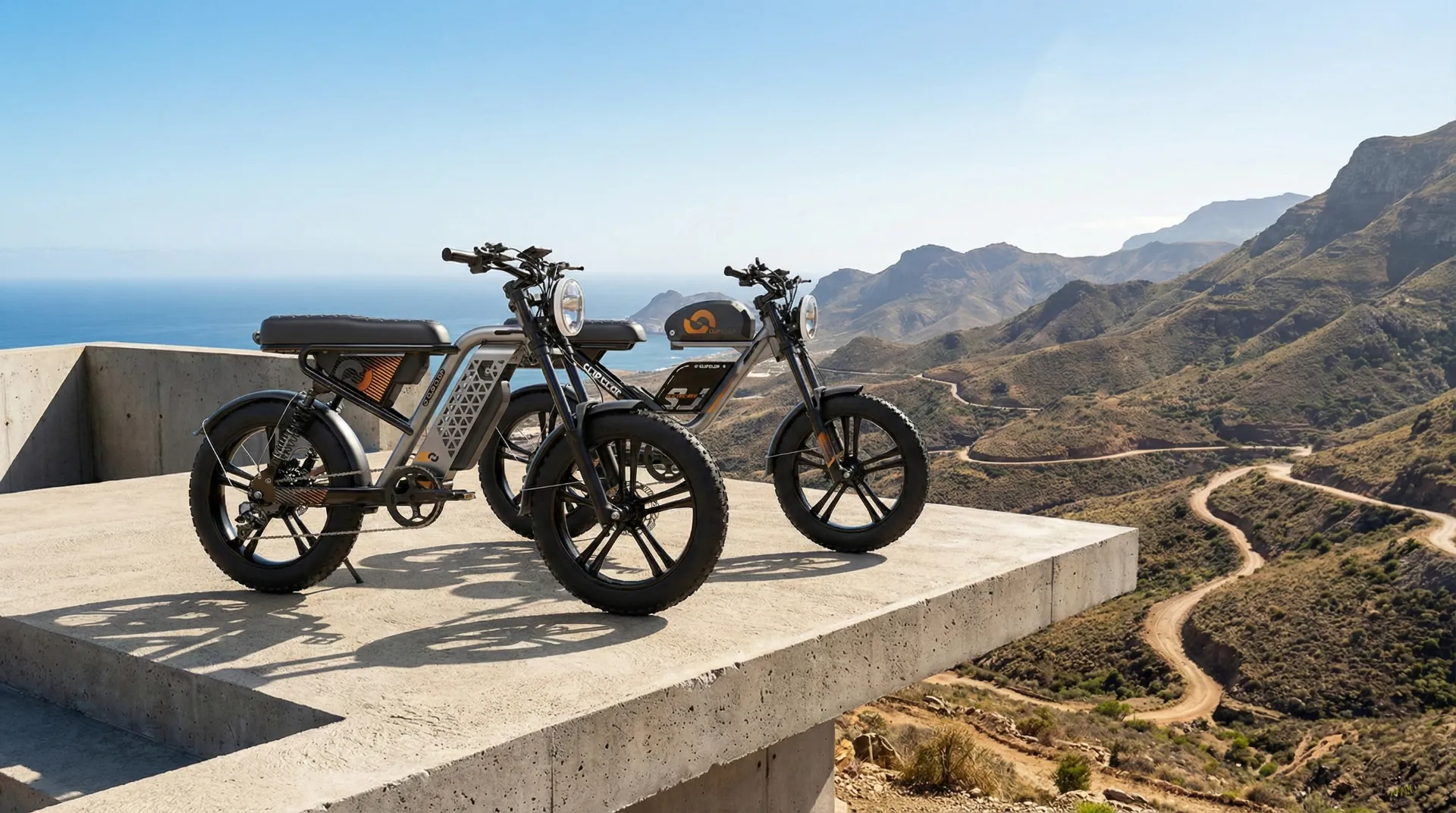
So yes, a bike like our ClipClop L1 can reach around 50 km/h in product specs. It uses a 48V 750W motor, a 48V 15Ah battery, fat tires, hydraulic disc brakes, and dual suspension. On paper, it is strong.
But should every rider use that full speed in the city? No. I don’t recommend that.
For Colombia, I would tell a distributor to market speed carefully. Say the truth, but don’t push people to ride like they are in a race. Speed sells, but safety keeps your brand alive.
My honest speed ranges
From my side, I normally explain it like this:
For daily city riding, 20–25 km/h feels enough for many people. Especially if they ride near traffic, pedestrians, or bike lanes.
For longer open roads, 30–40 km/h can feel useful, but only when the road is allowed, visible, and not crowded.
Above 40 km/h, I call it performance territory. Some riders love it. Some delivery guys ask for it. But I always get a bit cautious here. At that speed, bad brakes, cheap tires, or a loose frame become a real problem very fast.
One e-bike reviewer style of advice I like is simple: “Don’t test top speed first. Test braking first.”
I agree with that. A fast e-bike with weak brakes is not exciting. It is just a problem waiting to happen.
Why Colombia needs torque, not just top speed
This is my small bias: I care more about torque and climbing than pure top speed.
In flat cities, a weak bike can still look okay in a video. But in Medellín or hilly neighborhoods, you quickly find out if the bike is just “pretty fast” or actually useful.
A 750W motor helps because it does not struggle as much when the rider is heavier, the road goes uphill, or the bike carries a bag. For B2B buyers, this matters. Your customer will not ride in perfect lab conditions. He may carry groceries. He may ride after rain. He may be 90 kg. He may not maintain the tire pressure. Real life is messy.
That is why I like fat tire e-bikes for some Colombian use cases. Not for every rider, to be fair. A fat tire bike is heavier. It is not the best choice if someone wants a super light city bicycle. But for comfort, mixed roads, and that “stable feeling,” fat tires make sense.
ClipClop L1 uses 20×4.0 tires. I think this size is a good compromise. It looks strong, feels planted, and still fits the urban/adventure style that many Latin American customers like.
What affects e-bike speed?
A lot of people think motor power decides everything. It doesn’t.
Motor
Yes, motor power matters. A 250W city e-bike and a 750W fat tire e-bike are not the same animal. The 750W bike will usually accelerate better and handle climbs better.
But more power also means sellers must explain rules better. Don’t just say “more watts, more good.” That is lazy selling.
Battery
Battery condition changes speed more than beginners expect. A full battery feels strong. A low battery feels tired. Simple.
Also, riding full speed drains battery faster. I know everyone wants the highest range number, but range is never a fixed promise. Rider weight, tire pressure, road slope, stop-and-go traffic, and riding mode all change it.
ClipClop L1 uses a 48V 15Ah battery, and the listed range is around 50–60 miles under estimated conditions. But in Colombia, with hills and real traffic, I would rather under-promise. Customers respect honesty more than inflated range.
Tires and road surface
This one is underrated. Narrow tires may feel faster on smooth roads. Fat tires feel more forgiving on rough roads. In Colombia, I would not ignore road comfort.
A blogger-style tip I agree with: ride the bike on the worst road your customer will use, not the best road near your store.
That advice is not fancy, but it works.
Brakes
Hydraulic disc brakes are not just a premium word. If your e-bike can go fast, braking has to match the speed.
For me, this is one reason I don’t like super cheap high-speed e-bikes. Some of them show big numbers, but the brake system, frame, or wiring quality does not make me comfortable.
A dealer may make one quick sale with a cheap fast bike. But after two warranty complaints, that profit is gone.
A small real-world example
Let’s say a dealer in Colombia wants to sell e-bikes to two groups: young commuters and weekend riders.
The young commuter asks: “Can it go fast?”
The better answer is not just “yes.” I would say:
“For city use, keep it around 25 km/h where required. The motor is strong enough for climbing and acceleration, but don’t treat the city like a race.”
The weekend rider asks: “Can I take it outside the city?”
Here, ClipClop L1 makes more sense. Fat tires, suspension, and stronger motor power help when the road gets mixed. Not mountain-bike professional racing, no. But for rougher paths, leisure riding, and heavier riders, it feels more suitable than a small folding commuter bike.
That is how I would separate the message. Same bike, different selling angle.
Speed is also a marketing problem
In 2026, I think Colombian dealers should be careful with the word “fast.”
Fast attracts attention. But “safe, legal, and strong enough for hills” closes more serious buyers.
My suggestion:
Use speed as the hook, then explain control.
Say things like:
“Strong acceleration for hills.”
“Stable fat tire ride.”
“Hydraulic brakes for better control.”
“Configurable speed setting for local market needs.”
This sounds less flashy, but it is more believable. And honestly, believable content converts better now. People are tired of perfect ads.
So, how fast should an e-bike go in Colombia?
My answer is a little boring, but I stand by it.
For most city riders: 25 km/h is already useful.
For permitted roads and stronger use cases: up to 40 km/h can make sense.
For performance models like ClipClop L1: the bike may be capable of more, but the seller and rider need to respect local rules and road conditions.
A good e-bike is not the one that only wins a speed test. A good e-bike is the one customers keep using after three months, without feeling scared, cheated, or uncomfortable.
That is the kind of bike I want ClipClop to build.
Not perfect. Not the cheapest. But strong, practical, and honest enough for real roads.



 English
  Spanish
  Portuguese
  Russian
  Arabic
  French
  Dutch
Dutch  German
  Danish
