

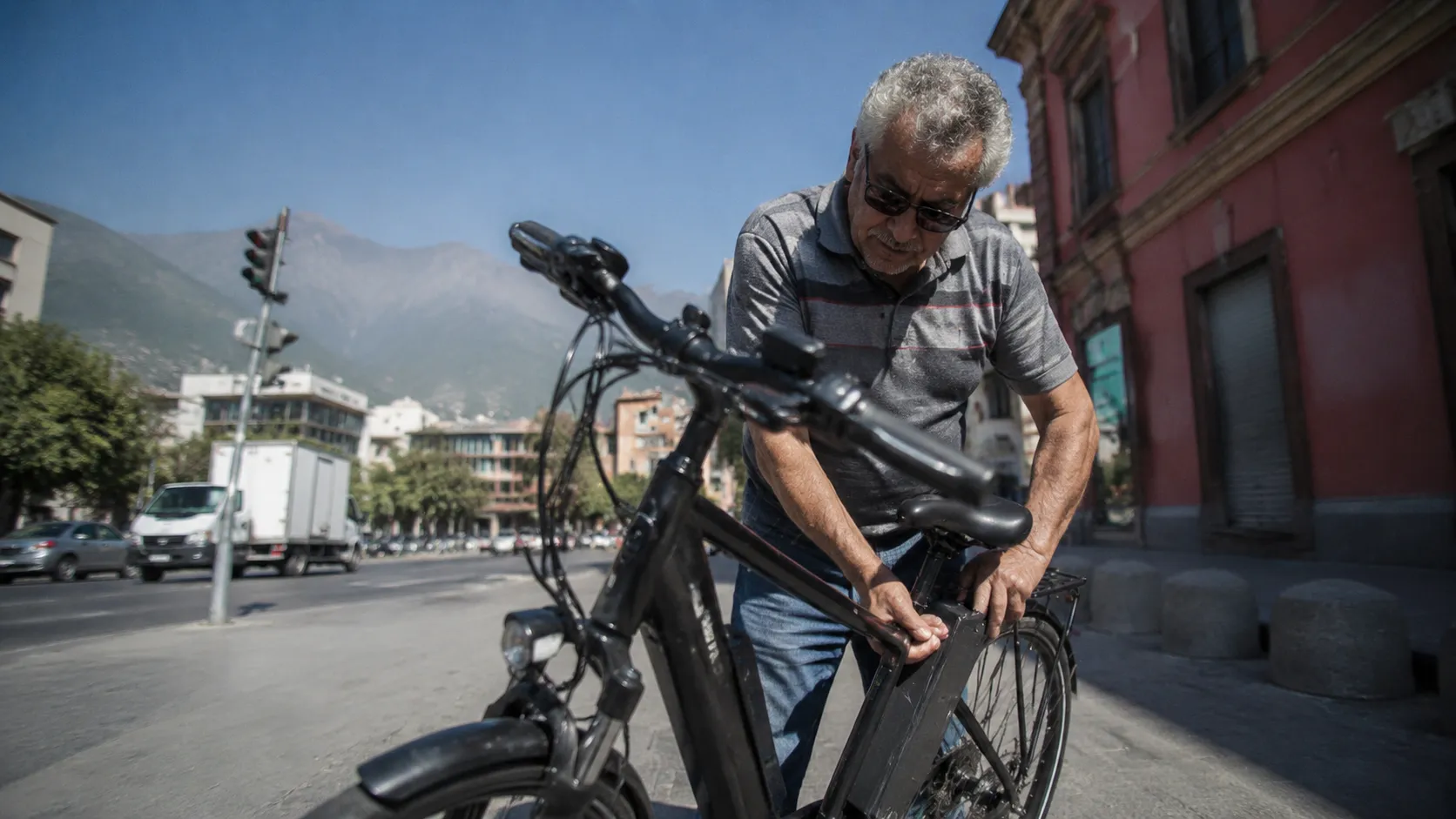
Look, I’m not going to pretend I’m some engineer with a PhD. I’m Leo. I run ClipClop Bike out of Guangzhou, and I’ve been staring at lithium battery packs until my eyes hurt. We build the L2 — that retro-fat-tire thing with the 48V system, dual suspension, and the removable battery you probably bought because it looks cool. Fair. But here’s the thing: I’ve shipped thousands of these 48V packs to South America, and about forty percent of the “dead battery” emails I get from Chile are not actually dead batteries. They’re just misunderstood. Tested wrong, charged wrong, or stored by someone who read a Facebook post from 2019 and never questioned it.
So yeah. This is my guide. Not Wikipedia. Just me, a factory guy, telling you how to actually test your e-bike battery in 2026 — if you’re riding around Santiago, Valparaiso, or down south where it rains like the world is ending. I’m going to be messy about it. Some sentences short. Others wandering around like a drunk uncle at a barbecue. Real people don’t write in perfect bullet points.
What You’re Actually Holding
The ClipClop L2 ships with a 48V 15Ah lithium-ion pack. That’s 720Wh. Our marketing team puts “874Wh” on the site because they’re optimistic. I gave up fighting them. The 2026 batches use slightly denser cells, so some packs hit closer to 18Ah, but don’t quote me. Point is: 48V DC. Direct current. Not AC. Half the multimeter mistakes I see involve people setting their tool to AC and panicking when the reading looks like a heartbeat monitor.
The battery is IPX5 rated. In Chilean terms: yes, you can ride through a Santiago winter downpour. No, you cannot drop it in a puddle in Concepcion and expect forgiveness. I’ve seen people confuse IPX5 with “submarine.” It’s “resistant to bad decisions,” not “immune to them.”
Also: it’s removable. Huge. You can take it inside your Nunoa apartment, charge at 220V — which Chile uses, so no voltage drama — and test it off the bike. Pop it out. Test it on your kitchen table. Maybe put a towel down. I’m not responsible for your roommate.
Why Test? Because Batteries Lie.
Last March, a dealer in Valparaiso — call him Carlos, not his real name — rang me on WeChat at 2 AM China time. His customer swore the battery was dead. Range crashed from 50 miles to twelve. Carlos tested voltage with a cheap multimeter from a ferreteria near Plaza Sotomayor. Reading: 54.6V. Fully charged. He figured the motor was the problem.
Nope. Voltage is a liar. A battery can sit at full voltage and still be toast. What Carlos didn’t do was a load test. He didn’t check what happened when the 750W motor — or the 1200W peak, if you’re hitting Santiago hills hard — started pulling amps. Under load, that “healthy” 54.6V pack dropped to 42V in seconds. Classic cell imbalance. Two cell groups dying. The BMS, the brain inside the battery, cut power to protect itself.
Customer wasn’t crazy. Battery was sick. Just not sick in a way a basic voltage check reveals.
What You Need (Spoiler: Not Much)
You don’t need a $300 Fluke multimeter. A $15 digital one from any Santiago Centro hardware store works fine. I’ve tested L2 packs with a meter that cost less than a completo. It just needs to read DC voltage. Most cheap ones do.
You also need a load. Something that pulls power. A YouTuber I watch, ElectrifiedEve out of Buenos Aires, uses an old car halogen bulb wired to Anderson connectors. Calls it her “torture light.” Love that. The idea: see the battery under stress. Voltage at rest is meaningless. Voltage while working is the truth.
Don’t want to build a load tester? Hack it: plug the battery into your L2, turn the throttle carefully with the bike on a stand, and measure voltage at the discharge port while the motor spins the wheel. Messy. But real data.
Step One: Safety
Turn the bike off. Remove the battery. I know, you’re not an idiot. But last year a guy in Providencia probed his battery while still connected to the controller, slipped, and shorted the terminals with his multimeter leads. Spark. Burned desk. Battery fine. Desk not. Pride not.
Put it on a non-conductive surface. Wood works. Do this dry. Not your Valdivia patio in a rainstorm. IPX5 is for riding, not electrical surgery.
Step Two: Resting Voltage
Set your multimeter to DC voltage. If manual range, pick above 60V. The L2 battery, fully charged, reads around 54.6V. Lithium-ion cells charge to 4.2V each, 13 in series. 13 times 4.2 is 54.6. “Empty” is around 39V to 42V. Below 39V, the BMS should have shut it down.
48V on a “full” battery? That’s maybe 60 percent. 30V? Either deep sleep mode or genuinely dead.
But — and I cannot stress this enough — good resting voltage does NOT mean good battery. I’ve seen packs at 54.6V with maybe 30% capacity left. Like old phones showing 100% then dying in an hour.
Step Three: The Load Test
This is where most Chilean riders fail.
Using the bike-as-load method: put the L2 on a stand, or flip it upside down carefully — put a rag under that LCD display with NFC, it’s not cheap. Connect the multimeter in parallel to the battery discharge leads. Have a friend slowly twist the throttle while you watch voltage. Or zip-tie the throttle gently. I’m not your boss.
A healthy 48V 15Ah pack should drop maybe 1 to 3 volts under moderate load. Drops 10 volts immediately? Weak cells. Drops to 40V and the BMS cuts out? Dead group.
Real case: a customer in Antofagasta. Desert heat. Stored his L2 in a tin-roof garage hitting 50C in summer. Brought the battery inside after a year. Resting voltage? Perfect 54V. Under load? Collapsed to 38V in ten seconds. Heat degraded the chemistry. Looked fine. Was not fine. He blamed us. I blamed his garage. We settled on “maybe don’t store lithium next to your lawnmower in the Atacama.”
Step Four: Capacity Test (For the Obsessive)
Charge fully. Run it down controlled while measuring amp-hours. Buy a cheap watt meter — those little blue boxes with LCD screens — wire it between battery and load. Run until BMS cuts off. Tells you how many Ah came out.
Our L2 packs are labeled 15Ah. In 2026, some new batches deliver 16-17Ah. After a year in Chile? 12Ah is acceptable degradation. 8Ah? The battery is lying. Time to replace.
A blogger I follow — BatteryUniversity, something like that, I forget the exact URL — insists lithium ages faster when kept at 100% charge all the time. He’s right. I used to think “keep it topped off” was good advice. It’s not. For lithium, store at 50-60% charge. Roughly 46V to 48V. Not full. Not empty. The middle. Like a good steak.
Chile-Specific Stuff Nobody Talks About
Altitude. Riding the Andes near Portillo or Farellones? Air is thin, motor runs cooler, but temperature swings are brutal. 20C in Santiago, 5C at 2,000 meters. Cold batteries don’t deliver full power. The L2 BMS limits current if pack temp drops too low. That 1200W peak feels like 800W in the mountains. Not a fault. Protection. I’ve seen forum posts where guys wrap batteries in hand warmers. Please don’t. You’ll cook the cells.
Charging infrastructure. Chile runs 220V, 50Hz. L2 charger is 54.6V 3A. Works fine. But I hate cheap aftermarket chargers. Every time a Chilean customer emails saying “I bought a faster charger from Mercado Libre to cut the 5-hour charge,” I know what’s coming. Overcharged cells. Swollen packs. Reduced lifespan. The 3A rate already pushes it — I’d prefer 2A for longevity, but customers want fast. Buy a no-name 5A charger because you’re impatient? You’re paying for convenience with battery life. Use the charger we gave you. Boring. Slow. Also why your battery lasts three years instead of one.
Rain. IPX5 means protected against water jets. It does not mean “leave it on the bike during a Temuco thunderstorm for three days.” A dealer in Concepcion told me his customer’s battery died after “just a little rain.” Turns out it was a week of constant downpour, battery sitting in a puddle on the frame. Water got in through the charge port cover because the user never checked if it snapped shut. BMS corroded. Not covered under warranty. I felt bad, but also… snap the cover, man.
What the “Experts” Get Wrong
YouTube e-bike reviewers — especially the ones with perfect lighting and British accents — tell you to “calibrate your battery” by running it dead then charging to 100% repeatedly. They call it a “memory reset.”
That advice is for old nickel-cadmium batteries from the 90s. Terrible for lithium-ion. Deep discharges to “zero” stress the cells. Our L2 BMS cuts off around 39V to prevent true zero, but if you’re constantly riding until the bike dies, you’re accelerating aging. Those reviewers should stick to handlebar grips and stop giving battery advice.
Another myth: “Store your battery in the fridge.” Saw this on a Spanish-language e-bike forum last month. Someone in Santiago literally put their 48V pack in the refrigerator. Do not. Condensation forms when you take it out. Water plus lithium equals bad. Store it in a cool, dry closet. Not the fridge. Not your car trunk in Iquique where it hits 60C.
My Honest Maintenance Routine
If I owned an L2 in Santiago — and sometimes I wish I did, just to ride up San Cristobal without dying — here’s what I’d do.
Every two weeks, pop the battery off and check the charge port for dust or corrosion. Santiago air is not clean. That fine dust gets everywhere. Compressed air costs nothing.
Every month, quick voltage check. Takes thirty seconds. Builds intuition. You start knowing what “normal” feels like.
Before a long ride — say, Santiago to Valparaiso, which some maniacs actually do — I’d load-test the night before. Make sure the pack handles sustained hills. That Ruta 68 climb is no joke, and pushing a 39kg fat-tire bike with dead electronics is the opposite of fun.
Every six months, check the battery mount screws. Vibration loosens things. The L2 has a solid locking mechanism, but if the battery rattles, connectors wear. Catch it early before your connector melts.
When to Give Up
Batteries die. It’s 2026. The L2 packs we built in 2023 are getting old. Capacity test shows under 60% of original Ah? Time. Don’t limp along with a dying pack. Not safe. Old lithium cells do weird things — swelling, heat. If your battery gets warm during charging when it never used to? Retire it. Recycle it. Chile has lithium recycling points in most major cities now. Use them.
And if you’re a dealer reading this — I know some of you are — stop selling “refurbished” batteries with unknown cell origins. I see this in the wholesale market. Someone opens a dead pack, swaps in random 18650s from who-knows-where, and resells. Dangerous. Gives all Chinese factories a bad name. I’m biased, obviously. I want you to buy new ClipClop packs. But even if you don’t, buy from someone using matched cells from a real brand. Samsung, LG, Panasonic. Not “generic red wrap” cells.
Final Thoughts
Testing your e-bike battery isn’t rocket science. It’s not even bicycle science. It’s paying attention. Most battery “failures” I see from Chile are attention failures. Not checking. Assuming. Reading one bad tip on Instagram and treating it like gospel.
The L2 is solid. I’m proud of it. That 48V system, removable pack, IPX5 rating — built for real life. But real life in Chile means steep hills, weird weather, dusty Santiago air. The battery can handle that. It just needs you to meet it halfway.
Get a multimeter. Learn what 54.6V looks like. Load-test once in a while. Store halfway charged. Use the right charger. That’s the whole secret. Everything else is noise.
If you read this far, you’re either really bored or really serious about your bike. Either way, thanks. If you’re in Chile riding a ClipClop, send me a photo. I like seeing our bikes out in the wild. Especially if they’re not on fire.



 English
  Spanish
  Portuguese
  Russian
  Arabic
  French
  Dutch
Dutch  German
  Danish
