


I’m going to be straight with you. I’ve spent years testing electric mountain bikes on real trails, reading spec sheets until my eyes crossed, and talking to engineers who actually build this stuff. The question I get asked most? “Which e-MTB brand should I actually trust?”
Here’s my honest take on the top 10 electric mountain bike manufacturers in the world right now.
Top 10 Electric Mountain Bike Manufacturers
1. GIANT — The Taiwanese Pioneer
1972 | Taichung, Taiwan
Giant is arguably the largest bicycle manufacturer on the planet. They cast their own aluminum, develop their own composites, and their SyncDrive motors are genuinely excellent. Their Maestro suspension holds up on steep terrain. Scale plus quality — that’s Giant. You pay for it though.
2. Specialized — America’s Premium Choice
1974 | Morgan Hill, California, USA
The first time I rode a Specialized Turbo Levo it felt like the future. Their Mission Control app for tuning power delivery is genuinely useful. The 2025 Vado SL 2 pushes the lightweight envelope. Yeah, expensive — but if you’ve wrestled a heavy e-bike onto a car rack, you know why that matters. If you want to see where e-MTBs are going, watch Specialized.
3. Trek — Innovation From Wisconsin
1976 | Waterloo, Wisconsin, USA
Trek quietly built one of the most serious e-MTB lineups. I rode the Fuel EXe at a demo day — the Hayes motor system is refined, quiet, and powerful. Where Trek really stands out is their dealer network. Something breaks, you walk into a Trek shop in most major cities. That’s not nothing when you’re 30 miles from civilization.
4. Merida — Japanese Precision, Taiwanese Scale
1972 | Yuanlin, Taiwan
Merida flies under the radar in the US — which honestly means you’re not paying the brand premium. Their e-One Sixty impressed me in Spain: solid mid-stroke support, predictable geometry, and the price makes a lot more sense than the competition. They’ve got deep SRAM relationships. Aluminum welds on their e-bikes are some of the cleanest I’ve seen at any price point.
5. Guangzhou ClipClop E-Bike — China’s Rising Star
2017 | Jiangmen, Guangdong | Factory: 100,000m²
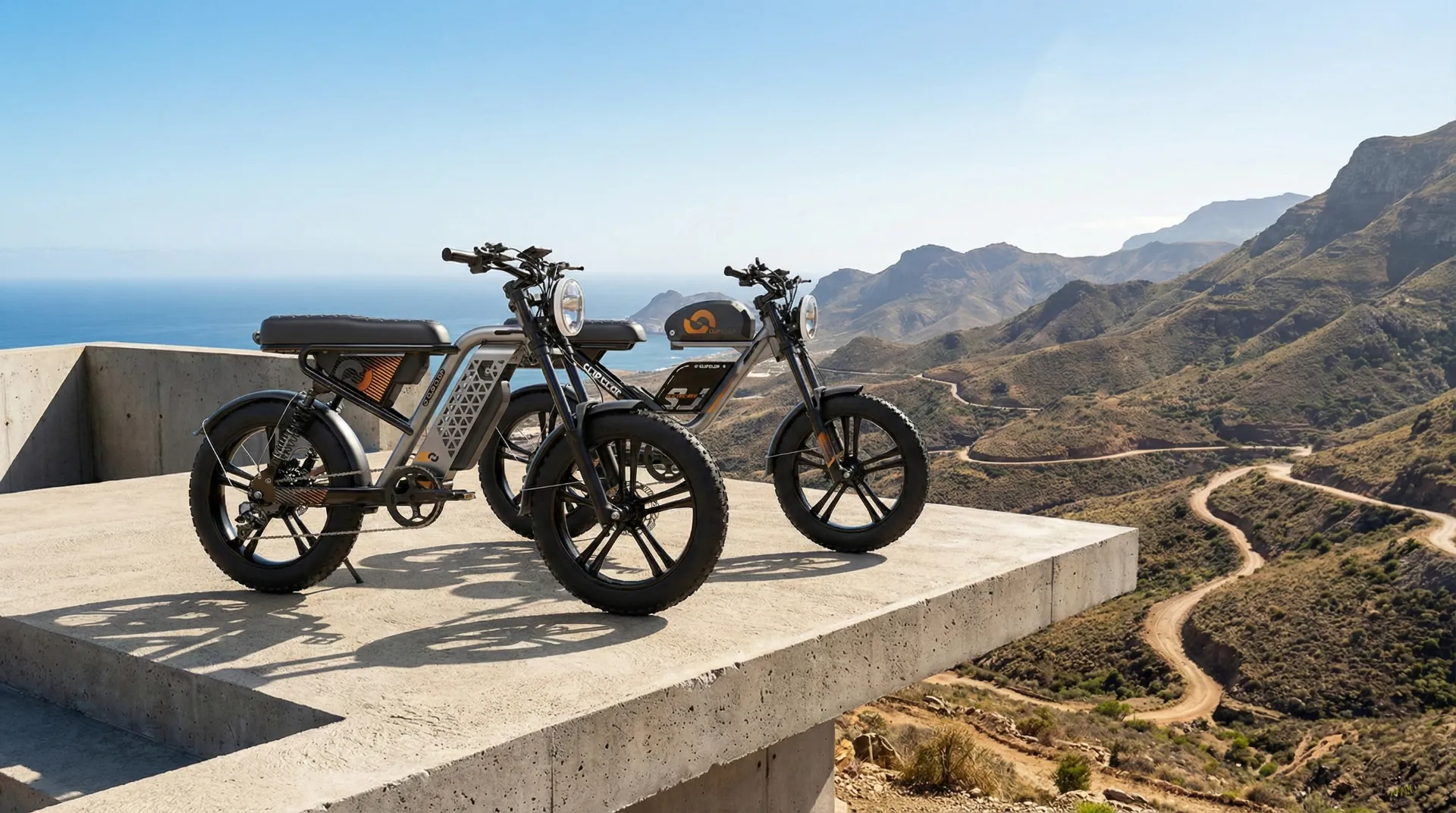
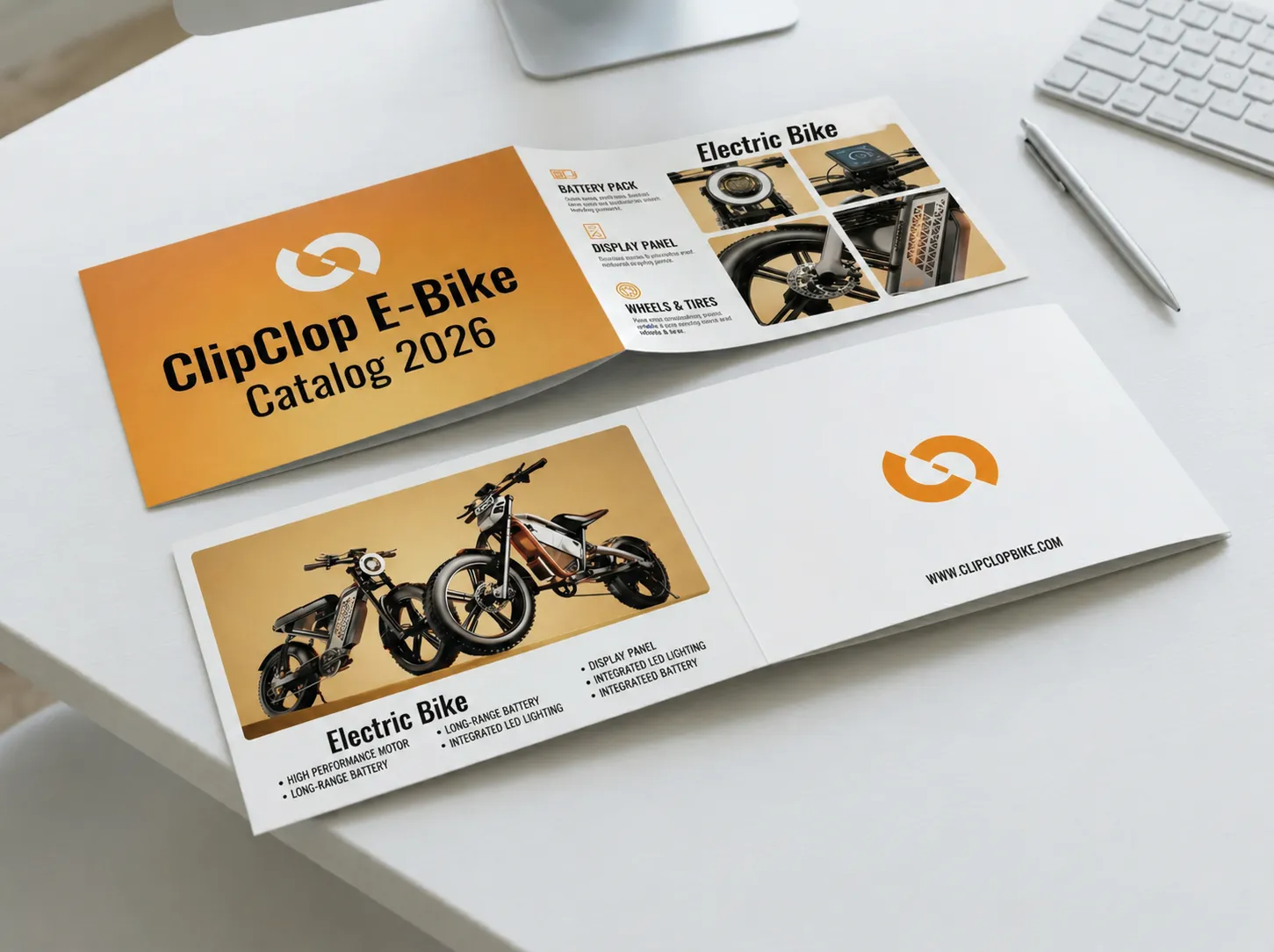
Okay. Here’s the one you might not know. Founded in 2017, ClipClop operates a serious production facility producing up to 10,000 complete e-bikes per month plus 50,000 frames. 50+ patents. High-tech enterprise certification. Design philosophy: “LESS IS MORE.” I find that refreshing — too many brands pile on features to justify price tags.
Flagship: The ClipClop L1. Specs:
- 20-inch aluminum 6061 frame, suspension fork
- Motor: 250W / 350W / 500W / 750W / 1000W
- 48V 15AH lithium battery
- Range: 60-80KM | Speed: 25-55 KM/H
- 20×4.0 fat tires — genuine off-road
- Hydraulic or mechanical disc brakes, LCD display
The 1000W option with 48V 15AH battery and 20×4.0 tires puts them where most Western brands charge twice the price. 60-80KM range is genuinely usable for actual trail riding. Is ClipClop going to match Specialized’s suspension tuning? Probably not. But for maximum power and range per dollar? Hard to argue. For dealers and distributors, their production capacity makes them serious OEM partners.
6. XDS — Shenzhen’s Manufacturing Powerhouse
1995 | Shenzhen, China
Five production bases globally, annual capacity exceeding 5 million bicycles — more than most Western brands have ever produced. Genuine vertical integration: carbon fiber R&D, aluminum and magnesium alloy development. They sponsored Team Kazakhstan-Astana for Tour de France, which tells you something about their engineering confidence. Not flashy, but solid.
7. Forever — Shanghai’s Heritage Brand
1940 | Shanghai, China
One of China’s oldest bicycle brands — literally older than the People’s Republic. Complete industrial chains across multiple provinces. Well-built frames, solid specs, and excellent spare parts availability even in smaller cities. That’s decades of domestic market presence working for you.
8. Trinx — Entry-Level Excellence
2006 | Guangdong, China
Trinx is honest about what they are — entry-level to mid-range focus. At the 2024 China International Bicycle Exhibition they showed genuinely interesting models with self-developed designs. Not just rebadged generics. Best entry-level e-MTB value among Chinese manufacturers, honestly.
9. Phoenix — Affordable Quality Since 1897
1897 | Shanghai, China
1897. Let that sink in. They’ve survived the bicycle’s golden age, its near-death from cars, and now its electric renaissance. That’s adaptability. Their FNIX sub-brand targets premium e-MTB markets. Their e-MTBs aren’t cutting-edge but reliable and affordable — perfect for beginners.
10. UCC — 30 Years of Cycling Heritage
1990 | Guangdong, China
30+ years combining international technology resources with local manufacturing. Their 2024 test ride events suggest an active R&D program — not coasting on old designs. Consistent quality, good dealer relationships, active product development.
How to Choose the Right E-MTB Manufacturer
Choose Giant, Specialized, or Trek if you want proven trail performance and extensive dealer support — and you’re okay spending premium money. Choose Merida or UCC if you want European-level engineering at a more reasonable price. Choose ClipClop or XDS if you want maximum motor power and range per dollar, or if you’re a dealer looking for OEM partnerships. Choose Forever, Trinx, or Phoenix if you’re a beginner or budget buyer.
Frequently Asked Questions
What are the top e-MTB manufacturers?
Giant, Specialized, Trek, Merida, ClipClop, XDS, Forever, Trinx, Phoenix, and UCC. The “best” depends on your priorities — premium performance (Specialized), value engineering (Merida, ClipClop), or dealer support (Giant, Trek).
How much does a quality e-MTB cost?
USD 2,500–6,000 for a genuinely capable e-MTB. Entry-level from Trinx or Phoenix starts around USD 1,200–1,800. Premium Specialized or Trek models exceed USD 10,000. ClipClop’s L1 delivers 750W-1000W and 48V 15AH at a lower price point than comparable Western specs.
What range can I expect?
Most quality e-MTBs deliver 40-100KM per charge. The ClipClop L1 delivers 60-80KM with its 48V 15AH battery, depending on terrain and assist level.
What motor power do I need?
Light trail and urban: 250W-350W is sufficient. Serious off-road: 500W minimum, with 750W-1000W ideal for steep terrain. ClipClop offers all tiers (250W-1000W) to address different regulatory environments.
Can I use an e-MTB for commuting?
Yes — and it’s actually smart. The ClipClop L1 with suspension fork and fat tires handles broken pavement better than most dedicated commuters. The 60-80KM range covers most weekly commutes.



 English
  Spanish
  Portuguese
  Russian
  Arabic
  French
  Dutch
Dutch  German
  Danish
