
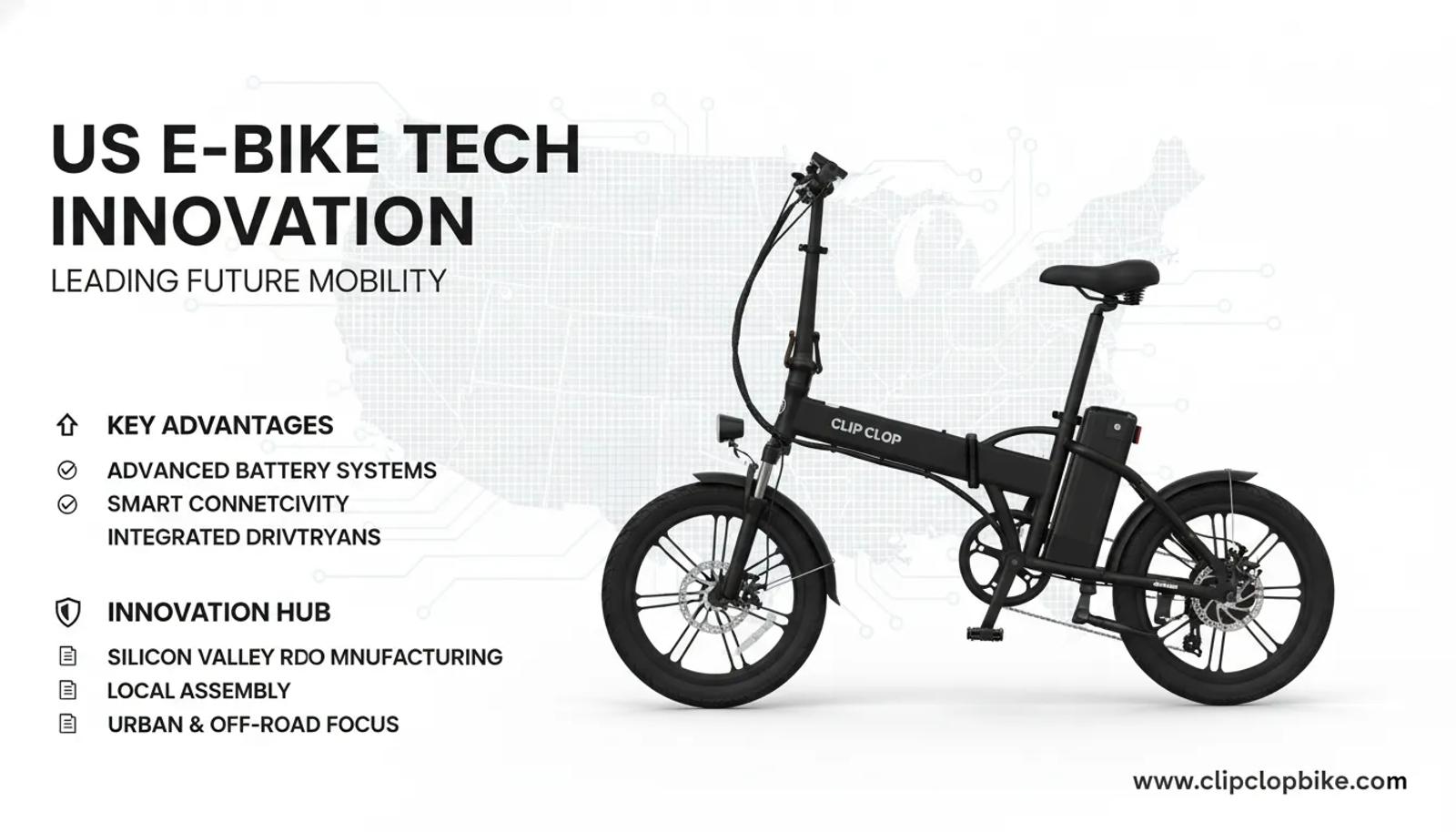
US E-Bike Technology Trends 2026: IoT Fleet Telematics, Smart BMS & Automatic Shifting
I’m Leo Liang, and my daily life basically revolves around electric off-road bikes at ClipClop. From our base in Guangzhou, I’m not just looking at BOM sheets and production schedules all day.
I’m Leo Liang, and my daily life basically revolves around electric off-road bikes at ClipClop. From our base in Guangzhou, I’m not just looking at BOM sheets and production schedules all day.
For commercial electric bicycle distributors, fleet managers, and private-label brands, us e-bike technology trends 2026: iot fleet telematics, smart bms & automatic shifting represents a critical engineering and operational decision. This comprehensive B2B technical guide analyzes the performance parameters, regulatory compliance frameworks, and factory-direct sourcing strategies required to maximize fleet uptime and commercial margins.
Commercial partners can inspect our manufacturing infrastructure on our OEM/ODM E-Bike Manufacturing Facility page, review standard configurations on our CS01 Fat Tire & CS04 Commercial Utility Platforms, or directly request volume FOB terms via our Commercial Quote Request Portal (MOQ 20).
When someone asks me for “just another e-bike,” I usually push back a bit. I’ll ask: What are your riders actually struggling with? Where are the bad reviews coming from? Do you need a bike that just moves units, or one that makes people say, “Wow, this brand really gets it”? That second path is harder, but it’s also where the margin and long-term loyalty live.
The US market is especially intense. Riders there are picky about power delivery, integration, and “smartness.” They read spec sheets, watch a bunch of YouTube reviews, and then walk into a shop already knowing way too much. A lot of US bike bloggers I follow keep saying the same thing: “Don’t just slap a motor and battery on an old frame and call it innovation.” I completely agree.
So this article is me talking to you as a partner, not just a supplier. If you are a buyer, brand owner, or rental fleet operator trying to plan your 2026 lineup, I want to walk you through the real tech trends I see shaping the next wave of US e-bikes—and how to actually use them in your sourcing strategy.
What’s Really Powering the Future: Mid-Drive Motors + Smarter Torque Sensors
If we’re honest, the motor is still where most riders make their final decision. In the US, more and more serious customers are gravitating toward mid-drive systems with refined torque sensing. Hub motors still have a place—especially for entry-level commuters or simple city fleets—but they don’t create that “premium ride” feeling your brand wants to be known for.
Because mid-drives send power through the crank and existing drivetrain, riders get better climbing, more efficient use of the cassette, and a far more natural feel. A lot of shop owners tell me their biggest headache is customers complaining about jerky, on/off assistance from basic systems. Once riders test a well-tuned mid-drive, it’s really hard for them to go back. That’s the experience you want them to associate with your logo.
Looking at 2026, it’s less about chasing crazy wattage and more about smarter control. Yes, we’ll still work within the usual US classes—Class 1 (20 mph pedal-assist), Class 2 (20 mph throttle), and Class 3 (28 mph pedal-assist). But the real R&D work is happening behind the scenes in torque sensors and control algorithms: higher sampling rates, more precise readings, and smoother assistance curves.
When the torque sensor is reading pedal input at a very high frequency and the controller reacts instantly, you get that “bionic legs” feeling. It doesn’t feel like a machine pushing you; it feels like you suddenly got much stronger. A lot of riders describe it that way in reviews, and those are exactly the reviews you want: “This bike just disappears underneath you; it feels like part of your body.”
At the same time, the whole drive unit is shrinking and becoming more refined. We’re using lighter materials—like magnesium housings and advanced polymers—to drop weight without making the casing fragile. Inside, helical-cut gears and more advanced motor control logic are cutting down on the high-pitched whine that many riders hate. As one US blogger put it, “I don’t want my e-MTB to sound like a drone.” I hear that a lot.
From a B2B point of view, this matters because first impressions sell bikes. When a customer on a test ride doesn’t hear much noise but feels this smooth, responsive push, they immediately treat the bike as a premium product. That’s how you differentiate in a 2026 market that’s going to be very crowded with “good enough” mid-drives.
Download the 2026 ClipClop Factory Catalog (PDF)
Full e-bike specs, motor & battery options, MOQ, and container loading details.
Are We Nearing Peak Battery? Not Really—But It’s Changing Where the Value Is
Everyone asks about range. Your rental partners want all-day operation with minimal swaps. Your dealers want to confidently tell customers, “Yes, this bike will handle your full commute plus a detour.” Batteries are still the bottleneck in many people’s minds, but we’re not at a dead end; the innovation is just getting more subtle.
By 2026, we’ll see more packs using higher-energy-density cells, including chemistries with silicon-based anodes and other tweaks that squeeze more watt-hours into the same—or even smaller—physical volume. In practice, that might look like a 600Wh integrated battery that weighs similar to an older 400Wh pack. That’s a compelling upgrade line for your catalog or website.
The days of big, bolted-on “shark” batteries are basically over in the serious segment. On our side, we’re designing frames—often using 6061 or 7005 aluminum—to wrap around the battery and hide it in the downtube. That does three things you can actually market: cleaner visuals, a lower center of gravity, and better handling, especially on off-road models. A lot of YouTube reviewers keep praising bikes that “don’t look like e-bikes,” and integrated batteries are a big part of that.
But the real game-changer for B2B partners is happening inside the pack: the Battery Management System. The BMS used to be this black box only engineers cared about. That’s changing fast. By 2026, smart BMS platforms will be central to the whole connected bike ecosystem. They will track cell health, charge cycles, temperature events, and even estimate remaining lifespan with decent accuracy.
For rental fleets or delivery operators, this opens the door to predictive maintenance instead of panic mode. Instead of waiting for a pack to fail in the middle of a busy Saturday, you’ll see in your dashboard that certain packs are nearing a threshold and should be rotated out or serviced. Less downtime, fewer angry customers, and more consistent revenue—that’s where the true value of “battery innovation” sits for your business.
As a buyer, I’d strongly suggest you stop asking only, “How big is the battery?” and start asking, “What can the BMS actually tell us, and how does it connect?” That one shift in mindset puts you ahead of most of the market.
Smart Tech and IoT: From Nice-to-Have to Must-Have
Let’s be honest: “smart” features used to be a bit of a gimmick. A flashy display here, a basic app there. Now, especially for mid- to high-end US bikes, connectivity is turning into a baseline expectation. Many riders are used to updating their phone, their watch, even their car. They expect their bike to behave the same way.
On the rider side, a good app should cover a few core things: ride tracking, battery info, system health, and basic tuning of assistance modes. People want to tweak how strong Eco, Trail, or Turbo feels without diving into engineer menus. Some reviewers also really appreciate OTA (over-the-air) firmware updates, because it means the bike can improve over time—bug fixes, smoother assistance, maybe even new modes. That’s an easy story for your marketing team to tell.
For B2B clients like you, though, IoT is worth even more on the backend. Integrated GPS and anti-theft systems are becoming standard, not optional. It’s not just about an alarm or a lock icon on the screen anymore. We’re talking about real-time location, remote disabling of motor assistance, and geofencing so you get alerts when a bike leaves a set zone. If you run a rental or corporate fleet, theft risk drops dramatically when the bikes are “visible” on a map.
The other huge win is operational data. Picture a live dashboard showing which bikes are in use, which are idle, which are low on charge, and which are throwing fault codes. Instead of staff riding around guessing which bikes need service, you can plan the day based on actual data. A lot of fleet managers I speak with say this kind of visibility is what finally makes bigger e-bike deployments feel manageable.
If you’re sourcing for 2026, I’d encourage you to stop treating connectivity as an add-on and start treating it as part of the core platform. Ask your suppliers not just “Does it have an app?” but “What data can we access, and how can we use it in our operations?”
Can We Make E-Bikes More Efficient? Regenerative Braking Done Right
Regen is one of those topics that always gets attention, sometimes a bit too much. People imagine unlimited range and never charging again. That’s not realistic on an e-bike, and it’s better to be honest with your customers about that upfront. But when done properly, regen absolutely has business value.
The core idea is simple: when the rider is braking, the motor switches into generator mode and sends some energy back to the battery instead of losing everything as heat. This is most useful in stop-and-go city riding or long downhill sections. You’re not doubling the range, but a 5–15% extension in real-world use is achievable, and for some applications that’s actually huge.
Think about delivery fleets. If a rider can finish a full shift without needing to swap packs because regen is giving them that extra bit of buffer, you save time, spare batteries, and some headaches. Same for rental fleets in hilly tourist areas—fewer mid-ride rescues because the bikes managed their energy a little better on the descents. It’s not magic, but it is meaningful.
Early regen systems felt weird: grab the brake and suddenly the bike dragged in an unpredictable way. The 2026-style approach we’re working on is much more subtle. Regen blends in at the start of lever pull to provide initial deceleration, and then mechanical disc brakes take over as needed. Riders just feel smooth braking instead of a harsh “engine brake” effect.
There’s another hidden benefit many bloggers don’t mention enough: reduced wear on pads and rotors. Over a few hundred bikes in a fleet, fewer brake component replacements and less workshop time translate directly into lower operating costs. So when you evaluate regen, don’t only ask, “How much range can we gain?” Also look at, “How much maintenance can we avoid?”
Advanced Materials: What Frames Will Look Like in 2026
The frame is where all these systems come together, so material choice is still a huge lever. For most of the US market, high-quality aluminum alloys like 6061 and 7005 will remain the workhorse options. They offer a sweet spot between strength, cost, and manufacturability, which matters a lot when you’re trying to hit a specific price point for dealers.
But the high-end segment is clearly moving more into carbon—especially for e-MTBs and performance road or gravel e-bikes. I see more US shops wanting at least one “halo” bike on the floor, something that shows off what their brand can do. Carbon is perfect for that, as long as it’s built correctly for e-bike loads and not just copied from an analog mold.
Modern carbon production is getting more efficient. Automated fiber placement, better layups, and improved molding techniques are reducing waste and making quality more consistent. On our side, we’re designing carbon frames that reinforce the areas that see the most stress: around the head tube, bottom bracket, and motor mounts. E-bikes put a lot more torque into the system, and if you don’t plan for that, you’ll get warranty nightmares later.
From a design point of view, carbon opens up tube shapes and integration options that are hard to execute in metal. You can push more aggressive geometries, route cables and harnesses internally in cleaner ways, and really hide the motor and battery to make the bike look sleek. A lot of US reviewers love calling these “stealth e-bikes,” and that kind of branding is very powerful in certain markets.
If you’re planning a lineup, I often recommend a layered approach: strong aluminum models for volume sales and one or two carbon flagships that lift the entire brand image. Even if those high-end models don’t sell in huge numbers, they set the tone for everything else you offer.
Suspension That Actually Understands E-Bikes
Take a normal mountain bike fork, bolt it on an e-MTB, and send it out—this is still happening in some parts of the industry, and it almost always leads to complaints. E-bikes are heavier, faster on climbs, and used by a broader range of riders. The suspension has to be tuned for that reality, not just recycled from analog MTB catalogs.
For 2026, “e-tuned” suspension means stiffening the chassis and reworking the internals. You’ll see more forks with 36 mm or 38 mm stanchions, reinforced crowns, and stronger lowers. The goal is simple: keep steering precise even when the bike is heavy and being pushed hard on rough terrain. Flexy forks might feel okay at first, but they become a confidence killer when speeds go up.
Inside, the damping is where we spend a lot of time. Compression and rebound circuits are re-tuned to deal with extra mass so the bike doesn’t dive, pogo, or bottom out too easily. When I ride test bikes with non-e-tuned suspension, I can feel the difference in a few minutes. On rental fleets, the difference shows up as fewer crashes and way fewer “this bike felt sketchy” reviews.
Looking ahead, electronic suspension will show up more often on high-end builds. Sensors read terrain and adjust settings on the fly, switching between firmer climbing modes and plush descending modes without the rider needing to think about it. For B2B partners, this is both a performance story and a nice upsell: “smart suspension” is something that looks exciting on a spec sheet and really does improve the ride for non-expert users.
When you evaluate suspension for your 2026 line, don’t just ask about travel and brand. Ask whether the fork and shock are specifically tuned for e-bike use, and if electronic options exist for your top models. Those details will matter more than ever.
E-Bike Technology Evolution: 2025 vs. 2026 Outlook
| Feature / Component | Standard Technology (Current) | US E-Bike Technology Innovation 2026 | Key B2B Advantage |
| Drive System | Hub Motor or Basic Mid-Drive | Integrated Mid-Drive Motor & Torque Sensor with refined algorithms | Attracts enthusiast customers; commands higher price point; superior performance on varied terrain. |
| Frame Material | Aluminum Alloy (6061/7005) | E-Bike Specific Carbon Frame & advanced aluminum hydroforming | Creates premium "halo" products; significant weight reduction; enables cutting-edge integrated designs. |
| Battery System | Standard Lithium-Ion Pack with a basic protection circuit | High-Density Cells with a Smart Battery Management System (BMS) | Reduces customer range anxiety; enables predictive fleet maintenance; lowers long-term operational costs. |
| Connectivity | Basic LCD/LED Display showing speed and battery level | Integrated IoT Connectivity with GPS Anti-Theft and mobile app control | Opens new markets (fleets, delivery); drastically reduces theft risk; offers valuable data for business planning. |
| Suspension | Standard MTB suspension repurposed for e-bike use | "E-Tuned" Suspension with reinforced chassis and custom damping circuits | Delivers a safer, more confidence-inspiring ride; higher customer satisfaction; reduces component wear. |
| Efficiency Tech | Standard braking systems | Integrated Regenerative Braking | Extends effective range by 5-15%; reduces brake pad and rotor wear, lowering maintenance costs for fleets. |
What All This Means for Your 2026 Sourcing Strategy
All these tech trends—motors, batteries, connectivity, materials, suspension—are exciting, but they also make sourcing more complex. The old model of picking a frame from a generic catalog, choosing a paint color, and slapping a logo on it is losing ground fast in the US. Riders are too informed, and the competition is too close.
To really compete, you need manufacturing partners who treat you like a development partner, not just a customer. When you sit down with a supplier, the conversation should go deeper than “What’s the price?” and “What’s the lead time?” You should be able to ask pointed questions about torque sensors, BMS features, IoT platforms, alloy grades, and carbon layups—and get clear, confident answers.
For example, instead of only asking “Is this a mid-drive?” ask:
- What type of torque sensor does it use, and what’s the sampling rate?
- How does the controller blend power at low cadence or on technical climbs?
Instead of just “How many amp-hours is the battery?” dig into:
- What does the BMS log?
- Can we access that data for fleet analytics?
- How does it communicate with the main system and the app?
And for frames and suspension, go beyond:
- Which aluminum alloy or carbon layup schedule is used, and why?
- Is the suspension specifically tuned for e-bike weight and use cases?
A manufacturer who can walk you through these details is usually one who is serious about long-term product quality, not just short-term orders. That’s the kind of partner who helps you build a brand, not just a single model year.
At ClipClop, this is how we try to work with our distributors and OEM clients. We spend a lot of time on joint R&D—custom frame geometries for rental fleets, specific IoT integrations for corporate programs, tailored motor tuning for different markets. It’s more work on both sides, but it produces bikes that stand out and stay relevant longer.
Wrapping Up: Turning Tech Trends into Real Business Growth
The e-bike world is moving fast, and the US market is pushing the pace. Mid-drive refinement, smarter batteries and BMS platforms, deep IoT integration, better materials, and e-specific suspension are not just buzzwords. They are the tools you can use to design a product line that feels one step ahead in 2026.
If you are thinking about how to position your brand, build a rental or delivery fleet, or spec your next generation of e-MTBs or commuters, I’m always happy to dig into the details with you. This is what my team and I do every day—help partners move from “we need an e-bike” to “we have a clear product strategy that fits our market.”
We specialize in electric off-road bikes and related platforms, offering everything from technical consulting and component selection to full vehicle solutions for dealers, wholesalers, and brand owners. If you’re ready to turn these tech trends into real products and real margins, let’s talk and see how we can build your next wave of growth together.
Frequently Asked Questions (FAQ)
Q1: What is the most significant trend in US E-Bike Technology Innovation for 2026 for a B2B buyer?
The most significant trend is the deep integration of systems. Instead of separate components, we're moving towards a cohesive "smart e-bike" where the mid-drive motor & torque sensor, Battery Management System (BMS), and IoT connectivity all communicate. For a B2B buyer, this means offering a more reliable, user-friendly, and feature-rich product that can be managed and diagnosed remotely, reducing long-term operational costs.
Q2: Will hub motors become obsolete with the focus on mid-drive systems?
Not at all. While high-performance e-MTBs and premium commuters will be dominated by advanced mid-drive motor & torque sensor systems, hub motors will continue to be a cost-effective and reliable solution for entry-level, urban, and folding e-bikes. The key is choosing the right drive system for the intended application scenario and price point.
Q3: Is a carbon frame worth the extra cost for a rental fleet?
For most general-purpose rental fleets, a high-quality aluminum alloy frame (6061 or 7005) offers the best balance of durability, performance, and cost. However, for a premium rental service catering to experienced mountain bikers or tourists seeking a top-tier experience, offering a select number of high-end carbon frame models can be a powerful differentiator and justify a higher rental price.
Q4: How does IoT connectivity and GPS anti-theft impact a distributor's business model?
It adds a significant value layer. For distributors, offering bikes with robust GPS anti-theft and fleet management capabilities opens up new markets, such as corporate bike-share programs, hotel rental fleets, and delivery services. It solves a major pain point—asset security and management—making the product offering far more attractive to these lucrative B2B segments.
Q5: What should I prioritize in B2B R&D when developing a new e-bike line for the US market?
Focus on the user experience. This means prioritizing a smooth and intuitive power delivery system (a high-quality mid-drive motor & torque sensor is key), ensuring ample range and safety with a smart BMS, and providing the seamless IoT connectivity that modern consumers expect. Reliability and serviceability are paramount for the B2B market, so choose components and partners that stand behind their electric bike tech.
References:
- Bike.eu: E-bike market trends and technological developments.
- Bosch eBike Systems: Information on mid-drive motor technology and smart systems.
ClipClop Manufacturing Standards & Build Quality
Looking for verified B2B e-bike manufacturing? Check out our ClipClop L1 All-Terrain Fat Bike and our ClipClop CS04 Commercial Cargo Bike, backed by factory-direct warranties and flexible 10-unit MOQ.
- CyclingIndustry.News: Reports on e-bike componentry and manufacturing innovations.
Commercial Procurement & Fleet Sourcing with ClipClop
Deploying electric bicycle fleets or distributing private-label e-bikes requires a trusted manufacturing partner capable of consistent container-level production, robot-welded frame alignment, and rigorous batch QC. From our 25,000 m² factory in Qingyuan, Guangdong, ClipClop provides end-to-end OEM/ODM electric bike manufacturing services with an accessible MOQ of just 20 units per SKU. Every container order includes dedicated spare parts allocation (2% free warranty backup components), full international compliance documentation (EN 15194, UL 2849, UN38.3), and 15-day sample dispatch.
Ready to evaluate engineering samples for the CS01 Fat Tire & CS04 Commercial Utility Platforms or review container FOB volume pricing? Visit our Commercial RFQ Portal to submit your technical specifications, or speak directly with our engineering sales team via our B2B contact desk.
Download the 2026 ClipClop Factory Catalog (PDF)
Full e-bike specs, motor & battery options, MOQ, and container loading details.
More OEM field notes.
Importing E-Bikes to Brazil 2026: IPI Tax Reductions, Inmetro Rules & Manaus Assembly (SKD)
World's Top E-Bike Manufacturers 2026: B2B OEM/ODM Comparison, Factory Capacity & Tooling Lead Times
Global E-Bike Market Segmentation 2026: Commuter, Cargo & eMTB Product Strategy for Importers
An Insider’s Guide: China’s Top 5 Fat Tire Electric Bike Manufacturers for B2B Partners
Send your brief. We will field-note back.
Reply includes the feasibility view, sample cost, MOQ, and the next step for your project. We aim to respond within 48 hours.