
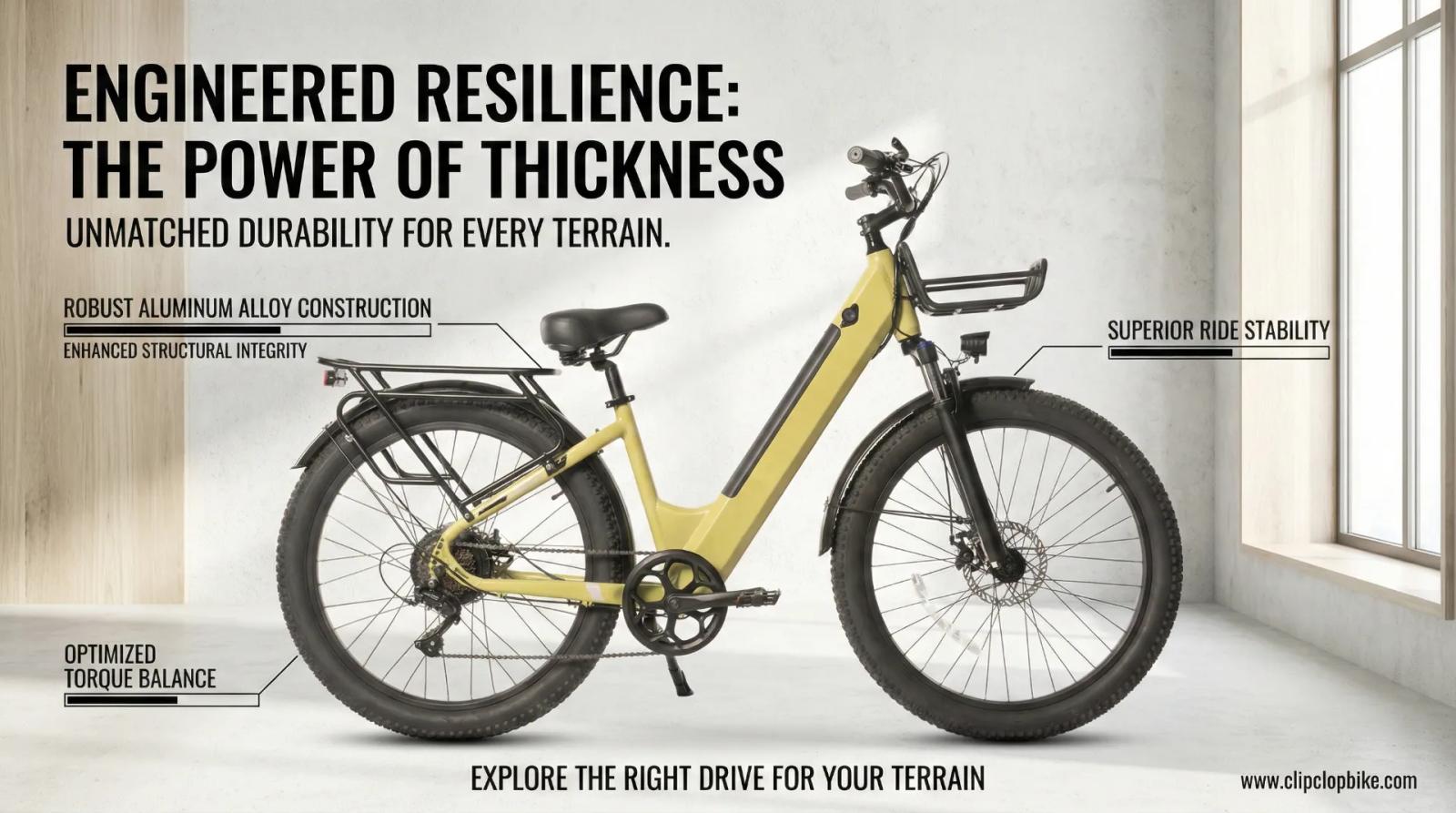
Hydroformed 6061-T6 Aluminum E-Bike Tubing: Wall Thickness, Butting & Stress Analysis
When distributors review a new e-bike frame supplier, the chat usually starts with motor watts and battery cells.
When distributors review a new e-bike frame supplier, the chat usually starts with motor watts and battery cells.
The structural chassis of an electric bicycle bears the combined dynamic stresses of motor torque, battery payload, and continuous commercial duty cycles. For OEM buyers, commercial fleet operators, and distributors, specifying e-bike frame manufacturing requires rigorous evaluation of hydroformed 6061-T6 and 7005 aluminum alloy chemistry, automated robot welding penetration, and post-weld T4/T6 artificial aging heat treatments to satisfy ISO 4210 and EN 15194 fatigue standards. This technical analysis outlines factory-floor quality benchmarks for high-volume frame production.
Commercial partners can inspect our manufacturing infrastructure on our OEM/ODM E-Bike Manufacturing Facility page, review standard configurations on our CS01 Fat Tire & CS04 Commercial Utility Platforms, or directly request volume FOB terms via our Commercial Quote Request Portal (MOQ 20).
A frame isn’t just a skeleton. It’s a torque container. E-bikes accelerate harder, carry more mass, and brake with more force, so stress concentrates at joints and cutouts. If thickness is treated like a blanket spec (same wall everywhere), you get either a heavy, dull ride—or a light frame that turns into warranty claims.
Thickness strategy in one sentence
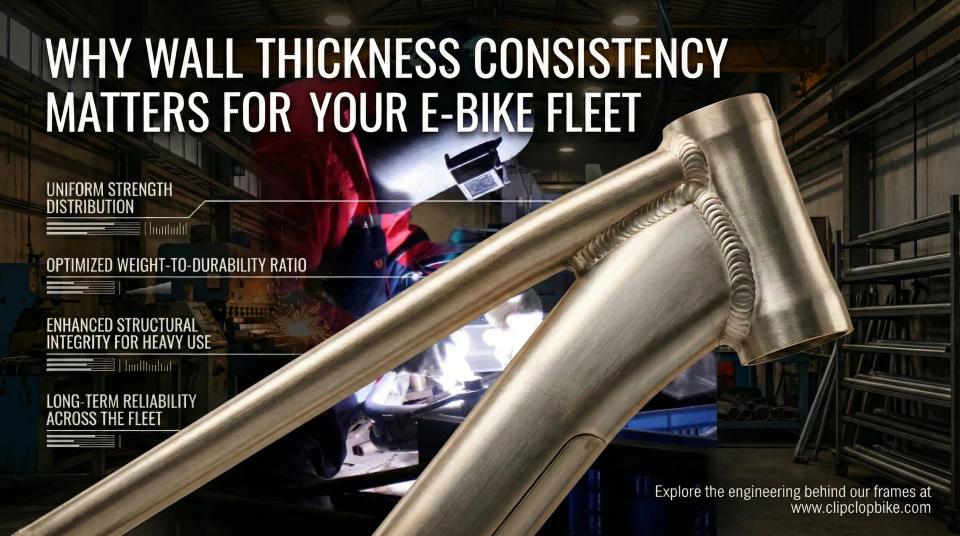
Good frames don’t “add more metal.” They deliberately, strategically move metal to the places that crack. Premium aluminum frames use variable wall thickness (double/triple butting plus hydroforming) so high-stress zones get reinforcement and calm zones stay lean.
For B2B, this isn’t academic. Fleets don’t fail on paper—they fail at the head tube after repeated curb hits, at the down tube battery window after endless vibration, or at the rear dropouts after torque-heavy launches. Reading the tube map helps you predict those failures before they ship.
Download the 2026 ClipClop Factory Catalog (PDF)
Full e-bike specs, motor & battery options, MOQ, and container loading details.
The five stress points we always audit
Use this checklist in RFQs and factory visits. The ranges below are common targets in aluminum e-bikes; the “right” number still depends on tube diameter, forming method, and riding category.
| Stress point | Why it’s critical | Typical target (wall) | What to ask |
|---|---|---|---|
| Head tube (center + junctions) | Steering leverage + braking torque | ~3.0–4.0 mm in key zones | Tapered? Gusset/sleeve? Post-weld heat treatment? |
| Down tube (battery + strike zone) | Cutout reduces stiffness; impacts happen | ~2.5–3.2 mm where needed | How is the cutout reinforced? Edge thickening or internal rib? |
| Chainstays + dropouts | Motor torque + wheel alignment | ~2.3–3.5 mm near yoke/dropout | Forged dropouts? Built-in torque reaction? |
| Seatstays + brake mount | Brake loads + comfort tuning | ~1.6–2.5 mm, thicker at ends | Is the caliper mount locally reinforced? |
| Bottom bracket / motor mount | Pedal + motor torque converge | ~3.5–5.0 mm in shells/yokes | BSA vs pressfit rationale? Yoke machining + weld plan? |
Head tube: the anchor of steering integrity
If you only inspect one zone closely, make it the head tube. The fork turns braking force into leverage, and that leverage tries to ovalize and crack the head tube junctions. Thin walls may feel fine early on, then headset play appears, and hairline cracks show up near the down tube weld.
What we want is thick where bearings and welds demand it. A tapered head tube spreads load across a larger bearing seat. A gusset or internal sleeve can be a quiet hero, especially for rental fleets that see potholes every day.
Down tube: battery integration without losing rigidity
Modern down tubes do double duty: they’re a structural spine and a battery vault. The moment you cut a big battery window, you remove material right where bending loads live. That’s why “battery integrated” only works when the cutout has a reinforcement plan.
Hydroforming helps because you can shape the tube into a polygon or U-section that resists twisting. Practically, we prefer thicker material at edges, weld zones, and the strike-facing surface, not in neutral mid-walls. That keeps the bike lively while still protecting cells from dents.
Chainstays: where power transfer becomes real
Chainstays are the backstage crew of performance. If they flex, the rear wheel drifts, shifting gets sloppy, and hub-motor torque can walk the axle in the dropout. “Rear triangle stiffness” is simply how you keep a bike tracking straight under load.
For torque-heavy setups, forged or well-machined dropouts paired with thicker local walls do more than external torque arms alone. Torque arms are useful insurance, but they shouldn’t be used to excuse thin dropouts.
When we design for higher payloads (our C1 targets a 140 kg max loading), this is one of the first areas we overbuild locally. Straight tracking under load is what customers notice on day one.
Seatstays: comfort is engineered, not accidental
Seatstays are one of the few places where controlled flex is a benefit. Overbuild them and the bike feels harsh; underbuild them and brake mounts or the seat cluster becomes a fatigue hotspot. The sweet spot is usually butted: thick at the ends for weld strength, slimmer in the middle for vibration damping.
When you evaluate a sample, look hard at the brake mount area. Hydraulic brakes can generate real force. If the local wall is thin and unsupported, the tube can slowly ovalize or crack near the mount—often preceded by squeal and misalignment.
A small detail that matters: bridges and braces. They look simple, but they can stop the rear triangle from “spreading” when a heavy rider corners aggressively.
Bottom bracket and motor mount: the “premium feel” factory
The bottom bracket zone is where riders feel stiffness instantly, even on a short test loop. A flexy BB wastes energy and makes even a strong motor feel vague. For mid-drives it’s more direct, because the motor is bolted here and torsion loads are constant.
We treat the BB shell and yoke as a system—thicker where tubes converge, with machining that controls alignment. Many buyers ask BSA vs pressfit; on high-load e-bikes, a threaded shell is often attractive because it brings more material and a cleaner welding interface, though your supply chain may steer the choice.
If you’re comparing suppliers, ask for lateral deflection numbers at the BB under a defined load. “Feels stiff” is subjective; millimeters are not.
Materials: why 6061 and 7005 keep winning
In B2B service life, 6061 aluminum is still the everyday workhorse: strong enough, light enough, corrosion resistant, and friendly to complex welding and forming. 7005 can be stronger in some builds, but it demands tighter process control.
The bigger variable is heat treatment. Thick tubes without correct post-weld treatment can still be soft. That’s why a credible “T6 after welding” story (or a proven alternative process) matters more than a shiny alloy label.
Testing and proof: what to request from a supplier
Ask for fatigue and impact data tied to recognized standards, not just “we passed internal tests.” ISO 4210 and EN 15194 are common reference points, and a good factory should explain how the rig loads match your use case (cargo, rental, trail, commuter).
Also ask how they verify weld integrity. Pretty beads are not enough. Consistent fixturing, penetration checks, and (when appropriate) non-destructive inspection are the boring steps that prevent expensive recalls.
A simple buying mindset shift
Instead of chasing the thickest tube, chase the smartest tube map you can verify. You want reinforcement at joints, battery windows, dropouts, brake mounts, and motor interfaces—plus controlled compliance where comfort and handling benefit.
If you’re sourcing for fleets, ask what failure modes they’ve seen in the field and what changed in the next revision. If you’re sourcing for retail, ask how steering precision holds up after thousands of kilometers. The answers tell you whether thickness is engineered or guessed.
Closing note
At ClipClop, we build frames for the boring reality: curb hops, panic stops, heavy riders, and high mileage—every season. Keep thickness strategy on your procurement checklist, insist on data, and you’ll spend less time on warranty calls and more time scaling your line.
If you want to discuss a configuration (power level, load rating, battery style, terrain) with us, keep the conversation anchored on those five stress points. It’s the quickest way to tell whether a frame is built to last—or just built to sell.
FAQ
Q: Does a thicker e-bike frame always mean a better bike? A: Not necessarily. Optimal wall thickness e-bike frame design focuses on "strategic thickness"—adding material where stress is high (like the head tube and BB area) and reducing it where it’s not needed. This creates a lightweight strong e-bike frame rather than just a heavy one.
Q: Why do e-bike frames crack more often than regular bike frames? A: E-bikes carry 48V lithium batteries and motors that add significant weight and torque. Without specific e-bike frame reinforcement, the increased vibration and force lead to e-bike frame fatigue faster than on traditional bicycles.
Q: Is 6061 aluminum better than 7005 for e-bike frames? A: Both are excellent. 6061 e-bike frame thickness offers great corrosion resistance and weldability, while 7005 can be stronger but is more challenging to manufacture. Most premium e-bike frames use 6061 with a T6 heat treatment.
References
ClipClop Manufacturing Standards & Build Quality
Looking for production-grade e-bike manufacturing? Explore our ClipClop L1 Hydroformed Fat Bike and our ClipClop CS03 Sport E-MTB, engineered with factory-direct OEM customization from 10 units.
- EN 15194:2017 - Cycles - Electrically power assisted cycles - EPAC Bicycles
- Aluminium Association - 6061 Aluminum Alloy Properties and Applications
Commercial Procurement & Fleet Sourcing with ClipClop
Deploying electric bicycle fleets or distributing private-label e-bikes requires a trusted manufacturing partner capable of consistent container-level production, robot-welded frame alignment, and rigorous batch QC. From our 25,000 m² factory in Qingyuan, Guangdong, ClipClop provides end-to-end OEM/ODM electric bike manufacturing services with an accessible MOQ of just 20 units per SKU. Every container order includes dedicated spare parts allocation (2% free warranty backup components), full international compliance documentation (EN 15194, UL 2849, UN38.3), and 15-day sample dispatch.
Ready to evaluate engineering samples for the CS01 Fat Tire & CS04 Commercial Utility Platforms or review container FOB volume pricing? Visit our Commercial RFQ Portal to submit your technical specifications, or speak directly with our engineering sales team via our B2B contact desk.
Download the 2026 ClipClop Factory Catalog (PDF)
Full e-bike specs, motor & battery options, MOQ, and container loading details.
More OEM field notes.
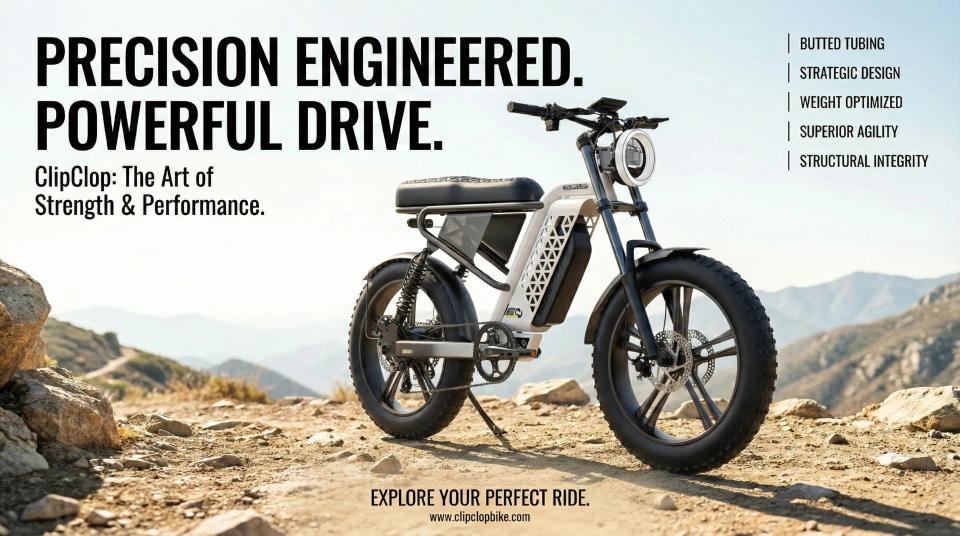
Understanding Butted Tubing for E-Bike Frames: Weight, Strength, and Strategy
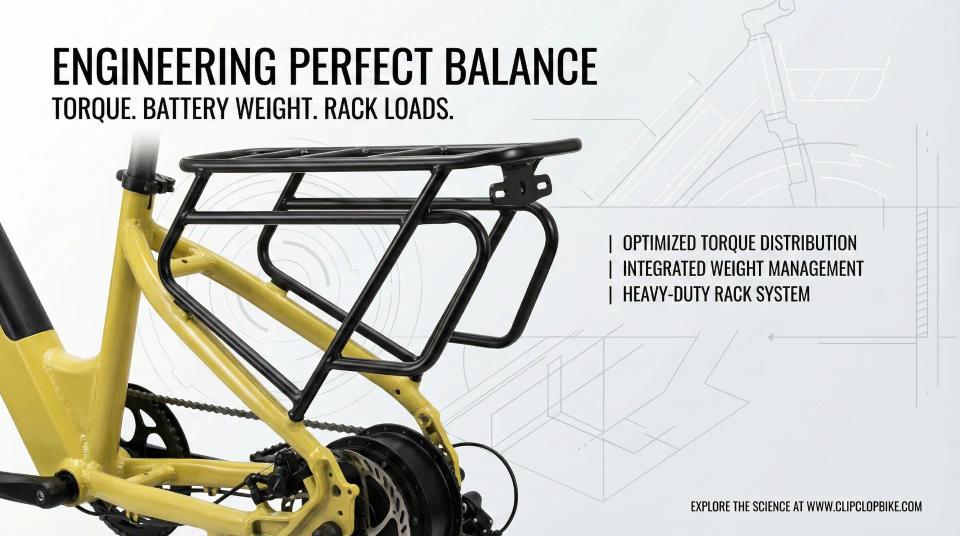
Heavy-Duty Cargo E-Bike Design: Torque Distribution, Dual Batteries & 200kg Rack Geometry
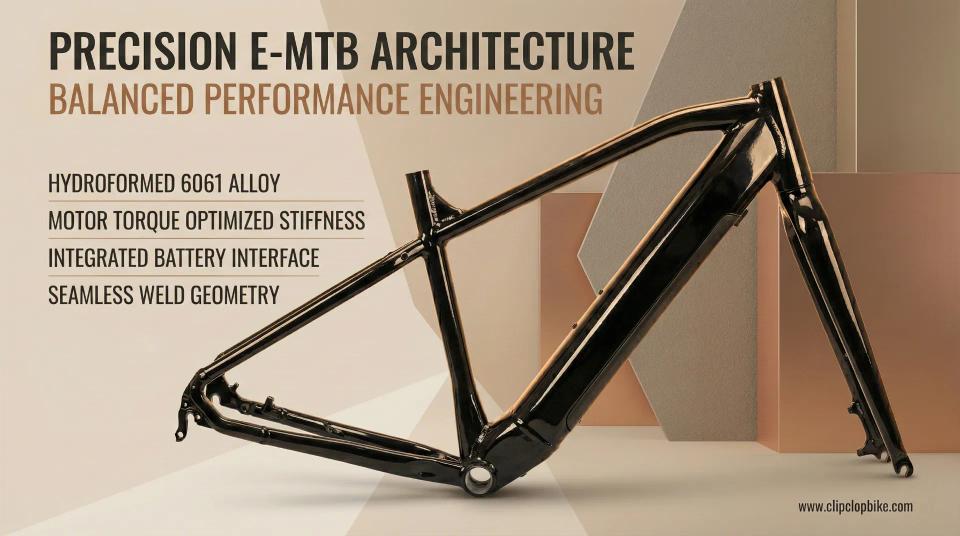
Cargo & Step-Through E-Bike Frame Engineering: Eliminating Down-Tube Flex & Structural Stress
E-Bike Frame Wall Thickness Tolerances: Extrusion Quality, Hydroforming & QA Protocols
Send your brief. We will field-note back.
Reply includes the feasibility view, sample cost, MOQ, and the next step for your project. We aim to respond within 48 hours.