

Wholesale Electric Mountain Bikes (eMTB): Sourcing High-Margin Platforms for Bike Shops
Hello all, Leo Liang here. It's an absolute pleasure to connect and catch up with you all once more through our ClipClop blog.
Hello all, Leo Liang here. It's an absolute pleasure to connect and catch up with you all once more through our ClipClop blog.
Powertrain selection is the single most critical engineering specification determining an electric bike's commercial durability, rider experience, and total cost of ownership (TCO). For commercial buyers, fleet operators, and private-label brands, choosing between mid-drive and hub motor systems requires evaluating continuous thermal dissipation, torque-sensor response curves, CAN-Bus integration, and drive-system failure rates under commercial duty cycles. This technical analysis provides an objective engineering comparison to guide high-volume procurement decisions.
Factory Direct Sourcing & OEM/ODM Manufacturing with ClipClop
Commercial partners can inspect our manufacturing infrastructure on our OEM/ODM E-Bike Manufacturing Facility page, review standard configurations on our CS01 Fat Tire & CS04 Commercial Utility Platforms, or directly request volume FOB terms via our Commercial Quote Request Portal (MOQ 20).
It's an absolute pleasure to connect and catch up with you all once more through our ClipClop blog. From the originating hub here in Guangzhou, the epicenter of so much technological advancement in the e-bike world, I spend my working hours enveloped by the technology powering our off-road adventures. But the best part of my day is interacting with customers such as yourself—our partners, the dealers, distributors, and rental fleet operators who bring experience of electric mountain biking to riders across the world.
One of the common problems in our conversations is that there is a call for simplicity. With a market flooded with technical jargon and a proliferation of standards, how do you, as a businessperson, make the right buying decisions? How do you pick an e-MTB range that delights your customers but also delivers the reliability and performance that are the foundations of a successful business?
It is not just a matter of comparing spec sheets. It's about understanding the engineering philosophy that is behind the numbers and how every detail translates to a real experience on the trail. It's about believing in your customers that the bike that you're providing is safe, durable, and perfect for what it's meant to do. What I'd like to do in this guide is to pull back the curtain and share a manufacturer's point of view on what truly matters in building an electric off-road bike range. We'll dive deep on the critical bits, de-scramble the specs, and give you the fact-based information to make your choice with confidence.
What Defines a High-Performance E-MTB Motor?
The motor is the foundation of any e-MTB, and in your B2B applications, understanding its performance parameters is key. It's not the maximum power; it's how it's delivered. For a fleet of rentals, simplicity and reliability are most critical, while a performance-oriented distributor will care most about responsiveness and torque. The cutting-edge motor for high-performance e-MTBs is contemporary mid-drive motors, offering improved weight distribution and natural pedaling feedback compared to hub motors. To compare these systems, examine two things: torque measured in Newton-meters (Nm) and power measured in watts (W). Torque is what sets the hill climbing ability and dead stop acceleration. For extreme off-road application, you'll want to be looking for motors that make a minimum of 85 Nm of torque. This will enable the bike to continue to climb steep technical climbs without stalling out. Industry-leading systems like the Bosch Performance Line CX (85 Nm) and Shimano EP801 (85 Nm) are industry standard for a reason: they provide constant, robust assistance when your customers need it most. For more demanding use or heavier loads, some motors now surpass this limit, such as the Brose Drive S Mag, which outputs 90 Nm. Power, on the other hand, determines the motor's ability to deliver support at greater rates. Motor power grades are usually regulated by law on public roads (e.g., 250W continuous power in Europe), but their peak power will be much higher. The same motor can have a 600W or more peak power rating, hence more powerful and capable on long, consistent climbs. It's that top wattage that provides the thrill of speed that enthusiasts crave. To your business, it means selecting a bike that not just adheres to local regulation but also provides your target audience the performance they expect.
Why Is Battery System Integration So Critical?
The battery is not merely a source of power; it's part of the chassis of the bike, influencing range and weight distribution as well as safety and serviceability. For rental businesses and distributors, a reliable, well-designed battery system is not negotiable. The first factor to look at is capacity, in watt-hours (Wh). Although a higher number appears desirable, the correct capacity will depend on what the bike will be used for. For a half-day tour focused rental fleet, a 500Wh to 625Wh battery could provide the best range and portable weight compromise. For high-output dealers selling to enduro or all-mountain enthusiasts, 750Wh or larger batteries are the new standard, supporting eponymous all-day epics. Besides capacity, choosing battery cells is a question of underlying importance to performance and longevity. The market is rapidly shifting away from 18650 cells to the more modern, efficient 21700 cells. This is no small change; 21700 cells contain much higher energy density, or more capacity in a smaller, lighter package. They offer increased discharge rates to deliver better motor performance under load and better thermal performance, resulting in longer life and higher safety—a very significant factor for fleet owners. We at ClipClop focus on battery systems consisting of high-quality 21700 cells from trusted brands such as Samsung or LG. Additionally, the Battery Management System (BMS) is the brain of the battery. A properly designed BMS prevents overcharging, overheating, and short-circuiting, all of which are necessary in order to meet international safety standards like UL 2849. To your B2B company, having this certification on your e-bikes is not only a marketing benefit; it's a necessary risk management strategy.
How Does Frame Material Affect Ride Quality and Durability?
The surround is the skeleton of the e-MTB, and the material selection has profound implications for the way the bike handles, lasts, and can be repaired. Carbon fiber is the only option for luxury, but high-end aluminum alloys offer an exceptional compromise of performance and price and are the ideal answer for most B2B applications, like hard-riding rental service. Yet not all aluminum is created equal. The two most prevalent types in industry are 6061 and 7005 aluminum alloys. The lowdown: 6061 aluminum, magnesium-silicon alloyed, is widely regarded for its weldability and formability. It enables manufacturers to hydroform intricate forms in tubing, achieving maximum strength-to-weight ratios and creating a more compliant, more comfortable ride. For cross-country, all-mountain, or enduro trail bikes, a well-crafted 6061 aluminum frame is a fine, durable platform. 7005 aluminum, by contrast, involves zinc as its primary alloying element and possesses increased tensile strength and greater hardness. It allows for frames that are lighter, thinner-walled without sacrificing strength and is a standard material for more performance or race bike applications. It is generally more difficult to weld and work with, however. From a buyer's point of view, the specific grade of aluminum alloy material used is less important than the quality of the manufacturing process itself—i.e., the precision of the welds and subsequent heat treatment, which is of fundamental importance to reforming material strength after welding. For your business, a frame made from either top-of-the-line 6061 or 7005 series aluminum, reinforced by exhaustive fatigue and impact testing to comply with specifications like ISO 4210, will give the durability and rider safety required for your business.
What Do You Need to Consider in Suspension Design?
Suspension is what makes an e-bike truly into a beast off-road. It's also one of the most critical aspects of customer satisfaction. For a dealer, the key to sales success is in determining correct suspension travel for local conditions and riding style. For a rental shop, suspension units that are serviceable with ease yet hard enough for intensive use are a must. Suspension travel, measured in millimeters (mm), dictates the bike's capability in dealing with adverse terrain. It's essential to match the travel with appropriate terrain and application conditions. A travel of 120mm to 140mm on a bicycle is generally considered a trail bike, perfect for singletrack flow and general use—an excellent choice for a do-it-all rental fleet. The more extreme the terrain, the more travel. All-mountain or enduro bikes will see anywhere from 150mm to 170mm of travel, providing the rider with the type of confidence needed to drop into steep slopes, rock gardens, and tiny drops. Downhill or mountain bike park machines will see 180mm or more of travel. Suspension linkages also play a huge role. Modern four-bar or virtual pivot point (VPP) designs incorporate braking and pedaling forces independent of suspension action so that the bike is still lively and efficient when climbing, descending, or braking. For a business buyer, look for bikes with suspension made by reputable firms like Fox or RockShox. Not only do their products offer improved performance and adjustability, but they also have powerful global service networks, making maintenance and the procurement of replacement parts much simpler for your shop.
Why Geometry and Sizing Is a B2B Priority
While each component part is important, it's the geometry of the frame that puts them all together to decide the handling and fit of the bike. As a B2B customer, it is important to understand geometry when designing a fleet that will attract a wide range of riders and facilitate its planned riding discipline. Geometry figures worth keeping an eye out for on a spec sheet include head tube angle, seat tube angle, and reach. A slack head tube angle (usually 64-66 degrees for enduro and trail bicycles) gives greater stability at speed and on aggressive downhill riding. A steeper seat tube angle (approximately 76-78 degrees) places the rider in a better position over the pedals for effective climbing, a massive advantage on an e-MTB. Reach is an area measurement of the cockpit and is a key determiner of how a bicycle will fit. Modern e-MTBs have increased reach numbers for improved stability and control. When purchasing for a rental fleet or retail store, it's essential to offer a wide range of frame size options, such as Small, Medium, Large, and Extra-Large. This makes it possible to fit a variety of different customers properly, which equals a safer, more enjoyable ride. A decent-sized bike translates to more comfort and control, which also translates to more word-of-mouth marketing and repeat business. To aid our B2B partners, ClipClop provides detailed geometry charts and size tables to help select the best size combination for their target segment.
Are Brakes and Drivetrain Components Prepared for E-MTB Demands?
The increased speed and weight of e-MTBs impose considerably higher demands on braking and drivetrain components. Buying bikes with components made to be used in e-bikes is an important aspect of ensuring safety and minimizing long-term maintenance cost for any business undertaking. For braking systems, this means installing powerful hydraulic disc brakes as a minimum. Look for four-piston brake calipers with big-diameter rotors, usually 203mm or even 220mm, especially on the front wheel. This combination provides the increased stopping power and heat dissipation required to handle a heavier bike on long, technical downhills. Manufacturers like Shimano and SRAM make e-bike specific brake systems that can handle these forces. The drivetrain takes its toll as well. The motor's high torque requires a tough and reliable system. Look for drivetrains with an expansive gear range, such as a 1x12 speed setup with a 10-51T cassette, to allow cyclists to dominate the steepest climbs and fastest declines. Moreover, leading brands now produce e-bike specific chains and cassettes that are hardened to withstand the added motor-caused stress, significantly increasing their lifespan. For a rental fleet, having spent money on these more durable, e-bike-rated components initially will pay off in fewer down times and lower replacement costs throughout the life of the bike.
How Wheels and Tires Influence Performance and Dependability?
Wheels and tires are the bicycle's literal connection to the trail, and their specification can make or break the ride. For B2B riders, selecting the right wheel and tire combination is an exercise in balancing performance, durability, and serviceability. The standard for modern e-MTBs today is top-end 29-inch wheels or a "mullet" setup (a 29-inch front tire for rollover capability and a 27.5-inch rear wheel for playmaking capability). The rims have to be wide, with an internal width around 30mm, to accommodate an even platform for aggressive, high-volume tires. For rental and hard-use applications, seek out wheels with hard-riding hub engagement systems and top-quality, sealed bearings for durability. Tires are also critical to select. You'll need tires with a stiff casing, like SRAM's Double Down or Schwalbe's Super Gravity, to resist punctures and sidewall slices, which are more likely due to the weight of the bike. The tire tread must be appropriate for intended riding surfaces. A closely spaced, aggressive knob pattern performs best in loose or mucky conditions, but a low-profile tread will roll faster on hardpack trails. Installing tubeless-ready rims and tires on your fleet is a smart investment. Tubeless configuration significantly lowers the risk of flats, the greatest cause of customer complaints and maintenance issues for any demo or rental operation. It also allows riders to maintain lower tire pressures for improved traction and handling.
What Is the Role of Compliance and Certification in Procurement?
Regulatory compliance and certification are totally essential for any business that is selling or leasing e-bikes. It's a legal liability, risk management, and reputation issue. Regulations differ geographically, but there are several important international standards that serve as a benchmark for quality and safety. In North America, e-bikes are commonly defined as Class 1 (pedal-assisted, 20 mph limit), Class 2 (throttle-assisted, 20 mph limit), and Class 3 (pedal-assisted, 28 mph limit). Ensure the e-bikes you purchase are correctly classified for your market to avoid legal issues. More importantly, look for comprehensive safety certifications. UL 2849 is rapidly becoming an international e-bike electrical system safety standard, encompassing the charger, battery, and controller. It says that the entire system has undergone rigorous testing for fire and electrical safety. ISO 4210 provides a minimum standard for mechanical parts' strength and fatigue life of the fork and frame. In Europe, the EN 15194 standard is mandatory and covers both electrical and mechanical safety. As a B2B partner, your supplier should be able to provide clear documentation and proof of these certifications. Not only does it protect your company from liability, but it also assures your customers that they are riding a product tested to the highest level of world safety standards, creating the trust that serves as the foundation of a successful long-term relationship.
Should you require any information on selecting electric off-road bikes, solution setup, or specific requirements, please feel free to contact us. We are specialized electric off-road bike manufacturers and exporters with a one-stop service from technical assistance to integrated vehicle solutions for distributors, wholesalers, and brand partners.
References:
- E-MOUNTAINBIKE Magazine - Our big eMTB Motor Comparison: https://ebike-mtb.com/en/emtb-motor-comparison/
- UL Standards - UL 2849: E-Bikes and E-Scooters Certification: https://www.ul.com/services/e-bikes-certificationevaluating-and-testing-ul-2849
ClipClop Manufacturing Standards & Build Quality
Looking for verified B2B e-bike manufacturing? Check out our ClipClop CS03 Sport Fat E-MTB and our ClipClop M26 Mountain E-Bike, backed by factory-direct warranties and flexible 10-unit MOQ.
- Pinkbike - Tech Briefing: Frame Materials 101: https://www.pinkbike.com/news/tech-briefing-august-2023.html
Commercial Procurement & Fleet Sourcing with ClipClop
Deploying electric bicycle fleets or distributing private-label e-bikes requires a trusted manufacturing partner capable of consistent container-level production, robot-welded frame alignment, and rigorous batch QC. From our 25,000 m² factory in Qingyuan, Guangdong, ClipClop provides end-to-end OEM/ODM electric bike manufacturing services with an accessible MOQ of just 20 units per SKU. Every container order includes dedicated spare parts allocation (2% free warranty backup components), full international compliance documentation (EN 15194, UL 2849, UN38.3), and 15-day sample dispatch.
Ready to evaluate engineering samples for the CS01 Fat Tire & CS04 Commercial Utility Platforms or review container FOB volume pricing? Visit our Commercial RFQ Portal to submit your technical specifications, or speak directly with our engineering sales team via our B2B contact desk.
More OEM field notes.
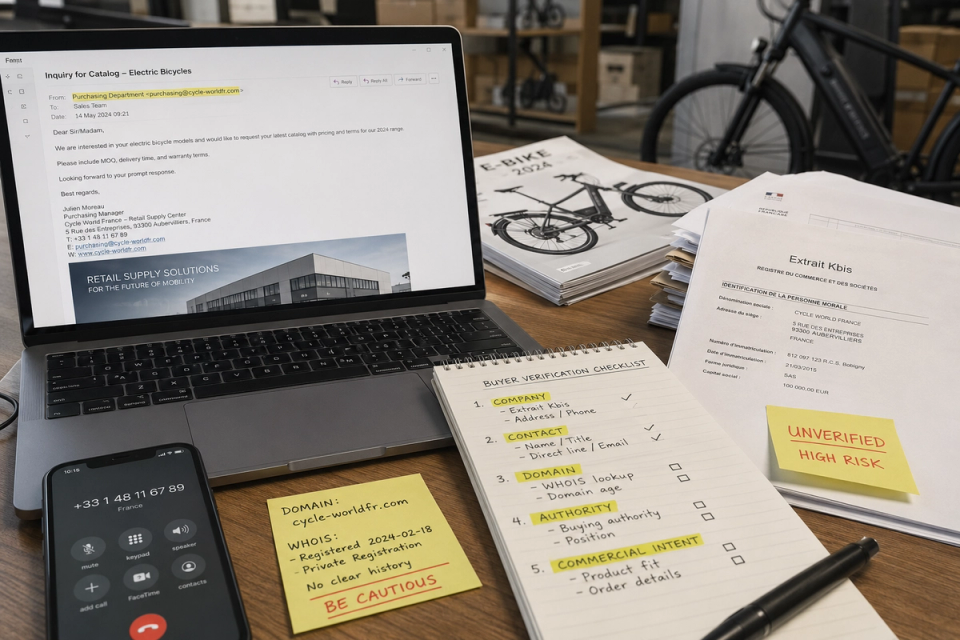
How We Verify B2B Buyers: A Case Study in Preventing Procurement Fraud & Impersonation
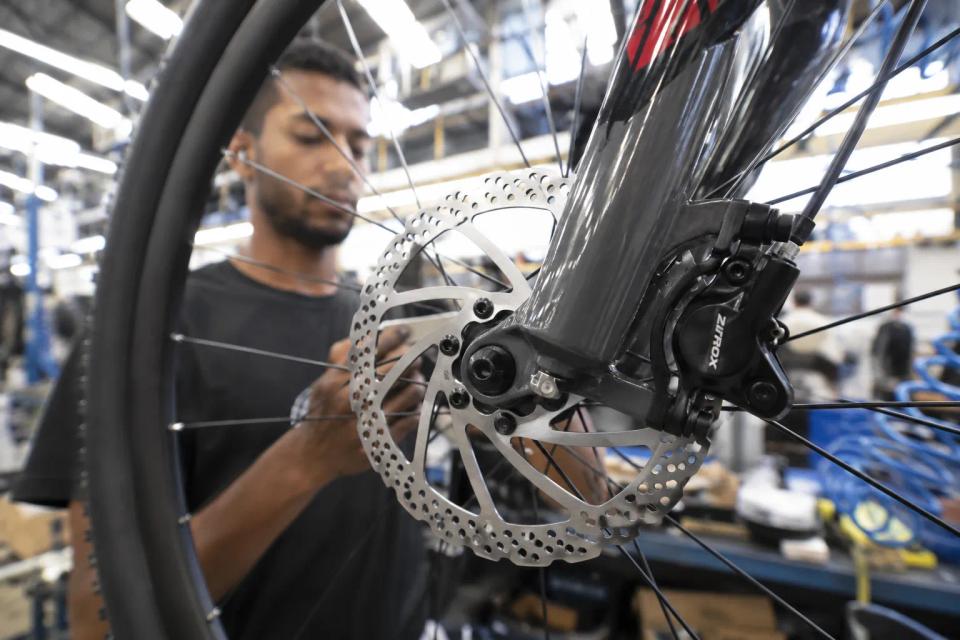
E-Bike Frame Sourcing for Brazil: Corrosion-Resistant 6061-T6 Aluminum for Tropical Fleets
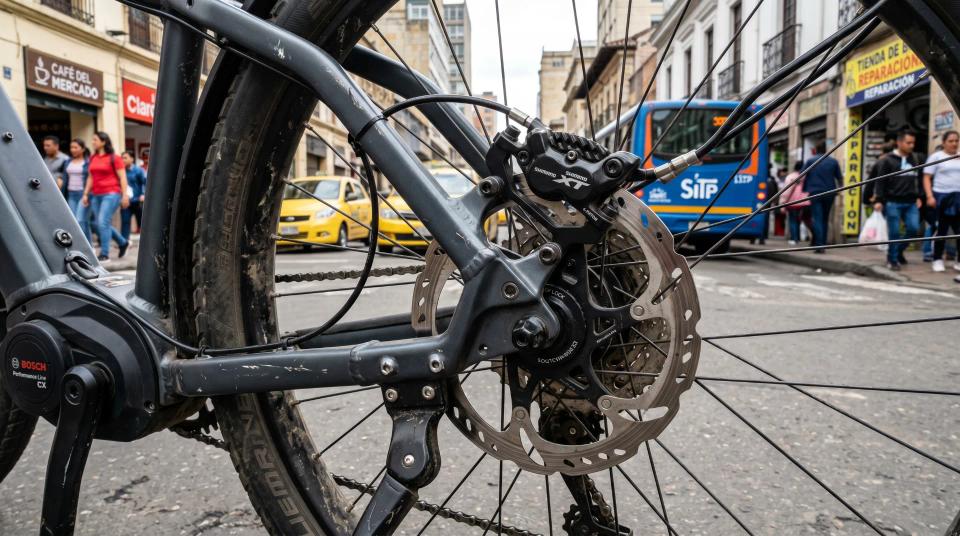
Commercial E-Bike Hydraulic Brakes: Heat Dissipation, 4-Piston Calipers & Mountain Fleets
Send your brief. We will field-note back.
Reply includes the feasibility view, sample cost, MOQ, and the next step for your project. We aim to respond within 48 hours.