
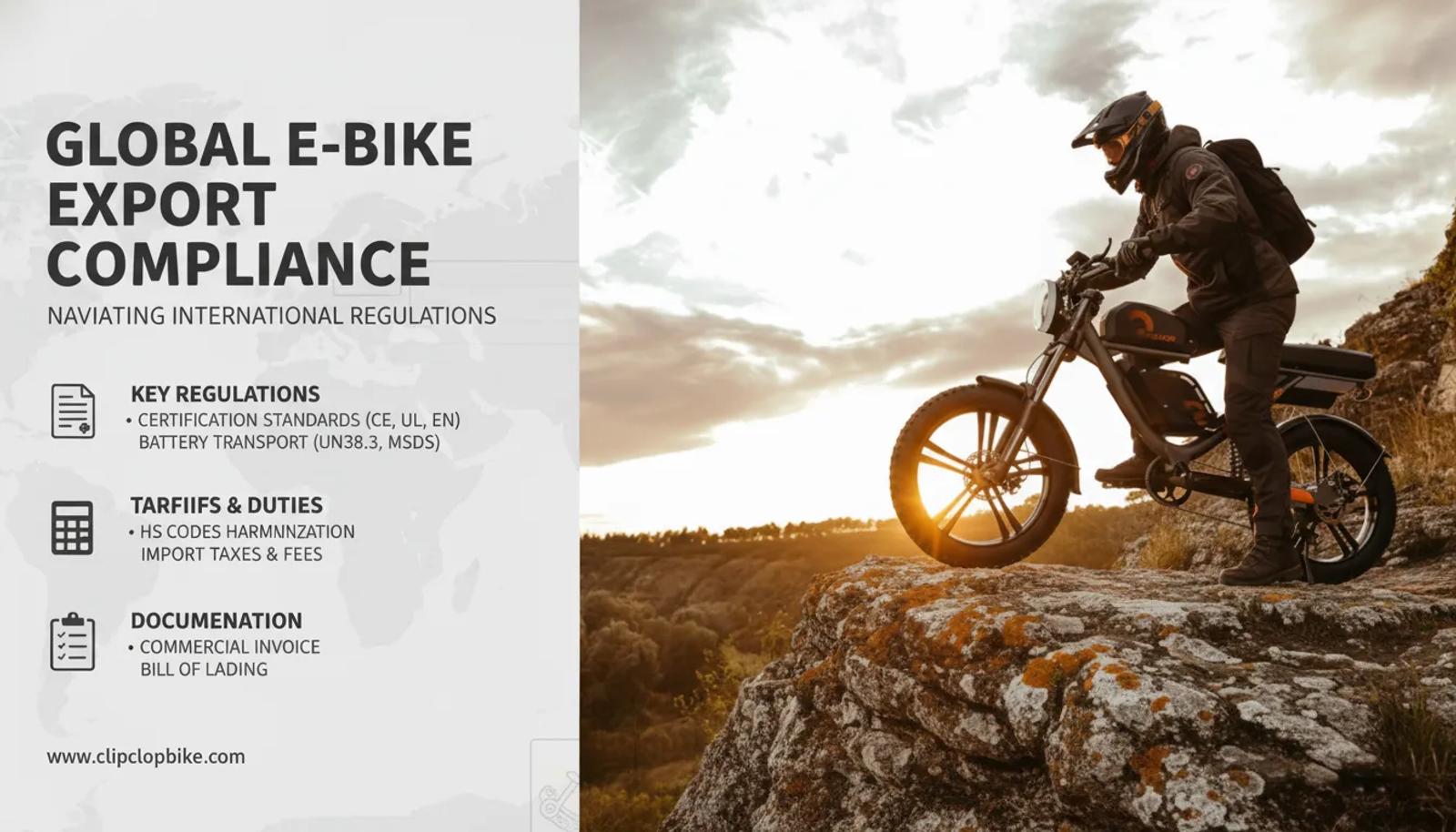
1 HS Code, 3 Incoterms, 0 Drama: My No-Nonsense Guide to Electric Bicycle Importing
Navigating the complex world of international trade can feel like hiking a steep, messy trail with rocks everywhere. If you’re trying to import e-bikes, understanding export rules isn’t just
Navigating the complex world of international trade can feel like hiking a steep, messy trail with rocks everywhere. If you’re trying to import e-bikes, understanding export rules isn’t just
Navigating the complex world of international trade can feel like hiking a steep, messy trail with rocks everywhere. If you’re trying to import e-bikes, understanding export rules isn’t just paperwork—it’s survival. I’ve seen people lose money, miss peak season, and argue with customs just because they didn’t sort these basics out. This guide is basically my notes from the field, turned into something you can actually use.
Commercial partners can inspect our manufacturing infrastructure on our OEM/ODM E-Bike Manufacturing Facility page, review standard configurations on our CS01 Fat Tire & CS04 Commercial Utility Platforms, or directly request volume FOB terms via our Commercial Quote Request Portal (MOQ 20).
I’m the ClipClop Engineering Team from ClipClop, a Guangzhou-based electric off-road bike company. I don’t just care about building strong bikes; I care about building good partnerships. Most days I’m talking with distributors, wholesalers, and rental guys in different time zones, trying to match what they need with what we can build. On the side, I write blogs and post on social media to explain all this complicated stuff in plain language.
We’re not trying to be that faceless “factory in China.” My goal is to act more like your export teammate. This article goes deep into the basics of export compliance—how to label your product, which shipping terms actually mean what, and how to keep your bikes moving instead of stuck at the port. If you understand these pieces, your whole supply chain runs smoother and your margins look a lot healthier.
You can treat this as a casual chat between two people who both care about making money without constant drama. I know the feeling of worrying about hidden fees, or checking tracking every hour because you’re scared your container is stuck. Whether you’re buying something like our L2 fat-tire off-road e-bike with a 48V 750W brushless motor and 6061 Aluminum Alloy Frame, or building a custom fleet, the rules of global trade don’t really change. Let’s walk through them together.
Why Is Accurate HS Code Classification Crucial for Your E-bike Shipment?
One of the first big headaches in cross-border e-bike trade is the HS code. It sounds super boring, I know, but if you get this wrong, you’re basically asking for trouble. HS codes are those international product numbers that customs use to decide what your goods are and how much tax they want to charge you. For e-bikes, the details matter more than you’d expect.
Most electric bicycles fall under HS code 8711.60 – “motorcycles (including mopeds) and cycles fitted with an auxiliary motor, with electric motor for propulsion.” That’s the main one we use for our performance models. But here’s the catch: customs officers don’t just read your catalog; they’ll look at how the bike behaves. Some bloggers keep reminding importers: write down exact power and speed, don’t guess. I totally agree.
They’ll ask: is this more like a bicycle with assistance, or is it basically an electric moped pretending to be a bike? In places like the EU, S-Pedelecs that go over 25 km/h or need type approval may fall under stricter rules and different classifications. That changes your duty, required documents, and even registration issues. So we always ask our partners for clear specs and target markets before we confirm anything.
Getting the HS code wrong is one of those rookie mistakes that can blow up an entire season. Your container might get held, rechecked, and then re-taxed with extra penalties just because someone picked the wrong number. I’ve seen bikes stuck for weeks when peak selling time was already ticking away. So at ClipClop, we treat HS code classification as a serious step, not an afterthought handled five minutes before shipment.
Internally, we cross-check our product details—like the 70Nm motor torque, full light set (headlight, rear signal taillights, wheel reflectors), and other features—against customs databases and the actual regulations in the destination market. It’s not glamorous work, but this boring accuracy is what makes B2B exports reliable. A few minutes of double-checking now usually saves you a lot of phone calls and stress later.
Download the 2026 ClipClop Factory Catalog (PDF)
Full e-bike specs, motor & battery options, MOQ, and container loading details.
How Do Incoterms Like FOB, CIF, and DDP Impact Your Bottom Line?
After the HS code discussion, the next thing we usually talk about with partners is Incoterms. These are those three-letter codes—FOB, CIF, DDP—that show who is responsible for what, and at which point. A lot of importers say they understand them, but when problems appear, it becomes very clear that some details were never really discussed. And those details are exactly where money leaks out.
FOB (Free On Board) is pretty straightforward: once we load the goods onto the vessel at the port of origin—say, Port of Guangzhou—the responsibility shifts to you. From that moment, you handle sea freight, insurance, unloading, customs clearance in your country, and final delivery. Many experienced buyers like this because they have their own freight forwarders and can negotiate better deals, but it also means they carry most of the risk during the main trip.
CIF (Cost, Insurance, and Freight) is more popular among buyers who want less hassle but still want some control. Under CIF, we cover the cost of goods, sea freight to your port, and basic insurance. When the shipment reaches your port, your job starts: customs clearance, duties, and local delivery to your warehouse. Some trade bloggers say CIF is a good “middle ground” if you’re still learning logistics but don’t want a totally hands-off approach. I think that’s pretty fair.
DDP (Delivered Duty Paid) is the “just make it appear at my door” option. We, as the seller, handle almost everything—shipping, insurance, customs clearance, duties, and taxes—until the bikes are at your location ready to open. It’s the easiest path for you in terms of workload, but usually also the most expensive because we have to build all those risks and costs into the price. It’s less stress, but you pay for that peace of mind.
Choosing Incoterms is really a strategy question, not just a simple line on the contract. When I talk with B2B partners, we go through their experience level, connections with local forwarders, and cash flow situation. Some prefer control, others prefer simplicity. My approach is to lay out the pros and cons openly—no mystery—and then pick the option that actually matches how your team works, instead of just following what everyone else does.
Incoterms Comparison for B2B E-bike Importers: FOB vs. CIF vs. DDP
| Responsibility / Cost Point | FOB (Free On Board) | CIF (Cost, Insurance, and Freight) | DDP (Delivered Duty Paid) |
| Product Cost | Buyer's Responsibility | Buyer's Responsibility | Buyer's Responsibility (included in total price) |
| Export Clearance (China) | Seller's Responsibility | Seller's Responsibility | Seller's Responsibility |
| Transport to Origin Port | Seller's Responsibility | Seller's Responsibility | Seller's Responsibility |
| Loading onto Vessel | Seller's Responsibility | Seller's Responsibility | Seller's Responsibility |
| Main Freight (Sea/Air) | Buyer's Responsibility | Seller's Responsibility | Seller's Responsibility |
| Cargo Insurance | Buyer's Responsibility | Seller's Responsibility (minimum cover) | Seller's Responsibility |
| Risk During Transit | Buyer assumes risk once on board | Seller's risk until destination port | Seller's risk until final delivery |
| Destination Port Charges | Buyer's Responsibility | Buyer's Responsibility | Seller's Responsibility |
| Import Customs Clearance | Buyer's Responsibility | Buyer's Responsibility | Seller's Responsibility |
| Import Duties & Taxes | Buyer's Responsibility | Buyer's Responsibility | Seller's Responsibility |
| Inland Delivery to Warehouse | Buyer's Responsibility | Buyer's Responsibility | Seller's Responsibility |
| Best Suited For: | Buyers with their own freight forwarder who want control over shipping costs and logistics. | Buyers who want the seller to handle the main shipping leg but prefer to manage their own import process. | New importers or buyers who want a seamless, all-inclusive "door-to-door" service with no logistical hassle. |
What Essential Documents Are Required for Customs Clearance?
If you want your bikes to clear customs without drama, your documents have to be clean and accurate. Think of them like your product’s passport. Without the right papers, your container isn’t moving anywhere, no matter how urgent your season is. In my daily conversations with importers, this is where I see many small but painful mistakes, especially when people are rushing to catch a shipping schedule.
The basics are pretty standard: Commercial Invoice, Packing List, and Bill of Lading (or Air Waybill for air shipments). The Commercial Invoice is what customs uses to figure out the value of your goods, and therefore your duties and taxes. It needs clear descriptions, quantities, unit prices, total amounts, and the Incoterm. If something doesn’t match the actual shipment, customs will notice. They’re slow when you want speed and surprisingly fast when you make a mistake.
The Packing List shows how everything is packed—carton counts, dimensions, weights, and how the goods are arranged. The Bill of Lading or Air Waybill is proof of shipment and ownership and is important for both logistics and payment. One thing I picked up from some trade blogs: always triple-check that all three documents match each other—names, addresses, HS codes, quantities, and Incoterms. When these align, your customs process becomes way less painful.
Another must-have is the Certificate of Origin (C/O), which proves where the bikes were actually manufactured—in our case, China. Many regions have trade agreements that change how much duty you pay based on origin. Sometimes it helps you get preferential tariffs. We handle the C/O application with the authorities here and make sure it travels with the shipment, so you can use it to unlock any trade benefits your country offers.
Depending on where you’re shipping, you may also need extra certifications or test reports. For Europe, that usually means CE marking to show the bikes meet EU safety, health, and environmental standards. For the US, having certifications from bodies like UL for the battery and charging systems (for example, our 48V 18.2AH lithium battery) is a strong trust signal. We prepare and manage this whole documentation package, because we know for distributors, wholesalers, and rental operators, a predictable and smooth supply chain is just as important as a good spec sheet.
Are There Special Regulations for Shipping E-bike Lithium Batteries?
Lithium batteries are where e-bike shipping really becomes “different” compared to normal bikes. These batteries—like the 48V 18.2AH pack in our L2—are officially treated as dangerous goods (DG) by organizations such as IATA. The risk of fire might be small, but it’s real, and authorities take it seriously. If you ignore or cut corners on these rules, you’ll face fines, delays, or flat-out refusal by carriers.
For air shipments, regulations are extremely strict. Batteries must pass UN38.3 tests, which simulate transport conditions like pressure changes, temperature swings, vibration, and impact. We make sure every battery we ship has passed these tests. On top of that, packaging has to be strong, protective, and properly labeled with the right DG marks. Another key point: lots of airlines require the batteries to be shipped at no more than 30% state of charge to minimize risk.
Because the rules are technical and always evolving, we keep a logistics team specifically trained in IATA DG regulations. Their job is to prepare the documents, labels, and packaging so our shipments don’t trigger alarms or get rejected at the last minute. From my experience, this is not something you want to “test and learn” with real cargo. It’s better to work with people who do this all the time and know the red lines.
For sea freight, which is what most bulk B2B orders use, the rules are covered under the IMDG Code. Some ideas are similar to air rules, but there are differences. For example, e-bikes with batteries installed in the frame (like our 6061 Aluminum Alloy Frame designs) usually fall under UN 3171 (BATTERY-POWERED VEHICLE). The container itself has to be correctly marked and placarded to show it carries dangerous goods, not just regular products.
We only cooperate with freight forwarders who already have a good track record handling DG shipments. That way, from the moment the container leaves our factory gate to the time it reaches your port, the whole chain is aligned with battery rules. For you as a buyer, the ideal situation is that you barely notice this part—everything just arrives. But behind that smooth experience, there’s a lot of regulatory work happening quietly in the background.
How Do Product Specifications Influence Export and Import Viability?
An e-bike’s technical specs are not only marketing highlights; they’re also legal indicators. I talk about this almost every week with new importers. A feature that makes a bike exciting in one country can make it illegal or restricted in another. You can’t just copy-paste a hot-selling US build into Europe and expect customs and local law to ignore the differences. That’s not how it works anymore.
Take motor power, for example. In the European Union, a standard road-legal pedelec is limited to a continuous motor power of 250W and assistance up to 25 km/h. Our L2, with its 48V 750W brushless motor and max speed around 51 km/h, is clearly not a normal commuter bike in that context. It’s considered off-road, private land use, or might need to be treated as a moped, which triggers type-approval and registration requirements.
Meanwhile, in the United States, the three-class system offers more breathing room. A Class 2 e-bike can have a throttle and a motor up to 750W, with assistance up to 20 mph (about 32 km/h). That makes the L2 a very comfortable fit for recreational use in many US states. It’s a good example of how the same bike can be “no problem” in one country, and “regulated heavily” in another, without changing a single screw.
As an importer, you really have to understand your local rules. Some bloggers recommend talking directly with local dealers or even local traffic authorities before you place big orders, and I think that’s smart. We support this by offering customization—motor settings, controller limits, sometimes other tweaks—so we can help you build a version that fits your regulations. But the final responsibility for legal use in your country is always on the importer.
Specs like frame size, tire size, and other dimensions also matter more than most people think. The L2’s 20" x 4.0 fat tires make it great for a wide range of terrains—from sandy beaches to snowy paths—so rental fleets in tourist areas love it. At the same time, details like max loading capacity (160kg/350lbs) and folded dimensions (39×20×31, LWH) matter for shipping, storage, and sometimes even safety standards. We provide a full technical datasheet so you can check all these details against local rules and marketing plans.
What Is the Role of an Export License and When Is It Needed?
When newcomers hear the term “export license,” they often imagine some super-complicated government permit that will block their plans. The reality, at least for most commercial e-bike shipments from China, is simpler than people fear. Electric bicycles are usually not treated as controlled goods, weapons, or sensitive technologies. So in normal cases, we don’t need a special export license just to ship them out.
Most of the time, we handle the export process through standard customs declarations and the usual commercial documents—invoice, packing list, HS code, Certificate of Origin, and so on. That’s part of our daily workflow at ClipClop. This relatively straightforward export environment is one reason the global e-bike business has grown so fast; the barrier to entry on the export side isn’t insanely high.
However, there’s a difference between export license and import license. While we usually don’t need a special license to send the bikes from China, you might need some kind of import permit on your side. Some countries require vehicle importers to register with certain authorities, or they may ask for specific licenses for anything with a motor. This depends heavily on your national laws, and we can’t guess that for you.
So, before placing a larger order, it’s wise to talk to your local customs broker, chamber of commerce, or relevant government office. Some industry bloggers say this is the step many small businesses skip, and then they’re surprised by sudden restrictions later. My personal opinion: a few emails and calls up front are way cheaper than a container that can’t be released.
Our job at ClipClop is to support you with all the manufacturer-side documents and information for whatever process you must complete. If your authorities need test reports, conformity certificates, or factory documentation, we’ll cooperate fully. We just can’t sign legal forms on your behalf or pretend to be your local lawyer. The goal is that when you say “yes” to a shipment, everything regulatory—on both sides—is already clear.
How Can You Verify a Supplier’s Compliance and Manufacturing Standards?
In B2B sourcing, your reputation rides on the products you choose. If your bikes fail or don’t meet standards, your customers won’t blame the anonymous factory—they’ll blame you. That’s why checking a supplier’s compliance and quality standards is not just a nice extra step; it’s basic risk control. The challenge is doing this from far away, when you can’t personally walk into the factory every week.
First, always ask for certifications. A serious manufacturer working globally will have compliance documents ready. For Europe, CE marking is non-negotiable. It’s more than just a logo; it means the manufacturer is declaring that the product meets health, safety, and environmental rules. For key electrical parts, look for things like UL certifications in the US or TÜV approvals in Germany. We’ve put a lot of effort into making sure our 48V 18.2AH batteries and chargers pass these tests.
When B2B partners ask, we’re prepared to send copies of relevant certificates for review. If a supplier gets annoyed or defensive when you ask about certifications, that’s usually a red flag. Some sourcing bloggers even suggest making certificate-checking part of your standard onboarding checklist for new factories. I think that’s a very practical habit to build into your process.
Then look one level deeper: the factory itself. A manufacturer with ISO 9001 or similar quality management certification is generally more serious about process and consistency. It doesn’t guarantee perfection, but it shows they have systems, not just random decisions. From raw materials like 6061 Aluminum Alloy to final assembly and inspection, these systems help keep quality stable when volumes grow.
For larger buyers, we actually recommend third-party inspections or even factory audits—either by your own team or by a professional service. We’re comfortable showing our production lines, QC processes, and team setup because we believe long-term cooperation comes from transparency. If a supplier refuses any type of independent look into their operations, you really have to ask yourself why.
How to Mitigate Risks and Ensure a Smooth E-bike Supply Chain?
At the end of the day, understanding regulations and documents is all about one thing: risk control. International trade will always have surprises, but the more you prepare, the smaller those surprises become. The first and most important step is choosing a partner who understands exports, not just how to weld a frame and assemble a bike. You want someone who answers questions clearly instead of hiding behind vague promises.
A practical move I always suggest is starting with a sample order. Not just for product testing, but also for process testing. Order one or two units or a small batch, and treat it like a mini rehearsal for your future full-container orders. You’ll see how the bikes perform—the 70Nm motor torque, the Hydraulic disc brakes, the folding system, overall build quality—and at the same time you test the logistics and customs flow.
With that smaller shipment, you can validate the HS code classification, see how your customs broker handles things, and get a real calculation of all duties and fees. Some partners even adjust their pricing model after this first run. It’s like paying a relatively small “tuition fee” instead of risking everything on the first big order. Many experienced importers and bloggers recommend this step, and I completely agree.
Another big piece of risk control is communication. Ask about packaging standards—we typically use a sturdy 144×34×86 cm carton for our L2, designed to survive rough handling. Ask about production lead times and how they change during peak season. A good supplier won’t be annoyed by these questions; they’ll be happy you’re taking things seriously. Internally, we assign a dedicated account manager for each B2B client so you always have one person who understands your market and your history.
When both sides share information honestly—about forecasts, regulations, and constraints—you can turn what looks like a complicated B2B export process into a real advantage. You plan earlier, ship smarter, and react faster than your competitors who are still guessing. That’s how a “boring” topic like compliance and logistics quietly becomes part of your competitive edge.
Call to Action
Importing e-bikes doesn’t have to feel like you’re doing it alone in the dark. If you’re thinking about which models to pick, how to set configurations, or what kind of fleet fits your local laws, we’re here to talk. At ClipClop, we focus on electric off-road bikes and offer full support for distributors, wholesalers, and brand partners—from tech questions to complete vehicle solutions.
If you want to explore options, clarify requirements for your market, or just sanity-check your import plan, reach out to the ClipClop team. Let’s see how we can power your business forward, step by step, without losing time and money to avoidable mistakes.
Frequently Asked Questions (FAQ)
Q1: What is the most common HS Code for importing electric bikes?
The most widely used HS code for electric bicycles is 8711.60. This code specifically covers cycles with an auxiliary electric motor. However, it's crucial to verify this with your local customs authority, as specific characteristics of the e-bike (like excessive speed or power) could potentially lead to a different tariff classification.
Q2: Which Incoterm is best for a first-time e-bike importer?
For beginners in international e-bike trade, using CIF (Cost, Insurance, and Freight) can be a good starting point. It simplifies the main shipping leg, as the supplier handles logistics to your country's port. However, if you want a completely hands-off experience and are willing to pay a premium, DDP (Delivered Duty Paid) is the most straightforward option, though it is often the most expensive. FOB is best for experienced importers with established logistics partners.
Q3: Do I need a special license for B2B e-bike export from China?
Generally, you do not need a special export license from China to ship standard electric bikes. However, as the importer, you are responsible for ensuring you have all the necessary permits and licenses required by your own country's import regulations. Always check with your local customs broker.
Q4: How are e-bike batteries packaged for safe international shipping?
E-bike lithium batteries must be packaged according to strict dangerous goods regulations (IATA for air, IMDG for sea). This involves UN38.3 certified batteries, strong external packaging, protection against short circuits, and clear DG labeling. We manage this entire export compliance process to ensure safe and legal transport.
Q5: Can you customize e-bikes to meet my country's specific e-bike rules?
Yes, absolutely. This is a core part of our B2B service. We frequently work with clients to adjust specifications, such as motor power output (750W vs. 250W) and speed limiters, to ensure the e-bikes comply with local laws in regions like the EU and North America. This customization is key to successful international trade.
References:
- International Chamber of Commerce (ICC). (n.d.). Incoterms® 2020. Retrieved from https://iccwbo.org/business-solutions/incoterms-rules/incoterms-2020/
- International Air Transport Association (IATA). (n.d.). Lithium Batteries. Retrieved from https://www.iata.org/en/programs/cargo/dgr/lithium-batteries/
ClipClop Manufacturing Standards & Build Quality
Review our export-ready production models: ClipClop C1 European-Spec Commuter and our ClipClop L1 All-Terrain Series, fully certified for worldwide export.
- World Customs Organization (WCO). (n.d.). What is the Harmonized System (HS)? Retrieved from https://www.wcoomd.org/en/topics/nomenclature/overview/what-is-the-harmonized-system.aspx
Commercial Procurement & Fleet Sourcing with ClipClop
Deploying electric bicycle fleets or distributing private-label e-bikes requires a trusted manufacturing partner capable of consistent container-level production, robot-welded frame alignment, and rigorous batch QC. From our 25,000 m² factory in Qingyuan, Guangdong, ClipClop provides end-to-end OEM/ODM electric bike manufacturing services with an accessible MOQ of just 20 units per SKU. Every container order includes dedicated spare parts allocation (2% free warranty backup components), full international compliance documentation (EN 15194, UL 2849, UN38.3), and 15-day sample dispatch.
Ready to evaluate engineering samples for the CS01 Fat Tire & CS04 Commercial Utility Platforms or review container FOB volume pricing? Visit our Commercial RFQ Portal to submit your technical specifications, or speak directly with our engineering sales team via our B2B contact desk.
Download the 2026 ClipClop Factory Catalog (PDF)
Full e-bike specs, motor & battery options, MOQ, and container loading details.
More OEM field notes.
B2B Payment Terms for E-Bike Container Orders: T/T, L/C, Escrow & Production Milestones
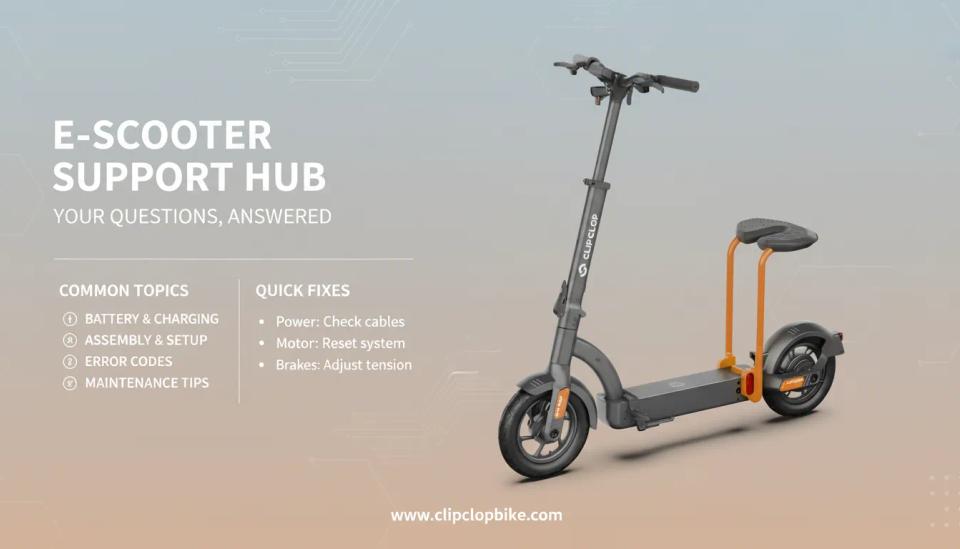
Commercial Electric Bicycle Technical Support & Diagnostic Manual: Error Codes, Controller & Hall Sensors
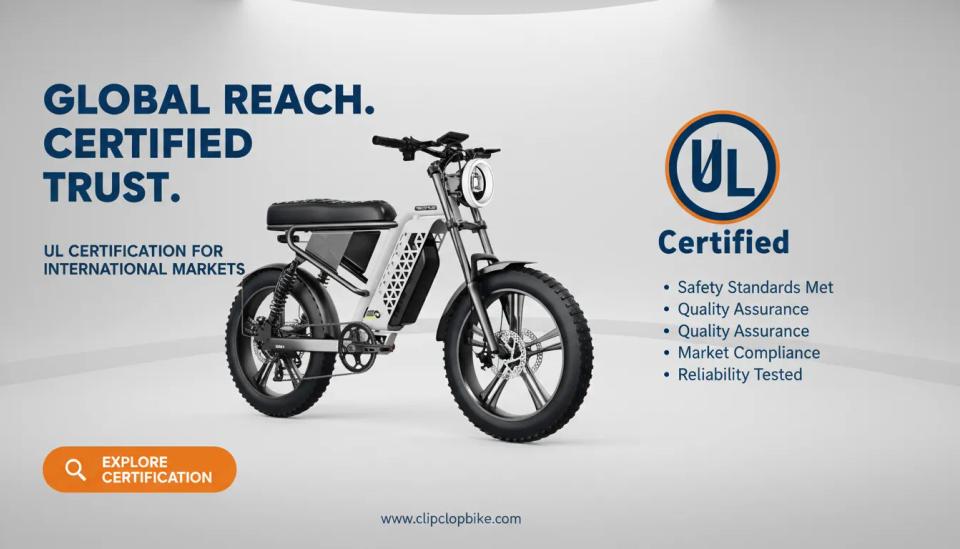
Navigating the Maze of Electric Bicycle Safety: Your In-Depth B2B Guide to UL Certification & International Compliance
Latin America Electric Bicycle Regulatory Compliance: Motor Speeds, Wattage Caps & Dealer Playbook
Send your brief. We will field-note back.
Reply includes the feasibility view, sample cost, MOQ, and the next step for your project. We aim to respond within 48 hours.