
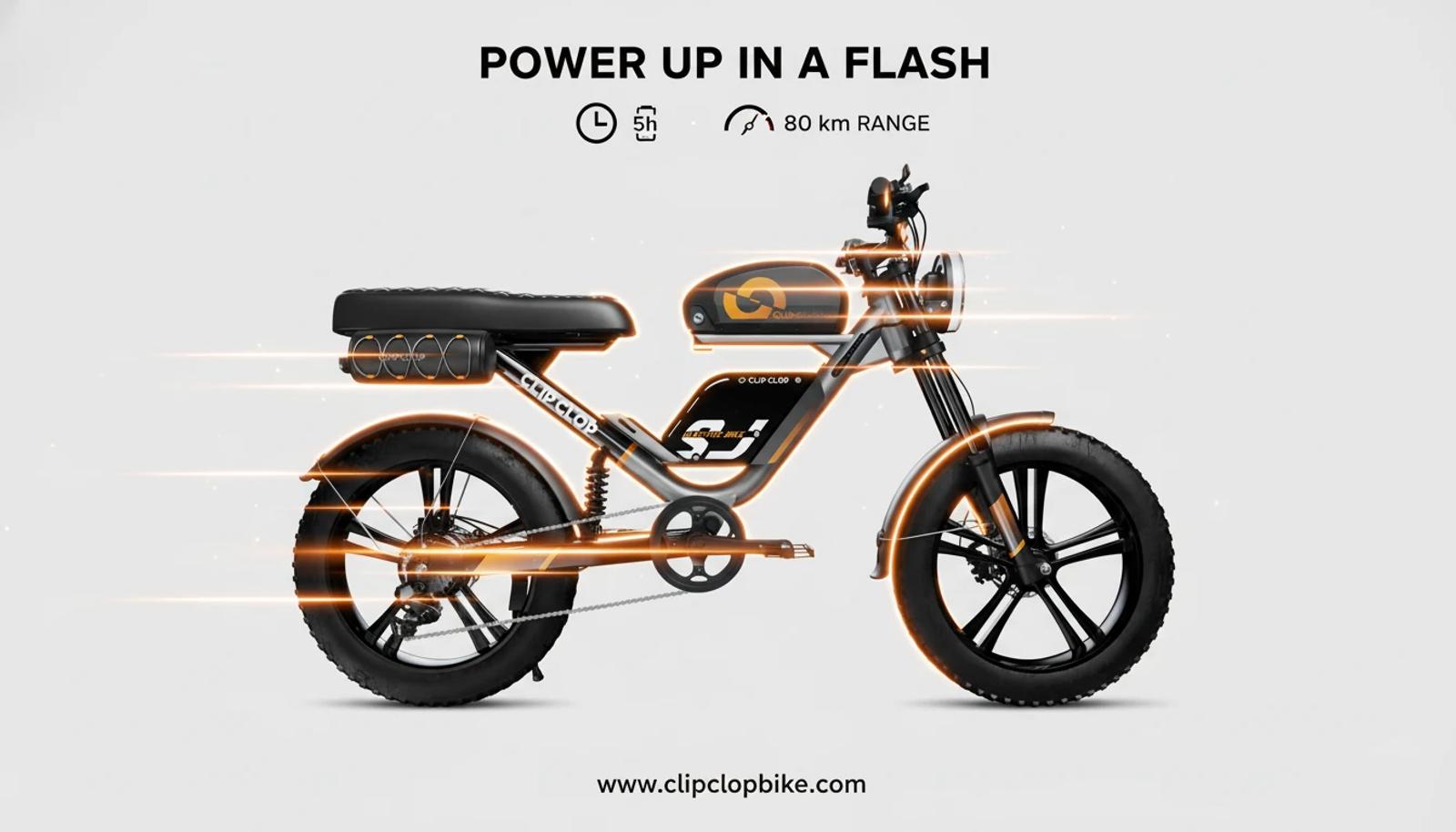
E-Bike Powertrain Efficiency: Motor Inverter Losses, Battery Discharge Curves & Fleet Range
Hi everyone, it's Leo Liang here. It's great to be blogging once more on the Clipclop website. Operating from our Guangzhou offices, I wake up and live electric off-road bikes each day, not just…
Hi everyone, it's Leo Liang here. It's great to be blogging once more on the Clipclop website. Operating from our Guangzhou offices, I wake up and live electric off-road bikes each day, not just…
Commercial E-Bike Energy Optimization: Wh/km Consumption, Fast-Charging Heat Dissipation & BMS Longevity
Commercial partners can inspect our manufacturing infrastructure on our OEM/ODM E-Bike Manufacturing Facility page, review standard configurations on our CS01 Fat Tire & CS04 Commercial Utility Platforms, or directly request volume FOB terms via our Commercial Quote Request Portal (MOQ 20).
In commercial delivery and municipal mobility operations, energy efficiency is measured in Watt-hours per kilometer (Wh/km) and total lifetime cycle cost rather than single-charge range claims. System-level losses across motor inverters, wiring harnesses, and battery internal resistance can waste up to 22% of onboard energy. High-efficiency commercial e-bikes operating with 48V architectures achieve 12–15 Wh/km under average urban payload conditions, compared to 20–25 Wh/km on uncalibrated consumer platforms.
ClipClop integrates high-efficiency automotive-grade Tier-1 21700 lithium cells, ultra-low resistance pure nickel busbars, and intelligent CC/CV fast-charging protocols (up to 4A–5A charging without thermal degradation). Our fleet management systems provide API-connected telematics that monitor real-time State-of-Charge (SoC), State-of-Health (SoH), and cell-level voltage balance across commercial battery depots.
| Electrical Architecture | Average Consumption | Thermal Dissipation | Charging Time (0-80%) | Fleet Application |
|---|---|---|---|---|
| 48V FOC Sine-Wave Architecture | 12–14 Wh/km | Integrated Aluminum Cooling | 2.5 Hours (5A Fast Charge) | Commercial Delivery (CS01 Cargo) |
| 36V Standard Square-Wave | 18–22 Wh/km | Passive Ambient Dissipation | 5.0 Hours (2A Standard) | Light Utility / Commuter (L1) |
| High-Drain 52V Extreme Torque | 22–28 Wh/km | High Thermal Generation | 3.0 Hours (4A Dual-Stage) | Heavy Off-Road & Mountain (L1 Pro) |
This range isn't however, achieved by the battery alone. The magic lies in the harmony of all components. The controller, the "mind" of our e-bikes, is essential. We use advanced high-tech sine-wave controllers, which distribute power to the motor more smoothly and effectively than the less sophisticated older square-wave controllers. This results in increased efficiency but also results in a quieter, more natural experience. The motor itself is a 48V 750W high-efficiency brushless motor, minimizing energy loss to friction and heat. Even the use of 20"*4.0 fat tires and the recommended pressure settings are calculated to reconcile rolling resistance and traction. For our B2B clients, the overarching philosophy is that you can market aggressively a bike's range not only as a number, but as a documented performance metric backed by an entire energy-saving system. It reflects a deeper level of engineering that refined purchasers will appreciate.
Download the 2026 ClipClop Factory Catalog (PDF)
Full e-bike specs, motor & battery options, MOQ, and container loading details.
What Exactly is "Fast Charging" and How Does it Relate to Your Business and to Your Batteries?
One of the more exciting advances is in fast charger technology. The typical charger on most e-bikes, including ours, tends to be around 2-3 amps, charging a large battery like our 48V 18.2AH pack in 5 hours or more. While sufficient for overnight charging, it would be inconvenient for rental shops or users who want to return to the trail urgently. Fast chargers, which can supply 4A, 6A, or even 8A, are able to decrease such time dramatically, sometimes reaching 80% charge in a few hours. By 2025, we see higher-amp, smart chargers becoming ever more common as a feature or even a high-end standard option.
Speed has a critical caveat: heat. Stuffing a big current into a lithium-ion battery generates heat, which is the biggest foe of battery longevity. Uncontrolled fast charging reduces battery cell life by accelerating the degradation process, reducing the total number of charge cycles and overall battery life. This is where charger quality as well as that of the battery's internal Battery Management System (BMS) becomes important. A high-quality fast charger will communicate with the BMS to monitor cell voltage and temperature and taper the current as the battery charges to prevent damage. A premium BMS will actively charge the cells and protect against over-voltage and overheating. Being a B2B buyer considering a supplier that offers fast charging, your most important question should not be "how fast?", but "how do you ensure battery health and safety during this process?". A reputable manufacturer should be able to provide you with in-depth specs on their BMS and the safety protocols built into their charge systems.
How Does the Battery Management System (BMS) Optimize Performance and Safety?
If the battery is the heart of an e-bike, the Battery Management System (BMS) is its brain. The tiny circuit board is the behind-the-scenes hero of the entire electrical system, and its quality is a key differentiator of e-bike battery efficiency and safety. The BMS performs several essential functions. Protection is the first and most important one. It constantly monitors the voltage of each group of cells within the battery pack and will disconnect the power should it detect over-charging, over-discharge, short circuits, or high currents. This is the primary safety feature that prevents terminal failures and fires.
Aside from security, the BMS is an optimization master. It performs "cell balancing," so the battery makes sure that all cells within the pack charge and discharge to the same level. If not balanced, some would be overloaded and others would not be used at all, and the pack capacity and life would be gone in no time. A proper BMS allows the battery to offer out even power over the duration of the discharge cycle and allows the achievement of that lovely 60-80KM range. To our B2B clients, the integrity of the BMS is a crucial, though non-tangible, component of product quality. An inexpensive, poorly crafted BMS is the foremost reason for premature battery demise. While buying e-bikes, you must never be afraid to inquire about the BMS. A proud vendor like Clipclop will not hesitate to share with you the quality of such critical in-house components and assure you that you are providing a safe, reliable, and long-lasting product to your customers.
What is the Role of Motor and Drivetrain in Energy Consumption?
The motor is where electrical power from the battery gets converted into the thrilling mechanical power that moves your vehicle. Efficiency in this conversion process is a significant contributor to the overall performance of the bike. It is our decision to use a 48V 750W brushless motor. Brushless DC motors are the norm for high-quality e-bikes because they are much more efficient, reliable, and long-lasting compared to the older brushed models. They have lower friction, produce less heat, and consequently waste less valuable battery energy. This effectiveness is especially crucial for an off-road bike that must provide great torque of 70Nm for steep hill climbing and accelerating in loose surfaces. A high-efficiency motor is capable of providing that torque without sipping an undue amount of power from the battery, maintaining your range.
The motor is not alone. It's within a system that consists of the drivetrain, the gears, in particular. The inclusion of a reliable Shimano 7-speed derailleur is not so much about comfort for the rider; it's a core element of the energy-saving system. By selecting the best gear for the terrain—a lower gear for climbing hills, a higher gear for riding on flat ground—the rider allows the motor to operate within its most efficient RPM (revolutions per minute) range. Forcing the motor to labor in too high a gear on an incline places the system under vast amounts of stress, making it draw an astronomical amount of current and deplete the battery very rapidly. Educating customers as to how to use their gears properly in conjunction with the pedal assist is a simple way to help them very much extend their on-road range and satisfaction with the product.
Is Regenerative Braking a Game-Changer for Off-Road E-Bikes?
Regenerative braking is a subject that makes many people excited. The idea is great: harvest the kinetic energy wasted as heat during braking and convert it back into battery power. It's a great technology in electric vehicles, which have high mass and do stop-and-go traffic frequently. But for an electric off-road bike, the situation is different. Even some of the direct-drive hub motors can be made to regenerative brake, its effect on range addition is typically small, typically in the single-digit percentages (2-7%). The relatively low mass of rider and bike, and the nature of off-road riding which is more likely to be gradual deceleration than abrupt braking, there simply isn't much energy to harvest.
Where regenerative braking can be truly beneficial on an off-road e-bike is handling long descents. With the regenerative mode, the motor supplies drag, a soft brake, that enables controlling speed without overloading hydraulic disc brakes. It can save wear and tear on your brake pads and provide a smoother, more controlled downhill ride down steep trails. So, is it range-changing? For the typical off-road scenario, no. The energy gains are too small to be a primary selling feature. However, as a feature for brake-saving and descent control, it has its merits. As a B2B partner, it’s important to have a realistic understanding of this technology to set correct expectations for your customers. Good efficiency gains are more regularly found within a quality BMS, a quality motor, and smart riding habits.
How Can Practical Problems Maximize Real-World Range for Your Customers?
As we've been going on about what's in the bike with new tech, the single biggest thing that will give maximum range is the one thing we can most control: the rider and on what they're riding. This is critical information for B2B partners, especially rental industry partners, since educating your customers has a dramatic effect on their experience. The first of these is tire pressure. Our bikes are equipped with 20"*4.0 fat tires, which give incredible grip. Making them too low on pavement, however, increases rolling resistance exponentially and wastes tons of energy. The optimum pressure for mixed terrain is to try it and find the optimum compromise. Riding mode second. Turning the pedal-assist system (PAS) down to a lower level will always give so much more range than just using the throttle or being on a high-level assist mode.
Other factors are rider weight and load—though the rugged 6061 Aluminum Alloy Frame has a payload capacity of 160kg/350lbs, every ounce beyond this requires more energy to transport. Terrain also plays a huge factor; climbing hills will waste battery power much faster than riding on the flat. Finally, technique of riding makes a difference. Smooth acceleration and constant momentum are far better options than aggressive, jerky acceleration. By providing your customers with a quick reminder of these helpful tips, you are helping them to get the most out of their bike. This forward-thinking training can transform a customer who might otherwise have been disappointed with the range into one who adores the performance of the bike just because they understand how to exploit it effectively.
What Should B2B Partners Look for in an E-Bike Supplier for 2025
Ahead to 2025, the world of e-bikes will be one where there are more sophisticated, more integrated, and more efficient systems. For distributors, wholesalers, and rental fleets, choosing the most suitable manufacturing partner is more crucial than ever. Your supplier is no longer just an assembler of parts; they must be a technology partner who sees the choreographed dance of the parts that provide a better ride. When evaluating a potential supplier, move the conversation beyond basic specs. Ask detailed questions about their battery tech. What brand and type of cells do they use (e.g., Samsung, LG, Panasonic)? Can they provide data sheets for their Battery Management System?
Discuss their approach to charging. Do they offer or are they developing smart, fast charging solutions that prioritize battery health? Ask for the efficiency of their motors and the level of sophistication of their controllers. An actual expert partner should be able to articulate how they selected particular components and how they interact with each other to produce an optimized energy-saving solution. Expect transparency, dedication to quality components, and a progressive mindset in technology. A vendor who is already concerned with system efficiency, and not just gunning on motor wattage or battery capacity, is a vendor who is building bikes for the future. This is the kind of partnership that will enable you to be offering products that are not only powerful and reliable today but relevant and competitive in the future.
Charging and energy efficiency is one of the brightest areas in the global e-bike universe. It's a path to improved power management that ultimately means a wiser, more convenient, and more sustainable ride for everyone.
If you'd like to know more about choosing the right electric off-road bikes for your market, discovering more about these new technologies, or discussing customized solutions for your brand, don't think twice to get in touch. We are Clipclop, experts in designing and exporting high-quality electric off-road bikes globally. We offer complete, one-stop-shop solutions for distributors, wholesalers, and brand partners that include in-depth technical support through to full, ready-to-sale e-bike solutions. Let us drive your success together.
References:
- BikeRadar. (n.d.). E-bike batteries: everything you need to know. Retrieved from https://www.bikeradar.com/advice/buyers-guides/ebike-batteries-explained
- Ebike Store. (n.d.). Regenerative Brakes on an E-Bike... Do they actually work? Retrieved from https://www.heybike.com/blogs/heybike-blog/ebike-regenerative-braking?srsltid=AfmBOorukaJC7aqLpOIFjlZWmQ3z82_JGLk4KIzpf0NNPi9K2MSOCMZh
ClipClop Manufacturing Standards & Build Quality
Looking for verified B2B e-bike manufacturing? Check out our ClipClop L1 Pro Dual-Battery System (1,440Wh) and our ClipClop L1 All-Terrain Fat Bike, backed by factory-direct warranties and flexible 10-unit MOQ.
- Battery University. (2023, September 20). BU-409: Charging Lithium-ion. Retrieved from https://batteryuniversity.com/article/bu-409-charging-lithium-ion
Commercial Procurement & Fleet Sourcing with ClipClop
Deploying electric bicycle fleets or distributing private-label e-bikes requires a trusted manufacturing partner capable of consistent container-level production, robot-welded frame alignment, and rigorous batch QC. From our 25,000 m² factory in Qingyuan, Guangdong, ClipClop provides end-to-end OEM/ODM electric bike manufacturing services with an accessible MOQ of just 20 units per SKU. Every container order includes dedicated spare parts allocation (2% free warranty backup components), full international compliance documentation (EN 15194, UL 2849, UN38.3), and 15-day sample dispatch.
Ready to evaluate engineering samples for the CS01 Fat Tire & CS04 Commercial Utility Platforms or review container FOB volume pricing? Visit our Commercial RFQ Portal to submit your technical specifications, or speak directly with our engineering sales team via our B2B contact desk.
Download the 2026 ClipClop Factory Catalog (PDF)
Full e-bike specs, motor & battery options, MOQ, and container loading details.
More OEM field notes.

E-Bike Motor Procurement Guide 2026: Bafang, Ananda & Mid-Drive vs Hub Specifications
Commercial Delivery E-Bike Sourcing: Heavy-Duty Cargo Fleets for Last-Mile Logistics
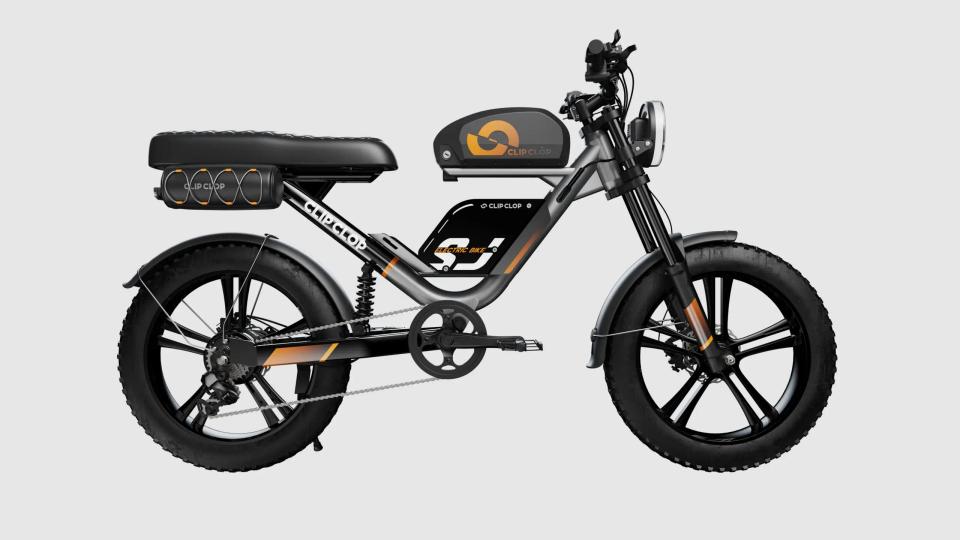
Off the Trailhead: Taking the Best Off-Road E-Bike Apart for B2B Success
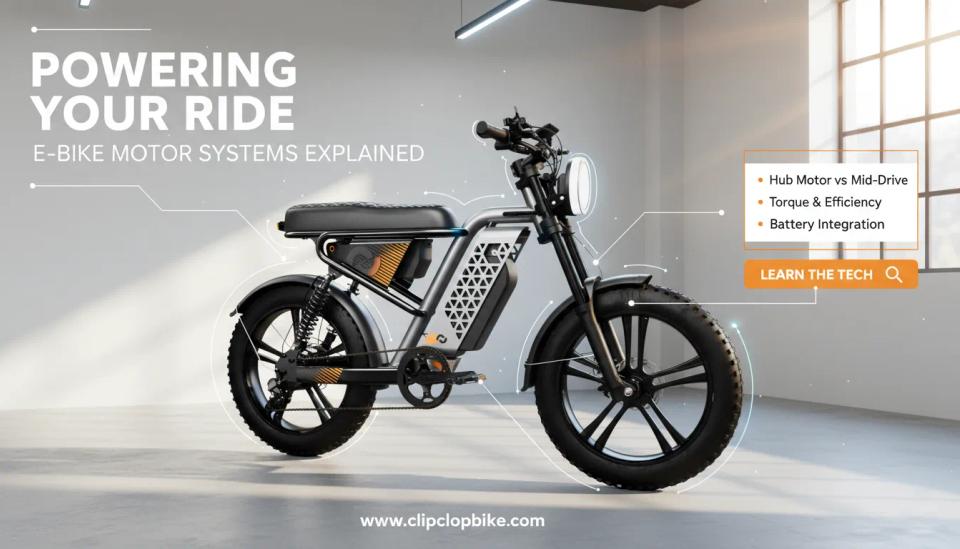
E-Bike Powertrain Architecture: CAN-Bus Protocols, Torque Sensors & Thermal Protection
Send your brief. We will field-note back.
Reply includes the feasibility view, sample cost, MOQ, and the next step for your project. We aim to respond within 48 hours.