
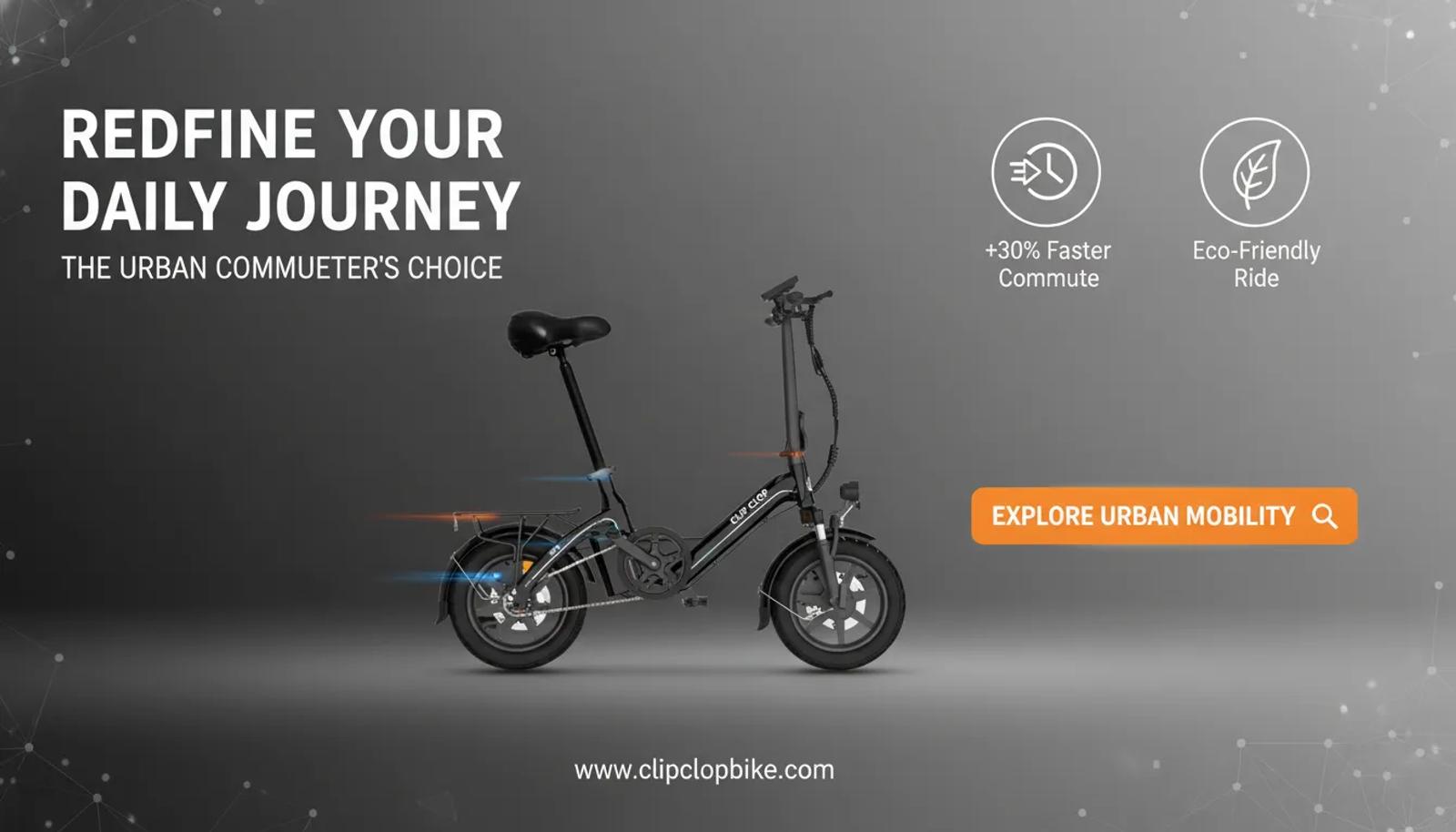
Urban Commuter E-Bike Sourcing: High-Volume City Bike Platforms for European Distributors
Hello all, I'm Leo Liang. Here at Clipclop in Guangzhou, we're not just manufacturing electric bikes; we're witnessing a revolution in motion.
Hello all, I'm Leo Liang. Here at Clipclop in Guangzhou, we're not just manufacturing electric bikes; we're witnessing a revolution in motion.
For commercial electric bicycle distributors, fleet managers, and private-label brands, urban commuter e-bike sourcing: high-volume city bike platforms for european distributors represents a critical engineering and operational decision. This comprehensive B2B technical guide analyzes the performance parameters, regulatory compliance frameworks, and factory-direct sourcing strategies required to maximize fleet uptime and commercial margins.
Factory Direct Sourcing & OEM/ODM Manufacturing with ClipClop
Commercial partners can inspect our manufacturing infrastructure on our OEM/ODM E-Bike Manufacturing Facility page, review standard configurations on our Model C3 Urban Commuter & Electric Bike G2 Step-Through Platforms, or directly request volume FOB terms via our Commercial Quote Request Portal (MOQ 20).
My work places me at the intersection of manufacturing and market application, giving me a unique perspective on the pain points and potential of integrating e-bikes into commercial operations. The challenges of urban gridlock, rising fuel costs, and the growing demand for sustainable practices are not abstract concepts; they are daily operational hurdles for businesses. In this article, I want to move beyond the headlines and delve into the practicalities. We'll explore the tangible benefits and strategic considerations of embracing the city commuter e-bike as a core component of a modern urban transport strategy and how making the right choice in hardware can define the success of that strategy.
Why is the City E-Bike Trend More Than Just a Fad?
The surge in urban e-bike usage is a direct response to the growing pressures of modern city life. It is not a fad but a structural turn towards more efficient, sustainable, and people-oriented urban mobility. Understanding the city e-bike trend is important for business in future-proofing their operations. At its heart is economics. Owning, operating, and parking commercial vehicles in dense urban centers is becoming prohibitively expensive. The fuel, insurance, and maintenance, plus the time lost to traffic, are an increasingly onerous operational cost. A correctly specified fleet of commuter e-bikes is a compelling alternative, massively slashing these costs while increasing operational agility.
Beyond the balance sheet, there is strong cultural and environmental momentum. The current work force, especially younger generations, focuses on sustainability and well-being. Those that enable greener commutes are much more attractive employers. It is a critical pain point for businesses looking to compete for top talent. Furthermore, municipalities globally are pushing micromobility in their efforts to meet climate targets and clean up the air quality. This provides a very supportive regulatory environment for electric bike adoption. The trend is thus underpinned by three major pillars: economic necessity, cultural demand, and policy encouragement. This is a long-term evolution of the urban fabric and hence a stable and promising market to invest in for dealers, fleet managers, and service providers.
How Do E-Bikes Offer a Practical Congestion Solution?
It is more than a nuisance; it is a multi-billion dollar productivity drain. For any business operating within a city-be it a courier service, a corporate campus, or a hospitality provider-time spent stuck in traffic is money lost. This is where e-bikes come in as an incredibly valuable congestion solution. An electric bike occupies a fraction of the physical space of a car. While a single car lane can accommodate a flow of approximately 2,000 cars per hour, up to 7,000 bicycles can operate in the same lane. This spatial efficiency is transformative. When a fraction of commuters or delivery personnel use e-bikes, not only are their own journey times reduced, but they further free up road space and therefore ease the congestion for all remaining vehicles.
The real competitive advantage of an e-bike is its agility. A rider on a model such as our L1, with its responsive 48V 750W brushless motor and high 70Nm torque, will cut through routes unreachable by vans and cars; he or she can take shortcuts through bike lanes, parks, and narrow streets. This ability to bypass gridlock is a complete game-changer for time-sensitive operations such as last-mile delivery. Think about a food delivery business: a 10-minute delay due to traffic is often the difference between a happy customer and a lost one. For our B2B partners, though, it gets even better: deploying an e-bike fleet means faster, more reliable, and more predictable urban logistics. It's a direct and immediate solution to a problem that has plagued urban commerce for decades, offering a tangible return on investment through time saved and improved service delivery.
What is the role of infrastructure in electric bike adoption?
The advantages of e-bikes are clear, but their complete integration into city transport is heavily dependent on infrastructure. For our B2B clients, it is essential to determine whether or not a city is seriously taking up its responsibility for micromobility before deployment of a fleet. The big factor is the presence of safe, connected, and well-maintained cycling networks. Protected bike lanes, physically separated from car traffic, are the gold standard. Not only do they ensure rider safety-a fundamental concern for any business with a duty of care to its employees-but also significantly boost the efficiency and appeal of cycling. It sends a clear signal that this city invests in this infrastructure to support and further micromobility, making it a more viable market.
Beyond bike lanes, other infrastructural elements are critical. Secure bike parking is a major concern, as theft is a huge deterrent to electric bike adoption. Businesses and municipalities must cooperate in providing secure, accessible parking solutions, preferably with charging options. The integration with public transport is another key aspect. The ability to take an e-bike onto a train or bus for part of a journey extends the practical range of the e-bike as an all-round transport solution. Where businesses are considering launching micromobility programs, a comprehensive assessment of the local infrastructure is non-negotiable. This goes directly to rider safety, asset security, and overall operational viability of the venture. A partnership with a city which is seriously investing in this area is one that is set up to succeed.
Can a City Commuter E-Bike Truly Replace a Car?
For the majority of journeys, especially for urban travel, the answer is a strong "yes." The modern commuter e-bike is no longer just a bicycle with a motor attached; it's a sophisticated means of transportation created with utility and dependability in mind. A core pain point among B2B clients is overcoming the perception that e-bikes are incapable of "serious" work. Here is where focusing on specification becomes paramount. Think of the average urban commute or delivery route, where less than 15 kilometers is covered. A bike mounted with a high-capacity 48V 15Ah lithium battery, like our L1, offers a range per charge of 30-60KM, comfortably doing multiple trips in one day. This, arguably for most urban applications, eliminates range anxiety.
Practicality also extends to carrying capacity and ride comfort. A strong frame constructed from 6061 Aluminum Alloy can support a maximum loading of 160kg/350lbs, enabling riders to carry everything from a briefcase to a full delivery bag. The option of tires is also critical in urban environments. Slim road tires are fast, but the 20"*4.0 fat tire offers superior stability and comfort due to shock absorption from potholes, cobblestones, and curbs common in a city landscape. When you combine this with essential safety features like a full Light Set and powerful hydraulic disc brakes for assured stopping in wet conditions, the e-bike comes off as a practical and often superior alternative to the car for a great swath of urban tasks. Not just a replacement but an upgrade in efficiency and agility.
How Are Micromobility Programs Reshaping Urban Transport?
Micromobility programs are among the most dynamic and scalable B2B opportunities in urban transport. Public bike-sharing systems, corporate e-bike fleets, and rental services for tourists represent initiatives that fundamentally change the way people move through cities. These are strong B2B transportation solutions since they address the "first-mile/last-mile" problem-the gap between a public transport hub and a rider's final destination. For a city, a successful program reduces demand for car parking and relieves congestion around transit stations. For a business, it represents a new revenue stream or a powerful employee perk.
The key to a successful micromobility program is durable and reliable hardware. These bikes go through high-frequency use in really demanding conditions, so you want robust construction. The frame should be able to handle continuous usage; components like Shimano 7-speed derailleur need to be dependable; and the braking system should be strong and low-maintenance. That is why fleet managers need to seek out commercial-grade specifications. In addition, telematics and smart locking system integrations are more of a norm now that enable efficient fleet management, tracking, and user billing. For our partners looking to enter this space, we emphasize a holistic approach: it's not about procuring bikes; rather, you choose a hardware platform that's built for the rigors of shared use, ensuring longevity, rider safety, and a profitable operational model.
What are the financial incentives driving such growth?
Financial incentives at all levels are accelerating the global push for electric bike adoption and, in turn, creating a fertile ground for B2B sales. Governments and corporations are coming to realize that encouraging cycling is one of the most cost-effective ways to achieve health, environmental, and economic goals. The most impactful of these incentives is the bike-to-work subsidy. In many countries, companies are given tax breaks for purchasing fleets of e-bikes for their employees or for subsidizing an employee's personal purchase of an e-bike for commuting. This directly reduces the capital expenditure for businesses looking to establish a commuter program.
These programs address one very critical pain point for B2B customers: employee wellness and retention. Offering a subsidized e-bike is a very visible and popular perk that can help improve employee health, reduce sick days, and solve parking-related frustrations. It’s a competitive advantage in the job market. Beyond direct subsidies, some cities offer grants to businesses, particularly in the logistics sector, to switch their delivery fleets from polluting vans to e-cargo bikes. For our dealer and distributor partners, knowledge of such local and national incentives is a powerful sales tool. It allows you to frame the purchase not as a cost, but as a smart, subsidized investment in operational efficiency and corporate responsibility; this makes the decision to adopt an e-bike fleet far easier to make for your clients.
Why Are E-Bikes the Future of Last-Mile Delivery?
But arguably the most compelling-and fast-growing-B2B application for electric bikes is in the last-mile delivery sector. The final stage in the supply chain-from local hub to customer doorstep-is notoriously inefficient and expensive, often accounting for over 50% of total shipping costs. Urban congestion, parking restrictions, and low-emission zones make traditional delivery vans increasingly impracticable. E-bikes, and more so e-cargo bikes, are the solution specifically designed for the purpose. They are faster through traffic, can be parked almost anywhere, require no fuel, have far lower maintenance costs, and can operate freely in restricted zones.
The advantages to a logistics company are significant. A delivery rider on an e-bike can often make more drops per hour through a dense urban core than a driver in a van. That directly impacts productivity and profitability. The demands on hardware for this sector are grueling-a delivery e-bike needs high torque for stop-and-go traffic, a durable frame for heavy loads, and a reliable battery that lasts an entire shift. A corrosion-resistant and strong aluminum alloy material type could be fundamental in making the right choice of the frame. The efficiency of a B2B transport solution in this context is measured in minutes and cents; the right e-bike can save significant amounts of both. This makes it arguably destined to be a cornerstone of the urban logistics industry as e-commerce demand continues to surge.
| B2B Application | Key Business Problem (Pain Point) | E-Bike Solution & Key Features |
|---|---|---|
| Urban Logistics & Congestion | Lost productivity and high operational costs due to traffic gridlock and parking difficulties. | Bypasses traffic, increasing operational agility. Essential features include high Torque: 70Nm for quick acceleration and a nimble frame design. |
| Last-Mile Delivery | High cost, inefficiency, and environmental impact of delivery vans; restrictions in low-emission zones. | Faster, cheaper, and more flexible deliveries. Requires a durable 6061 Aluminum Alloy Frame, high Max loading: 160kg/350lbs, and a long-range 48V 15Ah lithium battery. |
| Corporate Commuter Programs | Employee wellness, talent retention, limited on-site parking, and achieving corporate sustainability goals. | An attractive, often subsidized employee perk that improves morale and reduces a company's carbon footprint. Focus on rider comfort (20"*4.0 fat tire) and safety (Hydraulic disc brake, full Light Set). |
| Micromobility & Rental Fleets | Addressing the "first-mile/last-mile" transit gap; creating new, scalable revenue streams. | A durable, high-use vehicle platform. Requires extreme reliability, low maintenance, and trusted components like a Shimano 7-speed derailleur. |
What should a B2B buyer look for in a fleet-ready e-bike?
The most important decision a B2B buyer will make in investing in an e-bike fleet involves selecting the right hardware. A consumer-grade bike simply will not hold up to commercial use. Buyers have to take on a procurement mindset centered around durability, serviceability, and total cost of ownership. First among all components to delve deep into is the core powertrain: a reliable motor power level, for example, such as a 48V 750W system, strikes a good balance between performance and efficiency for varied urban terrain. The battery system should be from a reputable cell manufacturer, with a long and safe cycle life.
The chassis is as important as the components. A frame made from 6061 Aluminum Alloy offers a very good strength-to-weight ratio and also corrosion resistance, which is essential in vehicles that will be used every day in all kinds of weather. Give close attention to "contact points" and "wear items." Brakes should be powerful and easy to maintain; hydraulic disc brakes will offer better performance than mechanical ones. With the drivetrain, a mix of components from tried-and-true brands like Shimano, it'll make for one dependable machine. Finally, but not least, consider the bike's suitability for specific terrains and application scenarios. A bike intended for food delivery will have quite different demands-appropriately equipped with integrated cargo racks-than one for a corporate commuter program: maximum comfort and ease of use. A successful fleet is built on a foundation of well-chosen, purpose-built machines.
The shift towards electric urban mobility is a given, and it presents a transformational opportunity for businesses ready to adapt. From providing a practical congestion solution to revolutionizing last-mile delivery, the city commuter e-bike is proving to be an invaluable asset. Success, though, in this new landscape depends on the choices: choosing the right partner and the right equipment-hardware not just built to move but built to last and perform under the pressures of daily commercial use.
ClipClop specializes in the building of these robust, fleet-ready e-bikes. With many years of deep experience in the B2B sector, we understand the particular demands of dealers, distributors, and fleet operators. We design our bikes, like the versatile L1, to be reliable workhorses that deliver a strong return on your investment.
If you are investigating electric bike adoption for your business, have questions about custom configuration possibilities, or need an expert partner to guide you through the micromobility program world, we invite you to contact us. As specialists in the manufacturing and export of electric off-road and commuter bikes, we provide end-to-end services, from technical consultation to complete vehicle solutions for our partners around the globe.
Frequently Asked Questions (FAQ)
Q1: What are the key differences between a consumer e-bike and a B2B city commuter e-bike? A B2B-grade city commuter e-bike is designed for high-frequency use and durability. This means stronger frames (e.g., 6061 Aluminum Alloy), more powerful and reliable components like hydraulic disc brakes, and batteries designed for a higher number of charge cycles. They often feature integrated mounting points for cargo and are designed for easier maintenance, which is critical for minimizing fleet downtime.
Q2: How can our company start a bike-to-work program for employees? Start by assessing employee interest and commute distances. Research available local or national bike-to-work subsidy programs that can offset the cost. Partner with a B2B supplier like Clipclop to select a suitable, low-maintenance e-bike model. Finally, ensure you have secure on-site parking and charging infrastructure to support the program.
Q3: Are fat tire e-bikes like the L1 suitable for city use? Absolutely. While often associated with off-road use, fat tires provide significant advantages in an urban environment. They offer superior comfort by absorbing vibrations from potholes and uneven pavement, increase stability, and are less likely to get caught in tram tracks or grates, enhancing rider safety. This makes them an excellent and versatile choice for a modern city commuter e-bike.
Q4: What is the typical ROI for a business switching to an e-bike fleet for last-mile delivery? The Return on Investment (ROI) can be very rapid. Key savings come from eliminating fuel costs, significantly lower maintenance and insurance expenses compared to vans, and increased productivity as riders can avoid traffic and parking issues. Many businesses in the last-mile delivery sector report breaking even on their investment in well under a year, making it a highly effective B2B transport solution.
Q5: Beyond the bike itself, what is the most important factor for successful electric bike adoption in a city? The single most important factor is safe and connected cycling infrastructure. While a great e-bike makes the ride possible, dedicated and protected bike lanes make it safe, efficient, and enjoyable. For any large-scale electric bike adoption to succeed, whether through private use or micromobility programs, investment in infrastructure is essential.
References:
- McKinsey & Company. (2020, May 19). The future of micromobility: Ridership and revenue after a crisis. Retrieved from https://www.mckinsey.com/industries/automotive-and-assembly/our-insights/the-future-of-micromobility-ridership-and-revenue-after-a-crisis
- Deloitte. (2020). The future of mobility: What's next? Retrieved from https://www.deloitte.com/us/en/insights/topics/future-of-mobility.html
ClipClop Manufacturing Standards & Build Quality
- European Cyclists' Federation (ECF). (n.d.). The Benefits of Cycling. Retrieved from https://www.ecf.com/en/news/celebrating-world-health-day-what-are-the-health-benefits-of-cycling/
Commercial Procurement & Fleet Sourcing with ClipClop
Deploying electric bicycle fleets or distributing private-label e-bikes requires a trusted manufacturing partner capable of consistent container-level production, robot-welded frame alignment, and rigorous batch QC. From our 25,000 m² factory in Qingyuan, Guangdong, ClipClop provides end-to-end OEM/ODM electric bike manufacturing services with an accessible MOQ of just 20 units per SKU. Every container order includes dedicated spare parts allocation (2% free warranty backup components), full international compliance documentation (EN 15194, UL 2849, UN38.3), and 15-day sample dispatch.
Ready to evaluate engineering samples for the Model C3 Urban Commuter & Electric Bike G2 Step-Through Platforms or review container FOB volume pricing? Visit our Commercial RFQ Portal to submit your technical specifications, or speak directly with our engineering sales team via our B2B contact desk.
More OEM field notes.
E-Bike Frame Sourcing for Brazil: Corrosion-Resistant 6061-T6 Aluminum for Tropical Fleets
Tropicalized Heavy-Duty E-Bikes for Brazil: Reinforced Frames & 2.4"+ Tires for Fleets
NYC Commercial Delivery E-Bikes: UL 2849 Compliance, Heavy Cargo & Fleet Specifications
Send your brief. We will field-note back.
Reply includes the feasibility view, sample cost, MOQ, and the next step for your project. We aim to respond within 48 hours.