


Urban logistics is booming, and the electric cargo bike has quietly become the “last-mile workhorse.” At ClipClop, I’ve watched plenty of distributors fall into the same trap: they spec a stronger motor, add a bigger battery, bolt on a tougher rack… and end up with a bike that rides like a shopping cart full of bricks.
Designing an electric bike for heavy loads isn’t about piling on metal. It’s about managing forces—twist, bend, vibration, heat—and making them behave day after day, in real delivery conditions.
If you’re buying B2B, reliability under pressure is the whole game. A high-torque setup can be amazing, but it also turns every junction and weld into a stress test you’re running thousands of times per week.
And yes, this is where material choices and geometry stop being “engineering talk” and start being your maintenance budget.
Torque: Power That Tries to Tear the Frame Apart
Torque is not just acceleration; it’s a twisting load that attacks the dropouts, chainstays, and bottom bracket area. Once you cross into “serious cargo” territory—say, motors delivering 80Nm+—the frame must be engineered like it actually believes you’ll use that torque every day.
At ClipClop, our electric bike frame thickness recommendations typically start around 2.8–3.2mm at critical stress points for high-torque builds. That doesn’t mean the whole bike becomes a tank; it means the right areas get thicker, reinforced, and properly welded.
Here’s the ugly truth: pairing a high torque electric bike motor with standard thin tubing (think ~1.8mm in the wrong places) is how you get hairline cracks near motor mounts. Those cracks don’t look dramatic at first—until they do.
We lean on Aluminium Alloy 6061, heat-treated to T6, because it gives a strong balance of strength, weldability, and long-term fatigue performance. “Strong” is nice. “Strong after 10,000 curb hops and stop-and-go launches” is better.
Leo Liang says it bluntly in design reviews: the motor is only as reliable as the frame that contains it. He’s not being poetic—he’s saving everyone from warranty pain.
Battery Weight: The Hidden Load You Carry All Day
The battery is often the single heaviest component on a cargo e-bike, and it’s not just dead weight—it’s moving weight. A typical 48V 12.8Ah lithium battery adds mass that can amplify frame flex if the mount and down tube aren’t built for it.
A battery weight optimized e-bike keeps the center of gravity low. Mounting the battery higher might look clean on a spec sheet, but it can feel sketchy on a tight corner with cargo on the back (and a rider who’s already tired).
Battery weight vs range comparison is where buyers get hypnotized by “more capacity.” But more capacity can force more reinforcement, and reinforcement can reduce payload headroom. That’s how you accidentally build a bike that can store energy but can’t carry your business efficiently.
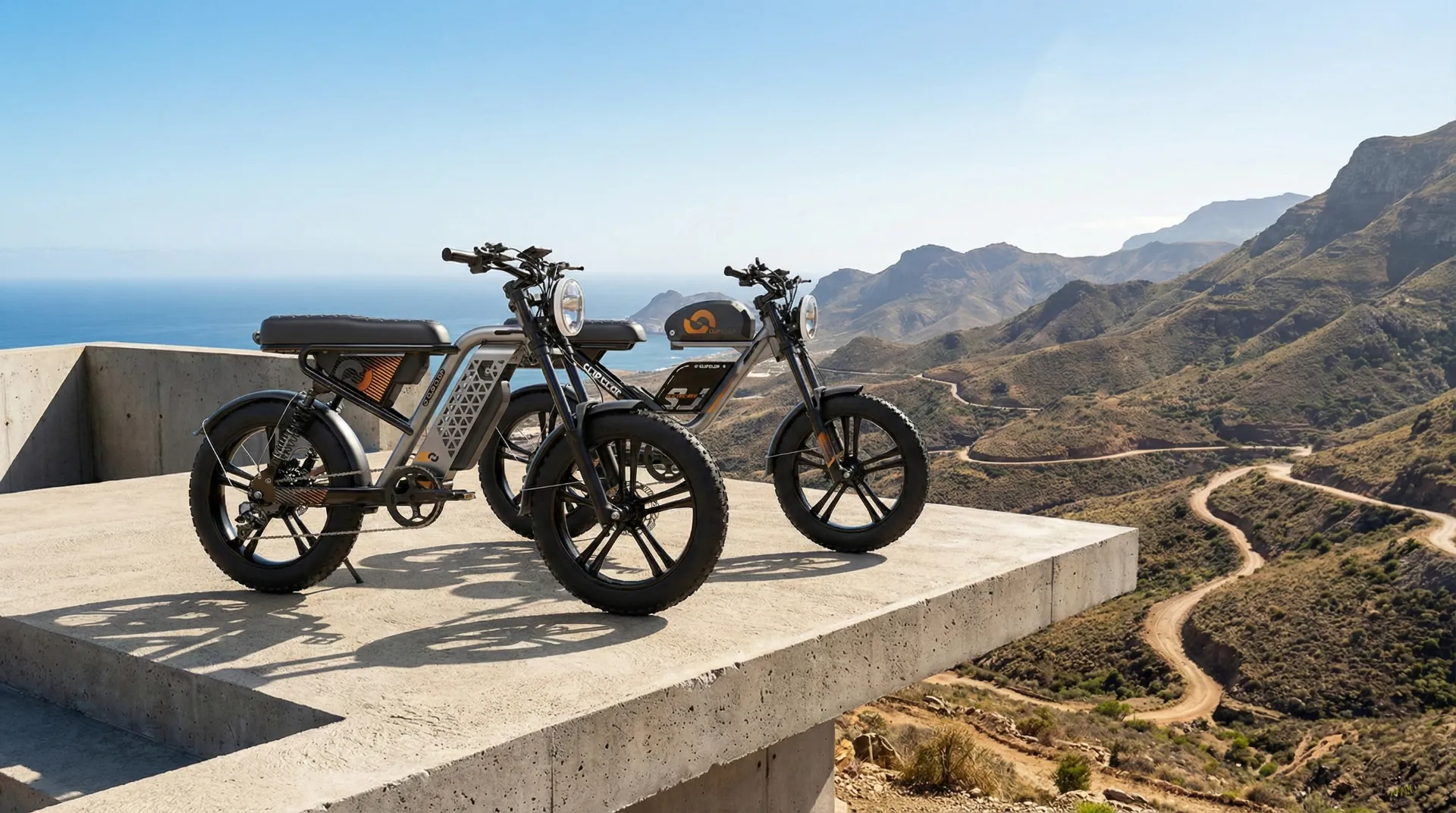
On the ClipClop C1, we aim for a practical balance: 40–65 km range, 4–5 hours charging, and a net bike weight around 29 kg—enough endurance without turning handling into a wrestling match.
One more thing: if your battery mounting has even a little vibration under load, it’s not a small issue. Vibration becomes fatigue. Fatigue becomes cracks. Cracks become that phone call nobody enjoys.
Rear Rack Loads: Why “50kg Rated” Needs Real Engineering Behind It
The rear rack is the most scrutinized feature in delivery fleets for a reason: it’s where reality lives. A rack “rated” for 50kg is meaningless if it’s basically an accessory bolted to thin stays.
For heavy-duty cargo, the rack has to behave like part of the structure. That usually means welded integration and load paths that spread stress through the rear triangle, not through a couple of bolts pretending to be heroic.
When we design for an e-bike rear rack load capacity of 50kg+, we focus on geometry and junction reinforcement: gussets, reinforced seat stay intersections, and dropout thickness that can handle both motor torque and vertical cargo load at the same time.
If you want a quick sanity check as a buyer: ask where the rear load actually “goes” in the frame. If the supplier can’t explain the load path, they might be selling optimism, not engineering.
Brakes: Stopping Is Part of the Drivetrain
A cargo bike with Max Loading 140 kg at 35 km/h carries serious kinetic energy. That energy doesn’t care about marketing copy.
That’s why ClipClop offers Zoom Mechanical Disc Brakes or Tektro Hydraulic Brakes as standard options, and why many B2B customers choose hydraulic for fleets: better modulation, consistent stopping, less fiddling over time.
Also, we pair brake levers with cut-off sensors that immediately disengage the 48V 500W hub motor when braking. It’s a small feature that makes the bike feel safer and more predictable—especially for new riders who don’t want the motor “pushing” during a stop.
If you’re evaluating a supplier, don’t just ask rotor size. Ask about repeated full-load stopping tests and brake mount reinforcement. Heat and flex are a nasty combo, and cargo bikes generate plenty of both.
Standards and Compliance: The Part Everyone Skips Until Customs (or a Recall)
Regulations are tightening worldwide, and the point isn’t to annoy manufacturers—it’s to stop unsafe bikes from entering fleets. References like GB 17761-2024 (and alignment thinking with standards like EN15194) push manufacturers to document safety, stability, and component performance more rigorously.
For B2B buyers, compliance is not paperwork; it’s risk control. A bulk shipment that fails certification can ruin timelines, cash flow, and customer trust in one stroke.
Electric bike quality assurance should include traceable testing: fatigue checks, braking under maximum load, mounting security for the battery, and repeatable structural integrity tests that match the product’s intended duty cycle.
At ClipClop, we treat compliance as design input, not a last-minute sticker.
Quick Reference Table: What to Spec, and What to Ask
| Engineering factor | Why it matters in cargo use | Practical target (example) | What to ask your supplier |
|---|---|---|---|
| Motor torque | Twisting loads stress dropouts/BB/welds | 80Nm+ needs reinforcement | “Where are your critical reinforcements, and why?” |
| Frame wall thickness | Prevents torsional fatigue and cracking | 2.8–3.2mm at stress zones | “Which tubes are thickened, and how is welding done?” |
| Battery placement | Impacts stability and frame flex | Low mount, rigid cradle | “How do you prevent battery vibration under load?” |
| Rear rack design | Cargo load must transfer safely into frame | Integrated rack, gusseted joints | “Is the rack structural or just bolted on?” |
| Braking system | Full-load stops generate heat and stress | Hydraulics often best for fleets | “Do you test repeated stops at max load?” |
| Compliance standards | Prevents seizures, recalls, safety failures | GB 17761-2024 / EN15194 mindset | “Can you provide test logs and documentation?” |
Material Science: Why Aluminium Alloy 6061 Keeps Winning
People love to ask why not carbon fiber. For heavy-duty delivery, the answer is boring and practical: impact resistance, repairability, and predictable fatigue behavior matter more than shaving a kilogram.
Aluminium Alloy 6061 is the B2B gold standard because it lets you tune wall thickness and still keep production consistent. You can reinforce the bottom bracket and dropout zones while using lighter sections where loads are lower.
It also plays nicely with quality TIG welding, which matters a lot when your frame is carrying both a drivetrain and a job description.
Add good powder coating and you get corrosion resistance that holds up in rain, snow, and salty coastal air—exactly the environments delivery fleets live in.
The Real “Sweet Spot”: Torque, Battery, and Load as One System
The biggest mistake in cargo e-bikes is optimizing each feature in isolation. Max torque without structure is failure. Max battery without balance is tipping risk. Max rack rating without real load paths is a broken weld waiting to happen.
We optimize torque vs battery weight by focusing on efficient power delivery—like using 48V 20A controllers to manage discharge cleanly—so the bike feels strong without cooking the system or forcing unnecessary mass.
Leo Liang likes to say, “Data drives the design,” and it’s not a slogan. Simulations, stress mapping, and real-world testing are how a bike becomes a tool instead of a fragile gadget with big numbers.
Choosing the Right Partner for B2B Cargo E-bikes
A good electric bike OEM supplier should be able to explain why their design choices exist, not just list specs. If the answers are vague, the problems later will be very specific.
ClipClop’s approach is simple: build industrial electric bicycle supplier solutions that stay stable under torque, stay balanced under battery weight, and stay safe under rack loads—without turning the bike into a slow, overbuilt anchor.
If you’re sourcing for fleets, ask for documentation, ask for test logic, and ask the uncomfortable questions early. The best suppliers won’t dodge them—they’ll be relieved you’re asking.
FAQ: Key Considerations for B2B E-bike Procurement
Q1: What is the ideal frame thickness for a heavy-duty electric cargo bike? For B2B and industrial applications, we recommend a minimum wall thickness of 2.5mm to 3.0mm in high-stress areas like the motor mounts and down tube. Standard consumer bikes often use 1.2mm-1.8mm, which is insufficient for a best electric cargo bike for 100kg load.
Q2: How does the new GB 17761-2024 standard affect international buyers? While specifically a Chinese standard, it represents the most stringent electric bike quality assurance metrics globally. Buying a bike that meets these standards ensures you are getting a product with verified structural integrity and electrical safety, which is often accepted or exceeded by other international certifications.
Q3: Can I customize the motor torque for my specific fleet needs? Yes. As an electric bike OEM supplier, we can tune the high torque electric bike motor via the controller settings. If your delivery route is flat, we can prioritize efficiency; if it’s hilly, we can maximize torque at the expense of some range.
Q4: Is the Aluminium Alloy 6061 frame strong enough for 140kg? Absolutely, provided the geometry and electric bike frame thickness recommendations are followed. Our C1 model uses reinforced 6061-T6 aluminum to safely manage a Max Loading 140 KG, making it one of the most durable in its class.
Q5: What is the maintenance cycle for a high-load delivery e-bike? For a durable e-bike for food delivery, we recommend a professional inspection every 1,000 KM. Special attention should be paid to the rear rack load bolts, the Tektro Hydraulic Brakes pads, and the spoke tension of the rear wheel.
References:



 English
  Spanish
  Portuguese
  Russian
  Arabic
  French
  Dutch
Dutch  German
  Danish
