

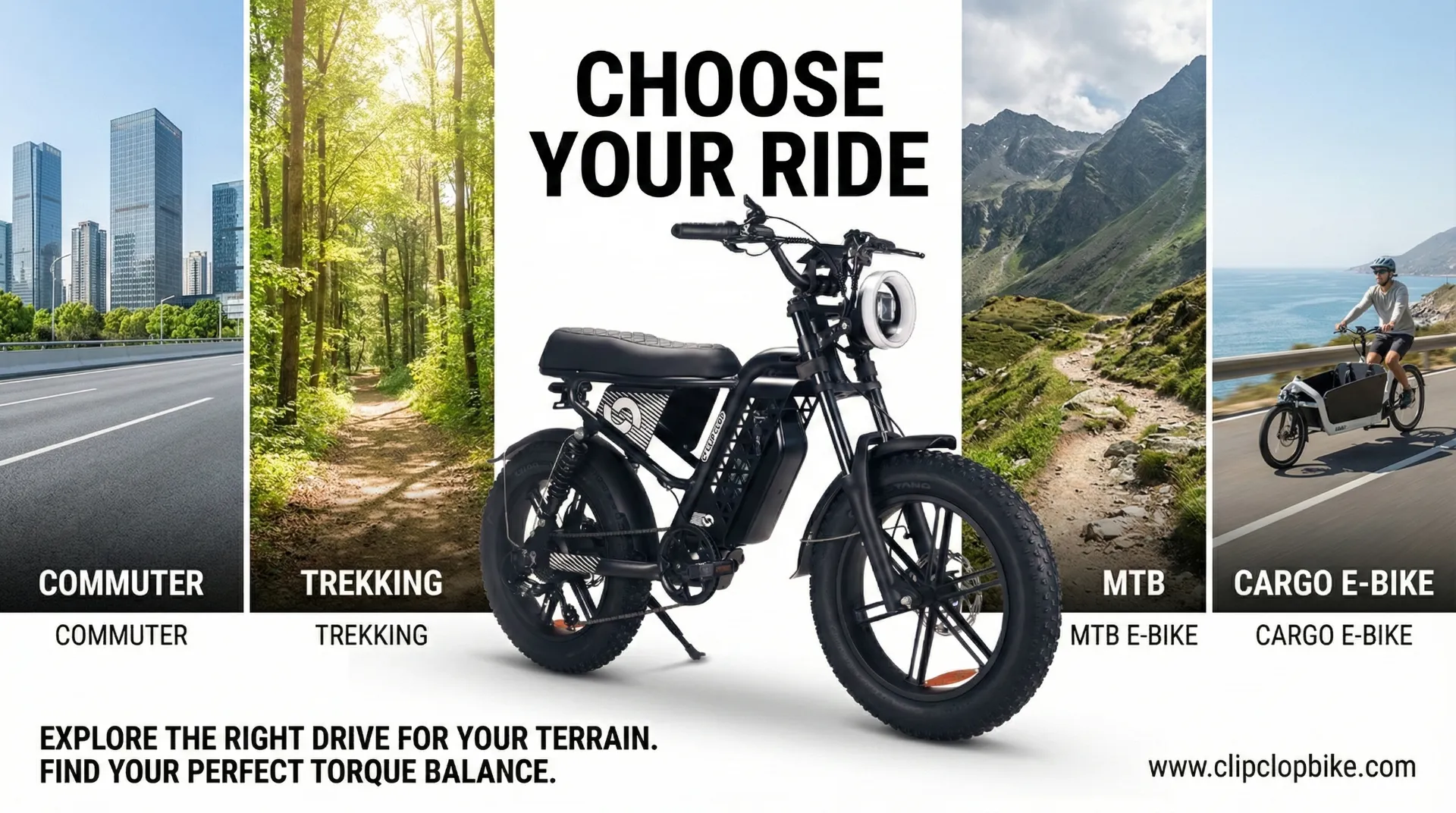
Buying e-bikes for a distribution business isn’t just “compare spec sheets and pray.” I’ve learned it’s more like: understand how the frame is built, then match it to what your customers actually do with the bike. And yeah, right now the market is splitting into niches fast—commuters, trekking, eMTB, cargo… all want different things.
One thing that keeps showing up in the “premium vs generic” discussion is the hydroformed ebike frame. Some people treat it like a buzzword. I don’t. If you’re trying to build a lineup that lasts (or run a rental fleet without constant headaches), frame choice is basically your long-term insurance.
At ClipClop, we’ve seen hydroforming help a lot with that sweet spot: strength without turning the bike into a tank. The material and the shaping method matter more than most buyers admit.
Why Hydroforming Changes the Game (Not Just the Look)
Here’s the simple version: hydroforming uses high-pressure fluid to shape tubes into complex profiles—thicker where stress lives, slimmer where it doesn’t. Traditional tubes are kind of “one shape fits all,” and that’s where compromises start.
For frames, that means a manufacturer can:
- reinforce high-stress zones without adding random extra metal everywhere
- reduce unnecessary weld points (welds are where fatigue cracks love to start)
- build cleaner integration for battery packs, internal cables, motor mounts
And yeah, it also looks smoother and more “premium.” But I’d rather you care about the boring part: structural balance + fewer weak spots.
On materials: for hydroformed frames, 6061 and 7005 aluminum are still the workhorses. They react well to the process and make sense for mass production when you need consistency.
The B2B Angle: Less After-Sales Pain, Better Perceived Value
I’ve spent too much time watching how technical decisions show up later as: warranty claims, return rates, angry dealer calls, and “why is this fleet always in the workshop?”
A hydroformed ebike frame helps because it supports:
- internal cable routing (less snagging, less weather damage)
- recessed / protected motor mounts (electronics don’t love impacts)
- more stable packaging for 48V battery systems (especially the big ones)
For wholesalers and fleet operators, the boring win is: fewer failure points. For end customers, the emotional win is: “this feels like a serious product.”
Match the Frame to the Use Case (Don’t Do One-Model-Fits-All)
I usually break selection into four big categories:
- urban commuting
- long-distance trekking
- high-performance eMTB
- cargo / last-mile logistics
Same word “e-bike,” totally different demands.
Urban Commuter: Light, Clean, and Easy to Live With
City riders hate two things: weight and messy design. If someone has to carry the bike upstairs, they’ll remember every extra kilogram.
What I look for in this segment:
- hydroformed 6061-T6 frame so tube walls can be thinner where possible
- target bike weight: under ~18kg if you want it to feel “city-friendly”
- integrated battery sitting flush in the down tube (theft resistance + better look)
- typical setup: 250W motor, assist up to 25 km/h (keeps you aligned with EU rules like EN 15194)
Dealers also love:
- internal cable routing (less maintenance drama)
- integrated lights powered from the main battery (people actually use them)
Geometry-wise, I’d push for:
- upright position for visibility
- lower stand-over height so more riders can use it comfortably
- wheels: 700C for standard commuter feel, or 20×4.0 if the market has rough roads and people want comfort
One blogger-style tip I agree with: don’t make everything “high-tech.” Keep wear parts easy:
- standardized drivetrain parts (Shimano etc.)
- brakes that local shops can service fast (even mechanical discs can make sense here)
Trekking E-Bikes: Range + Stability Are the Real Product
Trekking is basically the SUV category. People load gear, ride far, and don’t want surprises.
Main pain point is range anxiety, so the frame has to support:
- bigger batteries like 48V 15Ah and sometimes dual-battery setups
- extra rack load without the rear end feeling like a noodle
This is where hydroforming helps because you can design:
- rack mounts that are structural, not “bolt-on and hope”
- better stiffness for panniers + speed + uneven surfaces
Typical config that sells:
- 500W / 750W motor (torque matters on hills)
- a decent LCD display showing battery health + estimated range (not fake guesswork)
Comfort and safety are non-negotiable:
- suspension fork 80–100mm travel
- relaxed geometry, longer wheelbase for stability
- hydraulic disc brakes (when total weight gets heavy, mechanical starts feeling sketchy)
Trend I keep seeing: “all-road” demand. So the frame should allow wider tires, like 27.5×2.4 clearance. Rental fleets especially like this because one bike can satisfy more customer types.
High-Performance eMTB: Mid-Drive + Torque Sensor or Don’t Bother
If you’re selling into serious eMTB buyers, they’ll judge everything. They’ve moved hard toward:
- mid-drive motors (better weight distribution, better climbing feel)
- torque sensors (ride quality is night-and-day vs cadence sensors)
Frame requirements go up fast here. A hydroformed ebike frame matters because you need:
- a precise, strong motor cradle area
- internal shaping for protection + cooling space
- less welding in high-stress zones
Material choice: I see 7005 used a lot in higher-end builds because of strength needs, especially for full-suspension setups that take repeated hits.
Power options depend on region:
- 750W / 1000W makes sense in markets that allow it (often North America/off-road)
- and yes, these are margin-friendly bikes if you build them right
Also: tire/wheel setups like 29-inch or 20×4.0 demand lateral stiffness. If the rear triangle flexes and you get wheel rub under cornering, customers will roast the brand.
One very honest thing: eMTB buyers also buy “tech vibe.” If it looks like it belongs on a race track, it sells easier. Hydroforming helps the silhouette look modern, and hiding the battery in-frame reinforces that premium feel.
Cargo E-Bikes: This Is All About Torsional Rigidity and Payload
Cargo is booming because last-mile delivery is exploding and families want car alternatives. But cargo bikes punish weak frames.
In this category the frame must:
- support ~200kg payload or more depending on design
- avoid “frame wag” (that side-to-side oscillation under load)
Hydroforming is useful because you can go with:
- big rectangular-section tubing for torsional stiffness
- reinforced mounting points for racks, boxes, child seats
For commercial fleets, downtime is money, so config usually leans:
- 750W motor with good heat management
- dual batteries for full-day use
Safety is serious here:
- hydraulic brakes with 180mm or 203mm rotors (heat matters)
- reinforced dropout areas to handle braking torque
- low center of gravity, often step-through designs for stability
Also: fleet buyers love standardization.
If you keep battery formats compatible across models, it saves huge cost in spares and training. And yeah, branding matters too—cargo bikes are rolling billboards, so a flatter tube surface helps decals stay clean.
Certification: Don’t Treat This as a “Nice to Have”
For global markets, certifications are where deals get blocked or unlocked. The common buyer fear is real: customs issues, recalls, legal problems.
The big names in this space:
- EN 15194 (Europe e-bike standard)
- UL 2849 (North America e-bike electrical system safety)
- plus battery-specific like UL 2271 in many conversations
Hydroformed frames can help here because the structure is more predictable than inconsistent hand-built welding quality. Fatigue testing is brutal—frames may need to survive 100,000+ stress cycles without failure.
And please don’t ignore battery safety:
- proper BMS (overcharge, deep discharge, thermal protections)
- good battery housing design so impacts don’t become short-circuit stories
A lot of US cities have been tightening rules around lithium fire risk, so your paperwork and test reports are not just “sales documents,” they’re your shield.
Beyond Specs: Supply Chain Stability and After-Sales Support Win Long Term
Specs sell the first batch. Supply chain reliability sells the second and third.
One nasty issue I see: manufacturers swapping components between batches, then distributors can’t support repairs. That’s how after-sales turns into chaos.
Better approach (what I recommend):
- modular design across models (shared electronics, shared small hardware)
- tight tolerances so replacement hangers/covers fit without hacks
- keep buffer stock on key parts (LCDs, battery covers, common batteries)
Lead time is the silent killer. Miss spring season, you lose the year. So when evaluating suppliers, look beyond the frame: ask how they control production timing, how they handle part shortages, and whether they actually provide technical training materials.
Quick B2B Configuration Cheat Sheet
- Urban commuter: lightweight hydroformed frame, 250W, 36V/48V ~10Ah, integrated battery + clean routing
- Trekking: reinforced 6061, 500W, 48V 15Ah+ or dual battery, rack strength + comfort geometry
- eMTB: hydroformed 7005, mid-drive 750W/1000W, 48V 15Ah, torque sensor + strong motor cradle
- Cargo: heavy-duty hydroformed, 750W, 48V 20Ah (often dual), high payload + brake upgrades
Conclusion: Pick the Frame Like You’re Picking Your Future Warranty Rate
I’ll say it straight: the e-bike market isn’t one-size-fits-all anymore. If you want to stay competitive, you need purpose-built models, and the hydroformed ebike frame is one of those “under the hood” choices that changes everything—performance, durability, perception, compliance.
If you’re building a lineup for dealers, rentals, or fleet contracts, I’d focus on three words:
quality, certification, repeatability.
And if you want to upgrade your catalog with modern hydroformed frame options (or push an OEM/ODM build), that’s usually where the real growth starts—because you’re not fighting on price alone anymore.
FAQ & Extended Reading
Q: What are the main benefits of a hydroformed ebike frame for a rental business? A: For rental businesses, durability and low maintenance are the highest priorities. A hydroforming bicycle frame reduces the number of welds, which are traditional points of failure. This means the bikes can withstand the daily abuse of multiple users. Additionally, the integrated battery design protects the most expensive component of the bike from theft and physical damage, ensuring a better ROI for the fleet owner.
Q: Why should I choose 6061 aluminum over carbon fiber for a B2B fleet? A: While carbon fiber is lighter, aluminum alloy 6061 is significantly more cost-effective and impact-resistant for commercial use. It is easier to recycle, more durable when clamped in bike racks, and handles the “rough and tumble” of shipping and storage much better. For most B2B applications, the reliability of a high-quality aluminum frame outweighs the marginal weight savings of carbon.
Q: Can ClipClop provide customized frame geometries for our own brand? A: Yes, we specialize in OEM/ODM services. Because we utilize hydroforming bicycle frame technology, we can create unique tube shapes and geometries that align with your brand’s identity. This allows you to offer a product that is truly unique in your market, backed by our proven 48V 15AH battery and motor systems.



 English
  Spanish
  Portuguese
  Russian
  Arabic
  French
  Dutch
Dutch  German
  Danish
