


High-performance e-mobility is blowing up worldwide, and if you’re a distributor or a brand buyer, you’ll hit this decision sooner or later: Aluminum T4 vs T6 bicycle frame—which one are you actually importing?
I’m not saying heat treatment is the “sexiest” topic. But I’ve learned the hard way: it’s one of those quiet decisions that decides whether your product becomes a long-term seller… or a warranty nightmare that eats your margins and your reputation.
I’m Leo Liang from ClipClop. When we build a 20″ 6061 aluminum alloy frame for real off-road use, I don’t just look at the alloy label. I care about what’s happening inside the metal after welding, after forming, after the frame gets punished by a high-torque motor and heavy payloads. That’s what this guide is about: how the T6 heat treatment ebike frame process turns “just aluminum” into a chassis that can actually survive real use.
T4 vs T6: The Extra Step That Makes or Breaks Off-Road Frames
Here’s the simple difference (and yeah, it matters):
- T4 = solution heat treated, then naturally aged (basically it “ages” at room temperature).
- T6 = solution heat treated, then artificially aged in an oven with controlled temperature and time.
That oven step is the point. For a normal low-power city bike, you can sometimes get away with less. But for electric off-road bikes, mountain e-bikes, cargo builds—anything with real load and torque—skipping T6 is like skipping insurance.
Why? Because T6 boosts Yield Strength and Tensile Strength in a way T4 just doesn’t. When you’re talking about a 1000W motor plus a 48V 15AH lithium battery, the frame takes repeated shocks and vibration. T4 might look fine at first inspection, but over time it can soften, flex, and fatigue faster. And once those cracks show up in the field, you’re the one paying for it.
A lot of “cheap” frames don’t fail immediately. They fail after months of vibration, curb hits, trail chatter… and by then, you’ve already shipped containers and built a sales pipeline. That’s why I’m picky here.
Understanding Strength in 6061: “6061” Isn’t the Whole Story
If you’re sourcing 6061 frames, please remember this: 6061 is only half the story. The temper matters just as much.
In T4, 6061 is relatively ductile. Great for forming, bending, shaping. Not great when a high-power motor keeps pushing torque into the drivetrain area.
When we move to a T6 heat treatment ebike frame, we’re using precipitation hardening. In plain language: the heat treatment forms tiny particles inside the aluminum structure that block deformation. The metal basically gets better at resisting movement where it shouldn’t move.
A lot of people like numbers, so here’s the practical one: this shift can roughly double yield strength, from around 145 MPa in T4 to 240+ MPa in T6. That’s not marketing—this is the difference between a frame that stays stable and one that slowly turns “soft.”
For B2B buyers, a stronger frame means:
- fewer deformation issues under load
- less flex under power (which affects handling)
- fewer drivetrain headaches like chain drops or gear misalignment (yes, even on Shimano derailleur setups)
And if you’re importing volume, you already know: even a small defect rate becomes a big problem when you scale.
Why T6 Helps Fat Tires Track Better (And Feels Better at Speed)
People don’t always connect stiffness to ride control, but they should.
On our all-terrain builds with 20*4.0 fat tires, the frame needs to stay rigid so the tires track properly on sand, snow, loose gravel—whatever your customers ride. A flimsy frame wastes energy through side-to-side flex. And that “lost” energy isn’t free: it messes with power transfer, handling confidence, and stability at speed.
With T6 temper, 6061 can reach peak hardness around 95–100 Webster (typical target range). When the chassis is properly processed, you get a solid platform across the common 25–55KM/H range, instead of a bike that feels vague or wobbly when the rider pushes it.
This is one reason rental fleets and serious distributors often prefer T6-treated frames. They’re not buying vibes—they’re buying predictable durability.
The Weld Problem: “Weld Softening” Is Real, and It’s Invisible Until It’s Too Late
This is the part I wish more importers asked about: welding ruins your “nice” material state around the joint.
During welding, heat blasts the metal and creates the Heat Affected Zone (HAZ). That zone loses the previous heat treatment effect—so even if your tubes were decent, the weld area becomes the weak link.
I’ve seen it firsthand. A factory welds T4 tubes and just ships them out. No full post-weld cycle. The frame looks okay… until stress concentrates at the bottom bracket, motor mount, or head tube and fatigue starts doing its slow work.
For our MODEL L2, we prioritize T6 because we want the HAZ to be restored as much as possible. A proper T6 heat treatment ebike frame approach typically includes a full solution treatment and artificial aging after welding, so strength becomes more uniform across the structure.
And yes, it takes more time, electricity, and process discipline. But it’s also the difference between a “looks fine” frame and a “survives real customers” frame.
Post-Weld Heat Treatment: What Good OEM/ODM Factories Do Differently
A professional factory doesn’t just heat treat and hope.
When we do post-weld treatment, we use specialized jigs to prevent warping during oven aging. If you don’t control this, you can end up with alignment issues that cause real downstream pain:
- hydraulic disc brake alignment headaches
- wheel tracking problems
- tolerance drift at critical points like the head tube and rear triangle
On suspension fork models like our L2, the head tube area sees big stress concentration. If the weld zone hasn’t been restored to something close to T6 properties, fatigue cracking becomes much more likely.
This is also where quality systems show up. We don’t just talk about it—we back it with hardness testing (HB/HV) reports and batch traceability per production run. From a buyer perspective, that paperwork is basically insurance. When your dealers ask tough questions, you’ve got proof—not “trust me.”
Fatigue Life: This Is Where T4 vs T6 Really Hits Your Warranty Budget
Static strength is one thing. Fatigue life is the real game.
E-bikes stress frames differently than regular bikes because motors deliver consistent torque pulses. Especially with mid-drive systems pushing 60–100Nm torque ranges, the frame experiences repeated cycles that speed up fatigue damage.
A T6 heat treatment ebike frame generally offers a higher fatigue limit than T4. In real terms: it can take more stress cycles before micro-cracks start forming in places like chainstays, motor brackets, and weld transitions.
And this matters for your Total Cost of Ownership (TCO). Sure, T6 costs a bit more up front, but if it saves you a wave of warranty claims later, it’s not a “cost”—it’s margin protection.
Picture a rugged rental fleet near the coast: salt air, constant use, riders who don’t baby the bike. That environment exposes weak frames fast. T6 gives you a better chance to hit a realistic 3-to-5-year service life without ugly surprises.
Weight Optimization: Stronger Frames Can Be Lighter Without Getting Sketchy
In electric off-road bikes, weight hurts everything:
- handling
- acceleration
- braking load on hydraulic discs
- strain on motors from 250W up to 1000W
One benefit of 6061-T6 is the strength-to-weight ratio. Designers can use thinner wall thickness compared to a T4 frame while keeping the safety factor. That helps you build bikes that feel more responsive and still hold durability.
And a lighter frame supports range goals. If you’re aiming for 60–80KM range, you don’t want to waste energy hauling an overbuilt, heavy chassis. A properly engineered T6 frame lets you balance weight and strength instead of picking one and sacrificing the other.
Certifications and Standards: Heat Treatment Can Decide Whether You Can Sell the Bike
If you’re importing into Europe or North America, compliance is non-negotiable.
For many markets, meeting EN 15194 and ISO 4210 is the baseline for entry. Some builds also need to consider UL 2849 requirements tied to overall electrical and mechanical safety.
ISO 4210 mountain bike testing includes serious load cases: vertical forces, pedal forces, braking forces, impact tests. A frame that fails because heat treatment was skipped can get your shipment blocked or trigger rework that burns time and money fast.
I’ve seen budget suppliers skip full T6 to cut costs. For them, it’s a factory decision. For you, it becomes a business risk.
Our MODEL L2 is engineered to exceed impact expectations for EN 15194. Even at 55KM/H top speed configurations, the structural integrity should not be “maybe.” We also provide technical documentation to support partners who need local certification help.
Battery Safety: A Strong Frame Helps Protect the 48V 15AH Pack Too
This one gets overlooked: frame integrity isn’t only about the rider.
When you mount a high-density 48V 15AH lithium battery, the frame becomes part of the safety system. In an impact, a frame that deforms too easily can pinch, crush, or even contribute to battery damage—especially if the housing gets compromised.
A T6-treated frame is generally less likely to deform in a dangerous way during a crash. It’s not magic, but it’s part of a smarter, more holistic safety approach. Premium buyers notice this stuff, even if they don’t say it out loud.
Supply Chain Consistency: T6 Is Easier to Control at Scale Than T4
If you’re importing wholesale, consistency is everything. You test one sample, then you need the 1,000th unit to behave the same way.
Natural aging (T4) can be affected by ambient temperature, humidity, and time. That sounds small… until you’re dealing with batch variation and trying to keep product performance consistent.
Artificial aging (T6) happens in a controlled oven environment, with defined cycles. That reduces variables and helps ensure each batch hits the same mechanical targets.
At ClipClop, we monitor things like soaking temperature and quenching speed because poor control can create internal stresses and even warped frames. This is the boring factory stuff that importers don’t always see—but it’s exactly what keeps your product stable in foreign markets.
Match the Frame Spec to the Use Case (Don’t Build a “Configuration Mismatch”)
I don’t think every bike needs T6. A simple City/Trekking build with a low-power setup can sometimes work with a well-designed T4 frame.
But if your product is labeled:
- Off-road
- Mountain
- Speed pedelec
- Cargo / long-tail
- High-power (750W / 1000W)
…then honestly, T6 should be treated as required, not optional.
Dynamic loads—jumping, potholes at 45KM/H, heavy torque, payload weight—these aren’t the conditions where you want to gamble.
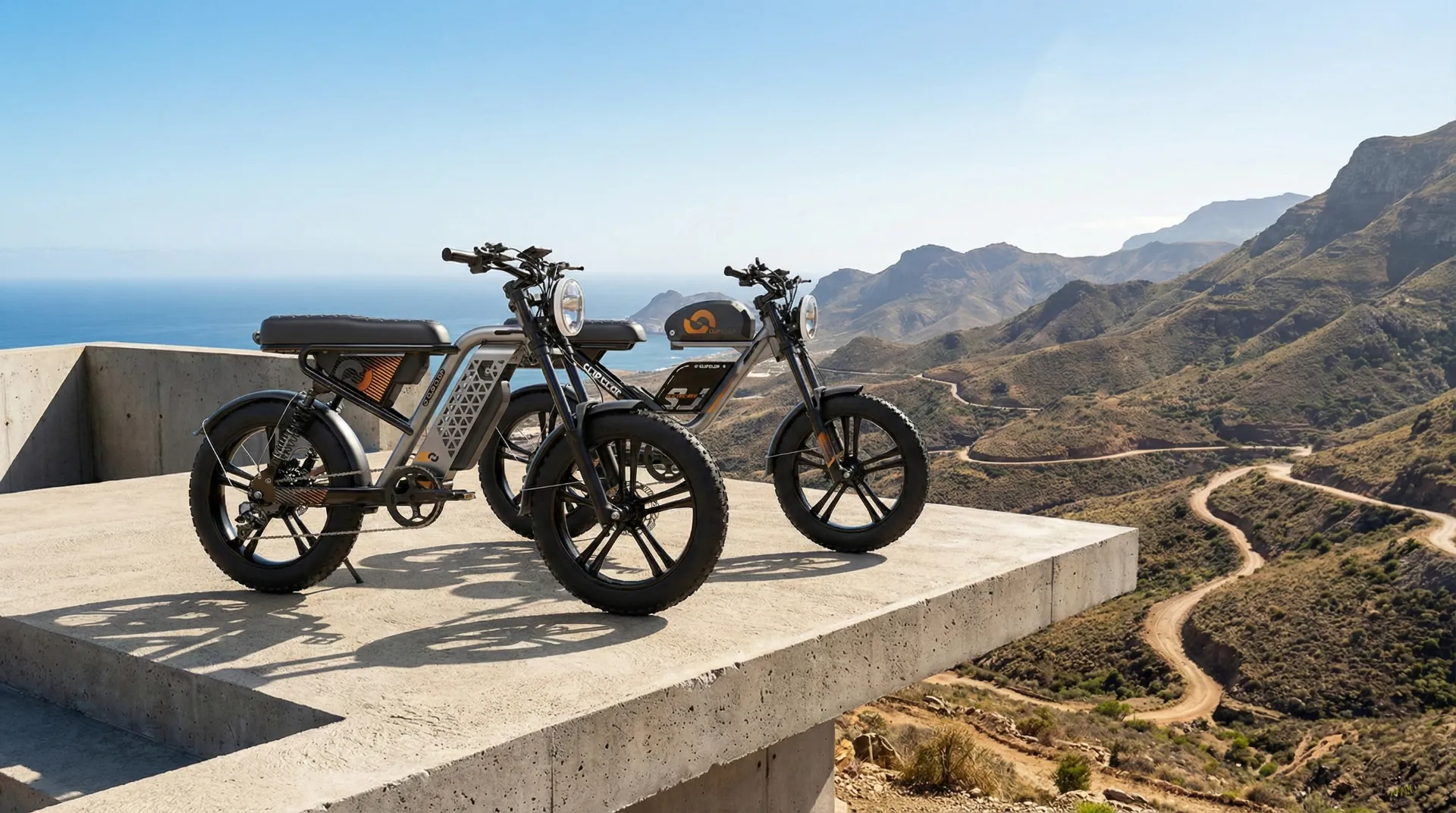
MODEL L2 is built for all-terrain stress with 20*4.0 tires and a suspension fork. That’s why we use 6061-T6: wide tires create leverage, suspension impacts add stress, and the bike needs stiffness to avoid wobble and oscillation under load.
If you pair a high-performance motor with a low-performance frame, you get a “fast” bike that feels wrong and breaks early. That’s a configuration mismatch, and customers don’t forgive it.
Conclusion: T6 Isn’t a Nice-to-Have—It’s a Brand Protection Move
For serious e-bike categories, investing in a T6 heat treatment ebike frame is basically investing in your warranty rate, your compliance success, and your brand image.
T6 improves fatigue life, strengthens the weld-affected zones when done right, supports certifications like EN 15194 and ISO 4210, helps with weight optimization, and brings better consistency at scale. The cost increase is real, but compared to recalls and reputational damage, it’s usually small.
ClipClop focuses on this because we don’t want partners selling “good-looking bikes.” We want you selling bikes that survive real riders.
Call to Action (CTA)
If you want to talk about selecting the right frame temper, motor configuration, battery setup, or how to spec an electric off-road bike for your market, reach out. We support dealers, wholesalers, and brand partners with one-stop services—from technical support to complete vehicle solutions.
Contact us today at clipclopbike.com to discuss your next bulk order.
FAQ & Extended Reading
Q: Can I tell the difference between T4 and T6 just by looking at the frame? A: No, the difference is at the molecular level. You must rely on Hardness Testing (Webster or Brinell) and the manufacturer’s Material Test Report (MTR).
Q: Why is 6061 used more often than 7075 for e-bike frames? A: While 7075 is stronger, 6061 aluminum alloy is much easier to weld and offers better corrosion resistance, making it the industry standard for high-quality T6 heat treatment ebike frames.
Q: Does the heat treatment affect the paint or coating? A: Heat treatment is performed before painting. However, a properly cleaned T6 surface provides an excellent base for powder coating or anodizing, ensuring a durable finish.
Q: Is T6 more brittle than T4? A: T6 is harder and has a higher yield strength, which means it has less “give” or ductility than T4. However, for an electric mountain bike, the added stiffness is a benefit for handling and efficien



 English
  Spanish
  Portuguese
  Russian
  Arabic
  French
  Dutch
Dutch  German
  Danish
