


Here at ClipClop, situated in the heart of manufacturing in Guangzhou, we’re not just building electric bikes; we’re on the front lines of a global movement. The surge in the electric bike market isn’t just a headline; it’s a conversation I have daily with distributors from North America, rental fleet operators in Europe, and OEM partners looking to innovate. The numbers are staggering, with the global e-bike market projected to exceed $148 billion by 2032, showcasing a compound annual growth rate (CAGR) of around 15%. But for businesses like yours, the real story isn’t just the growth-it’s the direction of that growth. It’s heading off-road. The demand for capable, durable, and exhilarating electric mountain bikes (eMTBs) is creating unprecedented opportunities in B2B outdoor mobility. From rugged trails to sandy beachfronts, the call for adventure is louder than ever, and e-bikes are the answer. This isn’t just about selling a product; it’s about enabling new experiences, opening new revenue streams for rental businesses, and equipping adventure tour companies with reliable fleets. As we navigate this exciting landscape together, my goal is to share the insights my team and I have gathered from the factory floor, from engineering discussions, and from our partners in the field, helping you make informed decisions that drive your business forward.
Why is the Electric Bike Market Truly Exploding?
The current mountain e-bike trend is a powerful confluence of technology, culture, and accessibility. It’s a topic that comes up in every strategy meeting we have. The core driver is a fundamental shift in how people approach outdoor recreation. Previously, challenging trails and scenic peaks were reserved for the most physically fit cyclists. E-bikes have democratized the mountain. Now, groups of mixed fitness levels can ride together, families can tackle longer adventures, and tourists can access breathtaking views that were once out of reach. This expansion of the customer base is a gold rush for rental businesses and tour operators. Technologically, we’ve hit a critical inflection point. Battery energy density has improved dramatically, motor systems are more efficient and intuitive, and frame engineering has made e-bikes lighter and more responsive than ever. This isn’t just about adding a motor to a bike; it’s about creating an integrated performance machine. From a B2B perspective, this technological maturity means the products you invest in are more reliable, require less maintenance, and deliver a superior customer experience-reducing long-term operational headaches. Furthermore, there’s growing global consciousness around sustainable tourism and transport, positioning e-bikes as the perfect solution for eco-friendly exploration. Governments and local authorities are increasingly supportive, developing trail networks and promoting green mobility, further fueling the public’s appetite for off-road electric adventures. This isn’t a fleeting fad; it’s a sustainable expansion of the entire outdoor industry.
What’s Driving the All-Terrain Performance Revolution?
At the heart of every great eMTB is its powertrain. For our B2B partners, the understanding of the subtleties in motor technology is vital to match a bike to its intended application scene and terrain. One common debate is between mid-drive and hub motors. While mid-drive motors boast balanced weight and intuitive, torque-sensing pedal assist, powerful hub motors offer incredible value, durability, and raw power perfect for many applications. For example, a robust motor such as the 48V 750W brushless hub motor provides the pure force required to conquer steep inclines or power through soft sand without the complexity of being integrated into the crankset. The most important performance metric a procurement manager should pay attention to is torque, in Newton-meters (Nm). A higher torque figure-like the 70Nm our motors produce-translates directly to better climbing ability and quicker acceleration from a standstill. This is an important factor for rental fleets with hilly operations, ensuring that customers have a positive experience no matter their strength. The power level per se, whether it be a 250W system for European markets or a 750W setup for North America, needs to be in tune with local regulations, but the quality of that power delivery is what defines a premium ride feel and ensures your fleet has the all-terrain performance your customers expect.
How Critical is Battery Technology for Success in B2B?
If the motor is the heart of an e-bike, the battery is its lifeblood. To a distributor or rental business, the performance of this battery is a direct line to profitability and customer satisfaction. The biggest pain point we hear from potential partners is “range anxiety”-that trepidation when a rental bike might die mid-trail, which causes a frustrated customer and a logistical nightmare. This is why, in your purchasing decisions, the specifications of the battery system should be chief among those considerations. A system built around a 48V 15AH lithium battery provides a substantial 720 Watt-hours of energy. In practical terms, this capacity can deliver real-world range options of 30-60 kilometers per charge, depending on terrain, rider weight, and assist level. For a rental operation, this means a bike can confidently handle multiple short-term rentals or a single all-day epic adventure on a single charge, maximizing asset utilization. Beyond capacity, you have to look at the battery’s longevity and management system-or BMS. A high-quality BMS protects the cells from overcharging, deep discharging, and overheating, drastically extending the battery’s usable lifespan and protecting your investment. For B2B clients, this means a lower total cost of ownership and a fleet that stays reliable season after season. The physical integration of the battery-whether it’s easily removable for convenient charging or sleekly integrated into the downtube for better protection and aesthetics-also impacts daily operations and should be a key consideration.
Does Frame Material and Geometry Really Matter for Your Fleet?
The frame is the skeleton of the e-bike, with its design dictating how the bike handles, its durability, and its ultimate capability. For the B2B buyer, the right frame selection is less about the chase for the lightest or most exotic material but about finding that sweet spot in strength, weight, and cost for your specific use case. The workhorse of the industry, and for very good reason, is 6061 Aluminum Alloy. It provides an exceptional strength-to-weight ratio, fantastic corrosion resistance that is important in coastal or humid environments, and high durability to take the repeated abuse common in a rental fleet. This provides a stiff, responsive platform for the motor and battery to perform optimally without the premium cost of carbon fiber. Apart from the material, frame geometry takes center stage in defining the bike’s purpose. For general trail riding and rental use, balanced geometry with a moderately slack head tube angle offers stability at speed without sacrificing agility on tighter trails. Frame size specifications are also critical in that offering a range of sizes ensures you can appeal to a wider demographic of riders, thereby maximizing your potential market. By investing in this well-engineered 6061 Aluminum Alloy Frame fleet, you ensure that you get your customers on bikes that are not only safe and predictable to ride but also robust enough to be a reliable asset for your business over the coming years.
Full-Suspension E-Bike or Hardtail: Which One to Choose?
The suspension is what connects the rider and the bike to the trail, and finding the right setup is one of the most critical decisions for any B2B operation. A full-suspension e-bike, featuring both a front suspension fork and a rear shock, provides unrivaled traction, comfort, and control on rough, technical terrain. The rear shock lets the back wheel track the ground more effectively, a particular advantage on an eMTB where the motor is always delivering power. This means better climbing on loose surfaces and more confidence for riders on descents. For businesses targeting either intermediate or advanced riders-or for areas where there are actual mountain trails-a full-suspension e-bike is normally the better choice, promising a premium experience that will call for a higher rental price. A hardtail e-bike, with only front suspension, has clear-cut advantages for a business. The fewer the number of moving parts, the lower the cost of maintenance and the less mechanical complexity-essential considerations if you run big rental fleets. They tend to be cheaper, meaning that you can build up a more significant fleet within the same initial investment. The hardtails are perfectly suited for smoother trails, bike paths, and general cross-country exploration. Therefore, they’re a great, cost-effective option for those tourist-focused rental companies. It boils down to the target clientele and terrain they will be riding.
| Feature / Consideration | Full-Suspension e-Bike | Hardtail e-Bike |
|---|---|---|
| Primary Terrain | Rough, technical trails, rocky descents, challenging climbs. | Smoother singletrack, gravel roads, bike paths, general cross-country. |
| Target Customer | Intermediate to advanced riders; tourists seeking a premium experience. | Beginners, casual riders, families, tourists on less demanding routes. |
| Key Performance Benefit | Superior traction, comfort, and control over obstacles. | Lighter weight, more efficient power transfer on smooth surfaces. |
| Business Application | Premium-priced rentals, guided mountain tours, performance-focused fleets. | Large-scale rental fleets, hotel/resort bikes, high-volume operations. |
| Maintenance Complexity | Higher: More moving parts (rear shock, pivots, linkages) require regular service. | Lower: Simpler design with fewer components to maintain or replace. |
| Initial Investment (Cost) | Higher: More complex frame and additional shock component increase the cost per unit. | Lower: More cost-effective, allowing for a larger fleet for the same budget. |
| Verdict for B2B | Ideal for businesses in mountainous areas targeting enthusiast clients. | The reliable, low-TCO workhorse for broad-appeal rental operations. |
The Surprising Versatility of the Fat Tire E-Bike
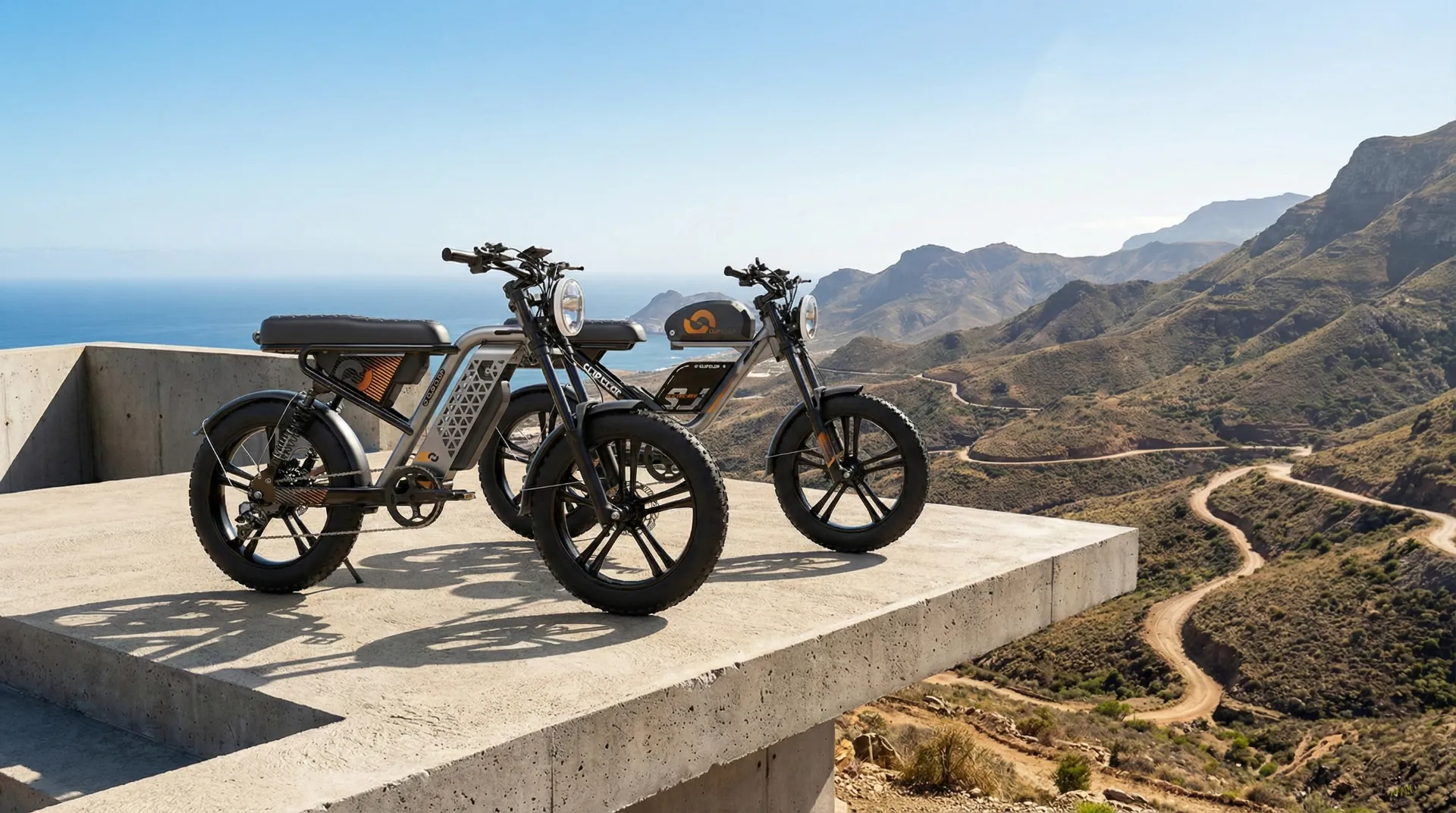
While the eMTB trend most often conjures up images of slick trail bikes, one of the biggest growth areas we have witnessed in B2B outdoor mobility has been the fat tire e-bike. With their oversized tires, these bikes have unlocked completely new business models. A bike fitted with *20″4.0 fat tires, such as our ClipClop L1 model, has the capability to go where traditional mountain bikes cannot. The wide footprint allows the bike to “float” over soft surfaces like sand, snow, and mud, making them perfect for beachside rentals, winter trail tours, or explorations over boggy terrain. This opens up the possibility of taking a single fleet of bikes and making them work all year round, generating revenue in what has traditionally been considered the “off-season” for cycling. To the dealer, fat tire e-bikes cut across a broad customer segment: from the casual, comfort, and stability-oriented recreational riders to hunters and anglers who use them to access remote areas. The inherent stability of the wide tires also gives novice riders confidence, making these bikes exceptionally popular in casual tourism and rentals. Take that in combination with a powerful motor and a robust frame, and the fat tire e-bike is not just a niche product; it’s a rugged, all-terrain workhorse capable of delivering unique and memorable experiences that set your business apart from the competition.
Decoding Drivetrains and Brakes for Durability and Safety For any business operating a fleet of e-bikes, durable, reliable, and safe components are not an option; they are a must-have. The drivetrain and braking systems are subjected to immense forces, especially with the added power of a motor. While the high-end 12-speed systems are fantastic for the enthusiast, workhorse systems like the Shimano 7-speed derailleur provide a perfect blend of performance and robustness for the B2B application. It gives enough gear range for varied terrain but is more importantly known for its reliability and low cost of replacement parts-a significant consideration in managing the operational budget of a rental fleet. Even more critical is the braking system. The added weight and speed of an e-bike demand superior stopping power. Mechanical disc brakes are sufficient, but hydraulic disc brakes are the gold standard in terms of safety and performance. They offer much more stopping power with less hand effort, provide better modulation and control, and self-adjust for pad wear. For a business, hydraulic brakes on your fleet are a major selling point in terms of safety, protecting both your customers and your company from liability. It means a rider can come to a safe, controlled stop-even one carrying gear up to the bike’s max loading of 160kg/350lbs-under any weather condition. This assurance offers peace of mind to both the rider and the operator.
How Can You Capitalize on the Mountain E-Bike Trend?
Understanding the technology and the market trends is the first step. The next is building a strategy to capitalize on this wave. For dealers and distributors, this involves curating a product lineup that addresses specific, high-growth niches. Don’t just stock a generic “e-bike”; offer a dedicated trail riding machine, a versatile fat tire e-bike for all-season adventure, and perhaps even a specialized model for the growing downhill & enduro scenes. For rental and tour operators, success is about crafting unique experiences. A fleet of capable full-suspension e-bikes can be the foundation for a premium guided tour business on technical mountain terrain. A fleet of fat tire e-bikes can unlock lucrative partnerships with beach resorts or winter lodges. The key is to identify the unique geographical and demographic opportunities in your market and then source a fleet that is perfectly tailored to that opportunity. That is where choosing the right supply partner becomes critical. You need more than just a manufacturer; you need a partner who understands the B2B landscape, offers robust and reliable products, and can provide the technical and logistical support to help you succeed. The eMTB trend is more than just a product cycle; it is a fundamental shift in outdoor recreation. With the right strategy and the right partner, it’s a significant opportunity for business growth.
At ClipClop, we’re living and breathing this industry every day. We’re more than just a manufacturer; we’re your strategic partner within the world of electric off-road mobility. For any questions regarding model selection, configuration options, or customization needs for your business, please do not hesitate to get in touch with us. We specialize in manufacturing and exporting electric off-road bicycles, providing comprehensive services for dealers, wholesalers, and brand partners from technical support to complete vehicle solutions. Let’s explore how we can ride the trend together.
Contact us today to discuss your B2B e-bike needs.
Frequently Asked Questions (FAQ)
Q1: What are the key differences between a hub motor and a mid-drive motor for a rental fleet?
A hub motor, located in the hub of the front or rear wheel, is generally more affordable, requires less maintenance due to its self-contained system, and provides a powerful “push” feeling. This makes it ideal for fat tire e-bikes and cost-effective fleet solutions. A mid-drive motor, located at the bike’s crankset, provides a more natural, intuitive feel by applying power through the drivetrain. It offers better weight balance and is often preferred for technical trail riding and climbing. The choice depends on your desired customer experience and budget.
Q2: How important is torque (Nm) when choosing an eMTB for hilly terrain?
Torque is arguably one of the most important specifications for any e-bike intended for off-road or hilly use. Measured in Newton-meters (Nm), it represents the rotational force of the motor. A higher torque figure (e.g., 70Nm or more) means the bike can accelerate faster from a stop and, more importantly, can maintain power and speed while climbing steep inclines. For rental businesses in mountainous areas, high-torque motors are essential for ensuring a positive and empowering customer experience.
Q3: What does “Class 2” e-bike mean, and why is it important for the US market?
E-bike regulations in the United States often use a 3-class system. A Class 2 e-bike is equipped with a throttle that can power the bike up to 20 mph without the rider pedaling, and it also has pedal assist. This class is highly popular for rental and recreational use because it offers maximum flexibility for riders who may want a break from pedaling. Understanding these classifications is vital for ensuring your fleet is compliant with local trail access and road use regulations.
Q4: Why should I choose a 6061 Aluminum Alloy frame over other materials for a B2B fleet?
For a B2B fleet, 6061 Aluminum Alloy hits the sweet spot of performance, durability, and cost. It is significantly stronger and more reliable than cheaper steel frames and far less expensive than carbon fiber. It’s resistant to rust and corrosion, and its stiffness provides an efficient platform for the electric drive system. For a business focused on ROI and operational longevity, it’s the most practical and proven material choice.
Q5: Can fat tire e-bikes be used for anything other than sand and snow?
Absolutely. While they excel in sand and snow, the stability and traction of a fat tire e-bike make it a fantastic choice for any loose or uneven terrain, such as gravel roads, muddy farm tracks, and rocky trails. They are also incredibly comfortable for casual riding on pavement due to the large air volume in the tires acting as natural suspension. This versatility makes them a smart investment for businesses looking to cater to a wide range of skill levels and riding conditions.
References:
- Fortune Business Insights. (2024). Electric Bike Market Size, Share, Trends | Growth Analysis. Retrieved from https://www.fortunebusinessinsights.com/electric-bike-market-102036
- Mordor Intelligence. (2024). E-bike Market Size, Growth, Trend Report & Drivers, 2030. Retrieved from https://www.mordorintelligence.com/industry-reports/e-bike-market
- Cycling Industry News. (2024). E-Bike Market Analysis & Trends. Retrieved from https://cyclingindustry.news/e-bike/



 English
  Spanish
  Portuguese
  Russian
  Arabic
  French
  Dutch
Dutch  German
  Danish
