


Hello all, I’m Leo Liang. Here at ClipClop, we don’t just believe in crafting high-performance electric off-road bikes, but we are also convinced that they are a potent driver for change. My journey within the e-bike industry-from engineering discussions to forging B2B partnerships across the globe-has given me a unique perspective. I’ve seen firsthand how a simple switch in commuting ripples out, transforming not just a company’s carbon footprint but its culture, employee wellness, and bottom line. It’s this experience, honed through countless conversations with distributors, fleet managers, and corporate partners, that I want to share with you today. We’ll move beyond the trails and explore how a B2B corporate fleet of e-bikes is becoming one of the most strategic assets for forward-thinking companies. This isn’t just about going green; it’s about building a more resilient, efficient, and attractive business for the future.
In today’s competitive scenario, businesses are not measured by their profits alone. A real concern for sustainability and employee health became a critical benchmark for success, impacting everything from investor relations to talent acquisition. This is where the corporate e-bike fleet moves from being a great new benefit to being a strategic imperative. At the core of the electric bike program, the pressing need for tangible environmental action is addressed along with tackling common corporate pain points like employee health, urban congestion, and operational costs. To our B2B partners-distributors, rental companies, and large enterprises-the demand is clear: companies need practical, scalable solutions that show results. They want to reduce their carbon footprint, improve their brand image, and provide benefits that matter to a modern workforce. But an ebike initiative is not a gesture; it is a data-backed strategy that will result in improved physical and mental health of employees, reduced absenteeism, and can cut costs significantly on vehicle fleets and parking infrastructure. It is a strong statement that a company is invested in the future-its people and the community, of course, but also the planet. This is the new frontier of corporate responsibility, and it’s powered by two wheels.
| Feature | Corporate E-Bike (e.g., ClipClop L1) | Personal Car | Public Transportation |
|---|---|---|---|
| Est. Annual Cost | $150 – $300 (Electricity & Maintenance) | $5,000 – $9,000 (Fuel, Insurance, Maintenance) | $1,200 – $2,500 (Passes/Fares) |
| Annual CO₂ Emissions | ~0.02 metric tons (from charging) | ~4.6 metric tons | Low per capita, but relies on infrastructure |
| Health & Wellness | Active; Low-impact daily exercise | Sedentary; Can contribute to stress | Sedentary; Crowding and delays can cause stress |
| Commute Efficiency | Excellent in urban traffic; avoids congestion | Poor in rush hour; significant time lost | Dependent on schedules and routes |
| Infrastructure Needs | Secure bike rack, charging point | Expensive parking space per vehicle | N/A (Relies on public system) |
| Employee Benefit | Promotes health, saves money, enjoyable | High personal cost, stressful | Inflexible, potential for delays |
Why an E-Bike Fleet Is a Game-Changer for Corporate Sustainability
The conversation around corporate sustainability has matured considerably. It’s no longer good enough to just make pledges; stakeholders expect quantifiable action and transparent reporting of that action. This is where a sustainable e-bike program becomes a powerful tool in your Environmental, Social, and Governance arsenal. The most direct impact would be on your carbon footprint. Employee commute is one of the most significant contributors to a company’s indirect greenhouse gas emissions, falling under Scope 3 category 7 in GHG Protocol accounting. By encouraging a shift from single-occupancy vehicles to electric bikes, you are actively reducing these emissions. For instance, an average passenger car emits about 4.6 metric tons of carbon dioxide per year. Shifting even a fraction of your workforce to e-bikes creates a significant, measurable reduction that can be proudly featured in your annual ESG reporting.1 This isn’t just about ticking a box; it’s about demonstrating leadership in a world increasingly concerned with climate impact. Younger generations of workers, in particular, are attracted to employers who have strong environmental ethics. A robust bike-to-work scheme serves as a visible testament to your company’s values, enhancing your brand reputation as a socially responsible, forward-thinking organization. It further meets the “S” in ESG through fostering employee health and wellbeing by creating a company culture that cares for its people and the planet.
How does a corporate e-bike program directly benefit employees?
Beyond the corporate-level benefits, perhaps the most compelling case for starting an employee commuting program centered on e-bikes is the direct impact on your team. Consider the grind of the modern commute: traffic jams, spiraling fuel costs, and the stress of finding parking. An e-bike is a refreshing and reliable alternative. It takes that stressful part of the day and makes it an enjoyable, invigorating experience. And cycling to work has been proven to make employees report lower levels of stress, show improved concentration, and have better mental health overall.3 That’s the formula for a more engaged, energized, and productive workforce. The physical health benefits simply can’t be denied either. Cycling is an excellent, low-impact cardiovascular exercise that can be fit into a daily routine with minimal hassle. This leads to reduced absenteeism and cost savings to the company in health benefits.3 Perhaps the greater of these benefits, however, is financial. Many employees save up to 42% on the cost of a new e-bike and equipment through tax incentives in a salary sacrifice scheme.2 They save a lot of money on fuel, public transport fares, and vehicle maintenance, too. This real financial relief-especially during times of economic uncertainty-is a strong tool in helping boost morale and loyalty with your employees. Everyone wins: employees arrive at work happy, healthy, and wealthier, while the company develops a resilient and motivated crew.
What are the key financial incentives and ROI of an e-bike fleet?
When proposing a new corporate initiative, the conversation invariably turns to the bottom line. The return on investment for a corporate e-bike fleet is multi-faceted and compelling. First, the direct cost savings could be substantial: For companies offering fleet vehicles or reimbursing mileage, the total cost of ownership of an e-bike is dramatically lower. Maintenance and “fuel” for an e-bike are negligible compared to a car. More significantly, the demand for expensive parking infrastructure can be reduced. At tens of thousands of dollars to construct one parking space, diverting that capital or avoiding future needs provides a direct financial benefit.1 Second, many governments provide incentives to push green transportation. These range from tax credits for the company, such as the proposed E-BIKE Act in the US which will offer significant rebates on e-bike purchases, to many countries like the UK and Ireland which have well-established tax relief programs for bike-to-work schemes which reduce employer social insurance contributions.1 Lastly, the indirect ROI is equally compelling. A healthier workforce means fewer sick days and higher productivity. Enhanced employee retention and attraction due to highly desirable green benefits reduce recruitment and training costs. A strong corporate brand built on sustainability attracts more customers and investors. Combining these direct savings with palpable indirect financial gains makes the case for an e-bike fleet viable and strategically astute.
How to choose the right e-bikes for your corporate fleet?
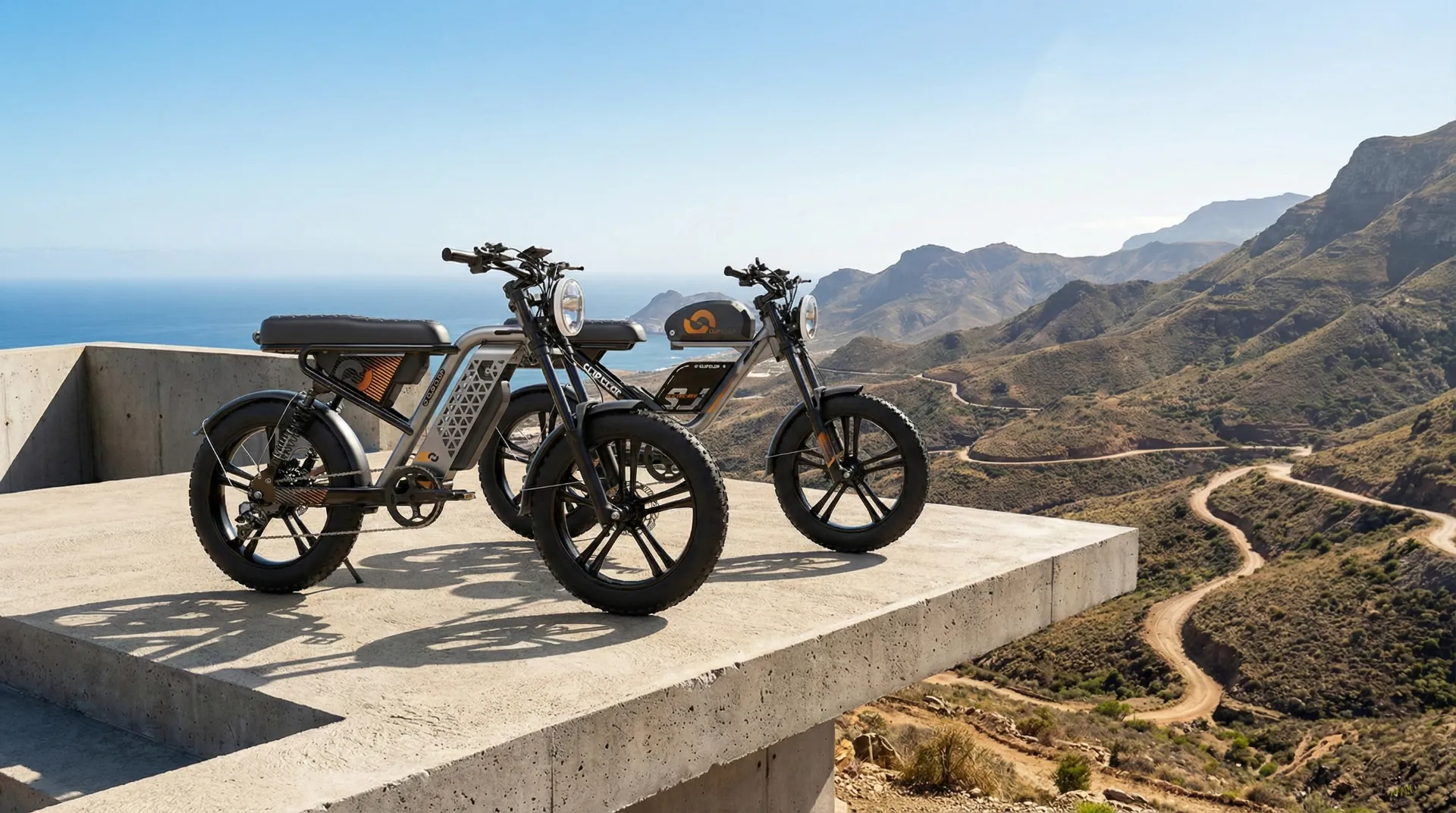
Making the right hardware choices is paramount to your electric bike program’s success. The ideal e-bike should be reliable, safe, low in maintenance, and versatile to suit a range of employees and their potential uses. This is where product specifications become key for our B2B clients who are making procurement decisions. For corporate fleet purposes, you need a workhorse. Look for a frame made from 6061 Aluminum Alloy, a material prized for its excellent balance of strength, lightweight properties, and corrosion resistance-qualities that ensure durability over years of daily use. The motor is the heart of the e-bike. The 48V 750W brushless motor provides a robust level of power that easily assists riders up hills and over varied urban terrain without struggle, and a torque rating of about 70Nm offers snappy acceleration from a standstill-a critical safety feature amidst city traffic. Battery life is critical for commuter confidence. A 48V 15AH lithium battery strikes an appropriate balance and offers a reliable range of 30-60KM per charge, which is sufficient for the great majority of commutes. Safety features cannot be compromised. Hydraulic disc brakes possess superior stopping power and control in all weather compared to mechanical brakes. Full light sets, including a headlight, rear signal taillights, and wheel reflectors, will be an essential set for visibility. For versatility, models such as our ClipClop L1 include 20″*4.0 fat tires. These tires provide good stability and comfort, absorb most bumps created by potholes, and make this bike suitable not just for paved roads but also for light trails or park paths, expanding its use for employee recreation.
What Is the Process of Implementing a Successful Bike-to-Work Scheme?
A well-implemented bike-to-work scheme involves much more than ordering a few bikes. First, one should understand interest and commuting patterns among employees to determine how many and what type of e-bikes are needed. There has to be safe and accessible bike parking-on-site; without it, people will be unwilling to give up driving. That means secure racks or lockers for gear or even an on-site bike room. Offering on-site maintenance support by either partnering with a local bike shop or training an internal facility member in basic upkeep can further lower the barrier. A simple, very clear usage policy is necessary: will bikes be assigned or part of a pool accessed through an app? Who is liable in case of an accident? Establish these up-front, and you’ll avoid confusion and ensure smooth operation. Internal marketing will be fundamental for driving uptake. Hold a launch event and demo days; create an internal channel or group where riders can share tips and organize group commutes. The green benefits and how it will save them money will be your biggest selling points. With such supporting infrastructure and communication, the program transforms from just another asset purchase to a living, breathing part of your corporate culture.
How Can E-Bikes Improve Your Company’s Brand and Talent Attraction?
An e-bike fleet is a powerful differentiator in the competitive job market, speaking volumes for your company’s culture and values. For the modern workforce, especially millennials and Gen Z, sustainability from a company is not a bonus; it’s core.2 An e-bike program puts this into tangible, visible action that shows you are the kind of employer who will invest in employee well-being and care for the environment. This may be a deciding factor for top talent when comparing offers. It speaks volumes about a progressive, people-centric culture. That green benefits package is a talking point for recruiters and highlighted on your company’s career page. The initiative opens up several positive public relations opportunities, too. Share on social media, or via press releases or your corporate blogs, stories of employee commuting transformations, and your brand’s reputation in the community and industry improves. Set your company up as an innovator and a leader in CSR. This positive brand association can help bring in new talent while making your current people even more proud and loyal, turning them into enthusiastic brand ambassadors. The fleet isn’t just a mode of transport; it’s a mobile billboard for your company’s forward-thinking ethos.
What does the future hold for corporate mobility and e-bikes?
The corporate mobility landscape is changing drastically. The car-centric commuting model and expansive corporate campuses are giving way to a more flexible, sustainable, and human-scale approach. E-bikes are at the very heart of this evolution. As cities become more congested and environmentally conscious, micro-mobility solutions-like a B2B corporate fleet of e-bikes-will be integral to corporate transportation strategies. Moving beyond just the simple employee commute program, we will move into a world of integrated mobility. Imagine a corporate app that lets employees book a shared e-bike for their trip across town to see a client, or a service that delivers a fully charged e-bike to an employee’s home for their weekly commute. These will no longer be cumbersome programs; rather, they will be seamless and data-rich due to their integration with technology, allowing companies to track precisely their CO2 savings and optimize fleet usage. For our B2B partners, this starts to mean a growing market for not just the e-bikes themselves but for the software, maintenance, and management solutions that surround them. The future is not just about replacing car trips; it is about creating a holistic ecosystem that nurtures efficient, healthy, and sustainable movement. As a company, investing in a sustainable e-bike infrastructure today is positioning your organization for the smarter, greener, more connected corporate world of tomorrow.
At ClipClop, we’ve experienced firsthand the high level of complexity accompanying corporate ebike programs that drive measurable outcomes. It isn’t just about bikes, but creating a solution that actually aligns with your targeted sustainability goals, financial objectives, and company culture.
For any questions regarding the selection of the right e-bikes, the configuration of a fleet, or the development of a customized solution, please do not hesitate to contact us. As a specialist in the manufacturing and export of electric off-road bikes, we offer a full-service end-to-end solution for distributors, wholesalers, and brand partners alike, offering everything from technical support to a complete turnkey solution.
Frequently Asked Questions (FAQ)
Q1: How do we calculate the carbon emission reduction for our ESG reporting from our e-bike program?
Calculating the reduction involves estimating the total distance commuted by employees using the e-bikes and multiplying it by the average emissions of the vehicles they replaced. You can gather data through app tracking, surveys, or sign-out sheets. The formula is essentially: (Total miles commuted by e-bike) x (Average CO2 emissions per mile of a car) = Total CO2 saved. This figure directly contributes to your Scope 3 category 7 emissions reduction data.
Q2: What is the typical maintenance schedule for a B2B corporate fleet of e-bikes?
For a fleet in regular use, we recommend a basic safety check (brakes, tire pressure, lights) weekly, performed by a designated staff member. A more thorough professional service should be scheduled every 6 months or after a certain mileage, whichever comes first. Key areas for professional checks include the braking system (especially hydraulic disc brakes), drivetrain components like the Shimano 7-speed derailleur, battery health, and motor diagnostics. Building a relationship with a local service provider is key for an efficient electric bike program.
Q3: Are fat tire e-bikes like the ClipClop L1 suitable for a purely urban corporate fleet?
Absolutely. While the 20″*4.0 fat tires are excellent for off-road conditions, they provide significant advantages in an urban environment. They offer superior stability, a more comfortable ride by absorbing bumps from uneven pavement and potholes, and increased traction in wet conditions. This versatility makes them a safer and more confidence-inspiring choice for a diverse range of employees who may have varying levels of cycling experience, making your bike-to-work scheme more inclusive.
Q4: How do we manage liability and insurance for a corporate e-bike fleet?
This is a critical consideration. First, consult with your company’s insurance provider to understand your existing commercial general liability coverage and whether you need a specific rider or policy for the e-bike fleet. We strongly recommend creating a user agreement that all participating employees must sign. This document should outline rules of the road, safety requirements (like mandatory helmet use), and liability waivers. Providing mandatory safety training sessions can also help mitigate risk.
Q5: Can we customize the e-bikes with our company branding?
Yes, customization is a key service we offer to our B2B partners. Branding your corporate e-bike fleet with your company logo and colors is an excellent way to enhance brand visibility and reinforce the program’s connection to your corporate identity. The e-bikes essentially become mobile advertisements for your commitment to sustainability and employee well-being. We can discuss options for custom paint on the 6061 Aluminum Alloy Frame and branded decals as part of a fleet procurement order.
References:



 English
  Spanish
  Portuguese
  Russian
  Arabic
  French
  Dutch
Dutch  German
  Danish
