


Hello everyone, I’m Leo Liang. I’ve been buried in the e-MTB and off-road e-bike world at ClipClop in Guangzhou for years, talking every week with dealers, distributors, and rental fleet operators from all over. When we jump on a call or chat on LinkedIn or Twitter, the conversation almost always circles back to one thing: the battery.
It’s funny, because from the outside, people get excited about motors and frames and fancy displays. But if you talk to fleet managers or serious dealers long enough, you realize the battery is the real boss. It controls range, riding experience, uptime, and honestly, a big chunk of your profit and your headache level. It’s the core of customer satisfaction, whether you sell or rent.
A lot of folks still think, “Bigger is better, just give me the highest number.” I get why; the marketing push is strong. But in reality, choosing battery capacity is more like doing a proper business case. You’re trading cost, weight, charging time, and real use scenarios. If you overshoot or undershoot, you either bleed margin or drown in complaints.
This guide comes straight from the trenches: hundreds of dealer calls, pilot projects with fleets, plus what I see shared by industry bloggers and YouTube reviewers who test these bikes in the wild. I’m not trying to impress you with perfect theory. I just want to strip away the fluff and help you make decisions that match how your customers actually ride and how your operation actually runs.
We’ll walk through how watt-hours really work, why voltage matters more than most spec sheets explain, and how terrain, rider habits, and assist levels mess with “official” range claims. We’ll also talk about BMS safety, cycle life, UL certifications, and some trends I see coming that will quietly change your product roadmap over the next few years.
My goal is simple: when you finish this, you should feel confident pushing back on vague supplier claims, asking sharper questions, and putting together bike configurations that fit your segment like a glove. Because when your battery choices are aligned with your customers’ reality, everything else in the business gets easier: fewer returns, fewer angry emails, more repeat orders.
Why Battery Capacity Is the First Big Decision You Need to Get Right
When a customer steps into a showroom or scrolls through a rental app, the first “serious” question is almost always: “How far can it go?” They usually don’t ask about voltage or cells or C-rate. They just want to know if the bike will survive their ride. That simple question points straight at battery capacity, measured in watt-hours (Wh).
For B2B buyers, though, “range” isn’t a one-line marketing claim. It’s about matching the battery to a clear use case. A delivery bike grinding up hills for 6 hours in a dense city is completely different from a relaxed tourist bike cruising along a flat beach path. If you pick one capacity and try to sell it to both, someone is going to be disappointed and leave negative reviews.
Range anxiety is real. New riders especially freak out when the bar drops faster than they expect. If this happens again and again, it turns into 1-star ratings, complaints to your partners, and extra workload for your support team. A lot of bloggers who test rental fleets talk about this: they say things like “specs say X km, but in real life I got maybe half.” That gap erodes trust very fast.
There’s also the boring but crucial financial side. Higher capacity batteries use more cells. More cells mean higher BOM cost, heavier packs, and more pressure on your cash flow when you’re ordering 200 or 500 bikes at once. A small bump, like +$50 per pack, turns into $25,000 over 500 units. That’s not pocket change. So “max capacity” is not always the smart move.
Your real target is optimization, not bragging rights. You want enough Wh to comfortably cover your average use scenario with some safety margin, but not so much that you carry unnecessary weight and cost that nobody really uses. I often sit with partners and literally map: typical trip length, terrain, rider profile, and rotation pattern, then back into a capacity range instead of guessing.
Capacity also hits operations. For rental and hospitality partners, a bigger battery can be both a blessing and a headache. On one hand, a 700–800Wh pack might easily cover a full day of rentals without swapping. On the other hand, that same pack might take 8–9 hours to fully charge with a standard 2A charger, which can kill your flexibility if bikes come back late.
Take a simple example. If a 500Wh battery takes roughly 5–6 hours with a basic charger, going up to 750Wh without upgrading your charging setup means longer “dead time” per bike. That’s why at ClipClop, we don’t just throw a capacity number at you; we try to design a complete power solution with you, including charger amperage, charging schedules, and maybe staggered fleets.
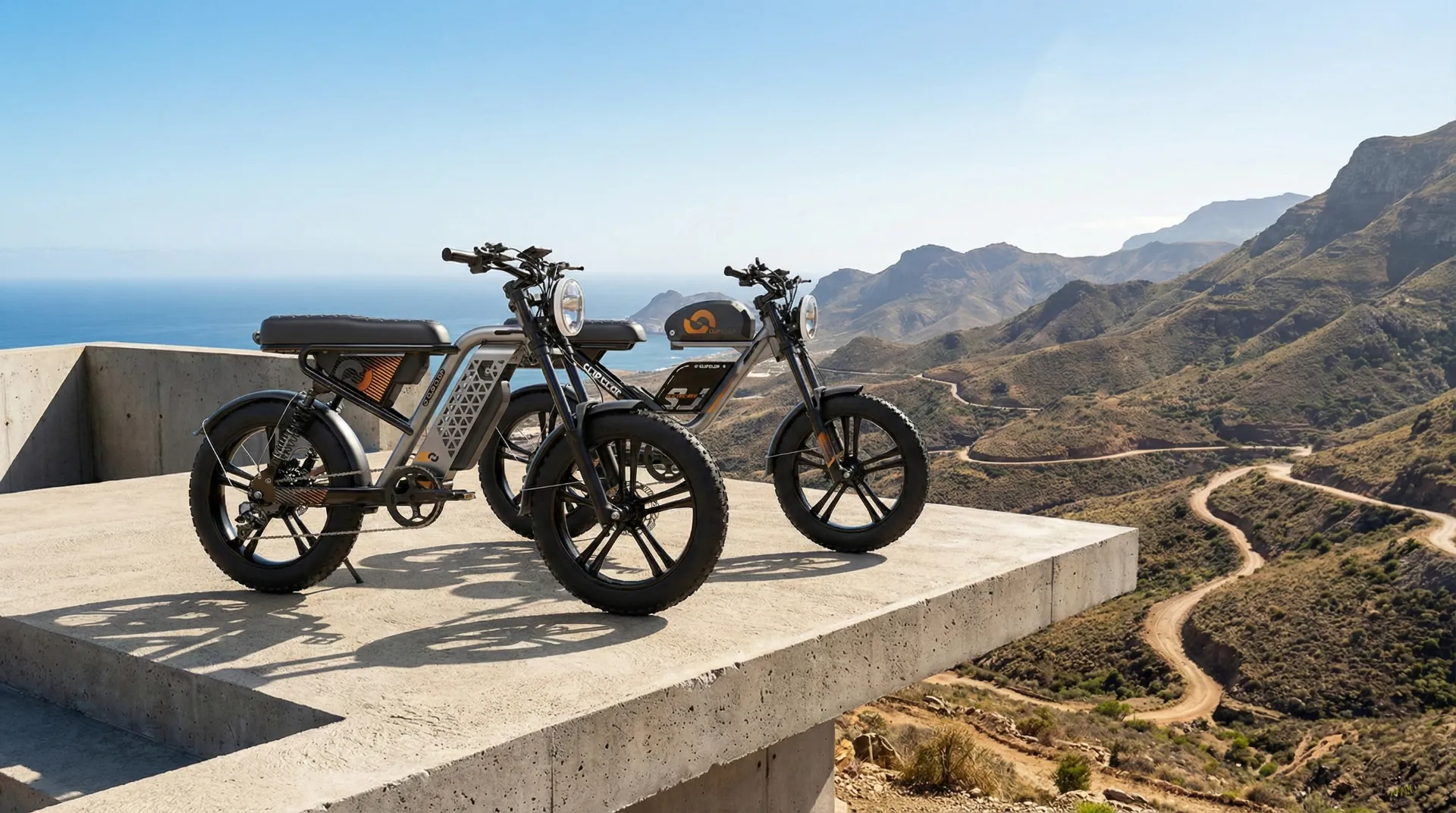
Our M14, for instance, runs a 36V 10.4Ah battery, which sits in that sweet spot for urban fleets that need quick turnover and manageable weight. It’s not flashy on paper compared to some monster packs, but for flat to moderate terrain and short-to-medium trips, it hits that balance of cost, range, and charging convenience that B2B customers really care about.
Decoding the Numbers: Watt-hours, Amp-hours, and Volts Without the Nonsense
Battery spec sheets can look like alphabet soup if you’re not used to them: Ah, V, Wh, sometimes C-rate, and a pile of brand names. Let me simplify the three numbers you actually need to pay attention to: amp-hours (Ah), volts (V), and watt-hours (Wh). Once you understand how they connect, you can read any spec sheet more confidently than most sales reps.
Think of amp-hours (Ah) as the size of the tank. It tells you how much charge the battery can theoretically hold. Volts (V) are a bit like pressure in a water system, or the “push” behind the energy. Higher voltage systems can deliver power more efficiently and keep the motor happier, especially when climbing or accelerating. That’s why you see common platforms like 36V, 48V, and 52V.
The number that matters most for range is watt-hours (Wh). This is basically “total energy” and it’s just Volts × Amp-hours. So if you see 36V 10.4Ah, you can multiply: 36 × 10.4 = 374.4Wh. If another bike has 48V 10Ah, that’s 480Wh. Same ballpark Ah, but the 48V system actually stores more energy and, all else equal, offers more range.
A lot of bloggers who test multiple bikes back-to-back say the same thing: ignore Ah marketing and check Wh first. I agree. If a supplier keeps shouting “15Ah! 17Ah!” but keeps the voltage low, you can end up with a heavy battery that doesn’t really go that far. It looks big in the catalog but underperforms in the real world. Wh gives you the “apples to apples” comparison.
Voltage also affects ride feel. Higher voltage setups (like 48V or 52V) often give a punchier response, better support on steep climbs, and less stress on the system at high loads. That’s why serious e-MTB riders and cargo operators tend to gravitate towards those platforms. They want that extra torque and resilience when the bike is pushed hard day after day.
When you’re building a lineup, I recommend thinking in tiers. A 36V platform, like our M14, is ideal for cost-sensitive city and commuter bikes where light weight and simplicity matter more than brute force. Then you reserve 48V or 52V systems for off-road, delivery, and cargo fleets that need strong hill performance and heavier load capacity. One size does not fit all.
Also, when you review supplier proposals, always check how they present their numbers. If they highlight Ah but bury voltage or Wh in the fine print, that’s a red flag. A transparent partner will list V, Ah, and Wh clearly and be willing to discuss trade-offs. If they dodge those questions, that’s usually a sign they’re selling on hype, not engineering.
How Terrain, Rider Weight, and Assist Level Destroy “Ideal” Range Claims
If you’ve ever compared a brochure range to what you actually got on a ride, you already know the truth: those official numbers are best-case scenarios. Manufacturers usually test under very friendly conditions: light rider, flat route, no headwind, mild temperature, lowest assist level, steady speed. Real life almost never looks like that, especially for commercial fleets.
The biggest energy killer is climbing. Going up a steep hill can eat three to four times more power than cruising on flat ground. So if your main markets are hilly cities or mountain regions, you can’t just take the advertised range and assume it holds. You need to start with higher Wh or be very honest with clients about what to expect when they’re constantly going up and down.
Rider weight and payload are the next big variables. A 200 lb rider with a backpack and maybe 20–30 lb of cargo will drain the battery noticeably faster than a 140 lb rider with nothing on the rack. Delivery services, in particular, hit this problem hard. They run heavy bikes, stop-and-go patterns, and often ride at higher assist to save time. Range drops fast in that scenario.
Some bloggers and reviewers now use range calculators or real-world simulation tools, and I think that’s a smart move. As a dealer, you can do something similar when talking to B2B clients: plug in average rider weight, typical terrain, and preferred assist setting to give a realistic range band, not a fantasy number. It makes you look like a consultant, not just a salesperson.
Assist level is another huge factor that riders underestimate. Most e-bikes today offer multiple modes: eco, normal, sport, turbo, or similar. I tell partners very directly: if users sit in turbo all the time, they can easily cut half or more off the maximum range compared to eco. That’s not a defect; it’s just physics. High assist burns through Wh quickly.
For our M14, for example, we’re clear that the range in eco mode with active pedaling can be very decent for city commuting. But if someone rides mostly on throttle or max assist, the effective range shrinks a lot. We tell rental partners to train staff to explain this at check-out: “Use higher modes for hills or short bursts, not for the entire ride.” It’s a simple script that avoids many mid-ride breakdown calls.
The more honest you are upfront about these variables, the fewer complaints and chargebacks you’ll deal with later. Many fleet operators have told me they appreciate dealers who “under-promise and over-deliver” rather than the other way around. Especially in the age of social media reviews, managing expectations around range is one of the easiest ways to protect your brand.
The Unseen Guardian: Why a Solid BMS Is Non-Negotiable
Range and power are fun to talk about, but the part that keeps me awake at night is safety. The most important piece inside any e-bike battery isn’t the cells themselves; it’s the Battery Management System, or BMS. You can’t see it from the outside, but it’s basically the brain and bodyguard of the pack. If it’s cheap or badly designed, you’re sitting on a potential problem.
The BMS monitors each cell group and controls charging and discharging. It protects the pack from over-charge (which can lead to thermal runaway), over-discharge (which damages cells permanently), over-current, short circuits, and extreme temperatures. When something goes wrong, a good BMS steps in and cuts power or shuts the system down before small issues become big ones.
To save a few dollars, some low-tier manufacturers cut corners here. They use weak components, sloppy firmware, or skip proper testing. It might work fine for a while, but over months of heavy use in a fleet, stress builds up. You don’t always see the risks until a pack swells, fails early, or in worst cases, overheats. And at that point, it’s your reputation that takes the hit, not just theirs.
A key feature of a quality BMS is cell balancing. During charge and discharge, individual cells never age exactly the same. They drift slightly. Over time, that drift creates imbalance. The BMS constantly works to keep all cells within a safe voltage window. If it doesn’t, some cells get overloaded, others underused, and the effective cycle life drops. The pack ages faster and more unevenly.
As a dealer or distributor, you’re not just selling a bike; you’re accepting liability to some extent. Public awareness of lithium-ion fires has grown a lot, especially in North America and Europe. Regulators and insurance companies are paying attention. This is where certifications like UL 2271 (battery pack) and UL 2849 (complete e-bike system) come in as real business protection, not just marketing badges.
A lot of safety-focused bloggers and tech reviewers now actively check for these certifications and call out brands that don’t have them. That influences buyers more than some people realize. If your lineup includes certified systems, you’re aligned with where the market is heading: stricter safety rules, building codes, and platform requirements by cities and large organizations.
At ClipClop, we put serious effort into BMS design and testing because we know one incident can destroy years of trust. For our partners, we want you to be able to say, “Yes, this system has been tested to recognized safety standards,” and actually mean it. That gives you a much stronger position when talking to corporate buyers, hotels, or rental chains who care about risk management.
Longevity and Investment: Making Sense of Cycle Life and Degradation
Every battery, even the best one, is a consumable. It will lose capacity over time. But there’s a huge difference between a pack that lasts 300 cycles and one that reliably gives you 800–1,000 cycles under similar usage. For a heavy-use fleet that charges daily, that difference is basically the line between a one-year and a three-year usable life. That’s massive in terms of total cost of ownership.
Cycle life is usually defined as how many full charge-discharge cycles a battery can go through before its capacity drops to around 80% of its original value. High-quality packs using cells from names like Samsung, LG, or Panasonic often fall in the 500–1,000 cycle range if treated reasonably well. Cheaper, no-name cells might reach only 300–500 cycles, sometimes less under hard use.
If you step back and look at this as a pure business case, it becomes very clear. A “cheap” battery that needs replacement after one year because it can’t hold enough charge is not really cheap. You pay again for the pack, you lose revenue when the bike is down, and you spend labor swapping and handling warranty claims. Fleet operators notice this; they may not know every spec, but they feel the pain in their budgets.
This is why I always encourage dealers to talk openly about cell brands and expected cycle life. Some bloggers already do this in their teardown reviews and say things like “Nice, they used branded cells here, so I expect good longevity.” You can use that kind of language in your sales conversations too. Position it as an investment in uptime, not a luxury feature.
Battery degradation speed also depends a lot on how the pack is treated. That’s where your after-sales education can create real value at no extra cost. Simple rules help a lot: don’t store batteries in a hot car or freezing shed; avoid leaving them on the charger for days; and if you’re storing bikes for a season, keep the battery around 40–60% charge, not totally full or empty.
Some content creators online already post “battery care checklists” for riders. You can adapt this concept as a one-page guide for your B2B customers. Put your logo on it, insert a few concrete tips, and include it with each order. It’s a small touch that helps your partners keep their batteries healthy longer and, at the same time, ties your brand to reliability and long-term thinking.
In short, don’t let the conversation stop at upfront price. Pull your clients into a total-cost-over-time perspective. When they see that a slightly more expensive pack with stronger cycle life and better care can save them thousands down the line, the higher spec suddenly looks like the smart, safe choice, not an upsell.
Form and Function: Integrated vs. Removable Batteries in the Real World
Battery design isn’t only about numbers; it’s also about where and how the battery sits on the bike. The two big styles you’ll see are integrated (in-tube) batteries and external, removable packs. Both have clear pros and cons. Picking the right one depends heavily on who’s using the bike and how they charge and store it day to day.
Integrated batteries hide inside the downtube, giving a clean, almost stealth look. Many riders love this because the bike doesn’t scream “e-bike.” It also helps with weight distribution and protects the pack from direct hits, dirt, and weather. For high-end e-MTBs and premium commuters, this look and feel can be a big selling point. It feels modern and tidy.
However, integrated packs can be less convenient for many B2B scenarios. Think about apartment dwellers who can’t drag a whole bike into their living room, or hotels that want guests to leave bikes downstairs but let staff bring batteries inside to charge. In these cases, an easily removable battery is way more practical. Less friction, fewer excuses for not charging.
For rental fleets, removable packs are often a must. Operators love being able to pull a depleted battery, swap in a charged one, and send the bike straight back out. That “hot-swap” capability keeps utilization high. Imagine a busy weekend afternoon: you don’t want bikes sitting useless for hours just because the only way to charge them is to plug the whole bike in and wait.
When building your catalog, I usually suggest offering both styles if your volumes allow it. Use integrated batteries for your style-driven consumer or enthusiast segment, where aesthetics and frame design matter a lot. Use removable packs for corporate fleets, delivery services, and rental partners who care more about uptime and logistics than hidden cables.
Our ClipClop M14 uses a frame-mounted, removable battery that’s easy to access, which works great for urban fleets and mixed B2B users. At the same time, we also build models with fully integrated systems aimed at partners who target trail riders and enthusiast markets. The logic is simple: we want each bike format to solve a specific daily problem for a specific type of user.
Whenever you’re unsure which direction to recommend to a client, just ask a very simple question: “Where will the bike sleep, and where will the battery charge?” The answer to that one usually tells you if they need removable packs or can live happily with integrated designs.
Matching Power to Pavement: Capacity Recommendations for Common B2B Scenarios
Let’s get concrete and translate all this theory into real situations you probably deal with. Different B2B applications need different battery strategies. Trying to cover everything with one capacity is like trying to sell one shoe size to every customer. It looks neat on your price list but falls apart in practice.
Scenario one: a big corporate campus. Employees use e-bikes to move between buildings, maybe 1–3 miles per trip, mostly flat, with predictable working hours. Bikes usually rest at docking stations or racks with nearby power. In this case, a massive 750Wh pack is overkill. A 350–400Wh setup, like a 36V 10.4Ah system, is more than enough, keeps the bike lighter, and reduces cost per unit.
Scenario two: an e-MTB tour operator in a national park with hilly, technical terrain. Customers ride 20–30 miles per tour, often with long climbs and less efficient pedaling. Range anxiety here is unforgiving. If someone’s battery dies halfway, it becomes a support nightmare and ruins their experience. For this kind of use, I usually recommend 600–800Wh paired with a strong 48V system.
Yes, the upfront cost is higher, and the bikes might be heavier. But in exchange you get solid performance under load, enough buffer for cold days or stronger riders, and fewer emergency rescues on the trail. Many serious reviewers who test e-MTB tours highlight this: under-specced batteries are the quickest way to bad reviews and refund requests.
Scenario three: food delivery in a dense, mixed-terrain city. These riders need decent range, strong acceleration, and consistent uptime, but the company is very cost-sensitive. A 500Wh pack is often the sweet spot here. It can support a typical shift if paired with smart assist usage, and it doesn’t inflate price and weight as much as larger packs.
For delivery riders living in apartments, a removable battery is almost non-negotiable. They park the bike in a hallway or downstairs, grab the pack, and bring it up to charge in their room. For fleet owners, having a small pool of spare batteries also helps; they can rotate packs and keep bikes moving even when a few batteries are charging or undergoing checks.
When I work with dealers on proposals, we usually map out the client’s daily riding hours, average trip length, terrain profile, and charging pattern, then choose a capacity band rather than chasing the largest number. That way, when your client asks, “Why this battery?” you can answer with very specific logic instead of “because it’s what we had.”
Toekomstbestendig ondernemen: Belangrijke batterijtrends en certificeringen om op te letten
E-bike batterijtechnologie is niet statisch; het evolueert rustig maar gestaag in de achtergrond. Als je je productlijn de komende 3–5 jaar concurrentieel wilt houden, is het de moeite waard om aandacht te besteden aan een paar trends waar bloggers, ingenieurs en vroege-adopterende dealers al over praten. Jezelf voor deze curves positioneren kan ervoor zorgen dat je catalogus langer “modern” aanvoelt.
Allereerst verbetert de energiedichtheid. Dat betekent meer Wh in dezelfde of kleinere afmetingen en gewicht. Op termijn stelt dit je in staat om fietsen aan te bieden met hetzelfde bereik als vandaag maar merkelijk lichter, of fietsen met meer bereik bij ongeveer hetzelfde gewicht. Klanten citeren misschien geen “energiedichtheid”, maar ze voelen het verschil in handling en draagbaarheid.
Ten tweede worden batterijen en BMS-systemen slimmer en beter verbonden. Je zult meer systemen zien die via Bluetooth of andere protocollen met smartphone-apps communiceren, gedetailleerde gezondheidsgegevens, gebruiksstatistieken en zelfs voorspellende waarschuwingen tonen. Voor vlootbeheerders is dit een goudmijn: ze kunnen zwakke packs opsporen voordat ze falen, bijhouden welke fietsen het hardst werken en onderhoud plannen in plaats van te reageren op storingen.
Sommige techgerichte bloggers en reviewers benadrukken deze “slimme batterij”-functies al als grote voordelen, vooral voor vlootgebruik. Ik verwacht dat dit over een paar jaar normaal zal zijn, niet alleen een premium extra. Vraag dus bij het evalueren van nieuwe leveranciers wat ze doen op het softwaregebied van hun batterijsysteem, niet alleen op de hardwarecijfers.
Derde, veiligheidsvoorschriften blijven aanscherpen. We hebben het al gehad over UL 2271 en UL 2849. Ik verwacht dat regionale normen en bouwvoorschriften in deze richting blijven gaan, vooral op markten waar e-bikegebruik explodeert. Partners kiezen die nu proactief deze normen najagen of overtreffen, zal je veel pijn besparen als regels later opkomen.
Je merk uitlijnen bij een fabrikant die certificering serieus neemt, gaat niet alleen om juridische problemen vermijden. Het stuurt een duidelijk signaal naar klanten: je snijdt geen hoekjes om een paar dollar van de prijs te halen. Je speelt het lange spel, gericht op betrouwbaarheid, veiligheid en stabiele partnerschappen. Dat soort positionering is moeilijk te kopiëren.
Laten we Batterijen Configureren Die Echt Bij Jouw Bedrijf Passen
Uiteindelijk is een e-bike zo goed als het energiesysteem erachter. Kies de verkeerde batterij en je vecht met bereikklachten, downtime en vervangingskosten. Kies de juige en de fiets wordt een rustig, betrouwbaar gereedschap dat je klanten blij maakt en je operaties soepeler.
Als je momenteel onzeker bent welke capaciteit, voltagesysteem of batterijconstructie het beste past bij jouw segment—of het nu gaat om verhuurvloot, bedrijfsmobiliteit, bezorgdiensten of off-road tours—ik loop het graag met je door. We hebben de meeste van deze patronen al gezien bij ClipClop en partners geholpen specificaties aan te passen voordat problemen in het veld verschenen.
Of je nu je eerste batch specificatieert of een bestaande productlijn bijwerkt, we kunnen samen zitten, kijken naar je terrein, type rijder, budget en oplaadrealiteit, en dan een batterijoplossing kiezen die zinvol is in plaats van alleen trends te volgen. Van celchemie en BMS-ontwerp tot certificeringen en oplaadinfrastructuur, we kunnen zo diep gaan als je wilt.
ClipClop probeert niet gewoon nog een fabriek te zijn die dozen verzendt. Onze focus ligt op elektrische off-road en prestatiesgerichte fietsen, maar onze ondersteuning dekt het volledige plaatje: technisch advies, OEM-aanpassing en praktische implementatieadviezen. Als dit soort partnerschap nuttig klinkt voor je bedrijf, neem dan contact op en laten we zien hoe we samen je volgende groeistap van kracht kunnen voorzien.
Frequently Asked Questions (FAQ)
V1: Wat is het echte verschil tussen een 36V, 48V en 52V e-bike batterijsysteem?
A: Het belangrijkste verschil zit in de kracht en efficiëntie van de energieafgifte. Een 36V systeem is uitstekend voor lichte,入门- en forenzenfietsen, en biedt een soepele en efficiënte rit op vlakker terrein. Een 48V systeem is de industriestandaard voor veel midden- tot hoogsegment e-bikes, vooral elektrische mountainbikes, en biedt meer koppel voor hellingen en snellere acceleratie. Een 52V systeem is een premiumoptie die een kleine prestatievoorsprong biedt ten opzichte van 48V-systemen, met nog meer kracht en soms iets betere efficiëntie, wat het populair maakt bij prestatieliefhebbers. Voor B2B-doeleinden dekken 36V en 48V systemen het overgrote deel van de commerciële behoeften.
V2: Hoeveel kost een vervangingse-bikebatterij?
A: De kosten van een vervangingse-bikebatterij kunnen sterk variëren, typisch tussen $300 en meer dan $900. De prijs hangt af van verschillende factoren, waaronder de batterijcapaciteit (Wh), het voltage, het merk van de gebruikte cellen (bijv. Samsung, LG, Panasonic), de complexiteit van het BMS en of het een geïntegreerd of extern ontwerp is. Als dealer is het cruciaal om deze langetermijn-vervangingskosten mee te nemen bij het adviseren van je klanten, en te benadrukken dat een hogere initiële investering in een kwaliteitsbatterij met een langere cycle life levensduur.
kan leiden tot een lagere totale kost van eigendom.
V3: Kunnen we een batterij van derden gebruiken op onze ClipClop e-bikes? A: We raden sterk af om batterijen van derden te gebruiken die niet specifiek door ons zijn goedgekeurd. De batterij, BMS, controller en motor op een e-bike zijn ontworpen als een geïntegreerd systeem. Een incompatibele batterij gebruiken kan leiden tot slechte prestaties, schade aan elektrische componenten en, het belangrijkst, significante veiligheidsrisico's creëren, inclusief brandgevaar. Het zal ook de fabrieksgarantie ongeldig maken. Voor al je vlootbehoeften leveren wij gecertificeerde en volledig compatibele vervangingsbatterijen om optimale prestaties en.
BMS-veiligheid
te garanderen. IPX5. V4: Wat betekent de IP-waterdichtheidsclassificatie voor een batterij?.
A: De IP (Ingress Protection)-classificatie meet hoe goed de batterijkast de interne componenten beschermt tegen vaste stoffen (zoals stof) en vloeistoffen (zoals water). Bijvoorbeeld, onze M14 heeft een fietswaterdichtheidsclassificatie van
IPX5 . De 'X' betekent dat het niet is getest voor stofindringing, en de '5' betekent dat het beschermd is tegen lagedruk waterstralen vanuit elke richting. Dit is over het algemeen voldoende voor het rijden in de regen. Een hogere classificatie, zoals IPX6 of IPX7, zou nog betere bescherming tegen krachtige straalen of zelfs tijdelijk onderdompeling aangeven. Voor klanten in regio's met veel regenval is een hogere IP-classificatie een waardevolle feature om op te letten. V5: Hoe kan ik het bereik voor de specifieke locatie van mijn verhuurvloot nauwkeurig schatten? A: De meest nauwkeurige manier is een bereik per oplaadcalculator te combineren met real-world testen. Gebruik een online calculator als uitgangspunt, waarbij je je lokale gemiddelde temperatuur, het primaire.
References
- Bosch eBike Systems. (z.d.). terrein. Opgehaald van https://www.bosch-ebike.com/en/service/range-assistant
- (heuvelachtig, vlak, gemengd) en een geschat gemiddeld rijdersgewicht invult. Voer dan een veldtest uit. Neem een volledig opgeladen fiets van je potentiële bestelling en laat iemand een typische verhuurroute rijden, met een mix van assistentieniveaus. Deze praktische data is de meest waardevolle informatie die je kunt hebben en stelt je in staat om je klanten zeer betrouwbare bereikschattingen te geven, wat een essentieel onderdeel is van goed. dealeradvies. Opgehaald van https://www.ul.com/services/e-bikes-certificationevaluating-and-testing-ul-2849
- . UL-standaarden. (n.d.).. Opgehaald van https://www.ebike24.com/blog/choosing-the-right-battery



 English
  Spanish
  Portuguese
  Russian
  Arabic
  French
  Dutch
Dutch  German
  Danish
