

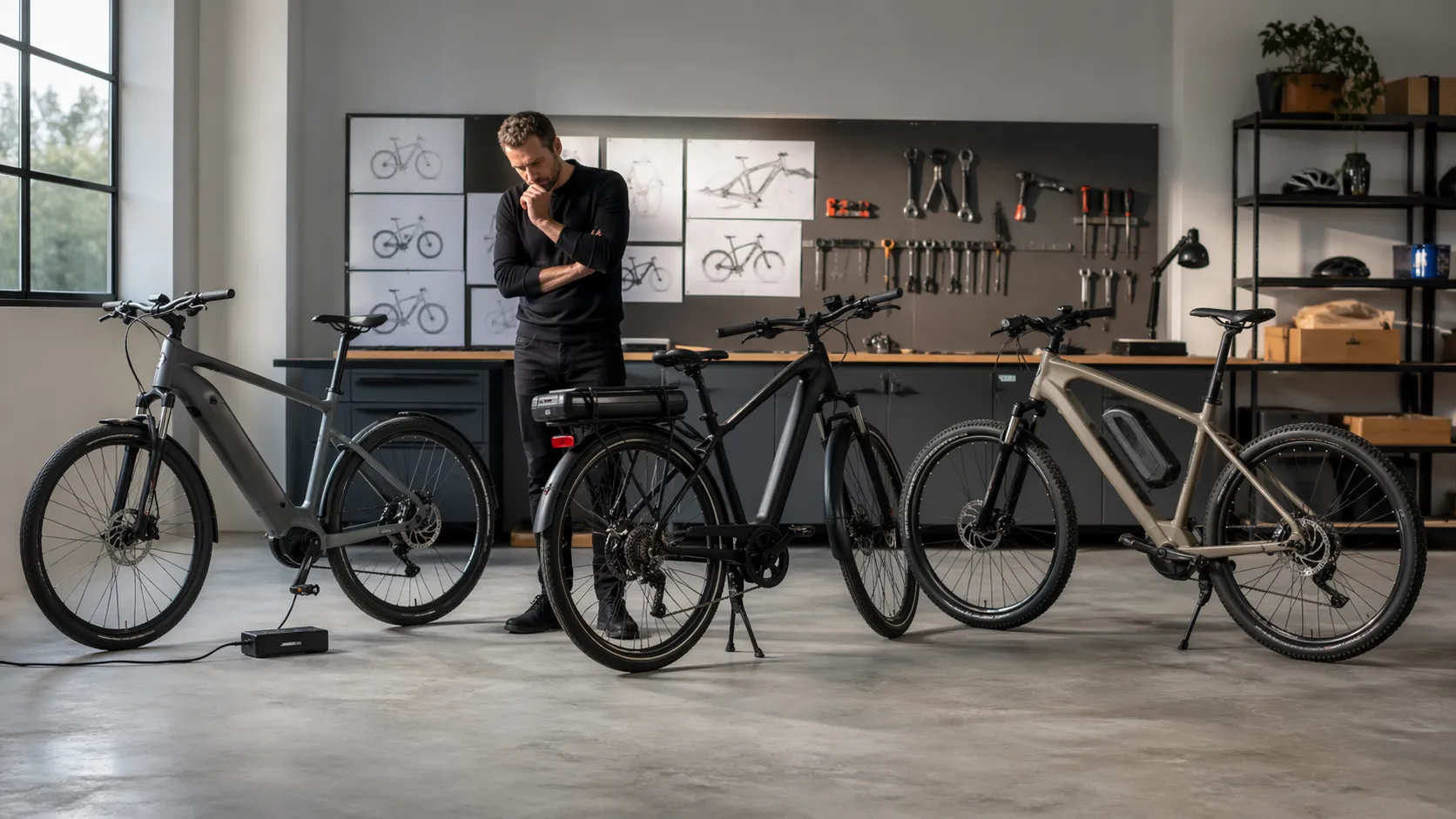
Voor de meeste fietsridders is de beste elektrische fietsaccu-plaatsing het laagste en centrale punt, omdat het meestal een betere balans, natuurlijker rijgedrag en minder compromissen in dagelijks gebruik oplevert. Achterbankaccu's kunnen nog steeds goed werken voor praktische stadfietsen, terwijl geïntegreerde designs vaak neter uitzien, maar mogelijk minder conveniënt om te verwijderen en opladen.
Accu-plaatsing beïnvloedt meer dan alleen het uiterlijk. Het beïnvloedt rijgedrag, opladingsconvenientie, cargo-compatibiliteit, service-toegang en hoe gemakkelijk de fiets is om mee te leven over de tijd. Voor pendelaars, wegfietsers en familie-cargo-kopers is de accu-positie een van de eerste details die worth checking zijn, omdat het de hele eigenaren-ervaring stilzwijgend vormt.
Bij het vergelijken van e-bikes helpt het om naar motorgrootte en accucapaciteit te kijken. Framegeometrie, accutoegang, cargo-compatibiliteit en gewichtsverdeling vormen vaak de dagelijkse eigenaar-ervaring meer dan een specheetabel suggereert. Kooplieden die de marktpositie willen vergelijken, kunnen ook zien hoe deze ontwerppoortjes eruit zien in land-niveau bron-artikelen zoals deze Croatia markt review.
Wat Electric Bike Battery Placement Werkt
Accu-plaatsing is de locatie van de accu op het fietsframe. Bij moderne e-bikes zijn de meest gebruikelijke layouts externe down tube accu's, geïntegreerde in-frame accu's, achterbankaccu's en een kleinere groep niche layouts zoals zitbuis-, verticale of dubbele accusystemen.
In praktische termen verandert de accu-plaatsing drie dingen tegelijkertijd: de centrumvan-massa van de fiets, het gewichtsbalanceert van voren naar achter en de dagelijkse service-weg voor opladen of vervanging. Daarom voelt dezelfde accucapaciteit vaak heel anders afhankelijk van waar de pack zit.
Dit is belangrijk omdat de accu een van de zwaarste componenten op een e-bike is. Verplaats die massa lager en dichter bij het centrum, en voelt de fiets meestal meer vastzitten en voorspelbaar. Verplaatst men hem hoger of verder achter, dan veranderen het steeringgevoel, gewichtsoverdracht en cargo-gedrag.
Veelvulige Accu-Locaties en Hun Tradeoffs
Externe down tube accu's zijn een van de meest balancede opties. Ze houden het gewicht relatief laag, werken goed voor sportieve of dagelijkse rijden en zijn gemakkelijk te vinden op pendel-, hybride- en mountaine-bikes. De nadelen zijn dat grotere packs het frame bulkiger kunnen maken en sommige verwijderingssystemen minder conveniënt zijn dan ze eerst lijken.
Geïntegreerde in-frame accu's bieden meestal een netter uitzicht en kunnen betere weerbescherming verbeteren. De tradeoff is service-toegang. Sommige geïntegreerde systemen zijn gemakkelijk te verwijderen, maar anderen worden ongemakkelijk als de accu naar boven moet worden getransporteerd, binnen moet worden opgeladen of later moet worden vervangen.
Achterbankaccu's maken nog steeds zin voor praktische stadfietsen. Ze kunnen gemakkelijk toegankelijk zijn en meer ruimte achterlaten in het hoofdframegebied bij bepaalde designs. De tradeoff is dat het gewicht hoger en verder achter zit, wat het achterdeel van de fiets meer beladen voelt, vooral als een kinderzitje, pannieren of groenten worden toegevoegd.
Andere of niche layouts zijn minder common vandaag. Ze kunnen goed werken binnen een specifiek frame-concept, maar compatibiliteit met accessoires, folding mechanismen en langdurige onderdeelbeschikbaarheid verdienen meer aandacht.
| Plaatsing | Omrijden | Opladingsconvenientie | Cargo-compatibiliteit | Uitzicht | Service-toegang |
|---|---|---|---|---|---|
| Externe down tube | Meestal stabiel en gelijkmatig | Vaak praktisch | Meestal goed | Minder net | Meestal gemakkelijker |
| Geïntegreerde in-frame | Meestal stabiel en gelijkmatig | Hangt af van verwijderingsdesign | Meestal goed | Nettst uitzicht | Kan complexer zijn |
| Achterbank | Meer achtergeprioriteerd | Vaak gemakkelijk | Kan botsen met achterlaad | Meer traditioneel | Meestal direct |
| Niche layouts | Zeer design-afhankelijk | Varies | Varies | Varies | Varies |
Hoe Accu-Plaatsing Rijgedrag en Comfort Beïnvloedt
Het merk zich het meest duidelijk tijdens echte acties: starts, schoiekeien, kerbels, remmen en lopen met de fiets door nauwe ruimtes. Een centraal gemonteerde accu helpt de fiets meestal neutraler te voelen. Het steering trackt natuurlijker en de fiets voelt vaak minder ongemakkelijk als het van een standaard is opgepakt of op laag tempo wordt bestuurd.
Achtergemonteerde accu's zijn niet automatisch onstabiel, maar ze verergeren vaak de achtergewicht. Als de fiets al lasten over het achterwiel draagt, kan dat gestackte gewicht het voorste deel lichter maken. Op gladde pendelroutes kan dit acceptabel zijn. Op ruwe wegen, grind of scherpe bochten is het verschil meestal duidelijker.
Accu-positie is ook duidelijk als de fiets op een auto-kop wordt opgeladen, in een gang gedraaid of gebalanceerd wordt bij het monteren van een kinderzitje of groenten. Deze kleine momenten beïnvloeden hoe praktisch een fiets voelt over maanden van eigenaar-ervaring.
Voor mountain- of gemengde terraingebruik is lage centrale massa meestal het beste, omdat het de fiets voorspelbaar maakt bij ruwe oppervlakten. Voor comfort-pendel fietsen is gemakkelijke accutoegang vaak zo belangrijk als rijgedrag, wat waar sommige achterbankdesigns nog steeds praktisch maken.
Opladen, Onderhoud en Weerbescherming
Dit is waar de eigenaar-realiteit meer belangrijk is dan marketingfotos. De mooiste accu-locatie is niet altijd de gemakkelijkste om mee te leven. Als de accu dagelijks binnen wordt opgeladen, wordt verwijderingconvenientie een ernstig praktisch probleem.
Geïntegreerde designs bieden vaak betere bescherming tegen sproeit en vuil, hoewel de dichtheid van de dichting belangrijker is dan reclame-taal. Down tube accu's kunnen ook goed beschermd zijn, maar zijn meer blootgesteld aan resten van het voorwiel. Achterbankaccu's vermijden sommige weg-spuitpatronen, maar zijn mogelijk meer blootgesteld bij valpartijen, parkingschades of laadongeval.
Onderhoud verandert ook met de plaatsing. Een schoon in-frame-systeem kan specifieke vervangingsonderdelen of frame-gematchte accuvormen vereisen. Gewonener externe packs zijn gemakkelijker te vervangen. Voor de meeste kooplieden is de vraag niet welke design het mooiest is, maar welke blijft praktisch na jaren opladen, service en vervanging.
- Before buying, check vier dingen in persoon als mogelijk:
- Hoeveel stappen het kost om de accu te verwijderen
- Of de accu op of af de fiets kan worden opgeladen
- Of het lock en slide pad in nauwe ruimtes ongemakkelijk is
- Of vervangingstoegang afhangt van model-specifieke onderdelen
Accu-Plaatsing per Fiets Type
| Fiets type | Meestal beste accu-plaatsing | Waarom |
|---|---|---|
| Commuter e-bikes | Down tube of geïntegreerde | Betere balans en dagelijkse praktijk |
| Mountain e-bikes | Lage centrale plaatsing | Beter beheersing op ruwe terrein |
| Cargo-e-bikes | Hangt af van de volledige frame- en lastontwerp | Balans is belangrijker dan simpele regels |
| Vouw- of compacte e-bikes | Verpakking-gedreven | Dragen en rollen is net zo belangrijk als rijden |
Voor in het bijzonder vouw- en compacte e-bikes raden kopers aan hoe het fietsgevoel is bij dragen en rollen, niet alleen bij rijden. Verpakkingstekorten veroorzaken vaak batterijcompensaties, waardoor de dagelijkse handelingsgemak buiten de fiets veel belangrijker is dan wat veel productpagina’s aangeven.
Hoe kiest u de beste batterijplaatsing voor een elektrische fiets
Stel deze zes vragen voordat u koopt:
- Waar wordt de fiets meestal gebruikt, stadswegen, heuvels, paden of belaste ruimte?
- Moet de batterij vaak worden verwijderd voor het opladen?
- Zal de achterwerk al cargo, zakken of een kinderzitje dragen?
- Is een schoner geïntegreerde look het waard van extra servicecomplexiteit?
- Hoe belangrijk is vrije ruimte in het frame driedeel?
- Als de batterij later moet worden vervangen, hoe eenvoudig is dat proces?
Als het rijvertrouwen prioriteert is, is de laag en centraal geplaatse batterij meestal de veiligste keuze. Als het opladingsgemak belangrijk is, moet de batterijtoegang nauwkeurig worden onderzocht, niet vertrouwen op productfotos. Als flexibiliteit bij cargo het doel is, moet de batterij worden beoordeeld als onderdeel van het gehele lastensysteem, niet als een geïsoleerde ontwikkelingsdetail.
Veelgestelde vragen
Is een down tube batterij altijd beter dan een achterwerk batterij?
Niet altijd. Een down tube batterij verbetert meestal de balans, maar een achterwerk batterij kan nog steeds een praktische keuze zijn voor platte stadrijdende of fietsen die zijn ontworpen rond gemakkelijke toegang. De betere optie hangt af van het cargo gebruik, rijdstijl en oplaadgewoonten.
Waarom kosten geïntegreerde batterijen meer op sommige e-bikes?
Geïntegreerde systemen vereisen vaak meer frame-engineering, strakke verpakking en modelspecifieke delen. Die schone uitstraling kan de productie- en servicecomplexiteit verhogen, wat de prijs vaak naar boven drukt.
Beïnvloedt batterijplaatsing de range?
Niet direct. Batterijplaatsing verandert de batterijcapaciteit niet, maar het kan veranderen hoe stabiel en efficiënt de fiets voelt bij ech gebruik. In de praktijk wordt de range meer beïnvloed door batterijgrootte, snelheid, terrain, rijdergewicht, banddruk en cargo last dan alleen door plaatsing.
Wat is belangrijker voor dagelijkse eigenaarschap, batterijtoegang of uitstraling?
Voor rijdere die de batterij elke dag verwijderen, is toegang meestal belangrijker dan uitstraling. Een schone geïntegreerde frame verliest deel zijn appeal als het opladen een dagelijkse ongemak is. Als de fiets kan worden opgeladen op plaats, wordt uitstraling gemakkelijker prioriteerd.
Slotopmerking
Voor de meeste kopers is een laag en centraal gemonteerde batterij de veiligste standaard omdat het meestal de beste balans en de minste compromissen biedt. Achterwerk layouts kunnen nog steeds zin hebben voor sommige nuttigheids- of platte stadfietsen, terwijl geïntegreerde designs het beste werken als het opladen en langdurige service echt gemakkelijk zijn, niet alleen visueel aantrekkelijk. Voor meer koopzij-artikelen en productupdates, zie de ClipClop nieuwssectie.
Over de auteur
Leo Liang werkt in internationale e-bike verkoop en bronselectie, met een focus op productpositionering, koopzij evaluatie en praktische use-case analyse voor overzeese markten.



 English
  Spanish
  Portuguese
  Russian
  Arabic
  French
  Dutch
Dutch  German
  Danish
