

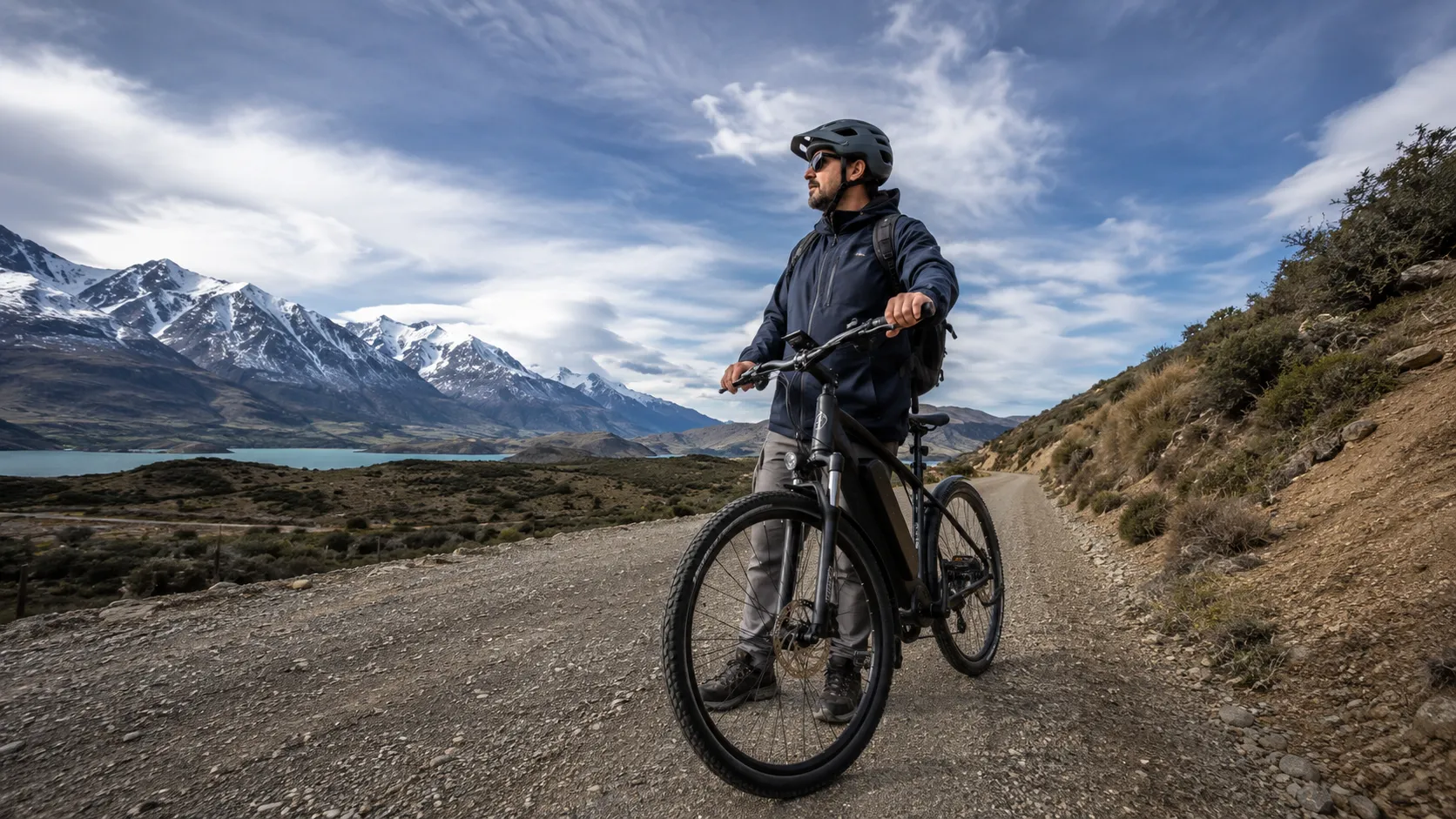
Toen ik voor het eerst zag dat mensen “top electric bike manufacturers in Chile” zochten, had ik een klein vraagje in mijn hoofd.
Zoeken ze echt naar fabrikanten? Of zoeken ze naar merken waar ze van kunnen kopen, repareren, importeren en verkopen zonder te veel moeite?
Want dat is two different things.
Sommige lijsten spreken Benelli Chile, Fahren, EvoBike, iBikes Chile en Volta. Dat is een nuttig beginpunt. Ten minste deze namen geven weer wat voor soort elektrofietsspelers in Chile zichtbaar zijn. Één industrie-artikel noemde ook deze vijf als voorbeelden van Chile’s elektrofietsmarkt.
Maar in 2026 zou ik niet alleen vragen: “Welk merk is bekend?” Die vraag is te simpel.
Ik zou vragen: kan de fiets echte wegen afhandelen? Kan de dealer reserveonderdelen krijgen? Is de batterijdocumentatie duidelijk? Komt de snelheidinstelling overeen met lokale regels? En ehrlijk gezien, zal de klant de fiets nog leuk vinden na drie maanden?
Zo zie ik Chile vanuit ClipClop Bike’s perspectief. Misschien niet de meest romantische manier, maar het is dichter bij het echte business.
Chile Is Not One Simple E-Bike Market
Chile is a long country, and I think people outside Latin America sometimes forget that. From far away, it is easy to say “Chile market” like it is one single city. But it is not.
Santiago has commuters. Coastal areas may have tourism riders. Some places have hills. Some buyers care about folding bikes because they live in apartments. Others want fat tires because the road is not always smooth.
For Santiago, I would first think about city e-bikes, folding e-bikes, and step-through frames. Not because they are the coolest, but because they are easy to use. Easy parking, less sweat, simple daily riding. Santiago has also been developing active mobility and cycling infrastructure, so this part of the market makes sense. (Oliver Wyman Forum)
But I would not stop there.
Around Santiago and the Andes, you can already find e-mountain bike tours. Public tour listings show riders using e-MTBs to handle steep hills and rougher terrain with less effort. (Viator) That tells me something: Chile is not only a commuter market. There is also outdoor use, rental use, tourism use, weekend riding.
I may be wrong, but I feel Chilean dealers who only prepare small city bikes may miss part of the demand.
I am a little biased here. For mixed roads, hills, and rental use, I prefer stronger frames, better brakes, and tires that are not too fragile. A bike can look beautiful in a product photo, but if it starts shaking on bad roads, nobody cares about the photo anymore.
The Rule Part Is Boring, But Dealers Should Not Ignore It
This is the part many people skip because it is not fun.
In Chile, official traffic guidance says electrically assisted cycles are treated as cycles only when they stay within certain limits: maximum 0.25 kW power and assistance not over 25 km/h. (Conaset)
So when someone tells me, “750W sells better, just ship that,” I normally slow down a little.
At ClipClop, we also make powerful e-bikes. I like powerful e-bikes. I am not pretending I only care about 250W city models. But for Chile, the use case must be clear.
For normal city road use, a compliant version may be the safer choice. For off-road, private land, tourism, or special rental use, the setup may be different. But sellers should not mix these things together and let the customer guess.
One customer once asked me something like, “Can we promote the bike as city legal but keep the high-power motor?” My answer was not very exciting: do not do that. Maybe you sell faster in the first month, but later you may create trouble for yourself.
Short-term sales are nice. Warranty and compliance problems are not nice.
The Brands People Usually Talk About
Benelli Chile has brand recognition. That helps. People trust names they have seen before, especially if the name already feels connected to motorcycles or mobility.
Fahren feels more local and practical. I like brands like this because they usually understand the local customer better. But a local brand still needs a reliable supply chain behind it. A nice showroom cannot solve everything.
EvoBike is interesting because it has Latin American relevance. If pricing and service are stable, that kind of brand can work.
iBikes Chile looks more like a retailer or distributor type of player. Actually, for many riders, this is very important. End users do not always care who welded the frame. They care who replies when the charger fails.
Volta sounds more premium and tech-focused. I am okay with premium e-bikes, but I have one small bias: I do not like when brands talk too much about apps and smart features, but cannot provide basic parts quickly. GPS is nice. But brake pads, displays, controllers, chargers, batteries — these are the things dealers fight with every week.
Maybe that sounds too practical. Fine. I still think it is true.
Where ClipClop Bike Fits In
ClipClop Bike is not a Chilean local shop, and I do not want to pretend we are.
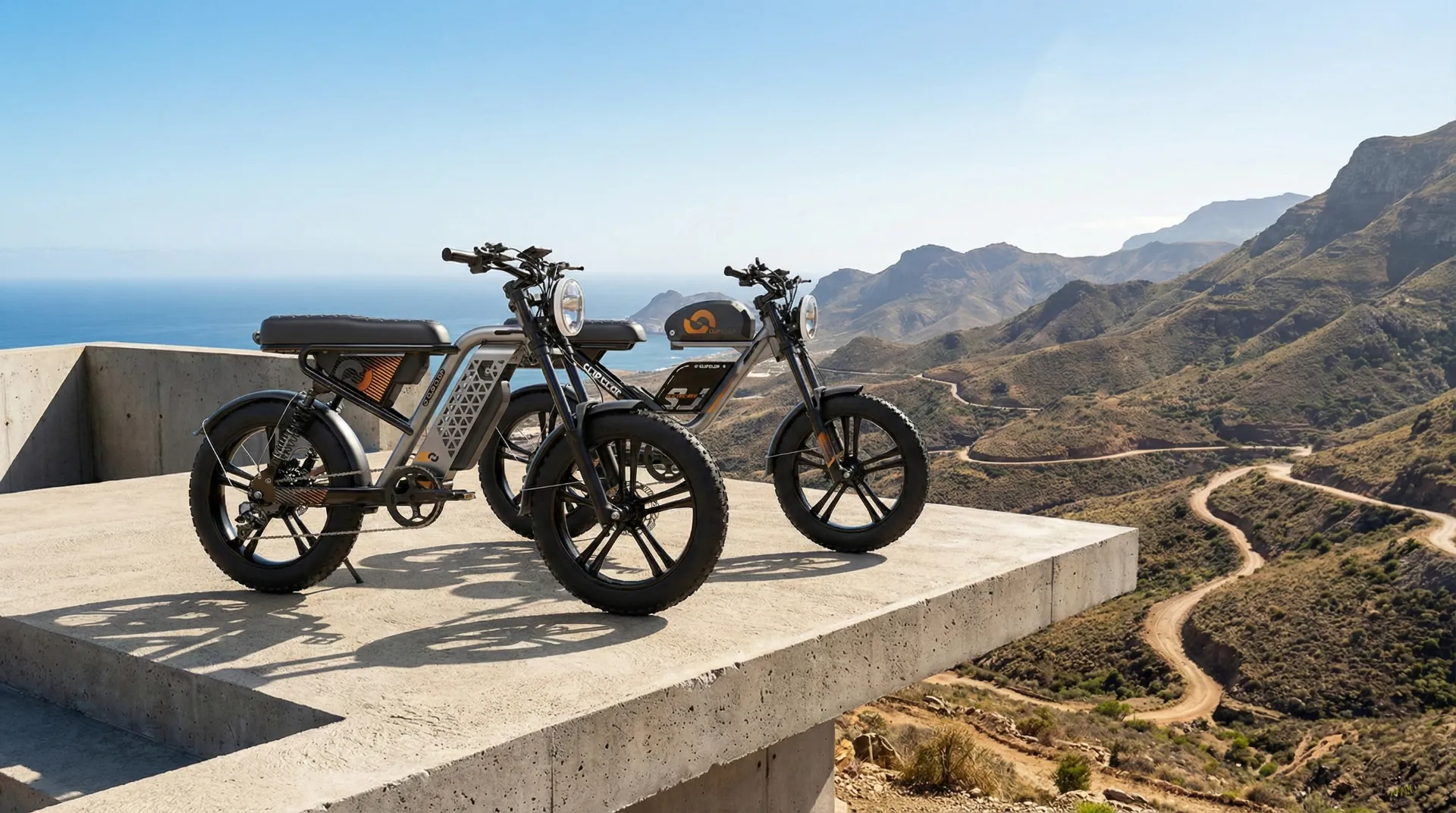
We are a China-based electric bike manufacturer working with dealers, importers, distributors, and OEM/ODM buyers. Our product lines include fat tire e-bikes, mountain e-bikes, city e-bikes, folding e-bikes, and scooters. (ClipClop Elektrische fiets)
So our role is different from a local retailer.
A Chilean dealer may already have a shop, but wants his own e-bike line. Another importer may want custom logo, color, motor, battery, or packaging. Some buyers start with samples first, then think about container orders if the test goes well.
This is where ClipClop can be useful.
Our production base is near Guangzhou, in Jiangmen. ClipClop says it has over 100,000 m² of production space and annual output capacity around 120,000 e-bikes. The company also lists standards such as EN15194, RoHS, ISO4210, LVD, and EMC. (ClipClop Elektrische fiets)
I know factory numbers can sound dry. But for importers, they matter. When the bike is already on the sea, or when customs asks for documents, “nice design” is not enough.
A Real Buyer Conversation I Remember
One type of question I often hear from overseas buyers is not about the motor first. It is about parts.
They ask: if I buy 50 units, what happens when one display breaks? Can I buy extra chargers? Can you send brake parts? Can we keep some batteries in stock? How long does it take?
This is not a glamorous conversation. But it is a real one.
For Chile, I think this matters even more because the country is far from China. Shipping time is not short. If a dealer waits until something breaks before thinking about spare parts, the customer may already be angry.
So my advice is simple: do not import only complete bikes. Import some spare parts from the beginning. Not too many, but enough for the common problems.
A blogger may tell riders to check reviews before buying. That is good advice. But for dealers, I would say something different: check the supplier’s parts response before ordering. Ask boring questions early. Boring questions save money later.
Another Case: Do Not Test Only on Flat Roads
I once discussed a bike setup with a buyer who cared a lot about price. That is normal. Everybody cares about price. But when we talked more, his target riders were not all riding on smooth flat streets.
So I told him: please do not test the sample only around your office.
Put a heavier rider on it. Add a backpack. Ride uphill. Brake downhill. Turn slowly. Ride over bad pavement. Then decide if the cheaper setup is still good enough.
Many e-bike reviewers do this better than brands. They test braking, hill climbing, comfort, and real battery feeling. Dealers should copy that habit. A catalog spec sheet does not tell the full truth.
I personally do not like selling very cheap city e-bikes into hilly or mixed-road markets. They look easy to sell at first, but warranty may come back later. Maybe I am too conservative, but I would rather lose a little “wow price” than sell something that feels weak after one month.
Bike Paths Outside Big Cities Also Matter
Chile has also been working on interurban bike path projects. One reported government-backed model planned 43 km of bike paths, including a 12 km pilot route between Pichilemu and Cáhuil, with tourism value mentioned too. (Latam Mobility)
This kind of thing matters because e-bike demand may not stay only in Santiago.
Small towns, coastal areas, tourism routes, and local commuting can all become markets. But I do not think those markets need overcomplicated bikes.
For many of these places, I would rather sell a simple, tough, easy-to-repair model. Good tires. Good brakes. Stable battery. Clear display. Normal parts.
Not every bike needs to feel like a smartphone on wheels.
My Advice to Chilean Dealers in 2026
Do not choose a supplier only because the catalog looks clean.
Before ordering, ask about spare parts, battery certificates, packing details, sample policy, controller replacement, charger stock, display compatibility, and whether the factory can make a 25 km/h version.
Vraag ook jezelf af welk soort klant je echt bedient. Een student in Santiago, een huurbedrijf in de buurt van de Andes en een kusttoeristische operator hebben mogelijk niet dezelfde fiets nodig.
Dit klinkt erg obvious, maar veel mensen kopen nog steeds één model en proberen het bij iedereen te verkopen.
Ik zou dat niet doen.
Voor stedelijke kopers is een netjes uitziende, wettelijk compliant elektrische fiets misschien beter. Voor huur- of buitenlandse kopers zijn sterke remmen en frame stabiliteit misschien belangrijker. Voor dealers is after-sales ondersteuning vaak belangrijker dan het toevoegen van een extra leuke functie.
Slotgids
Het beste elektrische fietsfabrikant voor Chili in 2026 is niet altijd het luidst merk of het ene met de mooiste foto's.
Het is het merk dat de route, het wetgevende kader, de rijder en de after-sales situatie matcheert.
Benelli, Fahren, EvoBike, iBikes Chile en Volta zijn allemaal namen waard om in de gaten te houden. Ze tonen verschillende delen van de markt: merkkracht, lokale detailhandel, prestatie, stedelijke mobiliteit en premium positionering.
ClipClop Bike pakt van een andere insteek. Wij richten ons meer op dealers en importeurs die fabrieklevering, OEM/ODM opties en praktische elektrische fietsmodellen voor stad, dikke banden, bergfietsen, vuile fietsen of customized projecten willen.
Mijn licht bevoegde mening?
Chili heeft niet alleen mooie elektrische fietsen nodig. Het heeft elektrische fietsen die heuvels kunnen aan. gemengde wegen, wettelijke controles, reserveonderdelen en klanten die klagen als er iets klein misgaat.
Dat is de echte markt waar ik om ga.



 English
  Spanish
  Portuguese
  Russian
  Arabic
  French
  Dutch
Dutch  German
  Danish
