

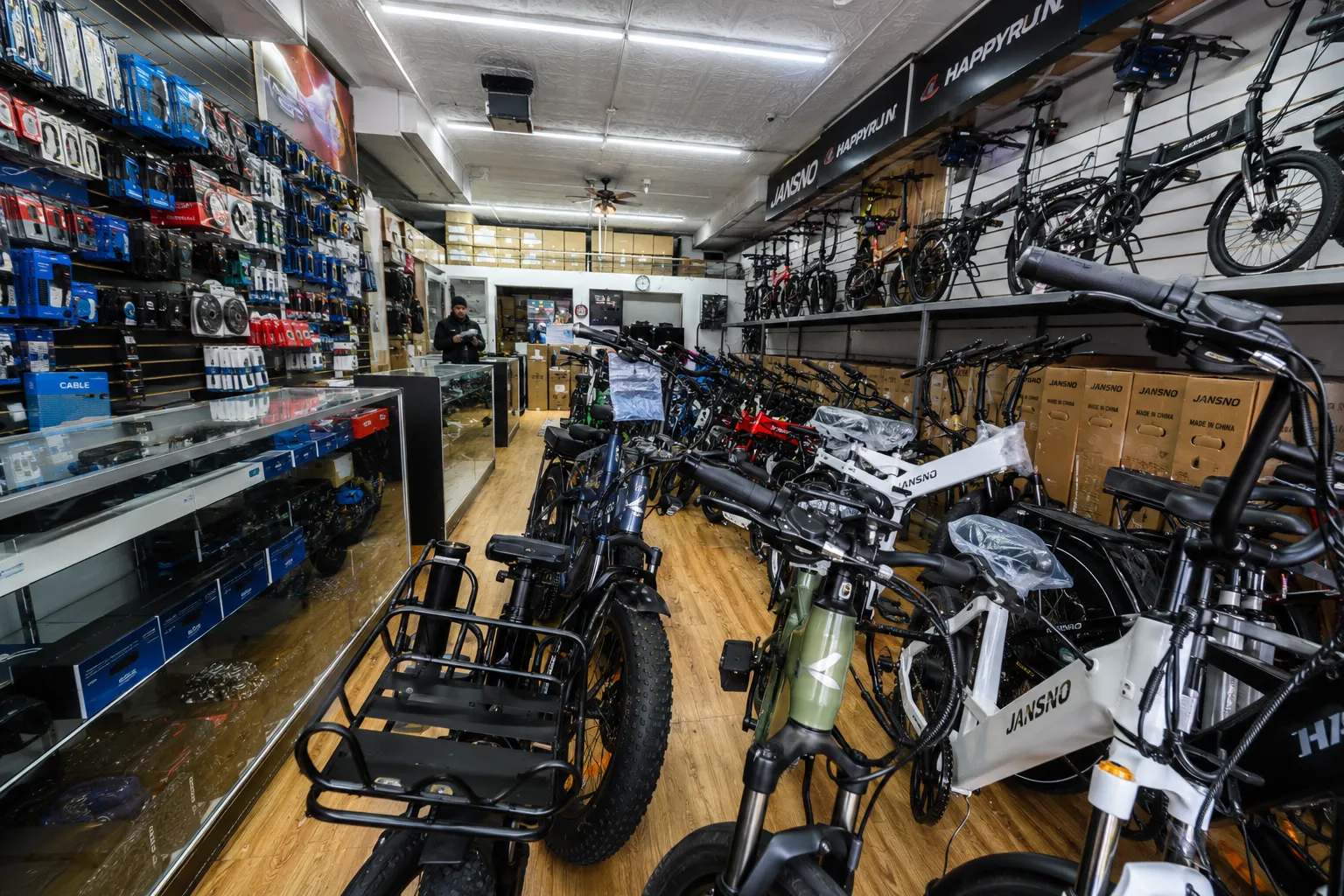
قوانين الدراجات الكهربائية في نيويورك 2026: ما يجب على الواردين معرفته
Hey, I’m Leo. I do sales at ClipClop Bike in Guangzhou. My day is basically yelling at the factory about NFC readers installed backwards, then jumping on WhatsApp calls with buyers in Queens and Brooklyn who ask the same thing every time: “Is this thing legal in New York?” Honestly? It’s “kind of.” That’s the answer that drives engineers crazy and keeps me employed.
I’ve been shipping e-bikes to the U.S. since before the pandemic made them cool. New York City turned into this regulatory experiment where the state says one thing, the city says another, and your local beat cop doesn’t know the difference. If you’re importing into NYC in 2026, or running a shop, or just buying off Amazon wondering if you’ll get a ticket—here’s the messy version from someone who fills containers for a living.
The Three Classes Nobody Fully Understands
New York State splits e-bikes into three classes. Class 1 is pedal-assist only, cuts out at 20 mph. Class 2 has a throttle, also cuts at 20 mph. Class 3 is the weird one—allowed only in NYC, goes up to 25 mph, and riders must wear helmets. State law says 25. But NYC DOT slapped a 15 mph cap on every e-bike inside city limits back in October 2025. So your Class 3 bike that can legally do 25 on paper? At 16 mph on a Manhattan street, you’re technically breaking the law. Yeah. I know.
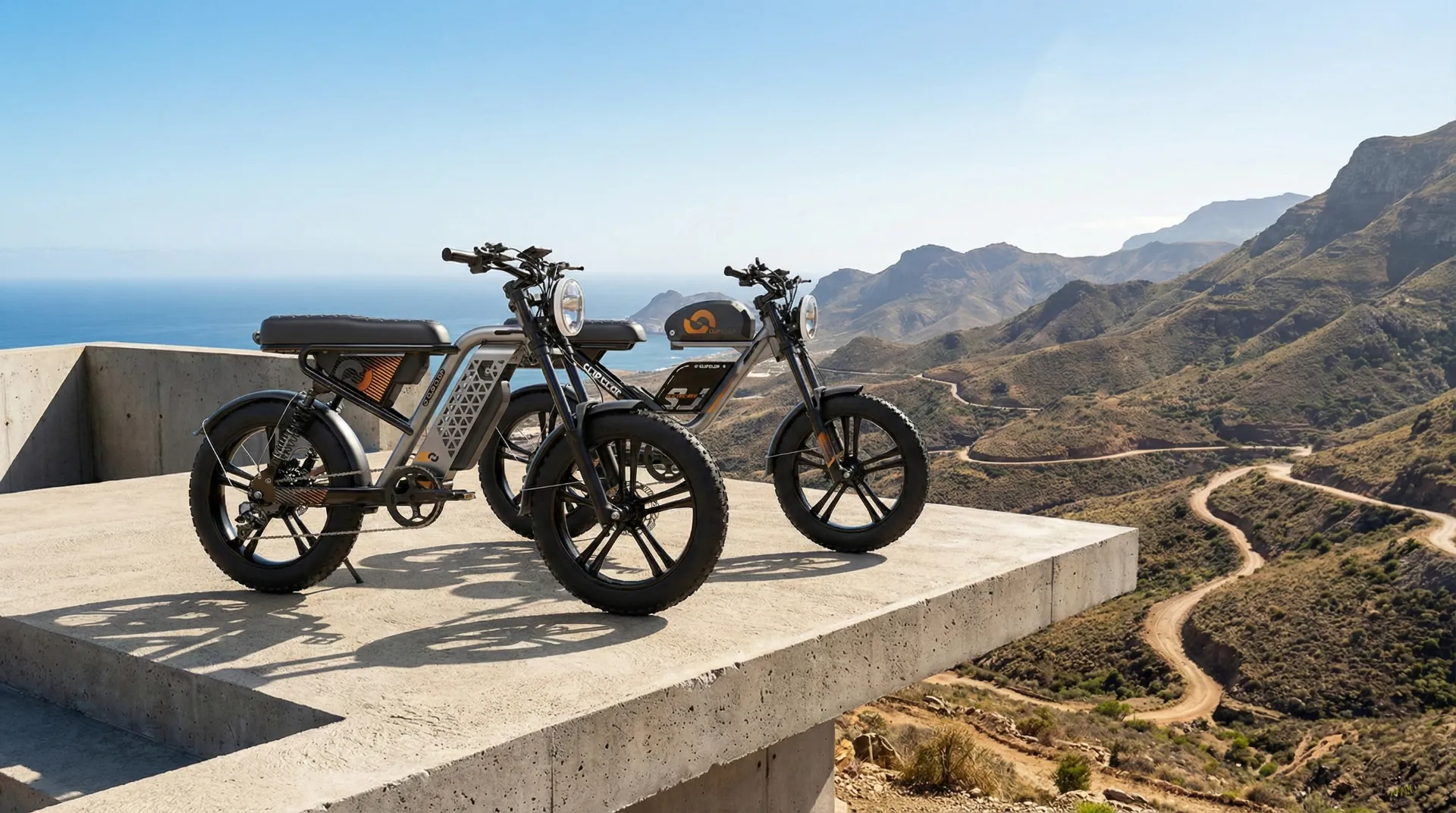
My company makes the L2. It’s technically a Class 2/3 hybrid depending on configuration. 48V 750W motor, peak output hitting 1,200W. Product page says 32 mph top speed. Way over 15. But I always explain to buyers: almost every e-bike on the market exceeds the NYC limit. The 750W nominal rating keeps you compliant with state motor-power rules, but peak power and road speed are different conversations. One of my regular customers—a guy running a rental fleet near Prospect Park—told me, “Leo, NYPD isn’t sitting there with a radar gun for bikes. They’re looking for delivery riders going 40 on the sidewalk.” He’s not wrong, but that’s not legal advice either.
No License, No Registration, No Insurance—For Now
Good news: e-bikes don’t need DMV registration in New York. No plates, no insurance, no driver’s license. Riders just need to be 16 or older. Huge selling point for fleet buyers. One client, let’s call him “Mike from Staten Island,” was looking at mopeds before he found me. Mopeds need plates, insurance, the whole headache. He took 40 L2 units for his delivery business because the math was simple: buy, charge, ride. No DMV lines.
But there’s this pending bill called Priscilla’s Law. If it passes, NYC would suddenly require DMV registration, license plates, and insurance for e-bikes. Cycling advocates hate it. The Mamdani administration is against it too, favoring delivery-app accountability instead. As of May 2026, it’s still not law. I tell buyers: plan your 2026 inventory assuming current rules hold, but keep one eye on Albany. If that bill passes, the economics of running a delivery fleet changes overnight.
Helmets: The Rule That Actually Matters
Class 3 riders must wear helmets. No exceptions. Class 1 and 2, it’s “recommended” for adults but mandatory if you’re using the bike for work—so basically every delivery rider in the city. I always push buyers to include helmets in bulk orders, not because I’m some safety saint, but because I’ve seen what happens when a rider crashes and the lawyer finds out they weren’t wearing one. Complicates insurance claims, workers’ comp, everything.
The L2 comes with hydraulic disc brakes, 180mm rotors, which stop better than half the mechanical garbage I see on bikes selling for twice the price. But brakes don’t help your skull. I had a buyer last year—”Sarah from the Lower East Side”—who bought ten units for a shared mobility pilot. She tried to skip helmets to save $15 per unit. I talked her out of it. Not because I care about fifteen bucks, but because in this city, with these laws, and with NYPD enforcement swinging depending on who’s mayor, you don’t want to give anyone an easy reason to shut you down.
Where You Can Actually Ride
NYC DOT says Class 1 and 2 e-bikes can use bike lanes, park drives, and vehicle lanes on streets where the speed limit is 30 mph or less. Class 3 is technically allowed in bike lanes too, but that 15 mph cap applies everywhere. Bridges? Only in bike lanes. Sidewalks? Absolutely not, and they’ll ticket you.
The L2 has 20×4.0 inch fat tires and dual suspension—front fork with 175mm travel and lockout, plus rear shock. Built for rough stuff. But I always warn my NYC buyers: it can handle potholes and cobblestones, but it cannot handle the Hudson River Greenway. That path is managed by the Hudson River Park Trust, and they ban e-bikes completely. The Trust’s rules are separate from city traffic law, and NYPD will write you a summons. I had a customer—”the guys from Midtown”—lose two bikes to impoundment on the Greenway in 2024. They didn’t read the fine print. Now I make sure every buyer knows: Central Park Loop and Prospect Park Loop are fine (part of the Parks pilot program through December 2026), but the Greenway is a trap.
The Battery Fire Thing
If you import e-bikes into NYC and don’t know about Local Law 39, you’re playing with fire. Since September 2023, any e-bike or battery sold, leased, or rented in NYC must have UL 2849, UL 2272, or UL 2271 certification. City fines retailers up to $1,000 per violation. FDNY has been cracking down because lithium-ion battery fires were killing people—18 deaths in 2023, dropping to 6 in 2024 after enforcement ramped up.
Here’s where I get biased, but it’s honest. A lot of U.S. buyers assume “Chinese factory” means “cheap battery that’s gonna explode.” And yeah, there are garbage-tier suppliers who slap any label on a battery pack. But that’s not all of us. At ClipClop, our L2 battery is 48V 15Ah, 874Wh, IPX5 waterproof-rated. We use certified cell suppliers and provide the UL documentation. I had a buyer last quarter—”the Brooklyn distributor”—who asked me to send a sample battery to a third-party lab in New Jersey before he’d place his 200-unit order. I didn’t get offended. I paid for the test. It passed. Any supplier who refuses that is either lazy or hiding something.
The state also passed Hochul’s battery safety package in July 2024, adding manufacturing standards, translated manuals effective January 2025, and those annoying red “unplug when not in use” tags on charging cords. I think the red tag thing is overkill—my apartment in Guangzhou has twenty devices charging and no red tags—but I include them because it’s the law. The translated manual requirement is actually helpful. I get fewer confused emails from Spanish-speaking riders in Washington Heights now.
What the L2 Actually Is
Let me talk about my own product for a second, because this isn’t just a legal explainer—it’s also a sales pitch, and I’m not gonna pretend otherwise. The L2 is a 48V 750W fat-tire e-bike with a 7-speed Shimano drivetrain, dual suspension, hydraulic brakes, NFC keyless start, and a rear rack that can handle serious cargo. It weighs 39 kg net. Heavy. I’m not gonna sugarcoat that. You feel it lifting it into a van. But the weight comes from the dual battery option—we can configure it with a second 48V 15Ah pack that pushes range to 80-100 miles. For delivery riders doing 10-hour shifts in Queens, that extra range is the difference between making money and sitting on a curb waiting for a charge.
The display shows speed, assist level, battery percentage, and distance. I always tell buyers: set the speed limiter to 15 mph if you’re running a fleet in Manhattan. The controller can do it. Yes, riders will complain. Yes, some will figure out how to override it. But from a liability standpoint, you did your part. One blogger I follow—he runs a YouTube channel about urban micromobility, I think his name is something like “City Rider”—said it best: “The 15 mph rule is unenforceable at scale, but the lawsuit after a crash isn’t.” I quote that to every fleet buyer. It usually gets their attention.
The Mamdani Shift
In March 2026, Mayor Mamdani ended the criminal pink summonses that the Adams administration had been using against cyclists. From April 2025 to March 2026, NYPD hit cyclists with criminal tickets for red lights, wrong-way riding, stop signs. About 20,000 of them, and most got dismissed because they were ridiculous. Now it’s back to civil tickets, same as cars get. A lot of my buyers breathed a sigh of relief.
But—and I keep saying “but” because nothing in NYC is simple—the Ghost Car Task Force is still seizing unregistered mopeds and ghost vehicles. If your e-bike looks too much like a motorcycle, or if you’ve modified it with a bigger battery and removed the pedals, you’re in moped territory. Mopeds need registration. I had a client—”the guys in the Bronx”—who bought 30 L2s, then let their mechanic swap in a 52V battery and bypass the pedal sensor. I told them I wouldn’t sell them anymore unless they reversed it. Not because I’m a cop, but because when those bikes get impounded and NYPD traces the serial numbers back to my factory, I don’t need that headache. They reversed it.
My Honest, Slightly Biased Advice
If you’re importing into NYC in 2026, here’s what I think. Remember, I’m a sales guy with a factory to fill, not a lawyer.
First, only buy bikes that can prove UL certification. Not a screenshot. Not a “trust me bro” email. Actual test reports. FDNY and DCWP are checking retail shops now, and fines start at $1,000 per device.
Second, get Class 2 bikes with programmable speed limiters. The L2 qualifies. Set them to 15 mph for NYC operations. Keep the throttle—riders need it for getting through intersections safely—but cap the top speed. You’ll sleep better.
Third, include helmets in your order. Even for Class 2. Even if the law says “recommended.” Because when a rider crashes on the Williamsburg Bridge and the hospital report says “no helmet,” your insurance company will find a way to make that your problem.
Fourth, stay off the Hudson River Greenway. I don’t care how nice the view is. The Trust bans e-bikes, and NYPD enforces it. Use the Brooklyn Bridge bike lane, use the Manhattan Bridge, use the Queensboro. But the Greenway is a $250 summons waiting to happen.
Fifth, watch Priscilla’s Law. If it passes, the whole “no registration, no insurance” advantage disappears. I’m betting it won’t pass in 2026—the Mamdani administration is opposed, and advocacy groups are loud—but I’m not betting my business on it. Neither should you.
الخلاصة
NYC in 2026 is still the best market in the country for e-bikes, in my opinion. The density, the traffic, the subway delays, the delivery economy—it all pushes people toward two wheels. But the regulatory environment is layered and contradictory. State law says 25 mph for Class 3. City law says 15 mph for everything. Parks have their own pilot programs. The Greenway has its own trust. Battery laws are getting stricter every year.
What I tell my buyers: buy a bike that’s compliant on paper, configure it conservatively for the street, document your certifications, and don’t give enforcement any easy excuses. The L2 works because it’s powerful enough that riders love it, but configurable enough that owners can stay within the lines. Is it perfect? No. At 39 kg, it’s heavy. The charger is 54.6V 3A, so a full charge takes five hours. But the hydraulic brakes are legit, the battery is certified, and the NFC lock means your delivery riders aren’t losing keys at 2 a.m. in Bed-Stuy.
Ride safe. Or at least, ride smart enough that you don’t end up on the local news.



 English
  Spanish
  Portuguese
  Russian
  Arabic
  French
  Dutch
Dutch  German
  Danish
