

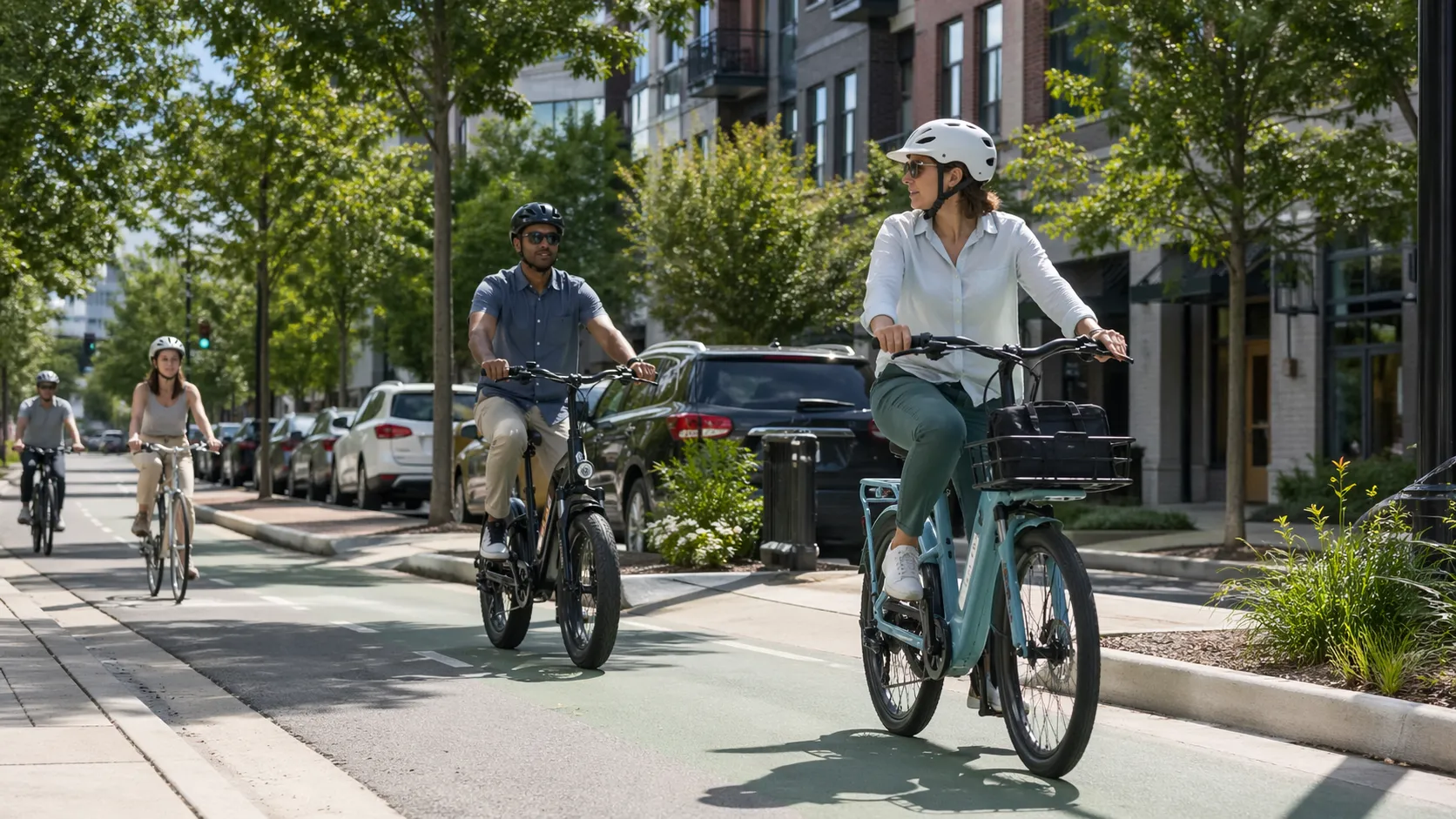
Par Leo Liang
Leo Liang travaille dans les ventes et l'approvisionnement internationaux de vélos électriques, avec un focus sur le positionnement des produits, l'évaluation côté acheteur et l'analyse pratique des cas d'utilisation pour les marchés internationaux.
L'entête sonne familier depuis longtemps : les vélos électriques deviennent l'un des moteurs de croissance les plus forts de l'industrie américaine du vélo. C'est vrai, mais c'est aussi incomplet. L'histoire plus utile se trouve sous la surface de l'entête. La croissance est réelle, mais elle n'est pas uniformément répartie entre les canaux, les tranches de prix, les segments de riders ou les attentes de service.
Selon PeopleForBikes, les données Circana ont montré que les vélos électriques ont contribué à 63% de la croissance des ventes au prix de l'argent de tous les vélos entre 2019 et 2023, tout en représentant 20% de ventes au prix de l'argent et seulement 4% de ventes unitaires dans le marché mesuré en 2023. Cette phrase explique toute la tension du marché : les vélos électriques sont puissants en termes de revenus, mais ils ne représentent qu'une petite partie du volume total de vélos. (PeopleForBikes)
En tant que professionnel travaillant dans les ventes et l'approvisionnement internationaux de vélos électriques, je suis naturellement biaisé en faveur de la catégorie. Je vois comment les acheteurs réagissent lorsqu'ils testent un vélo électrique de commute pratique pour la première fois. Je vois également comment des produits faibles, des batteries faibles, un support après-vente médiocre et une positionnement flou peuvent détruire la confiance. Ma vision n'est donc pas que “ les vélos électriques remplaceront les vélos ”. Ma vision est plus pratique : les vélos électriques deviennent la partie la plus commercialement importante du marché du vélo, mais seulement pour les entreprises qui comprennent où la demande provient vraiment.
Ce que les chiffres de croissance indiquent vraiment
Les chiffres de croissance du marché peuvent être trompeurs s'ils sont lus comme un slogan de victoire.
Le marché américain du vélo connaît deux histoires différentes en même temps. D'un côté, plus de gens roulent. PeopleForBikes a rapporté que 112 millions d'Américains, ou 35% de personnes âgées de trois ans et plus, ont roulé sur un vélo au moins une fois en 2024, le niveau de participation le plus élevé depuis le début de l'étude en 2014. La participation des jeunes a également augmenté de 49% à 56%. (PeopleForBikes)
C'est de bonnes nouvelles. Mais la participation n'est pas la même que l'achat de produits haute valeur. Un cycliste occasionnel qui roule quelques fois par an ne se comporte pas comme un commerçant, un livreur ou un enthusiast qui achète des accessoires chaque mois. Cela compte parce que l'industrie du vélo confond souvent “ plus de gens qui roulent ” avec “ plus de gens qui achètent des vélos premium ”.”
La catégorie des vélos électriques se trouve au milieu de cette contradiction. Elle attire de nouveaux riders en réduisant l'effort, en aplattissant les collines, en raccourcissant les trajets et en rendant le cyclisme moins intimidant. Mais la base d'acheteurs est divisée. Certains clients veulent un outil de transport sérieux. D'autres veulent un vélo de week-end. D'autres veulent un vélo en ligne bon marché qui ressemble à du puissant. D'autres veulent un produit certifié, soutenu par un détaillant, qui ne deviendra pas un problème de batterie six mois plus tard.
C'est pourquoi la croissance des vélos électriques ne doit pas être traitée comme un seul marché. Il s'agit de plusieurs marchés qui se cachent sous une même étiquette.
Le prix divise le marché
Le marché américain des vélos électriques est tiré dans deux directions.
En haut, les vélos électriques haut de gamme deviennent plus affinés. Ces produits se concentrent généralement sur des cadres légers, des capteurs de couple améliorés, des freins hydrauliques, des batteries intégrées, des moteurs marqués, des affichages nets, des garanties meilleures et un soutien de détaillant. Ils ne vendent pas seulement “ de l'électricité ”. Ils vendent de la confiance.
En bas, les vélos électriques bon marché attirent un pool beaucoup plus large de acheteurs sensibles au prix. Ces acheteurs peuvent ne pas se soucier de Bosch versus Bafang, capteur de couple versus capteur de cadence, ou UL 2849 versus une étiquette de batterie générique. Ils se soucient de la portée, de la vitesse, du prix, du délai de livraison et de la façon dont le vélo ressemble dans les photos de produit.
Cette fracture de prix n'est pas inhabituelle. Elle se produit dans les téléphones, les outils, les motos et les électroniques grand public. Le danger est que les vélos électriques ne sont pas des électroniques grand public simples. Un mauvais vélo électrique reste un véhicule mobile avec une batterie lithium-ion, des freins, du câblage et des charges structurelles. Plus le produit est bon marché, plus l'ingénierie cachée devient importante.
C'est pourquoi je ne pense pas que “ bon marché ” est automatiquement mauvais. Un vélo électrique abordable bien conçu peut être un excellent produit. Mais un vélo électrique bon marché sans certification de batterie, freins faibles, plan de pièces de rechange et canal de service n'est pas une bonne affaire. C'est une dette de support client futur.
Cela est particulièrement pertinent avec les changements constants des tarifs et des règles commerciales aux États-Unis. PeopleForBikes a noté dans sa mise à jour des tarifs de 2025 que les vélos électriques chinois faisaient face à un environnement de droits de douane combiné qui créait une pression coût pour l'industrie, tandis que sa mise à jour de 2026 indiquait que les vélos et vélos électriques avaient évité une exposition supplémentaire aux droits de douane en acier et aluminium de la section 232 à ce moment-là. (PeopleForBikes)
Pour les distributeurs, cela signifie que la planification des prix ne peut pas se fier uniquement sur les devis d'usine. Le coût fiscal, l'exposition aux droits de douane, la conformité des batteries, la réserve de garantie, l'entreposage domestique et la gestion des retours façonnent la marge réelle.
Pourquoi les vélos électriques d'occasion à bas prix se vendent plus vite
Une raison pour laquelle les vélos électriques d'occasion deviennent plus intéressants est simple : les vélos électriques neufs sont encore trop chers pour beaucoup de consommateurs américains.
Un vélo d'occasion ou rénové peut réduire la barrière d'entrée. Bloomberg a rapporté qu'Upway, un revendeur de vélos électriques d'occasion, vendait des vélos électriques rénovés à un remise de 40% par rapport aux vélos neufs, en utilisant son entrepôt et son modèle de réparation aux États-Unis pour construire la confiance dans la catégorie d'occasion. (彭博社)
Cela compte parce que les vélos électriques sont plus proches des voitures que les vélos traditionnels en un aspect important : les acheteurs s'inquiètent de l'état. Avec un vélo ordinaire d'occasion, les gens vérifient le cadre, le groupe de transmission, les roues et les freins. Avec un vélo électrique d'occasion, ils doivent aussi penser à l'état de la batterie, aux composants du contrôleur, à la compatibilité du chargeur, aux dommages d'eau et à la disponibilité des pièces de rechange.
C'est pourquoi le marché des vélos électriques d'occasion croîtra probablement le plus rapidement là où l'inspection et la garantie sont incluses. Un vélo d'occasion bon marché aléatoire sur une place de marché peut se vendre rapidement en raison du prix bas, mais un vélo d'occasion certifié peut créer un modèle commercial plus scalable en réduisant la peur de l'acheteur.
Pour les distributeurs de vélos électriques neufs, cela crée une pression. Un vélo neuf de $1,799$ ne concurrence pas seulement un autre vélo neuf de $1,799$. Il peut aussi concurrencer un vélo rénové d'une marque connue à un prix plus bas. Cela change l'équation de la valeur.
La leçon pratique est claire : si une marque de vélo électrique ne peut pas expliquer pourquoi son produit est plus sûr, plus facile à entretenir, mieux soutenu ou mieux adapté à un cas d'utilisation spécifique, il sera serrée par les importations bon marché et les alternatives d'occasion.
La croissance en ligne ne remplace pas le service en magasin
De nombreuses marques veulent croire que les ventes en ligne peuvent remplacer le service local. C'est partiellement vrai.
La découverte en ligne croît. PeopleForBikes a rapporté que bien que seulement environ 2% des vélos électriques vendus par des détaillants en Q1 2024 aient été vendus en ligne, ce canal avait un taux de croissance annuel de 45%, et de nombreuses transactions étaient “ click and collect ”, ce qui signifie que le magasin local jouait toujours un rôle. (PeopleForBikes)
C'est le point clé : les acheteurs de vélos électriques peuvent shopper en ligne, mais ont toujours besoin de confiance en magasin.
Ils ont besoin d'assemblage. Ils ont besoin d'ajustement des freins. Ils ont besoin d'un endroit pour demander pourquoi l'affichage montre un code d'erreur. Ils ont besoin de service de pneu. Ils ont besoin de conseils sur la batterie. Ils ont besoin de quelqu'un pour expliquer si le vélo est légal dans leur ville, parc, campus ou immeuble d'appartement.
C'est là que de nombreuses marques direct-to-consumer deviennent fragiles. Leurs sites Web peuvent être solides, leurs publicités agressives, et leurs prix attractifs. Mais lorsque le client a besoin de support, la marque a-t-elle un réseau de service réel ou non.
Les détaillants indépendants sont également sous pression. AP a rapporté que les magasins de vélo américains ont bénéficié d'une boom pendant la pandémie, puis ont fait face à des problèmes d'inventaire, à un trafic de commutation plus faible dans certaines villes, et à la pression des fabricants qui vendent directement aux consommateurs. Les ventes de vélos aux États-Unis en 2023 ont été rapportées à $4,1 milliards de dollars, en hausse par rapport à 2019, mais en baisse significative par rapport au pic de 2020. (AP News)
Donc, le service en magasin n'est pas automatiquement en sécurité. L'avenir est probablement hybride : génération de demande en ligne, assemblage local, partenaires de service régionaux, disponibilité des pièces et règles de garantie plus claires.
Pour les fournisseurs internationaux, cela compte beaucoup. Un acheteur américain peut aimer votre prix FOB, mais si votre produit crée trop de problèmes de service, le distributeur perdra de l'argent après la vente. Les meilleurs fournisseurs ne vendent pas seulement des vélos. Ils vendent un système de service.
Ce qu'il faut surveiller ensuite
La première chose à surveiller est la conformité des batteries.
UL Solutions décrit UL 2849 comme une norme axée sur le système de transmission électrique du vélo électrique, la batterie et le chargeur, avec certification de sécurité incendie au niveau du système. (UL Solutions) Le CPSC a également appelé les fabricants à respecter les normes UL pour les produits de mobilité électrique à batterie et à démontrer la conformité par le biais de certifications d'essais dans des laboratoires agréés. (U.S. Consumer Product Safety Commission)
Cela ne signifie pas que chaque acheteur paiera immédiatement plus pour des produits certifiés. Beaucoup ne le feront pas. Mais la réglementation, les règles d'appartement, la force de l'ordre municipale, la pression sur les assurances et les exigences des détaillants pousseront le marché dans cette direction.
La deuxième chose à surveiller est la qualité du canal. La croissance direct-to-consumer est réelle, mais les marques qui survivent auront besoin de plus que des publicités. Elles ont besoin de pièces de rechange, de documentation de service, de logique de garantie, de traçabilité des batteries et d'une structure de support client claire.
La troisième chose à surveiller est le segment produit. “ Vélo électrique de commute ” est trop large. Un étudiant, un livreur, un cycliste récréatif de 60 ans et un parent suburbain transportant un enfant n'ont pas besoin du même produit. Un distributeur qui achète uniquement par puissance du moteur et capacité de batterie manquera la logique d'achat réelle.
La quatrième chose à surveiller est la réglementation. Les règles des vélos électriques aux États-Unis sont fragmentées par État et ville. Les discussions sur la sécurité deviennent plus sérieuses, en particulier sur les batteries, la vitesse, la circulation des jeunes et les conflits sur les trottoirs. Un rapport du Guardian de 2026 a noté une préoccupation croissante concernant les accidents de vélos électriques et les réponses politiques locales, y compris des débats sur l'immatriculation, l'application, l'infrastructure et l'équité pour les travailleurs de livraison. (卫报)
La cinquième chose est le risque d'importation. Le marché américain dépend fortement des vélos et composants importés. Les changements de tarifs peuvent rapidement restructurer les prix de détail. Un acheteur qui ignore la politique commerciale n'est pas en train d'analyser le marché ; il devine.
Une liste de vérification pratique avant de faire confiance à une histoire de croissance du marché
Avant de faire confiance à une histoire de croissance du marché des vélos électriques, je vérifierais six choses.
D'abord, demandez si les données mesurent les ventes en dollars, les unités vendues, les importations, le volume de vente ou la participation. Ce ne sont pas les mêmes. Un marché peut croître en dollars alors que les unités vendues restent faibles.
Deuxièmement, demandez quel canal est inclus. De nombreux rapports traditionnels sous-estiment les ventes directes aux consommateurs. PeopleForBikes a plus tard révisé sa prévision après avoir ajouté plus de données DTC, notant que près de 50% des ventes de vélos électriques en 2024 se sont effectuées via des canaux directs et révisant la croissance des unités de vélos électriques en 2026 à 11%. (Bicycle Retailer and Industry News)
Troisième, séparez les nouveaux vélos des vélos d'occasion et rénovés. Les vélos électriques d'occasion peuvent élargir l'accès, mais ils modifient également la pression sur les prix des modèles neufs.
Quatrièmement, examinez la serviceabilité. Si le marché croît grâce à des produits qui ne peuvent pas être réparés localement, le chiffre de ventes peut sembler bon, mais la satisfaction cliente diminue.
Cinquièmement, vérifiez les normes des batteries et chargeurs. Un prix bas sans documentation de sécurité crédible n'est pas un avantage concurrentiel. C'est un risque caché.
Sixièmement, identifiez le segment de riders. Un produit destiné au service de livraison, au trajet quotidien, à la famille en famille, au loisir et à l'utilisation légère en trail ne doit pas être positionné avec le même message.
Mon biais est que je crois que les vélos électriques ont une valeur à long terme réelle. Mais le marché punira la pensée paresseuse. Les gagnants ne seront pas les marques qui crient le plus fort “ longue distance ”. Les gagnants seront ceux qui associent produit, prix, sécurité, canal et service en une offre crédible.
Questions fréquemment posées
Les vélos électriques sont-ils vraiment le moteur de la croissance de l'industrie du vélo aux États-Unis ?
Oui, surtout en termes de dollars. Les données Circana citées par PeopleForBikes ont montré que les vélos électriques représentaient 63% de la croissance des ventes en dollars parmi tous les vélos entre 2019 et 2023. Mais les vélos électriques ne représentaient que 4% des unités vendues dans le marché mesuré en 2023, donc la catégorie est financièrement puissante, mais pas encore dominante en volume. (PeopleForBikes)
Cela signifie-t-il que les vélos traditionnels déclinent ?
Pas exactement. Les vélos traditionnels représentent toujours la majeure partie du volume d'unités. La meilleure façon de lire le marché est la suivante : les vélos traditionnels restent larges et fondamentaux, tandis que les vélos électriques deviennent la catégorie de croissance à forte valeur ajoutée.
Pourquoi les vélos électriques abordables sont-ils si populaires ?
Ils réduisent la barrière d'entrée. De nombreux consommateurs américains sont intéressés par les vélos électriques, mais ne sont pas prêts à payer des prix premium. Les modèles abordables rendent la catégorie accessible, surtout pour les riders occasionnels, les étudiants, les commutex et les familles axées sur la valeur. Le risque est que le prix bas peut cacher une batterie faible, de mauvais freins, un mauvais câblage et un support limité.
Les vélos d'occasion constituent-ils une menace pour les marques de vélos électriques neufs ?
Oui, surtout dans le segment de prix moyen. Les vélos d'occasion certifiés peuvent offrir des marques reconnues à des prix réduits. Les nouvelles marques doivent défendre leur valeur par une garantie meilleure, une positionnement de cas d'usage plus clair, des batteries plus sûres, des composants mis à jour ou un support de service plus solide.
Les ventes en ligne de vélos électriques peuvent-elles remplacer les magasins de vélos ?
Non. Les ventes en ligne peuvent générer de la demande, mais les vélos électriques ont encore besoin d'assemblage, d'ajustement, de réparation, de gestion de garantie et de remplacement de pièces. Le modèle le plus solide est probablement en ligne vers en magasin, pas en ligne uniquement.
Qu'ont-ils à surveiller avant d'importer des vélos électriques ?
Ils doivent vérifier le coût réel d'importation, la certification de la batterie, la disponibilité des pièces de rechange, les conditions de garantie, la qualité de l'emballage, l'adaptation juridique locale, la performance des freins, la fiabilité du contrôleur et la charge de travail après vente. Un prix FOB bon marché signifie très peu si le produit crée des problèmes clients coûteux plus tard.
Quels types de produits de vélos électriques ont plus de chances de performer ?
Les produits avec des cas d'usage clairs. Un vélo de commuter pratique, un vélo pliable compact, un vélo familial capable de transport de charge ou un vélo de ville confortable pas à pas sont plus faciles à vendre qu'un “ vélo électrique puissant ” générique. Le marché américain récompense la clarté.
Quelle est la plus grande erreur dans l'analyse des rapports du marché des vélos électriques ?
La plus grande erreur est de traiter toute croissance de manière égale. La croissance en dollars, en unités, en participation des riders, en volume d'importations et en trafic en ligne peuvent raconter des histoires différentes. Les acheteurs sérieux devraient comparer plusieurs signaux avant de prendre des décisions.



 English
  Spanish
  Portuguese
  Russian
  Arabic
  French
  Dutch
Dutch  German
  Danish
