


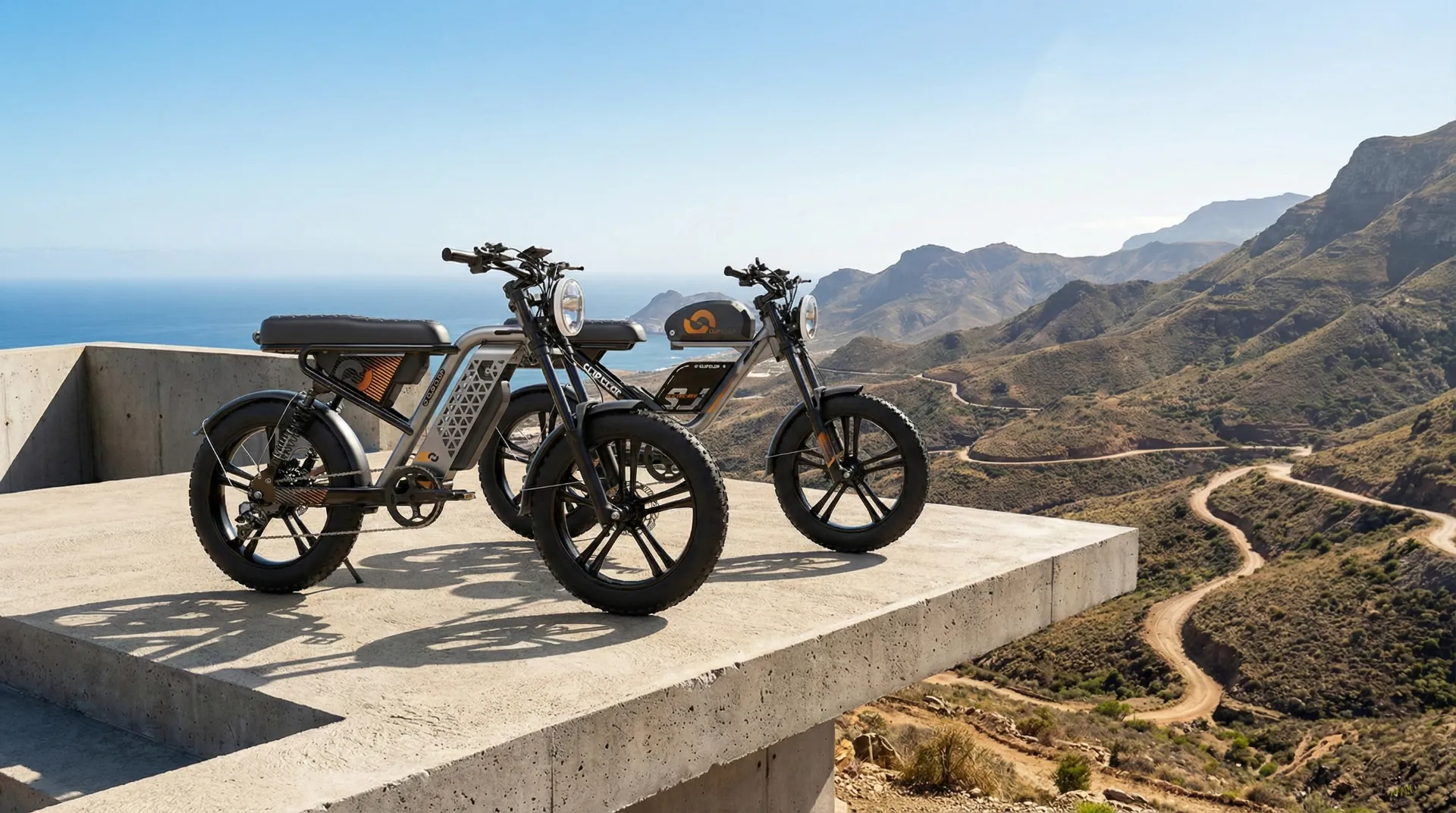
Здравствуйте, я Лео Лиан, и я passionate about electric off-road bikes. Being a part of Guangzhou Clipclop’s team, my world revolves around designing, testing, and, most importantly, learning how to make a mountain e-bike truly exceptional. It’s a passion that I pour not just into our products, but also into our blog, podcast, and conversations I have with partners like yourself on LinkedIn and social media. Clipclop is not just a manufacturer; we are partners to a global distribution network, rental houses, and B2B customers who demand more than a bicycle. They must be dependable, function, and know the market intimately. What we’re doing today is giving you a tour in the machine. We’re going to break down the anatomy of a great off-road e-bike, and we’re going to use our new L1 Pro as an example. This isn’t hyperbole marketing; this is the real engineering and compromise strategy that brings a product up to the trail and B2B requirements. We’ll examine the essential balance among power, range, and control that defines a top machine and how selecting the right components is crucial to any business looking to make an investment in a fleet of eMTBs.
What is the Heart of a Modern Off-Road E-Bike?
The heart of any electric bike is the powertrain, and that is where a truly rugged e-bike gets its badges. To any serious electric bike dealer, an understanding of the fineries of the motor and battery system is not a choice. It’s the user experience heart and the cyclists’ reliability cornerstone. Let’s start with the motor. For the L1 Pro, we selected a 48V 750W Brushless motor. Why that specific rating? A 750W motor strikes the sweet spot for the heavy-duty torque required to haul up steep pitches and accelerate swiftly on challenging terrain. It provides the oomph to pull riders up through muddy sections or push over rock hurdles without losing steam. Brushless technology is required here because it offers more efficiency, longer life, and minimal maintenance—a big concern for rental fleet operators and distributors who need to optimize uptime. Intelligent management, though, renders power useless without it. That’s why intelligent brushless controller 48V is paired with the motor. It’s not an on/off switch; it’s the brain of the operation, controlling power delivery to be smooth and intuitive. It cuts out the staccato start-ups and makes the power sense like a smooth amplification of the rider’s input, especially in pedal-assist mode. That level of precision is what sets a high-end product apart from an off-the-shelf one. We’ve seen dozens of B2B customers go through poorly assembled systems leading to premature failure and customer complaints. The powertrain must be a flawless, perfectly compatible system, designed and developed to withstand the repeated rigors of off-road travel. It’s this precise integration that builds brand trust and ensures your customers come back again and again for that exciting, reliable ride.
Why Does Battery Capacity Mean So Much to B2B Operations?
If the motor is the heart, the battery is the lungs. For an off-road B2B business, range anxiety is a costly and consequential problem. For guided tours, rental fleets, or retail riders, a half-way-packed bike to adventure is a logistical disaster and a reputational blow. That’s why we equipped the L1 Pro with a massive 48V 30AH lithium battery. Let’s set that in context. The Ah rating is a straight measure of how far you will be able to go. The majority of consumer grade e-bikes are between 10-15Ah. At 30Ah, we are more than doubling the range and run time. This works out to an incredible 1:1 PAS range of up to 100km. For a rental business, this means one bike potentially having the ability to see several customers per single battery, greatly reducing downtime and labor expenses related to battery swaps and charging. To a distributor, it’s a sound sales pitch that works to dispel one of the big fears of potential customers. The choice of lithium-ion chemistry is deliberate; it has the best energy density-to-weight ratio, and the bike won’t end up too heavy and cumbersome. The built-in battery management system (BMS) is also important to safety and longevity. It protects against overcharging, over-discharging, and thermal runaway. When we talk with our B2B customers, we’re always quick to point out that the battery is not a part to be purchased off the shelf; it’s an investment in a long-term asset. Spending money on a high-capacity, high-quality battery system right upfront pays dividends in the form of greater customer satisfaction, reduced operational overhead, and an overall better, hassle-free user experience.
How Does the Frame Define an E-Bike’s Performance and Durability
The frame is the skeleton of the e-bike, the base from which everything else follows. Its geometry and material decide the way the bike handles, how responsive it is, and how much abuse it can take. For the L1 Pro, we ordered a 6061 Aluminum Alloy Frame. This specific alloy is the industry standard for a reason. It’s infused with magnesium and silicon, and it’s solution heat-treatable, which gives it an incredible strength-to-weight ratio. It’s significantly lighter than a steel frame, making the bike more agile and easier to handle on technical trails, and it’s far more cost-effective than carbon fiber, allowing us to deliver a high-performance machine at a price point that makes sense for B2B investment. But the material is only half the story. The frame geometry is specifically designed for all-terrain stability. We set out to create a design that provides a confident ride, with aggressive trail handling balanced with comfort for all-day use. Welds are accurate, reinforced at high-stress areas like the head tube and bottom bracket to handle the enormous forces generated by a heavy motor and hard riding. Frame size specification is intended to accommodate a wide range of riders, a consideration needed for rental fleets. Moreover, the frame seamlessly integrates the battery, protecting it from harm while lowering the bike’s center of gravity for better handling. For any electric bike distributor or OEM business partner, checking the frame is not just checking a spec sheet; it’s understanding the philosophy of engineering which goes behind it. It’s the difference between a bike that’s inspiring and feels real and one that feels uncertain and floppy when the trail gets hard.
What is the Function of Suspension on a Genuine All-Terrain E-Bike?
When you get off the pavement, suspension is no longer a nicety but a stern necessity. It’s the most important link between the trail and the rider, with traction, control, and comfort riding on it. A rigid bike will only bounce off of obstacles, offering an unpleasant ride and loss of traction. That is why the L1 Pro features an Aluminum Alloy Suspension front fork. It is designed to absorb the rough shocks from rocks, roots, and drops while keeping the front wheel on the ground. When the front wheel is in contact with the ground, you then have steering capability and braking grip, both of which are needed for safety. The aluminum alloy construction of the lowers keeps unsprung weight to an absolute minimum, allowing the suspension to react more quickly and effectively to varied trail surface conditions. While a supplemental level of comfort and capability is provided with a full-suspension system, the greatest performance value for a remarkably broad range of off-road and trail-riding conditions is found in a high-performance front suspension fork. For our B2B clients, especially those that operate rental fleets of bikes in mountainous or forest environments, stable suspension is a key factor in customer satisfaction and safety. It makes riders fresher, so they can ride longer and ride harder trails with confidence. The suspension system on a hard-tail e-bike must be robust enough to handle the increased weight and speed of an electric-assist vehicle, and the components we’ve selected for the L1 Pro are designed particularly for this rigorous use, where they offer durability and consistent performance ride after ride.
Why Hydraulic Brakes Are Non-Negotiable for High-Performance E-Bikes?
Punching at 51km/h and carrying the weight penalty of a motor and battery, an off-road e-bike can generate huge momentum. Having the ability to control that speed is not just a performance feature; it’s the single most important safety system on the bike. That’s why we flat-out required Hydraulic brakes on the L1 Pro. Compared to cable-operated mechanical disc brakes, hydraulic brakes use a precise sealed system of fluid. This has two vast advantages. First, the braking force is far greater and much more controllable. The rider can achieve massive braking pressure with one or two fingers, keeping his hands securely on the handlebars for enhanced control. Second, the modulation is greatly enhanced. The rider is able to feel the brakes catch and feather them in control to prevent wheel lock-up and skids, which is needed when riding loose conditions like dirt or gravel. Liability and safety must be first for any company placing riders on such motorcycles. equipping a fleet with hydraulic brakes is an excellent and necessary choice. It provides the stopping power necessary to ride safely over unexpected obstacles and steep grades. Further, when it comes to maintenance in high-volume off-road B2B operations, hydraulic systems self-compensate for pad wear, reducing the constant fiddling that comes with mechanical systems. The increased power, control, and reliability make hydraulic brakes an integral, non-negotiable component of any hard-core, aggressive e-bike.
How Do Components Like Gearing and Tires Impact a Bike’s Versatility?
A good motor and frame are only the start. The components that transfer the rider’s and the motor’s power to the trail define the actual versatility of a bike. For gearing, we equipped the L1 Pro with a Shimano 7-speed system. Shimano is a name synonymous with the world of cycling, one that hollering confidence in end-users and admired by every experienced mechanic. A 7-speed cassette provides a wide enough gear range to overcome stiff hills and fast flat sections. It allows the rider to find the perfect cadence, augmenting the pedal-assist feature of the motor to provide maximum efficiency and battery life. It’s a proven, hardwearing solution with little more than regular maintenance to keep it going, a major consideration for fleet managers. And tires. We chose fat 20″ x 4.0 tires that are wide. This width offers a large contact patch with the ground, offering excellent traction in a huge range of conditions—soft sand and snow, mud and loose rock. The large air volume also acts as a type of secondary suspension, dampening smaller trail chatter and smoothing out bumps. This choice significantly expands the bike’s usable terrain and application scenarios and makes it a true all-season, all-terrain vehicle. For a distributor, this versatility is the primary selling feature. It makes the bike marketable to a wider group, from beach cruisers to mountain explorers, maximizing its market potential.
What are the “Invisible” Features That Make a B2B E-Bike Standout?
Beyond the big guns, it’s the thoughtful inclusion of little but crucial features that takes an e-bike from good to great, especially in a B2B environment. The Multifunctional LCD display on the L1 Pro is one such example. It’s the rider’s command center, providing key information at a glance: speed, battery level, distance covered, and assist mode. This is important information for keeping a ride going and, in the case of a rental shop, usage and service interval monitoring. We also installed a complete lighting package, including an all-around high-performance headlight, rear turn signal taillights, and wheel reflectors. It’s not just about regulations; it’s a critical safety feature that puts the useful hours on the bike in the early morning or late afternoon and significantly increases rider visibility in all conditions. These are not an afterthought; they are designed into the bike’s electrical system in order to provide reliability and usability. These details speak to a deep appreciation for the actual use scenario. They show the bike was not just designed to be ridden, but to be used—every day, every day, in varying conditions. For an electric bike distributor or fleet operator, these integrated, high-end features reduce the necessity for aftermarket upgrades, simplify the maintenance process, and ultimately provide a safer, more complete, more professional product to the end user. It’s this dedication to the total user experience that builds a reputation for quality and dependability.
How Can B2B Partners Maximize Their ROI with the Right E-Bike?
For our B2B customers, an e-bike is more than a bike; it’s an investment. The intent is to achieve the maximum Return on Investment (ROI) through durability, satisfaction of the customer, and operation efficiency. The choice of an e-bike is the most critical decision in this regard. A bike like the L1 Pro is crafted from scratch with the B2B market in mind. Every aspect of selection is thoroughly balanced among performance, dependability, and serviceability. The 6061 Aluminum Alloy Frame is durable. The 48V 750W Brushless motor and Shimano 7-speed gearbox are laboratory-tested, low-maintenance workhorses. The massive 48V 30AH lithium battery delivers maximum uptime with minimal daily operational stress. Hydraulic brakes and intrinsic safety features minimize risk and safeguard the rider and the enterprise. By selecting a bike designed for the abuse of commercial duty, you are directly reducing future costs on repair, upkeep, and failure of parts. You are investing in a machine that will deliver a solid, high-quality experience to your clients, which ultimately feeds into positive reviews, repeat business, and word of mouth. Our service at Clipclop as your partner exceeds the sale. We provide you with the technical support and advice you require to build a successful e-bike program. Right product is the foundation, and with a truly rugged e-bike, you are building your company on rock.
At Clipclop, we are driven by the desire to apply our extensive industry knowledge towards making electric off-road motorcycles that empower our B2B clients. We know the distinct challenges and opportunities inherent in distributors, wholesalers, and rental fleet managers in the international market.
Should you have any enquiries about the appropriate e-bike choice, fleet setup, or evaluating custom OEM possibilities, we invite you to approach us. We specialize in the manufacturing and exporting of high-performance electric off-road bicycles and provide full-scale, one-stop technical support services to complete vehicle solutions to brand partners and distributors.
Discuss with us today on how we can help you succeed.
Ссылки:
- Upway. (2023). How to choose your electric bike motor. https://en.upway.be/pages/guide-motor
- BikeExchange. (n.d.). A Guide to E-Bike Batteries. https://www.bikeexchange.com/en-US/featured/e-bike-motors
- Bicycling. (2024). A Guide to E-Bike Classes. https://www.bicycling.com/bikes-gear/a62570670/class-of-ebike/



 English
  Spanish
  Portuguese
  Russian
  Arabic
  French
  Dutch
Dutch  German
  Danish
