

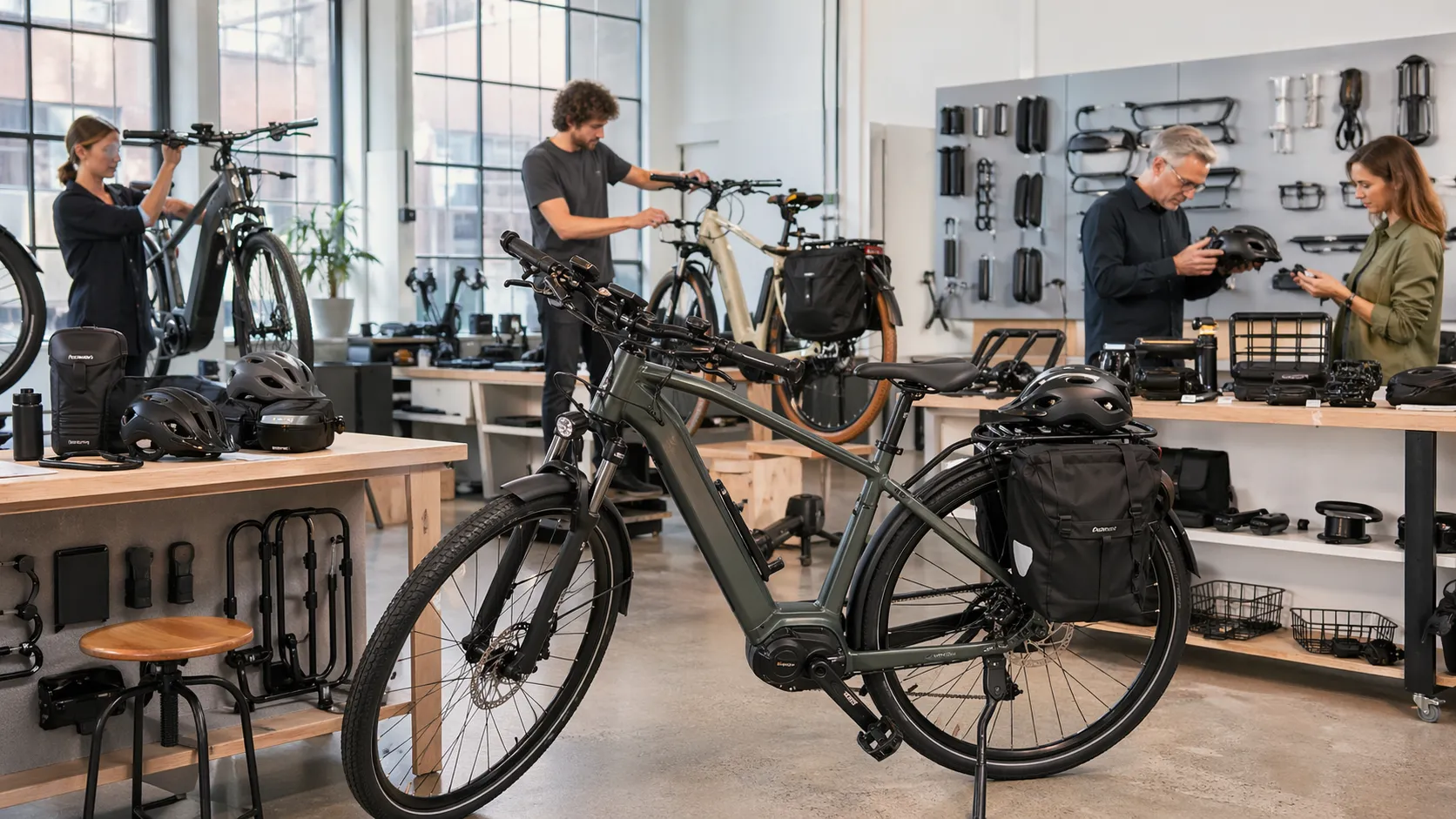
El mercado de bicicletas eléctricas ha estado calentándose durante varios años. Las marcas principales se han diversificado en líneas de bicicletas eléctricas, y un creciente número de actores menores han inundado el espacio — creando un paisaje que se ha vuelto intensamente competitivo y, francamente, agotador navegar. Aunque el mercado de bicicletas eléctricas en sí muestra señales de saturación en ciertos segmentos, hay una oportunidad más silenciosa pero convincente sentada justo al lado: accesorios para bicicletas eléctricas. Para los fabricantes dispuestos a mirar más allá de la bicicleta en sí, los accesorios representan un punto de entrada más accesible con márgenes más saludables y una competencia directa menos intensa.
¿Qué son exactamente los accesorios para bicicletas eléctricas?
Los accesorios para bicicletas eléctricas abarcan un amplio rango de productos. Algunos son esenciales para el funcionamiento de la bicicleta — paneles de visualización, paquetes de batería, controladores y motores — mientras que otros se adaptan a la bicicleta o al ciclista para mejorar la experiencia. En esta última categoría es donde los fabricantes pequeños y medianos a menudo encuentran la mayor tracción: soportes para teléfonos, sistemas de bloqueo, luces, cestas para botellas de agua, espejos, cascos, guantes y gafas, todo esto encaja en este espacio. A diferencia de los componentes centrales de bicicletas eléctricas que requieren una profunda experiencia técnica y una inversión significativa, muchos accesorios pueden diseññarse, prototiparse y llevarse al mercado con una inversión relativamente modesta.
Esa baja barrera de entrada es precisamente lo que hace atractivo este mercado para emprendedores y fabricantes fuera de la industria de bicicletas eléctricas. No necesitas dominar el software de controladores de motor ni negociar con proveedores de celdas de iones de litio. Necesitas entender lo que realmente quieren los ciclistas — y esa información es sorprendentemente accesible.
La oportunidad de mercado global
Los números detrás de la adopción de bicicletas eléctricas son difíciles de ignorar. Europa, especialmente, tiene una cultura cíclica profundamente arraigada. En los Países Bajos, las bicicletas son casi universales — el 99,1 % de la población las posee. Dinamarca está en el 80,1 %, y Alemania en el 76,1 %. Solo Alemania tiene aproximadamente 62 millones de bicicletas en uso activo. Cuando los gobiernos comenzaron a subvencionar la compra de bicicletas eléctricas bajo iniciativas de viaje verde — aceleradas por las preocupaciones de seguridad energética tras el conflicto Rusia-Ucrania — la adopción se aceleró aún más.
Para 2022, el mercado global de bicicletas eléctricas alcanzó los 49.700 millones de dólares, con 51,25 millones de unidades enviadas ese año. Las proyecciones de la industria sugieren que esto superará el marca de los 100 mil millones en los próximos años. Para los fabricantes de accesorios, esta trayectoria de crecimiento es prometedora: cada nueva bicicleta eléctrica vendida es un cliente potencial para accesorios, y a diferencia de las propias bicicletas, los accesorios son consumibles, mejorables y atraen a una demografía más amplia — incluyendo a ciclistas mayores que aprecian la pedaleo asistido de una bicicleta eléctrica pero que quizás no habían considerado la bicicleta antes.
La comparación con los vehículos eléctricos es ilustrativa aquí. La barrera de costo para cambiar de una bicicleta tradicional a una eléctrica es sustancialmente menor que la barrera para cambiar de un automóvil de gasolina a un EV. Esa menor fricción se traduce en una adopción más rápida, que se traduce en un mercado direccional más grande para todo lo que rodea a la bicicleta eléctrica — incluyendo accesorios.
Por qué los accesorios para bicicletas eléctricas son un negocio viable
Construir y vender bicicletas eléctricas requiere recursos significativos. Pero los accesorios operan sobre una lógica económica fundamentalmente diferente — y esa lógica favorece a los fabricantes más pequeños y ágiles.
Demanda de mercado fuerte en regiones clave
Los mercados en Europa y América del Norte muestran una demanda sólida y creciente de accesorios para bicicletas eléctricas. Los usuarios de ciclovías en estas regiones han abrazado las bicicletas eléctricas no solo para el commute, sino también para ocio y fitness. Ese caso de uso más amplio impulsa la demanda de accesorios en casi todas las categorías — candados de seguridad, rastreadores GPS, soportes para teléfonos, espejos, guantes, luces y más, todos ven un volumen de ventas significativo en plataformas como Amazon.
Costos más bajos y presión en la cadena de suministro
Los accesorios suelen tener un costo de materiales más bajo que los cuadros de bicicletas o los sistemas eléctricos. Las cadenas de suministro para la mayoría de las categorías de accesorios están bien establecidas en centros de fabricación como China, Vietnam y Taiwán — lo que significa tiempos de entrega más cortos y menos capital atado en inventario. Las barreras técnicas para entrar son también comparativamente modestas, especialmente para categorías como soportes, fundas y ropa deportiva donde el diseño y la ergonomía importan más que la tecnología propietaria.
Considere el sencillo soporte para teléfono como ejemplo. Para entusiastas del ciclismo que usan aplicaciones de navegación GPS o seguimiento de fitness, un soporte para teléfono es casi equipo esencial. En Amazon, un soporte para teléfono vendido a 23.99 tiene conocido un volumen mensual de ventas que excede las 2,000 unidades. Ese volumen, en una categoría con baja complejidad de fabricación, se traduce en ingresos significativos con márgenes manejables.
Los datos de la categoría de accesorios para bicicletas eléctricas en Amazon muestran la oportunidad de manera clara: análisis de 225 productos relacionados con bicicletas eléctricas encontró ventas combinadas de 72,574 unidades y ventas agregadas que exceden los 618 millones. Estas cifras no son aisladas — representan una demanda consistente en un amplio rango de productos.
Tendencias favorables en el comportamiento del consumidor
Varias macro tendencias están convergiendo para expandir el mercado de accesorios para bicicletas eléctricas. El viaje verde ya no es una preocupación niche — es una prioridad política para gobiernos en Europa, América del Norte y, cada vez más, en Asia. La congestión urbana continúa empeorando en las principales ciudades, lo que hace que las bicicletas eléctricas sean una solución atractiva para el último tramo del viaje. La conciencia ambiental de los consumidores está aumentando, especialmente entre las demografías más jóvenes que son más propensas a ver las bicicletas eléctricas como una alternativa sostenible a los viajes en auto.
Lo que esto significa para los vendedores de accesorios es que la base de consumidores de bicicletas eléctricas aún está en una fase temprana — muchos ciclistas son nuevos en el ciclismo en general, y sus necesidades de accesorios aún están siendo establecidas. Las necesidades básicas como candados y luces vienen primero, seguidas de mejoras de comodidad y conveniencia. Esta escalada gradual de compras de accesorios refleja el patrón visto en otros mercados de equipos recreativos y sugiere una larga trayectoria de crecimiento a medida que la base instalada de ciclistas de bicicletas eléctricas continúa expandiéndose.
Lo que esto significa para fabricantes y vendedores
Si usted es un fabricante o vendedor evaluando entrar en el espacio de accesorios para bicicletas eléctricas, el momento actual ofrece una ventana genuina. El mercado es lo suficientemente grande para soportar a múltiples jugadores, lo suficientemente competitivo como para recompensar la diferenciación, y lo suficientemente joven como para tener aún espacio significativo para establecer posición antes de que se sature.
Varios estrategias tienden a performar bien en este espacio. Primero, enfoque en categorías donde la durabilidad y el diseño específico para ciclistas importan — accesorios que se sienten hechos a medida para ciclistas de bicicletas eléctricas (en lugar de productos genéricos de ciclismo) comandan lealtad y a menudo tienen márgenes más altos. Segundo, preste atención a las tendencias regulatorias: ciertos mercados están comenzando a exigir accesorios de seguridad específicos para bicicletas eléctricas, lo que crea oportunidades de demanda forzada. Tercero, considere el enfoque demográfico: los ciclistas mayores son entre los segmentos de clientes de bicicletas eléctricas más rápidos en crecer, y sus preferencias de accesorios (comodidad, estabilidad, facilidad de uso) difieren significativamente de los ciclistas recreativos más jóvenes.
El mercado casi seguramente continuará creciendo, y el ecosistema de accesorios que lo rodea crecerá con él. Para los fabricantes dispuestos a invertir en comprender las necesidades de los ciclistas — en lugar de simplemente copiar lo que ya está en el mercado — la oportunidad es real y accesible.
Preguntas frecuentes: Oportunidades de negocio en accesorios para bicicletas eléctricas
- ¿Son los accesorios para bicicletas eléctricas un negocio rentable? Sí. Los accesorios suelen tener costos de fabricación más bajos y menor complejidad en la cadena de suministro que las propias bicicletas eléctricas, mientras que la demanda crece junto con el mercado de bicicletas eléctricas en expansión. Categorías específicas como soportes para teléfonos, candados y luces muestran ventas sólidas en plataformas de comercio electrónico.
- ¿Cuál es el tamaño del mercado global de bicicletas eléctricas? El mercado global de bicicletas eléctricas alcanzó aproximadamente los 49.700 millones de dólares en 2022, con alrededor de 51,25 millones de unidades enviadas. Se proyecta que crecerá más allá de los 100 mil millones en los próximos años.
- ¿Qué países tienen la mayor adopción de bicicletas eléctricas? Los países europeos lideran en propiedad de bicicletas eléctricas. Los Países Bajos tienen una propiedad casi universal de bicicletas en el 99,1 % de la población, Dinamarca en el 80,1 %, y Alemania en el 76,1 %.
- ¿Qué tipos de accesorios para bicicletas eléctricas se venden mejor? Accesorios de seguridad (candados, rastreadores GPS), accesorios de comodidad (soportes para teléfonos, espejos), equipos de seguridad (luces, cascos, guantes) y artículos de comodidad tienen buenas ventas. La demanda abarca tanto categorías funcionales como recreativas.
- ¿Necesito experiencia técnica para fabricar accesorios para bicicletas eléctricas? No necesariamente. Muchas categorías de accesorios — soportes, ropa deportiva, bolsas — requieren experiencia en diseño y ergonomía más que ingeniería eléctrica o mecánica profunda. Las barreras técnicas son generalmente más bajas que para componentes centrales de bicicletas eléctricas.
Guangzhou Clipclop Technology Co. Ltd. se especializa en diseño y fabricación de accesorios para bicicletas eléctricas, sirviendo a ciclistas y negocios en Europa, América del Norte y más allá. Para consultas de productos, visite clipclopbike.com.



 English
  Spanish
  Portuguese
  Russian
  Arabic
  French
  Dutch
Dutch  German
  Danish
