
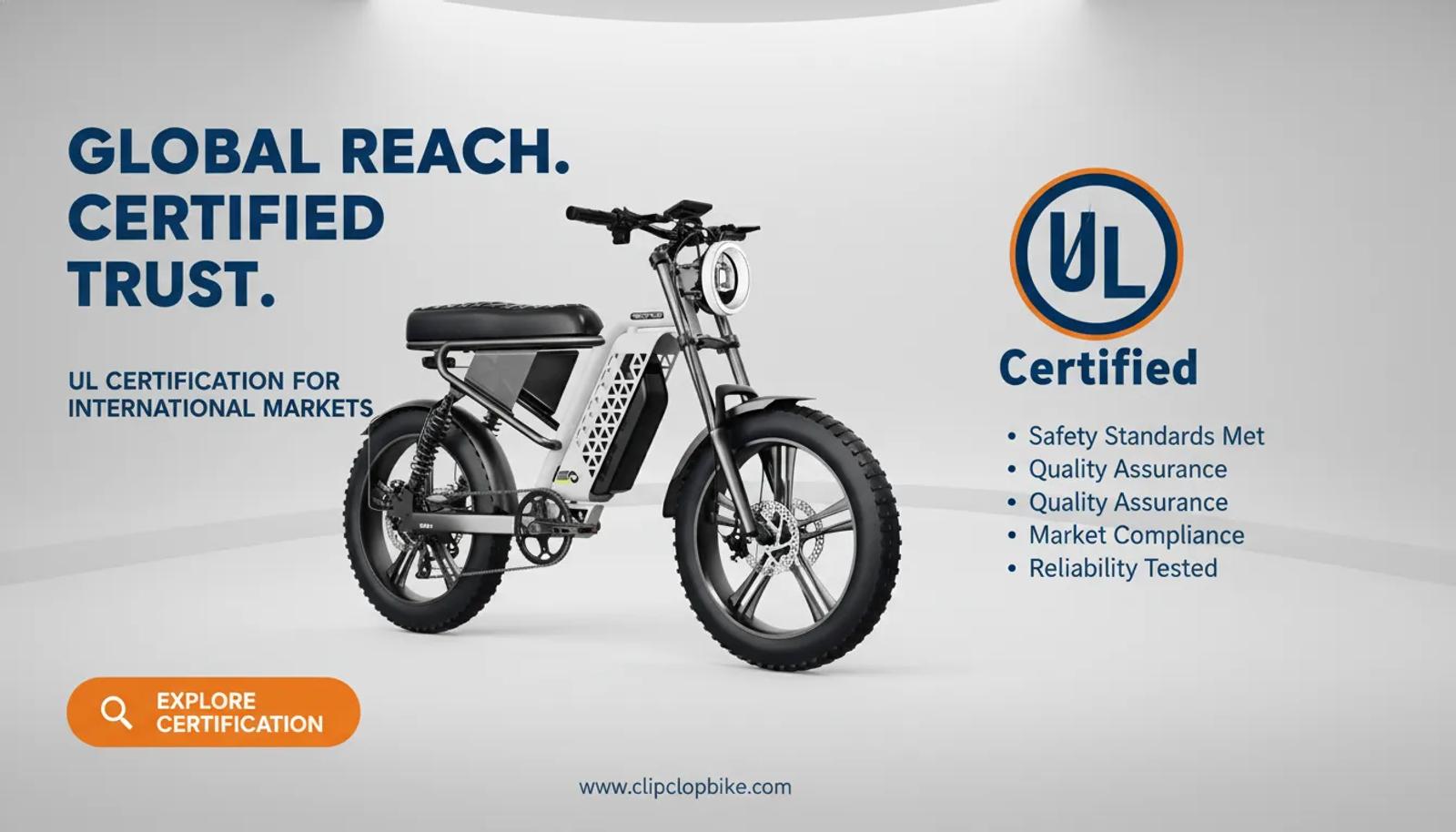
دليلك B2B المعمق لشهادة UL لـ E-Bike والامتثال الدولي
أتقن شهادة UL للدراجة الكهربائية للأسواق العالمية. تعرف على UL 2849 وUL 2271 والامتثال الدولي لضمان سلامة B2B وفتح السوق الأمريكية.
أتقن شهادة UL للدراجة الكهربائية للأسواق العالمية. تعرف على UL 2849 وUL 2271 والامتثال الدولي لضمان سلامة B2B وفتح السوق الأمريكية.
مرحبًا، أنا ليو ليانغ، ولأكثر من عقد، كان عالمي يدور حول التفاصيل الدقيقة للدراجات الكهربائية المخصصة للطرق الوعرة. وبصفتي عضوًا رئيسيًا في شركة Guangzhou Clipclop E-Bike Tech، يتجاوز شغفي مجرد بناء الدراجات إلى ريادة السلامة والموثوقية والأداء في صناعة سريعة التطور. ومن خلال مدونتنا وملفاتنا الصوتية وقنواتنا على وسائل التواصل الاجتماعي، كرّستُ نفسي لتبسيط التكنولوجيا التي تشعل مغامراتنا. واليوم، أريد أن أتناول موضوعًا بالغ الأهمية لشركائنا في مجال B2B — الموزعين وتجار الجملة ومشغلي أساطيل التأجير — وهو شهادة UL للأسواق العالمية.
يمكن للشركاء التجاريين فحص بنيتنا التحتية الصناعية عبر صفحة منشأة تصنيع الدراجات الكهربائية OEM/ODM، ومراجعة التكوينات القياسية عبر CS01 Fat Tire & CS04 Commercial Utility Platforms، أو طلب شروط تسليم الحاويات FOB مباشرة عبر بوابة طلب عروض الأسعار التجارية (الحد الأدنى 20 وحدة).
بالنسبة لأي عمل يستورد أو يبيع دراجات كهربائية، فإن الامتثال للمعايير الدولية ليس ممارسة جيدة فحسب، بل هو متطلب للوصول إلى السوق، وسمعة العلامة التجارية، وقبل كل شيء، سلامة المستهلك. تختلف اللوائح من منطقة إلى أخرى، ويمكن أن يكون هناك مشهد واسع منها.
لكن علامة واحدة للجودة والسلامة أصبحت المعيار الذهبي للوصول إلى سوق أمريكا الشمالية المربح: شهادة UL. هذه ليست مجرد ملصق آخر على الإطار. إنها ضمان شامل بأن المنتج قد خضع لاختبار مستقل صارم لتخفيف المخاطر مثل الحرائق الكهربائية وأعطال النظام.
تكمن نقطة الألم لدى الكثير من شركائنا في عدم اليقين والتعقيد المحيط بهذه الشهادات. أي المعايير تنطبق على سوقي؟ ما الفرق بين UL 2849 وUL 2271؟ كيف أتأكد من أن المنتجات التي أتعاقد عليها معتمدة فعلاً — وليست فقط "متوافقة"؟ هذه هي الأسئلة التي تُسهِر المستوردين. يمكن أن تكون عواقب الخطأ وخيمة، بدءًا من احتجاز الشحنات عند الجمارك ووصولاً إلى أعطال المنتج الكارثية التي قد تؤدي إلى مسؤولية قانونية وضرر لا يُعوَّض لسمعة العلامة التجارية.
إن مفتاح التنقل في هذا الأمر، بحسب خبرتي، هو المعرفة والشراكة. يتعلق الأمر بالعمل مع مصنع لا يفهم هذه المعايير فحسب، بل بنى كامل عمليتي التصميم والإنتاج حولها. في Clipclop، لا ننظر حقًا إلى شهادة السلامة باعتبارها العائق الأخير الذي يجب تجاوزه، بل باعتبارها الأساس الذي تُبنى عليه كل واحدة من دراجاتنا الكهربائية.
لماذا تُعد شهادة UL غير قابلة للتفاوض للوصول إلى السوق الأمريكية؟
يعني ذلك أنه بالنسبة لأي علامة تجارية دولية للدراجات الكهربائية، أو موزع، أو شريك OEM يفكر في الولايات المتحدة كجزء من خططه، فإن فهم مدى أهمية دور شهادة UL أمر بالغ الأهمية. فقد انتقلت بسرعة كبيرة من علامة جودة "مُستحسنة" إلى شرط "ضروري" للدخول إلى السوق. وكان المحرك هو القلق المتزايد بشأن سلامة بطاريات الليثيوم-أيون وأنظمتها الكهربائية المستخدمة في وسائل التنقل الصغيرة.
لم تُثر الحوادث البارزة لحرائق البطاريات الهيئات التنظيمية فحسب، بل أثارت قلق المستهلكين المتزايدين الذين يطالبون بمستوى أعلى من ضمان السلامة. وقد دفع هذا القلق لجنة سلامة المنتجات الاستهلاكية الأمريكية إلى أن تحث بشدة صناعة الدراجات الكهربائية بأكملها على الامتثال لمعايير UL المعمول بها (تحديدًا UL 2849)، مما يقلل بشكل كبير من خطر الحريق والإصابة الحالي.
لم يعد هذا الدفع مجرد توصية. فقد اتخذت مدن كبرى إجراءات تشريعية. فقد سنت مدينة نيويورك، على سبيل المثال، قانونًا يقتضي أن تكون جميع الدراجات الكهربائية والدراجات البخارية التي تُباع أو تُؤجَّر أو تُستأجر داخل المدينة معتمدة من مختبر اختبار معترف به وطنيًا وفقًا لمعيار UL 2849 للنظام الكهربائي الكامل وUL 2271 لحزم البطاريات.
هذا يُرسي سابقة قوية جدًا، ومن المرجح أن تحذو مدن وولايات أخرى حذوها. وبالنسبة لعملائنا في B2B، يعني هذا أن الحصول على منتجات غير معتمدة لم يعد مجرد مخاطرة — بل أصبح عائقًا مباشرًا للوصول إلى بعض أكبر أسواق البلاد. إن وجود حاوية من الدراجات الكهربائية مرفوضة بسبب افتقارها إلى شهادة NRTL الصحيحة هو كابوس مالي ولوجستي لا يريد أي مستورد التعامل معه.
إلى جانب هذه الواجبات القانونية، توجد مسألة مهمة تتعلق بالمسؤولية والتأمين. إذا تعطل منتج وتسبب في أضرار بالممتلكات أو إصابات، فإن تجار التجزئة والموزعين للمنتجات غير المعتمدة يتعرضون لمسؤولية قانونية ومالية ضخمة. كما أن شركات التأمين أصبحت أكثر صرامة؛ إذ تطالب بشكل متزايد بإثبات شهادة UL قبل منح التغطية.
وقد كانت NBDA تؤدي دورها في تثقيف أعضائها حول هذا الأمر، وتخبر تجار التجزئة بشراء الدراجات الكهربائية فقط من الموردين الذين يمكنهم إثبات شهادة UL 2849 سارية. هذه رسالة واضحة من الخطوط الأمامية لتجار التجزئة: السوق ينظّم نفسه ذاتيًا، والطلب على المنتجات المعتمدة والآمنة قادم من كل الاتجاهات. بالنسبة لـ Clipclop وشركائنا، هذا ليس عبئًا؛ بل فرصة. فهو يتيح لنا التمييز بين منتجاتنا استنادًا إلى أعلى اعتمادات السلامة، مما يوفر لموزعينا نقطة بيع قوية والثقة بأنهم يقدمون منتجًا ليس عالي الأداء فحسب، بل موثوق سلامته.
تحميل كتالوج مصنع ClipClop لعام 2026 (PDF)
المواصفات الكاملة للدراجات الكهربائية، خيارات المحرك والبطارية، الحد الأدنى للطلب (MOQ) وتفاصيل تحميل الحاويات.
تفكيك المعيار الذهبي: ماذا يغطي UL 2849 حقًا؟
عندما نتحدث عن سلامة الدراجة الكهربائية، تتحول المحادثة حتمًا وبحق إلى UL 2849. ولكن بالنسبة للكثيرين — لنواجه الأمر، بعضنا يعمل في هذا المجال منذ وقت طويل — قد تكون تفاصيل ما ينطوي عليه هذا المعيار بمثابة صندوق مغلق بعض الشيء. لذلك دعونا نفتحه. إن UL 2849 ليس مجرد اختبار للبطارية؛ بل هو المعيار الشامل للأنظمة الكهربائية للدراجات الكهربائية.
نطاقه واسع عمدًا، وهو مصمم لتقييم النظام البيئي الكهربائي بالكامل للدراجة كوحدة متكاملة واحدة. هذا تمييز حاسم. قد تحتوي الدراجة على بطارية عالية الجودة ومعتمدة بشكل منفصل، ولكن إذا لم تتم إدارة تلك البطارية بشكل صحيح بواسطة وحدة التحكم في الدراجة أو لم تُشحن بواسطة شاحن متوافق، فإن خطر التعطل يظل قائمًا.
الاختبارات المدرجة في شهادة UL 2849 شاملة ويجب أن تُجرى بواسطة NRTL معترف به من OSHA. وهي تحلل كيفية تفاعل البطارية مع الشاحن ووحدة تحكم المحرك والأسلاك. إليك تفصيل لما يتم اختباره تحديدًا:
السلامة الكهربائية: يتم إجراء اختبار للنظام في ظروف مختلفة مثل الشحن الزائد، والقصر الكهربائي، وتقلبات الجهد، للتأكد من أن دوائر الحماية المدمجة تعمل بشكل صحيح تحت الضغط الشديد وتمنع المواقف التي قد تؤدي إلى ارتفاع الحرارة أو الاشتعال. كما يتم فحص إمكانية التعرض لصدمة كهربائية أثناء الشحن أو أوضاع التشغيل بشكل دقيق.
السلامة الميكانيكية: تحاكي هذه الاختبارات الضغوطات المادية في العالم الحقيقي. ويشمل ذلك اختبارات الاهتزاز والصدمات والسحق على حزمة البطارية ومبيتِها لضمان المتانة والاحتواء حتى في ظل الظروف القاسية. كما يتم فحص الأسلاك والموصلات للتأكد من قدرتها على تحمل إجهاد الاستخدام المنتظم دون تآكل أو انفصال.
المرونة البيئية: يجب أن يُعرَّض النظام الكهربائي لاختبارات الحرارة العالية والمنخفضة، إلى جانب اختبارات التعرض للماء لتقدير تصنيف IP الخاص بقدرته على العمل دون أعطال في أي نوع من الطقس. هذا مهم بشكل خاص لأن الدراجات المخصصة للطرق الوعرة يُتوقع منها أن تعمل في ظروف صعبة.
بالنسبة لمشترٍ في B2B، يمثل هذا المستوى من التدقيق ضمانتك ضد نقاط الفشل الأكثر شيوعًا. عندما ترى أن طرازًا مثل Clipclop M20F، بمحرك العجلة 48V 500W وإطاره القوي من سبائك الألمنيوم 6016، مبني ليتوافق مع معايير UL 2849، فهذا يعني أن كل مكون في نظام نقل الحركة الكهربائي الخاص به قد تم أخذه في الاعتبار.
لا يتعلق الأمر فقط بجودة الأجزاء الفردية، بل بسلامة تكاملها. هذا النهج الشامل هو ما يجعل UL 2849 المعيار الذهبي الحقيقي لسلامة النظام الكهربائي للدراجة الكهربائية، مما يوفر مستوى من الثقة لا يمكن لشهادات مستوى المكونات وحدها أن تضاهيه.
جوهر المسألة: لماذا تُعد شهادة UL 2271 لحزم البطاريات ضرورية
في حين أن UL 2849 توفر شهادة سلامة شاملة لكامل النظام الكهربائي للدراجة الكهربائية، فمن المهم جدًا التكبير على المكون الذي يخزن كل تلك الطاقة: البطارية. هنا يأتي دور UL 2271: المعيار الخاص بالبطاريات المستخدمة في تطبيقات المركبات الكهربائية الخفيفة (LEV).
فكر في الأمر بهذه الطريقة: إذا كانت UL 2849 تضمن سلامة النظام الكهربائي والوقودي للمركبة بأكملها، فإن UL 2271 هي المعيار المتخصص الذي يضمن أن "خزان الوقود" نفسه قد تم بناؤه ليكون آمنًا ومستقرًا قدر الإمكان. ونظرًا لأن الغالبية العظمى من حوادث حرائق الدراجات الكهربائية تنشأ من بطارية الليثيوم-أيون، فإن هذا المعيار هو الركيزة غير القابلة للتفاوض التي تحكم تطوير منتجاتنا في Clipclop.
تسلسل اختبارات UL 2271 صارم للغاية، وهو مصمم خصيصًا لإجهاد حزمة البطارية بكل طريقة ممكنة لتحديد كيفية تصرفها في حالات سوء الاستخدام والأعطال. لا يتعلق الأمر بما إذا كانت البطارية تحتفظ بشحنتها؛ بل يتعلق الأمر بخلق أسوأ السيناريوهات. تشمل الاختبارات الرئيسية:
اختبارات الشحن الزائد/التفريغ الزائد: يتم شحن البطارية بشكل زائد و/أو تفريغها بشكل زائد من خلال تطبيق جهود ومعدلات تفريغ أعلى بكثير من الحدود المحددة للتأكد من أن نظام BMS سيقوم بقطع الطاقة بشكل مناسب ومنع حالة خطيرة مثل الانفلات الحراري.
اختبار القصر الكهربائي: يحاكي هذا الاختبار قصرًا مباشرًا بين الأطراف الموجبة والسالبة للتحقق من أن ميزات السلامة الداخلية للبطارية يمكنها منع عطل كارثي.
اختبارات الإجهاد الحراري: تتكون هذه الاختبارات من تعريض البطارية لدرجات حرارة شديدة الحرارة والبرودة لاختبار استقرارها وأدائها تحت الإجهاد البيئي. "الانفلات الحراري" المرعب هو أحد المخاطر الكبرى التي يهدف هذا الاختبار إلى منعها.
تشمل اختبارات سوء الاستخدام الميكانيكي اختبارات السحق والصدمات والإسقاط والاهتزاز. القصد من جميع هذه الاختبارات هو ضمان أن البناء المادي للبطارية يمكنه تحمل المطبات والإسقاطات والاهتزازات الناتجة عن الاستخدام في العالم الحقيقي دون المساس بسلامة الخلايا أو الوصلات الداخلية.
بالنسبة لشركائنا في B2B، فإن تحديد بطاريات معتمدة من UL 2271 هو استراتيجية حاسمة لإدارة المخاطر. عندما نبني دراجة مثل Clipclop M20F، نستخدم بطارية ليثيوم Samsung 35E بقدرة 48V 14AH. ومن خلال ضمان أن هذه الحزمة تفي بمعايير UL 2271، فإننا نوفر طبقة سلامة قابلة للتحقق عند النقطة الأكثر أهمية في النظام.
إنه يطمئن الموزعين ومديري أساطيل التأجير إلى أن البطاريات التي يتعاملون معها ويشحنونها ويقدمونها للعملاء قد تم فحصها بدقة لمنع الحوادث ذاتها التي تُحدث عناوين الأخبار والمسؤوليات القانونية. إنه الالتزام الأساسي بالسلامة الذي يحمي المستخدم النهائي، وعملك، وسمعة الصناعة بأكملها.
التنقل في المتاهة العالمية: ما وراء UL إلى الامتثال الدولي
على الرغم من أن مفتاح سوق أمريكا الشمالية هو شهادة UL، فإن شركاءنا في B2B يعملون عالميًا، وتتطلب استراتيجية التصدير الناجحة معرفة أوسع بالامتثال الدولي. تضع مناطق مختلفة قواعدها ومعاييرها التنظيمية للدراجات الكهربائية.
يجب أن يمتلك المنتج الذي يدّعي أنه شريك تصدير الخبرة اللازمة للتعامل مع هذا التشتت، والذي يمكن أن يجعل المنتج متوافقًا في أكثر من منطقة. هذه المعرفة ضرورية للموزعين الذين قد يخدمون عملاء في بلدان مختلفة ذات تشريعات خاصة بها.
يمتلك الاتحاد الأوروبي معيارًا أساسيًا، وهو EN 15194. هذا معيار متناسق بموجب توجيه الآلات في الاتحاد الأوروبي ويشكل الأساس لإلصاق علامة CE على الدراجة الكهربائية، وهي خطوة ضرورية للبيع داخل الاتحاد الأوروبي. يغطي EN 15194 كلًا من الجوانب الكهربائية والميكانيكية لما يسميه "الدراجات ذات المساعدة الكهربائية" (EPACs).
يتضمن متطلبات أساسية مثل أقصى قدرة مستمرة مُصنّفة تبلغ 250 واط، ومحركات تتوقف عن العمل عندما تصل الدراجة إلى 25 كم/ساعة، والحد الأدنى من متطلبات سلامة البطارية وأداء الفرامل وقوة الإطار، مع الإشارة بشكل متكرر إلى معيار ISO 4210 للمكونات المشتركة مع الدراجات التقليدية.
بالنسبة لشركة مثل Clipclop، يعني هذا أننا بحاجة إلى القدرة على تكوين دراجاتنا للالتزام بحدود الطاقة والسرعة المحددة جدًا لشركائنا الأوروبيين. وهذا يتناقض بشكل صارخ مع حد الـ 750 واط (1 حصان) الأكثر شيوعًا في الولايات المتحدة.
خارج أمريكا الشمالية وأوروبا، تستمر أسواق أخرى متنوعة في تطوير مشهدها التنظيمي. تتبع أستراليا معايير شبيهة بالمعايير الأوروبية، في حين تعمل دول في جميع أنحاء آسيا وأمريكا الجنوبية على تطوير مجموعاتها الخاصة من القواعد واللوائح. وهنا تصبح قيمة خبرة الشركة المصنعة في الخدمات اللوجستية والامتثال العالمي ذات أهمية مضاعفة.
يتجاوز تصميم المنتج الصحيح مجرد التصميم الفعلي للمنتج؛ فهو ينطوي على وضع الملصقات الصحيحة، والوثائق الصحيحة للجمارك (مثل تقارير UN38.3 لنقل البطاريات)، والامتثال للوائح الكيميائية الإقليمية مثل REACH في الاتحاد الأوروبي. في Clipclop، يتمحور دورنا حول أن نكون شريكك في الامتثال. نحن نظل في طليعة هذه التطورات التنظيمية، مما يضمن أنه سواء كنت تستهدف المسارات الوعرة في كولورادو أو مسارات الدراجات في أمستردام، فإن المنتجات التي تتلقاها منا متوافقة تمامًا ومختبرة وجاهزة للسوق. هذا يقلل من المخاطر التي تتعرض لها ويُسهم في تسهيل طريق النجاح.
معايير السلامة العالمية للدراجات الكهربائية: مقارنة بين شركات B2B
| الميزة | UL 2849 | UL 2271 | EN 15194 |
| السوق الجغرافي الرئيسي | أمريكا الشمالية (التركيز على الولايات المتحدة) | أمريكا الشمالية (اعتراف عالمي) | الاتحاد الأوروبي |
| نطاق الشهادة | كامل النظام الكهربائي للدراجة الكهربائية (شامل: البطارية، الشاحن، المحرك، وحدة التحكم، الأسلاك) | حزمة البطارية فقط (على مستوى المكون للمركبات الكهربائية الخفيفة) | الدراجة الكهربائية بالكامل (EPAC) (يشمل النظام الكهربائي والمكونات الميكانيكية) |
| الغرض الأساسي | السلامة على مستوى النظام لمنع المخاطر الكهربائية والحرائق أثناء التشغيل والشحن. | التأكد من أن البطارية نفسها قوية وآمنة في ظروف الأعطال وسوء الاستخدام. | ضمان الامتثال للوصول إلى السوق في الاتحاد الأوروبي، مع تغطية لوائح السلامة والأداء. |
| التركيز الفني الرئيسي | تكامل النظام الكهربائي، السلامة الوظيفية، المتانة الميكانيكية، الاختبار البيئي. | الحماية من الشحن الزائد/التفريغ الزائد، اختبارات القصر الكهربائي، منع الانفلات الحراري، اختبارات السحق/الصدمات. | أقصى قدرة مستمرة 250 واط، قطع المساعدة عند 25 كم/ساعة، أداء الفرامل، قوة الإطار (ISO 4210). |
| الأهمية لشركاء B2B | ضروري للوصول إلى السوق الأمريكية، يخفف مخاطر المسؤولية الكبرى، علامة قوية لسلامة المنتج الشاملة. | طبقة سلامة تأسيسية حاسمة للمكون الأكثر تقلبًا؛ وغالبًا ما تكون شرطًا مسبقًا لـ UL 2849. | إلزامية لوضع علامة CE والبيع القانوني داخل سوق الاتحاد الأوروبي بأكمله. |
شرح عملية الشهادة: ما يحتاج مشترون B2B إلى معرفته
بالنسبة للموزعين وأصحاب العلامات التجارية، قد تُستخدم عبارة "معتمد من UL" بشكل فضفاض أحيانًا في المواد التسويقية. وهذه فخ كبير. نقطة ألم رئيسية لعملاء B2B هي الخوف من الاستثمار في خط إنتاج بناءً على ادعاءات سلامة زائفة أو مضللة. ولهذا السبب، من المهم جدًا معرفة ما ينطوي عليه الامتثال الحقيقي وكيف يتم التحقق منه. الشهادة الحقيقية ليست اختبارًا لمرة واحدة أو إقرارًا ذاتيًا من الشركة المصنعة، بل هي عملية صارمة ومستمرة تُجرى بواسطة جهة مستقلة معترف بها وطنيًا.
تبدأ رحلة الشهادة باختيار مختبر اختبار معترف به وطنيًا، أو NRTL. تُعد UL (Underwriters Laboratories) هي الجهة التي تضع المعيار، ولكن يمكن إجراء الاختبار بواسطة NRTLs متنوعة مثل SGS أو Intertek أو TÜV. النقطة الأساسية هنا هي أن المختبر يحتاج إلى اعتماد من جهة مثل OSHA في الولايات المتحدة لاختبار المعيار المحدد موضع النظر، بما في ذلك UL 2849.
بصفتنا مصنعًا، نرسل نظام الدراجة الكهربائية الكامل الخاص بنا — الدراجة، طراز البطارية المحدد، والشاحن — للتقييم. ثم يضع الـ NRTL المنتج عبر المجموعة الكاملة من بروتوكولات اختبار السلامة المحددة ضمن المعيار. دعني أؤكد لك، إنها شاملة وعادة ما تكون عملية تستغرق وقتًا طويلاً. إذا فشل أي مكون من النظام في اختبار، فإن فريقنا الهندسي يحتاج إلى العودة إلى نقطة البداية، وإعادة تصميم المكون أو النظام المخالف، وإعادة تقديمه للاختبار.
بمجرد اجتياز المنتج لجميع الاختبارات بنجاح، يصدر الـ NRTL الشهادة. لكن لا يتوقف الأمر عند هذا الحد. جزء حاسم وغالبًا ما يتم تجاهله من شهادة NRTL الحقيقية هو المراقبة اللاحقة. يُجري الـ NRTL عمليات تدقيق دورية وغير معلنة للمصنع للتأكد من أن المنتجات التي نقوم بتصنيعها بشكل مستمر مطابقة لتلك التي تم اختبارها واعتمادها في الأصل.
هذا يحمي من حالات الخداع حيث يتم استخدام "عينة ذهبية" لاجتياز الشهادة، بينما تُستخدم مكونات أرخص وغير متوافقة في الإنتاج الضخم. إذن كيف يمكن لشركائنا في B2B التحقق من هذه الادعاءات؟ أولاً، اطلب دائمًا رقم ملف الشهادة. إذا كان لديك هذا الرقم، فستتمكن من التحقق في قاعدة البيانات العامة لـ NRTL — مثل قاعدة بيانات UL Product iQ™ — للتأكد من أن الشهادة صالحة، وأي معيار ينطبق، وأي طرازات محددة مشمولة. لا تثق ببعض الشعارات على موقع ويب؛ طالب بإثبات قابل للتحقق. هذا الاجتهاد هو أفضل دفاع لك ضد مخاطر الامتثال وضمانك لسلامة المنتج.
اختيارات المواد والتصميم: كيف يؤثر الإطار والمكونات على السلامة والشهادة
لا تتعلق شهادة UL باجتياز الاختبارات الكهربائية فحسب، بل ترتبط جوهريًا باختيارات الهندسة والمواد منذ البداية. إن المتانة الميكانيكية للدراجة الكهربائية المخصصة للطرق الوعرة لا تقل أهمية عن سلامتها الكهربائية، نظرًا للضغوط التي تفرضها التضاريس الوعرة. يعمل الإطار، على وجه الخصوص، كعمود فقري للهيكل بأكمله، حيث يحمل البطارية، ويحمي الأسلاك، ويتحمل حمل الراكب والمحرك القوي إجمالًا.
بالنسبة لشركائنا في مجال التوزيع والتأجير، فإن المتانة الأكبر للإطار والأجزاء تترجم إلى تكاليف صيانة أقل، وعمر أطول للمنتج، وتحسين سلامة الراكبين.
في Clipclop، نبني إطاراتنا من سبائك الألمنيوم عالية الجودة 6061، كما هو الحال في طراز M20F الخاص بنا. تُستخدم هذه السبيكة تحديدًا بسبب نسبة القوة إلى الوزن الممتازة، ومقاومتها للتآكل، وقابليتها للتشكيل. يُعد الإطار القوي مهمًا من حيث شهادة السلامة. تتطلب اختبارات الإجهاد الميكانيكي أن يكون الإطار قادرًا على حماية حزمة البطارية من الصدمات التي قد تسبب تلفًا داخليًا للخلايا وحدوث حدث حراري محتمل.
يجب أن يضمن التصميم أيضًا توجيه جميع الأسلاك الكهربائية بطريقة لا تُقرص ولا تتآكل ولا تتضرر في الاستخدام العادي أو في حال سقوط الدراجة. هذه اعتبارات تصميمية يتم فحصها بدقة أثناء عملية الشهادة. لن يجتاز التصميم التقييم الميكانيكي الصارم إطار سيئ التصميم يسمح بضرر محتمل للأسلاك أو يفشل في تثبيت البطارية بشكل كافٍ.
تمتد اختيارات المكونات لتشمل عناصر مثل أنظمة الفرامل وحتى مواصفات حجم الإطار. تأخذ عملية الشهادة الدراجة ككل في الاعتبار. على سبيل المثال، إذا كانت الدراجة تستخدم محركًا قويًا بالعجلات بقدرة 48V 500W قادرًا على الوصول إلى سرعات 35 كم/ساعة، فيجب أن تتضمن أيضًا فراملًا متناسبة قادرة على استيعاب تلك الطاقة والسرعة بأمان وموثوقية. ستخضع هذه الفرامل لاختبارات مسافة الكبح والأداء تحت الحمل.
وبالمثل، فإن تقديم مجموعة من مواصفات حجم الإطار مهم لأسباب تتعلق بالراحة، كما أنه مهم أيضًا لتوزيع الوزن المناسب وخصائص المعالجة عبر مجموعة متنوعة من الراكبين المختلفين، وهو ما يعد مهمًا للاستقرار والسلامة العامة. بالنسبة لشركائنا في OEM، يعني هذا أنه عندما نعمل معهم على تصميم مخصص، فإن خبرتنا العميقة بهذه المعايير تمكننا من التوصية بتكوينات المواد والمكونات عالية الأداء والمصممة في الوقت نفسه من البداية لتحقيق الامتثال الدولي وشهادة السلامة. هذا النهج المتكامل يوفر الوقت، ويقلل تكاليف إعادة التصميم، وينتج منتجًا نهائيًا أكثر أمانًا وموثوقية.
التطبيق الواقعي: مطابقة مواصفات الدراجة الكهربائية لاحتياجات عملاء B2B
بالنسبة لعملائنا في B2B — سواء كانوا شركة تأجير تُعد أسطولًا في حديقة وطنية أو موزعًا يزود متاجر التنقل الحضري — يجب أن تترجم المواصفات الفنية في ورقة البيانات إلى أداء وموثوقية في العالم الحقيقي. وهنا يتألق فعليًا خبرتنا في Clipclop: في هندسة دراجات ليست متوافقة فحسب، بل مناسبة تمامًا للتضاريس وسيناريوهات الاستخدام المقصودة. يحتاج الموزع إلى أن يقول لعملائه بثقة: "هذه الدراجة مبنية للمسارات التي تريد ركوبها"، ويحتاج مشغل التأجير إلى ضمان أن أسطوله يمكنه تحمل موسم كامل من الاستخدام المكثف مع الحد الأدنى من التعطل.
لنأخذ على سبيل المثال Clipclop M20F الخاصة بنا. بشكل أساسي، جميع مواصفاتها الأساسية هي إجابات على احتياجات سوقية معينة. يوفر محرك العجلة 48V 500W الذي يبلغ ذروته 1200 واط عزم الدوران والقوة المطلوبين للمنحدرات الشديدة ومسارات الطرق الوعرة الصعبة. بالنسبة لعمل تأجير في منطقة جبلية، هذا ليس رفاهية — بل ضرورة. هذا يضمن أن يستمتع العملاء بركوبها وأن تكون الدراجة قادرة فعليًا على التعامل مع التضاريس المُعلن عنها.
توفر بطارية الليثيوم Samsung 35E بقدرة 48V 14AH مدى يتراوح بين 40 و65 كم — وهو مقياس مهم جدًا لمشغلي الأساطيل الذين يحتاجون إلى دراجات قادرة على الاستمرار ليوم تأجير كامل على الأقل دون إعادة شحن مستمرة. كما أن مدة الشحن البالغة 4-5 ساعات تسمح بدوران فعال. يضمن استخدام إطار متين من سبائك الألمنيوم 6061 وشوكة قوية من سبائك الألمنيوم أن الدراجة ستتحمل إساءة الاستخدام في سيناريوهات الاستخدام المتنوعة، من المسارات الصخرية إلى مسارات الغابات.
يتحدث التصميم القابل للطي لـ M20F، بأبعادها المطوية المدمجة، عن حاجة B2B مختلفة: الخدمات اللوجستية والتخزين. وهذا يترجم إلى شحن وتخزين أكثر كفاءة للموزع. وبالنسبة لمشغل التأجير الذي لديه مساحة صغيرة أو يقدم خدمة التوصيل، فإن القدرة على طي الدراجة بشكل مسطح هي ميزة عملية كبيرة. توفر شاشة LCD مقاس 3.2 بوصة معلومات واضحة وأساسية للراكب، مما يقلل من إمكانية حدوث خطأ المستخدم. عندما نعمل مع شركائنا في OEM أو موزعًا، فإن محادثتنا تستند دائمًا إلى هذه الجوانب العملية.
نحن لا نبيع المواصفات؛ نحن نبيع الحلول. نتحدث عن مستويات طاقة المحرك المقصودة لتلبية اللوائح في سوقهم، والنوع الصحيح من مادة سبائك الألمنيوم لتحقيق التوازن المطلوب بين الوزن والمتانة، ومواصفات حجم الإطار لجمهورهم المستهدف. يضمن هذا النهج القائم على البيانات والمركّز على التطبيق حصول شركائنا على منتج سيكون ناجحًا تجاريًا، وكذلك آمنًا ومعتمدًا.
مستقبل سلامة الدراجة الكهربائية وعملك
لا تقف صناعة الدراجة الكهربائية ساكنة؛ إنها تبتكر وتتطور باستمرار. ومع تطور التكنولوجيا بمحركات أكثر قوة، وبطاريات ذات مدى أطول، وأنظمة أكثر ذكاءً، فإن المعايير التي تحكم سلامتها ستستمر في التكيف وتصبح أكثر صرامة. بالنسبة لأي عمل في هذا القطاع، سواء كان تصنيعًا أو بيعًا بالتجزئة، فإن البقاء في طليعة هذا المنحنى يمثل أكثر من ميزة تنافسية؛ إنه مفتاح للبقاء على المدى الطويل.
إن الدفع الحالي نحو الاعتماد الشامل لـ UL 2849 في الولايات المتحدة ليس سوى البداية. يمكننا أن نتوقع مستقبلًا يصبح فيه الامتثال الدولي أكثر تناسقًا وشمولًا في آن واحد، وربما يدمج معايير الأمن السيبراني للدراجات الكهربائية المتصلة ولوائح أكثر صرامة بشأن إعادة تدوير البطاريات وإدارة نهاية العمر الافتراضي.
بالنسبة لشركائنا، يظهر مشهد متطور يحمل في طياته مخاطر وفرصًا في آن واحد. التحدي هو كيفية إدارة التعقيدات المتزايدة وارتفاع تكلفة الامتثال. تكمن الفرصة في إمكانية بناء سمعة للعلامة التجارية بناءً على التزام لا يتزعزع بالسلامة والجودة. أصبح المستهلكون المتزايدون دراية والعملاء التجاريون يبحثون عن علامات ضمان مثل تلك التي تقدمها شهادة NRTL.
سيستثمرون في المنتجات التي يثقون فيها. لم يعد نهج السلامة أولوية مجرد استراتيجية لتخفيف المخاطر؛ بل أصبح الآن أداة تسويقية قوية بشكل استثنائي. ستجني الشركات المستعدة لتبني هذا التحول النموذجي ولاء العملاء الدائم وتتفوق على المنافسين الذين يختصرون الزوايا.
إن رؤيتنا في Clipclop هي أن نكون أكثر من مجرد مورد، بل شريكًا استراتيجيًا لا يتجزأ في هذه الرحلة. نحن ملتزمون بالاستثمار المستمر في البحث والتطوير، ودفع حدود الأداء في إطار أعلى معايير السلامة العالمية. نحن نرى عملية الامتثال ليس كعائق بل كخارطة طريق لبناء منتجات أفضل وأكثر أمانًا.
نتفاعل بشكل استباقي مع لجان المعايير والمختبرات لضمان أن تصاميمنا، مثل الإطارات المتينة من سبائك الألمنيوم 6061 وأنظمة الطاقة المتكاملة، مستعدة للمستقبل. من خلال الشراكة معنا، يكون عملك متوائمًا مع مصنع يفهم مستقبل سلامة الدراجة الكهربائية وعازم على مساعدتك في اجتيازه بنجاح. يمكنك التركيز على تنمية سوقك، عالمًا بشكل كامل أن المنتجات التي تقدمها في طليعة السلامة والموثوقية والامتثال الدولي.
دعوة إلى العمل
ليس بالأمر الهيِّن التنقل في تعقيدات اختيار الدراجة الكهربائية المخصصة للطرق الوعرة وتكوينها ومعايير السلامة الدولية. سواء كانت لديك أسئلة حول اختيار طرازات الدراجات الكهربائية المناسبة لسوقك، أو إنشاء تكوينات مخصصة، أو فهم الفروق الدقيقة في شهادة UL ومتطلبات الامتثال الأخرى، فإننا ندعوك للتواصل معنا. وبصفتنا متخصصين متفانين في تصنيع وتصدير الدراجات الكهربائية المخصصة للطرق الوعرة، فإننا نقدم حلولًا شاملة ومتكاملة للموزعين وتجار الجملة وشركاء العلامات التجارية حول العالم، من الدعم الفني الأولي إلى حلول المركبات الجاهزة النهائية. دعنا نبني معًا مستقبلًا أكثر أمانًا ونجاحًا.
الأسئلة المتكررة (FAQ)
س1: ما الفرق الرئيسي بين شهادتي UL 2849 وUL 2271 للدراجة الكهربائية؟
ج1: الفرق الرئيسي هو النطاق. UL 2271 هو معيار يختبر على وجه التحديد سلامة حزم بطاريات الليثيوم-أيون المستخدمة في المركبات الكهربائية الخفيفة، ويخضعها لاختبارات كهربائية وميكانيكية وبيئية صارمة. من ناحية أخرى، تُعد UL 2849 معيارًا شاملًا لـ B2B للسلامة يقيّم كامل سلامة النظام الكهربائي للدراجة الكهربائية، بما في ذلك البطارية والشاحن والمحرك ووحدة التحكم كنظام متكامل. توفر الدراجة المعتمدة وفقًا لـ UL 2849 مستوى أعلى من ضمان السلامة لأنها تضمن عمل جميع المكونات الكهربائية معًا بأمان.
س2: هل شهادة UL للدراجة الكهربائية إلزامية في الولايات المتحدة؟
ج2: في حين لا يوجد قانون اتحادي يفرض شهادة UL للدراجة الكهربائية على المستوى الوطني حتى الآن، فإنها أصبحت شرطًا بحكم الأمر الواقع لـ الوصول إلى السوق الأمريكية. توصي بها CPSC بشدة، وقد سنت ولايات قضائية كبرى مثل مدينة نيويورك قوانين تتطلب أن تكون جميع الدراجات الكهربائية المباعة أو المؤجرة معتمدة وفقًا لـ UL 2849. بالنسبة لمشتري B2B، فإن الحصول على منتجات معتمدة من UL هو الطريقة الأكثر أمانًا لتجنب المسؤولية القانونية وضمان الوصول إلى السوق.
س3: كيف يمكنني التحقق مما إذا كانت الدراجة الكهربائية تحمل شهادة UL فعلاً؟
ج3: لا تعتمد فقط على شعار على المنتج أو الموقع. الطريقة الأكثر موثوقية هي أن تطلب من الشركة المصنعة رقم ملف UL الخاص بالطراز المحدد. يمكنك بعد ذلك استخدام هذا الرقم للبحث في قاعدة البيانات الرسمية عبر الإنترنت UL Product iQ™. ستؤكد قاعدة البيانات العامة هذه ما إذا كان المنتج معتمدًا حقًا، وأي معيار يستوفيه، وأي شركة تحمل الشهادة. يُعد هذا التحقق خطوة حاسمة في ضمان الامتثال الدولي.
س4: هل تنطبق شهادة UL خارج الولايات المتحدة؟
ج4: UL هو معيار أمريكي، وشهادته موجهة أساسًا نحو الوصول إلى السوق الأمريكية. ومع ذلك، نظرًا لصرامته، فهو يحظى باحترام عالمي كمعيار مرجعي للسلامة. بالنسبة للأسواق الأخرى، تنطبق معايير مختلفة، مثل EN 15194 (التي تتطلب علامة CE) في الاتحاد الأوروبي. يجب أن يمتلك شريك التصنيع الموثوق خبرة في التنقل في هذه الشبكة المعقدة من الامتثال الدولي لضمان أن المنتجات تستوفي المتطلبات القانونية المحددة لكل منطقة مستهدفة.
س5: ما هو NRTL، ولماذا هو مهم لعملية الشهادة؟
ج5: NRTL تعني مختبر الاختبار المعترف به وطنيًا. إنها منظمة مستقلة خارجية معترف بها من قبل وكالات مثل إدارة السلامة والصحة المهنية الأمريكية (OSHA) باعتبارها تملك القدرة على اختبار المنتجات واعتمادها وفقًا لمعايير سلامة محددة، بما في ذلك UL 2849 وUL 2271. يضمن استخدام NRTL معتمد لـ عملية الامتثال أن اختبار السلامة غير متحيز ويلبي أعلى المعايير المرجعية في الصناعة، وهو أمر ضروري لشهادة حقيقية وقابلة للتحقق.
المراجع:
- حلول UL: "شهادة الدراجات الكهربائية: التقييم والاختبار وفقًا لـ UL 2849" - https://www.ul.com/services/e-bikes-certificationevaluating-and-testing-ul-2849
- مجموعة SGS: "اختبار الدراجات والدراجات الكهربائية" - https://www.sgs.com/en-us/services/bicycle-and-ebike-testing
- لجنة سلامة المنتجات الاستهلاكية الأمريكية (CPSC): "CPSC تحث راكبي الدراجات البخارية الكهربائية والدراجات الكهربائية على تقليل خطر الحريق" - https://www.cpsc.gov/Warnings/2026/CPSC-Warns-Consumers-to-Immediately-Stop-Using-Batteries-for-E-Bikes-from-Rad-Power-Bikes-Due-to-Fire-Hazard-Risk-of-Serious-Injury-or-Death
معايير التصنيع وجودة البناء في مصنع ClipClop
Discover our factory-direct OEM/ODM e-bike solutions: ClipClop L1 All-Round E-Bike, the versatile ClipClop M26 Mountain Platform, and ClipClop OEM/ODM Customization Services, backed by direct factory wholesale pricing and comprehensive warranty support.
المشتريات التجارية وتوريد الأساطيل مع ClipClop
يتطلب نشر أساطيل الدراجات الكهربائية أو توزيع دراجات العلامات التجارية الخاصة شريك تصنيع موثوقًا قادرًا على توفير إنتاج متسق بمستوى الحاويات، ومحاذاة الهياكل الملحومة بالروبوت، ومراقبة صارمة لجودة الدفعات. من مصنعنا الذي يمتد على مساحة 25,000 متر مربع في تشينغيوان، غوانغدونغ، تقدم ClipClop خدمات تصنيع الدراجات الكهربائية OEM/ODM بحد أدنى للطلب يبلغ 20 وحدة فقط لكل منتج. يتضمن كل طلب حاوية تخصيصًا مخصصًا لقطع الغيار (2% قطع غيار مجانية لدعم الضمان)، ووثائق الامتثال الدولية الكاملة (EN 15194, UL 2849, UN38.3)، وإرسال العينات في غضون 15 يومًا.
هل أنت مستعد لتقييم عينات هندسية لمنصات CS01 Fat Tire & CS04 Commercial Utility Platforms أو طلب حقوق توزيع حصرية لمنطقتك؟ تواصل مع الفريق الهندسي في ClipClop عبر بوابة عروض الأسعار التجارية B2B لتلقي تسعير مفصل للحاويات والجدول الزمني للإنتاج.
تحميل كتالوج مصنع ClipClop لعام 2026 (PDF)
المواصفات الكاملة للدراجات الكهربائية، خيارات المحرك والبطارية، الحد الأدنى للطلب (MOQ) وتفاصيل تحميل الحاويات.
المزيد من الملاحظات الميدانية لـ OEM.
شهادة CE للدراجة الكهربائية: دليل مستورد B2B لمعايير EU
شروط الدفع B2B لطلبيات حاويات الدراجات الكهربائية: تحويل T/T وخطابات اعتماد L/C
سياسة الضمان وقطع الغيار B2B للدراجات الكهربائية: اتفاقية مستوى الخدمة للمستوردين
رمز HS واحد، 3 Incoterms، 0 دراما: دليلي المباشر لاستيراد E-Bike
أرسل موجزك. سنرد بتقرير فني ميداني.
يتضمن الرد تقييم الجدوى وتكلفة العينة والحد الأدنى للطلب (MOQ) والخطوة التالية لمشروعك. نهدف للرد خلال 48 ساعة.