

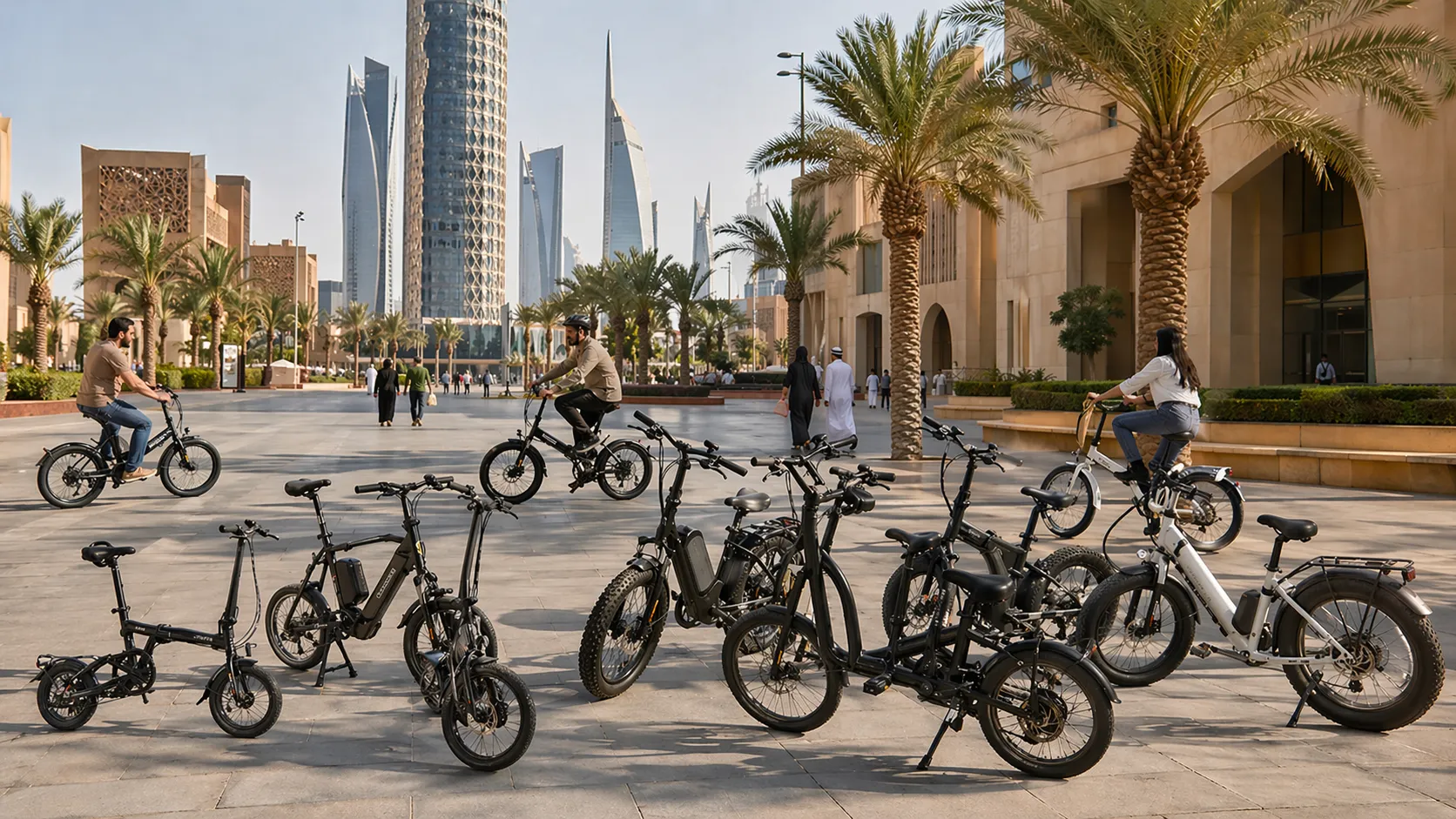
شراء دراجة كهربائية في المملكة العربية السعودية في 2026 ليس أمراً عن المطاردة وراء أكبر اسم تجاري، بل أكثر ما يتعلق بما يمكن التحقق منه فعلياً. تشكل المخاطر الأكبر لدى المشتري عادةً مصداقية البائع، وكذلك الدعم ما بعد البيع، ووثائق البطارية والشاحن، ووقت استلام قطع الاحتياجات، وما إذا كانت الدراجة متوفرة حقاً من خلال وكيل محلي بدلاً من صفحة إعلانات غامضة.
يُبنى هذا الدليل كمراجعة مخاطر المشتري بدلاً من تصنيف علامات تجارية بسيط. الهدف هو فصل ما يمكن التحقق منه علانية في المملكة العربية السعودية عن ما يجب التعامل معه بحذر قبل إتمام الدفع.
كيف تم بناء هذا الدليل
- مراجعة صفحات الوكلاء والمتاجر السعودية العامة
- التحقق من ما إذا كانت العلامات التجارية تظهر وجوداً تجارياً إقليماً أو محلياً قابلاً للتحقق
- مقارنة مخاطر الدعم بناءً على وضوح الوكيل، ودعم البطارية، ورؤية الخدمة
- التعامل مع عدم الوضوح في التوفر المحلي كعنصر خطر، وليس كتوصية
تم التحقق منه في آخر مرة: أبريل 2026 للمصادر العامة المذكورة أدناه.
ملاحظة النطاق: يعتمد هذا الدليل على وضوح الوكلاء، والمعلومات الرسمية للامتثال، والتحليل المبني على مخاطر المشتري، وليس على اختبار عملي لكل النماذج المذكورة.
ما الذي يمكن التحقق منه علانية في المملكة العربية السعودية
Trek هو أحد العلامات التجارية التي يسهل التحقق منها في المملكة العربية السعودية لأن علامة ويلز بيكس تقدم نفسها علانياً كوكيل رسمي لعلامة تريك في المملكة العربية السعودية مع وجود تجاري. لا يعني ذلك تلقائياً أن كل النماذج أو قطع الاحتياجات سهلة الحصول عليها، لكنه يمنح المشتري ثقة أكبر من شراء الدراجة من خلال صفحة بائع غير واضح.
Giant أسهل التحقق منها على مستوى دول مجلس التعاون للدول العربية أو الإقليمي، rather than at Saudi city-by-city after-sales depth. The brand clearly maintains an official international office and distributor structure, but local support quality should still be confirmed before payment, especially for batteries, chargers, and replacement parts. In other words, Giant is commercially credible, but Saudi after-sales should not be assumed without dealer confirmation.
Saudi Arabia also shows signs of a growing cycling and micromobility environment, which matters for market context even if it does not validate every seller. Public reporting on projects such as Madinah’s bicycle-lane expansion and bike or scooter station rollout helps support the idea that riding infrastructure and public exposure are increasing. That is useful background, but it should not be confused with proof that every e-bike brand has a mature dealer network inside the country. For broader buyer-side context on design tradeoffs, readers can also compare this guide with our article on battery placement, charging, and ownership practicality.
What Buyers Should Treat Cautiously
Some names appear in online listings, reseller pages, or regional search results, but that is not the same as having a clearly verifiable Saudi dealer footprint, workshop coverage, or long-term parts support. Buyers should be especially cautious with sellers or brands that are hard to verify through official dealer pages, local workshop visibility, or written after-sales terms.
That caution applies to low-visibility local names, vague marketplace sellers, and brands that may be visible online without clear Saudi support. If a seller cannot show a real workshop process, battery warranty path, and expected parts lead time in writing, the risk remains high even if the listing looks attractive.
Stromer can be treated as a premium niche option rather than a mainstream Saudi market default. The brand is relevant for buyers who want a high-end connected e-bike experience, but price, support complexity, and long-term parts access should all be verified locally before purchase.
Accell Group-related brands should also be handled carefully in Saudi-specific buying decisions unless there is clear dealer evidence in the city where the bike will actually be purchased and serviced. European brand strength does not automatically equal Saudi workshop support.
Compliance Before You Pay
This is the section many buyers skip, and it is where expensive mistakes happen. Before buying or importing an e-bike into Saudi Arabia, check whether the bike, charger, and battery require product conformity documentation through Saber or related SASO-linked processes. A seller’s “CE” claim or factory certificate should never be treated as sufficient by itself for Saudi import or commercial entry.
- Ask for battery specifications in writing
- Ask for charger input and output specifications
- Ask for warranty terms in writing, including battery coverage
- Ask for expected spare-part lead time
- Ask whether any conformity documents are available for Saudi import or commercial entry
For importers and resellers, the safer rule is simple: importer compliance should not be assumed. Product conformity, shipment documentation, and local commercial requirements should be checked with the seller, local compliance bodies, and customs or clearance partners before money is transferred.
Best Choice by Use Case
For buyers who want the strongest verified local confidence: Trek is one of the safer starting points because Saudi retail visibility is easier to confirm publicly through Wheels Bikes.
For buyers focused on value if dealer support is confirmed: Giant and other large international brands may still make sense, but city-level service depth should be checked before assuming that parts and battery support will be smooth.
For budget-first buyers: the key question is not just entry price. It is whether the seller can provide battery warranty, charger specs, and parts lead time clearly enough to reduce support risk.
For premium tech-oriented buyers: niche brands can still be attractive, but they carry more support risk if local workshop coverage is unclear.
For logistics, delivery, or cargo use: the real issue is less “which brand is coolest” and more whether the bike can be maintained under load with dependable battery and spare-part support. Buyers evaluating utility platforms may also want to compare market-facing brands with sourcing-oriented reads such as our review of Danish cargo e-bike brands and benchmark categories.
الأسئلة الشائعة
What should a Saudi buyer verify before paying for an e-bike?
Verify five things first: seller identity, battery specifications, charger specifications, written warranty terms, and expected spare-part lead time. If those details are vague, the purchase risk is already high.
What documents matter if you are importing rather than buying from a local dealer?
Check whether the bike, charger, and battery need product conformity documentation through Saber or related Saudi compliance channels. Import and resale requirements can differ from a simple consumer purchase, so do not rely on generic seller claims.
How do you check whether a seller really has after-sales support in Saudi Arabia?
Ask for a real workshop address, a written battery warranty process, and a written answer on spare-part lead time. Public dealer visibility is a good sign, but workshop clarity matters more than marketing pages.
Is a seller’s “CE certificate” enough for Saudi import or resale?
Usually not by itself. Buyers and importers should check current Saber or SASO-related requirements instead of assuming that a foreign factory certificate automatically covers Saudi market entry.
Final Verdict
The smartest way to buy an e-bike in Saudi Arabia in 2026 is not to ask which brand sounds best, but which offer is easiest to verify. Trek currently gives one of the clearest publicly visible confidence signals through an identifiable Saudi retail structure. Giant and other large international brands can still be viable, but local support should be checked city by city. Low-visibility sellers and unclear reseller pages carry the highest risk, especially when battery warranty, charger documentation, and workshop support are vague.
Compliance disclaimer: Import, road-use, and commercial sale requirements can change. Buyers and importers should confirm current Saudi requirements with the seller, local compliance bodies, and customs or clearance partners before purchase.
For more verified buying guides and market reviews, see the latest updates in the ClipClop news section.



 English
  Spanish
  Portuguese
  Russian
  Arabic
  French
  Dutch
Dutch  German
  Danish
