


Hello, I’m Leo Liang. For over a decade, my passion for electric off-road bikes has taken me from the factory floor here at ClipClop in Guangzhou to rugged trails across the globe. As a key member of the team behind clipclopbike.com, I’ve had the privilege of collaborating with hundreds of dealers, distributors, and rental fleet operators. This hands-on experience has given me a unique perspective on the challenges and opportunities within the B2B e-bike landscape. One of the most critical conversations I have with our partners revolves around a fundamental choice: the motor system. This single component dictates an e-bike’s character, its performance, and ultimately, its suitability for your specific market.
Understanding the subtleties of B2B e-bike technology is key. Your customers, from weekend warriors to daily commuters, depend on the performance and reliability you offer them. For you as a business, sourcing e-bikes with the right electric drive system affects everything from inventory management through after-sales support to brand reputation. The big battle usually leaves one with a choice: mid-drive motor vs. hub motor. Each of these has its very specific advantages and perfect use cases. In this wide-ranging guide, I will use my experience to break down these systems for you, not from a purely technical viewpoint, but from a practical, business-oriented one. We’ll delve into how things like power output, torque sensor integration, and overall motor efficiency translate into ride experience and how you can leverage that knowledge to build a more successful e-bike program. This is the insider’s guide I wish I’d had when I started, designed to empower you with the know-how to make the best possible choices for your business.
So, what really powers the ride? Understanding the core electric drive options
Every ebike has an electric drive system, one that combines a motor, controller, and battery to provide assistance. For our B2B partners, understanding the two dominant motor architectures is a great first step in curating a successful product lineup. The choice fundamentally shapes handling, the maintenance profile, and target audience for any given bike. First-and often most common-is the hub motor. As the name would suggest, this motor is integrated directly into the hub of either the front or rear wheel. It operates independently of the bike’s main drivetrain-that is, the chain and gears. Think of it as a self-contained power unit that “pushes” or “pulls” the bike along. Its design is elegant in its simplicity, which often translates to a lower manufacturing cost and easier installation-key considerations for large-scale production and fleet management.
The second option is the mid-drive motor, which is situated at the bike’s bottom bracket, where the pedals attach. This motor routes power directly to the crankset, which means it utilizes the bike’s existing gears. This integration is the defining feature of the system. Because this type of motor works in harmony with the e-bike drivetrain system, a mid-drive motor can operate within its most efficient RPM range, similar to the way a car’s engine uses a transmission. This allows it to outperform its counterpart on steep inclines and technical terrain, because shifting gears optimizes both motor and leg power. Historically, mid-drives have been more expensive, but as manufacturing gets better, they are becoming increasingly competitive. For companies targeting performance-oriented markets, such as mountain biking or cargo transport, sophisticated power delivery and balanced weight distribution found in mid-drive systems are usually non-negotiable. So, it’s not a question of which universally is “better”; rather, the question is which one is strategically correct for your intended application and customer base.
Hub Motors: The Workhorse of Urban and All-Purpose E-Bikes
These motors are the unsung heroes of the e-bike world, providing millions of riders with reliable power day in and day out. The primary appeal of hub motors, especially to B2B clients that have focused on rental fleets, commuting models, or entry-level recreational bikes, lies in their straightforward design and cost-effectiveness. The system is largely self-contained within the wheel, which greatly simplifies the bike’s overall frame design and assembly process. That of course equates to lower production costs and, crucially, less complex maintenance. When one of your rental bikes is out of commission, it is not generating any revenue. A hub motor system, with fewer proprietary parts interacting with the drivetrain, often means a quicker, simpler fix. If the motor fails, you can often swap the entire wheel in minutes-a major operational advantage.
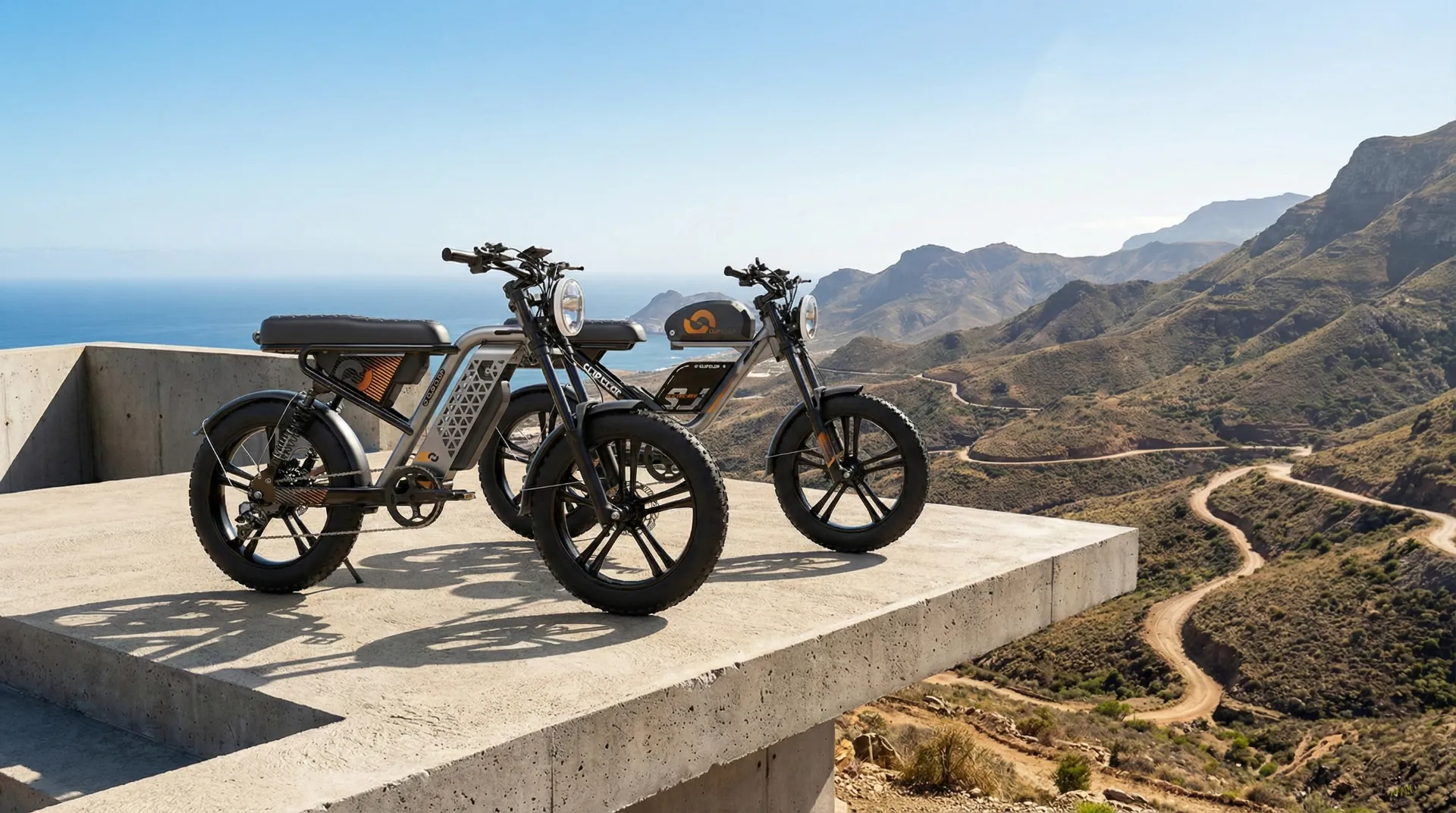
There are two types: front hub and rear hub. Front hub motors are the easiest to install and maintain, creating an “all-wheel-drive” effect but can sometimes feel like they are pulling the rider and may lose traction on loose surfaces. The rear hub motors, such as the 48V 750W brushless motor used in our ClipClop L1 model, offer a more natural feeling of push, like that of traditional cycling. This configuration has excellent traction, making it perfect in various conditions-from city streets to light trails. For our L1, this powerful motor, in conjunction with a 70Nm torque rating, assures very good acceleration and allows it to ride moderate hills with ease, even under maximum load conditions of 160kg/350lbs. This robust performance, in a low-maintenance design, is just why hub motors are still dominant in the market. They are a pragmatic, robust, and forceful solution for a large part of the e-bike market.
Mid-Drive Motors: The Choice for Performance and Technical Terrain
When the going gets tough, this is when the mid-drive motor truly shines. It is the premium choice for serious enthusiasts and demanding applications, therefore a crucial offering for any business catering to the mountain, trekking, or high-performance cargo bike market. The genius of the mid-drive lies in how it works with the bicycle’s drivetrain. Putting power in at the crank allows the motor to utilize the bike’s gears. That means on a steep technical climb, a rider can downshift, keeping the motor spinning within its optimal RPM range, applying maximum torque efficiently without overheating. The result is an extremely intuitive yet powerful ride because the motor output is multiplied by the gearing for a climbing capability that hub motors simply cannot match. It is this symbiotic relationship between motor and gearing that forms the cornerstone of its high-performance credentials.
Another major benefit is weight distribution: placing the motor low and central in the frame, at the natural balance point of the bike, greatly improves handling and stability. For an electric mountain bike, this is paramount. This allows the bike to feel nimble and responsive on tight switchbacks and stable during high-speed descents. The suspension can function as designed, unencumbered by unsprung weight due to a heavy hub motor in the wheel. From a B2B perspective, offering models with mid-drive systems signals a commitment to quality and performance. It attracts a more discerning customer willing to invest in superior technology. Although the initial cost may be higher, it provides a very solid value proposition for enhanced ride quality, far superior efficiency, and exceptional climbing ability for any brand looking to establish itself as a leader in the performance e-bike segment.
Torque vs. Cadence Sensors: The Brains Behind the Brawn
The sensor is the brain of the e-bike’s electric drive, determining how and when the motor delivers power. This choice has a profound impact on the riding experience-arguably more so than the raw power output figure. By far the most common type, and especially budget-friendly and hub motor systems, is the cadence sensor. It works like a simple on/off switch: once you start pedaling, the motor engages and provides a set level of assistance based on your selected setting. It’s simple, reliable, and cost-effective. But it can sometimes feel jerky, the power kicking in abruptly after a slight delay. This system works perfectly well for casual cruising or commuting where the primary goal is simply to reduce effort.
Thus, when a finer and more intuitive ride is needed, the torque sensor is the better technology, which is the hallmark of almost all high-quality mid-drive systems. A torque sensor measures how hard you are pressing on the pedals. It provides proportional assistance: push gently and you get a little help; stomp on the pedals to conquer a hill, and the motor instantly responds with maximum power. It’s a seamless experience, organic, like using your own muscles. It’s like having superhuman legs. So far as B2B partners are concerned, the difference is important. In this case, for a rental fleet in a flat tourist area, a cadence sensor is probably sufficient. Performance e-MTBs or premium trekking bikes, however, deserve a torque sensor, very much because it provides control, efficiency, and safety for discerning riders on technical terrain-where modulation of power input is crucial to maintaining traction and keeping control. It also enhances motor efficiency and prolongs battery range due to the fact that it only dispenses the amount of power actually needed.
| الميزة | المحرك المحوري | المحرك وسط العجلة |
| يميلون إلى أن يكونوا شركاء أسهل بكثير على المدى الطويل. | In the center of the front or rear wheel. | At the bike’s bottom bracket, integrated with the crankset. |
| توصيل الطاقة | Directly spins the wheel, independent of the bike’s gears. | Powers the crank, leveraging the bike’s نظام نقل حركة الدراجة الإلكترونية for optimized torque. |
| Ride Feel & Sensor | A distinct “pushing” or “pulling” sensation. Commonly uses a cadence sensor. | Natural and intuitive, mimics rider’s effort. Almost always uses a torque sensor. |
| Performance (Hills) | Good for moderate hills. Can struggle or overheat on very steep, sustained climbs. | Excellent. Uses bike’s gearing for superior climbing efficiency and power. |
| Weight Distribution | Concentrated at the front or rear, creating “unsprung weight” that affects handling. | Low and central, providing optimal balance, stability, and responsive handling. |
| Maintenance & Service | Simpler, self-contained system. Entire wheel can be easily swapped for quick repairs. | More complex. Integrated into the frame and requires more specialized service. |
| تآكل نظام نقل الحركة | Minimal additional stress on the chain, cassette, and derailleur. | Puts significantly higher stress on all drivetrain components. |
| Cost & Complexity | Generally more cost-effective and simpler to integrate into standard frames. | Typically more expensive due to specialized frame mounts and complex mechanics. |
| Best B2B Applications | Urban commuting, rental fleets, food delivery services, flat-terrain cruisers. | Electric mountain bikes (e-MTB), heavy cargo bikes, performance trekking, hilly regions. |
Why Frame Material and Design Are Crucial in Motor Integration
The frame of an e-bike is much more than a skeleton-it forms the very basis on which the entire system is built. The choice of material and geometry is deeply entwined with the motor type and intended use, something more experienced B2B buyers are acutely aware of. For most e-bikes, some form of aluminum alloy is the default material, thanks to the excellent balance they strike between strength, weight, and cost. Specifically, 6061 Aluminum Alloy-which we use for the frame of the ClipClop L1-is an industry workhorse. It is easily formable, resistant to corrosion, and provides the robustness that is needed to handle increased forces and weight from an electric drive system, especially one producing 70 Nm of torque. The frame needs to be engineered to handle these stresses without flexing, so stable handling and long-term durability can be achieved, something extremely important to fleet operators that need their assets to last.
The frame design itself is largely dictated by the motor choice. A hub motor system allows for the use of more traditional frame geometries since the motor is contained within the wheel. However, with a mid-drive motor, the frame needs to be specially designed with an integrated motor mount into the bottom bracket shell. This special construction generally leads to more complex and more expensive frame manufacturing but offers superior integration and protection for the motor. Furthermore, frame size specifications become even more critical. Proper sizing ensures optimal rider comfort and control, but on an e-bike, it also affects the placement of the battery and the overall balance of the bike. A well-designed frame will seamlessly integrate the battery, whether mounted on the down tube or integrated within it, protecting it from the elements and keeping the center of gravity low. For our partners, specifying the right frame material and a design optimized for the chosen motor system is a fundamental step in delivering a safe, reliable, and high-performing product to their end-users.
Battery Systems and Drivetrain: Completing the Performance Puzzle
An e-bike’s motor is nothing without a capable battery and a robust drivetrain to translate that power into motion in the real world. For our B2B clients, the evaluation of the complete ecosystem is very important for the assurance of customer satisfaction and minimization of maintenance issues thereafter. The battery is the fuel tank. The capacity, measured in Watt-hours (Wh), defines the range of this bike. The ClipClop L1 mounts a 48V 15Ah lithium battery, meaning 720Wh-or 48V times 15Ah. It is this significant capacity that ensures a real-world range of 30-60KM per charge, contingent upon riding mode (Electric Mode/PAS Mode), terrain, and weight of rider. Lithium-ion is the industry standard because of its energy density and longevity. Voltage-48V in this case-remains an important barometer of power in the system; higher voltage systems can supply power with far greater efficiency and less stress on the system components.
Meanwhile, the drivetrain must be up to the task of handling both human and motor power. This is especially true for mid-drive systems, but even powerful hub motors place additional stress on chains, cassettes, and derailleurs. So we specify reliable components from trusted brands for our models, such as the Shimano 7-speed derailleur on the L1. For fat tire bikes intended to take on varied terrain-like our 20″*4.0 fat tire model-having a range of gears allows the rider to maintain a comfortable pedaling cadence whether they’re on pavement or soft sand. To control the speed generated by a powerful 750W motor, a reliable braking system is non-negotiable. Hydraulic disc brakes offer superior stopping power and modulation in all weather conditions compared to mechanical brakes, and their safety and control are essential layers to have. It’s this holistic approach-matching a powerful motor with a high-capacity battery, a durable drivetrain, and responsive brakes-that’s the key to building a complete, reliable, and desirable e-bike package.
Matching Motor Systems to Your Business Model: Use Cases and Applications
The most successful B2B e-bike strategies have their foundation in deep insight into the end-user. The dealer and distributor, as well as the rental operator, are trying to sell the right tool for the job. This requires aligning the motor system with the primary application and terrain. Let’s look at a few common scenarios. A business operating a rental fleet in a bustling, relatively flat city or a seaside tourist town, for example, can immediately think of the hub motor. It’s great for casual users, being super reliable and not demanding much in the way of servicing, and it’s easy to use. A bike like our ClipClop L1, with its robust 6061 Aluminum Alloy frame, a powerful hub motor, and fat tires, is great for food delivery services, offering a comfortable and capable vehicle that can handle city streets and heavy loads.
Conversely, if your shop is near mountain trails or in a hilly area, a product mix with mid-drive motors is necessary. These will be desirable to enthusiasts and more serious recreational riders who want performance both up steep, tricky climbs and down technical descents. The natural, torque-sensing power delivery and superior balance are selling points that command a higher price point. For corporate customers who want to implement employee commuter programs, a mix could be appropriate: hub motor bikes for general use and a few high-end mid-drive models for executives or commuters over long distances. By accurately segmenting your market and understanding the particular needs-whether it is durability for a rental fleet, climbing prowess for mountain trails, or cargo capacity for delivery services-you will be able to choose strategically the motor systems that will drive demand and ultimately ensure satisfaction, thereby growing your business. It’s about moving beyond the one-size-fits-all approach and curating a portfolio that truly resonates with your target audience.
Future Trends and Making the Right Sourcing Decision
The e-bike market is moving fast, and this goes to the heart of our value proposition for B2B partners: being one step ahead. We are observing a number of key trends in motor technology. Motors are becoming lighter, more silent, and efficient. Advanced software integration is enabling a customization of the ride feel, with companion apps that let riders tune power output and throttle response. We are also seeing a blurring of the lines, with the development of lightweight, low-drag hub motors that appeal to performance road riders and more compact, affordable mid-drive systems entering the market. As a sourcing partner, it’s crucial to work with a manufacturer that not only understands current technology but is also invested in future development.
When you’re making a sourcing decision, look beyond the spec sheet. Ask potential suppliers about their R&D process. How do they ensure the long-term reliability of their motor systems? What is their process for warranty claims and providing spare parts? A lower upfront cost on a bike with an unproven electric drive system can quickly be negated by high maintenance costs and unhappy customers. At ClipClop, we believe in partnership. We’re not just a supplier; we’re a B2B solutions provider. We leverage extensive manufacturing experience and rigorous testing protocols to ensure every motor system we implement-whether a workhorse hub motor or a high-performance mid-drive-meets the highest standards of reliability and performance. Your success is our success. By choosing a partner who is transparent, knowledgeable, and committed to quality, you can build a resilient business and confidently meet the evolving demands of the e-bike market.
Ready to Power Your Business?
The challenges that come with understanding e-bike technology can be overwhelming. Whether it’s questions about model selection, configuration options, or custom OEM requirements, we’re here to help. At ClipClop, we specialize in the manufacturing and export of electric off-road bicycles. On behalf of all our dealers, wholesalers, and brand partners, we provide a comprehensive one-stop solution, starting from initial technical support to final delivery of the vehicle.
Contact us today to discuss your needs and find out how a partnership with ClipClop can electrify your success.
الأسئلة المتكررة (FAQ)
Q1: For a rental fleet, is a hub motor or mid-drive motor better for longevity and lower maintenance?
For most rental fleet applications, especially in urban or moderately hilly environments, a محرك هاب (محرك محور العجلة) هو عمومًا الخيار الأكثر عملية. تصميمه المدمج يحتوي على أجزاء متحركة أقل تتفاعل مع نظام نقل الحركة الرئيسي للدراجة، مما يؤدي عادةً إلى صيانة أقل وسهولة في الخدمة. استبدال عجلة محرك هاب معطلة غالبًا ما يكون أسرع ويتطلب عمالة أقل تخصصًا مقارنةً بصيانة محرك الدفع الوسطي، مما يزيد من وقت تشغيل المركبة.
س2: ما مدى تأثير مستشعر عزم الدوران حقًا على مدى البطارية مقارنةً بمستشعر الوتيرة؟
A torque sensor يمكن أن يحسن مدى البطارية بشكل ملحوظ — غالبًا بنسبة 15-30٪ أو أكثر — مقارنةً بمستشعر الوتيرة. هذا لأنه يوفر مساعدة متناسبة، مقدًّا فقط الطاقة التي يحتاجها الدراج في أي لحظة. من ناحية أخرى، يقدم مستشعر الوتيرة مستوى طاقة ثابتًا عندما تدور الدواسات، مما يوفر غالبًا طاقة أكثر من اللازم على الأرض المستوية، مما يهدر طاقة البطارية. هذه الكفاءة المحسّنة لكفاءة المحرك هي فائدة رئيسية لأنظمة استشعار العزم.
س3: هل يمكن لمحرك هاب بقوة 750 واط التعامل مع التلال شديدة الانحدار؟
نعم، يمكن لمحرك هاب عالي الجودة بقوة 750 واط مزود بعزم دوران كافٍ، مثل محرك 70 نيوتن متر الموجود في طراز كليب كلوب L1 الخاص بنا، أن يتعامل بفعالية مع التلال متوسطة إلى شديدة الانحدار، خاصةً عندما يستطيع الدراج المساعدة بالدواسة. ومع ذلك، بالنسبة للتسلقات شديدة الانحدار والطويلة والتقنية، فإن محرك الدفع الوسطي سيكون له ميزة أداء لأنه يمكنه الاستفادة من تروس الدراجة للبقاء في نطاق طاقته الأم، مما يمنع ارتفاع الحرارة ويحافظ على الكفاءة.
س4: ما الاعتبارات الرئيسية عند توريد دراجات كهربائية لخدمة توصيل طعام بين الشركات (B2B)؟
لتوصيل الطعام، الأولويات هي الموثوقية والمتانة والمدى وسعة التحميل. ابحث عن الموديلات ذات الهيكل القوي مثل سبائك الألومنيوم 6061, ، وبطارية عالية السعة (700 واط ساعة أو أكثر)، ومحرك محرك هاب (محرك محور العجلة). قوي وقليل الصيانةإطارات胖 20 بوصة * 4.0 20 بوصة * 4.0 عريضة ممتازة للثبات والراحة) هي أيضًا بالغة الأهمية لهذا.
التطبيق والتضاريس
س5: ما الفرق بين خرج الطاقة الاسمي وخرج الطاقة القصوي لمحرك الدراجة الكهربائية؟ خرج الطاقة الاسمي. (على سبيل المثال، 750 واط) هو الطاقة المستمرة التي يمكن للمحرك تحملها دون ارتفاع درجة الحرارة في الظروف العادية. خرج الطاقة القصوي.
المراجع:
- هي أقصى طاقة يمكن للمحرك إنتاجها لفترات قصيرة، مثل أثناء التسارع القوي أو عند صعود تل قصير شديد الانحدار. بينما تعد القدرة القصوى مقياسًا مفيدًا، فإن تصنيف القدرة الاسمية هو مؤشر أكثر موثوقية للأداء المستدام العام للمحرك وهو الرقم الذي غالبًا ما يتم تنظيمها بالقانون. أنظمة بوش للدراجات الكهربائية. (بدون تاريخ).. وحلة الدفع: القوة الكامنة https://www.bosch-ebike.com/en/products/drive-unit
- . بوش. تم الاسترجاع من. شيمانو ستيبس. (بدون تاريخ).. ما هي شيمانو ستيبس؟ https://bike.shimano.com/stories/article/say-hello-to-shimano-steps-e-cargo.html
- . شيمانو. تم الاسترجاع من. grin Technologies. (بدون تاريخ).. أساسيات المحرك https://electricbike.com/forum/forum/main-forum/diy-discussion/134207-grin-technology-e-bike-motor-simulator



 English
  Spanish
  Portuguese
  Russian
  Arabic
  French
  Dutch
Dutch  German
  Danish
