


Hello, I’m Leo Liang, part of the team here at Guangzhou Clipclop E-Bike Tech Co., and an avid advocate for the electric off-road biking industry. Here at Clipclop, we don’t just build e-bikes; we live and breathe the technology that powers them. Through our blog, podcast, and social channels, my goal is to share the insights I’ve gained from years in the B2B electric bike sector. I consider it a privilege to be able to work with distributors, rental fleet managers, and OEM partners across the globe, crafting solutions that meet the real-world demands of their markets. Today, I want to take you on a deep dive into the forces shaping our industry, taking a look at the global e-bike market growth in 2025 and what the forecast through 2030 means for businesses like yours.
The global e-bike market is no longer niche; it’s a full-blown transportation revolution. As we make our way through 2025, it is at an inflection point, with the industry transitioning from early adoption into the mainstream across commercial and consumer sectors. The numbers tell a powerful story in and of themselves. There are different projections regarding the size of the global e-bike market, but one thing is for sure: we are on an upward trajectory. According to some analysts, the global e-bike market will breach $38-45 billion in 2025, while the CAGR for 2025-2030 will be around 10% – 12%. Other reports put the forecast for the period 2025-2030 on a more conservative but incredibly strong trajectory. The market will grow from approximately USD 38 billion in 2025 to over USD 45 billion by 2030. Such phenomenal expansion is not an accident. This perfect storm has been created by converging macro trends, technological leaps, and a fundamental shift in how we look at mobility. For B2B stakeholders (distributors, wholesalers, and brands), understanding the subtleties of this growth is not a nicety; it is about knowing what actually lies beyond the line and where the real opportunities truly lie, from the growing demand for tough off-road models for tour operations to the increased need for durable, low-maintenance fleets that keep last-mile delivery services running around the clock. These are the trends this article will unpack, providing a strategic outlook for our partners and the greater B2B community.
What’s Fueling the Global E-Bike Phenomenon?
Driving this incredible momentum are several key demand drivers. First and foremost, there’s a powerful global push toward sustainability. Given that urban areas account for a significant portion of global carbon emissions, governments and consumers are actively looking for greener transportation alternatives. Environmental consciousness is a main driver, but very tangible, economic reasons further support it. Rising fuel costs and crippling traffic congestion in major cities make e-bikes a financially savvy and time-efficient way to commute. Moreover, there are significant policy incentives acting as a strong catalyst: in Europe, for example, government subsidies, tax credits, and huge investments in dedicated cycling infrastructure dramatically lower the barrier of entry for both individuals and businesses. We also see a cultural shift. The global pandemic has reshaped perceptions of personal space and outdoor recreation, pushing up demand for activities such as mountain biking. This has directly fueled the popularity of electric mountain bikes, or e-MTBs, a segment showing explosive growth. For our B2B clients, that means a growing demand for versatile bikes suitable for everything from urban commutes to weekend adventures. The challenge for many dealers is finding products with that performance and durability without compromising on cost-a core problem we at Clipclop are focused on solving.
How is Technology Shaping the E-bikes of 2025?
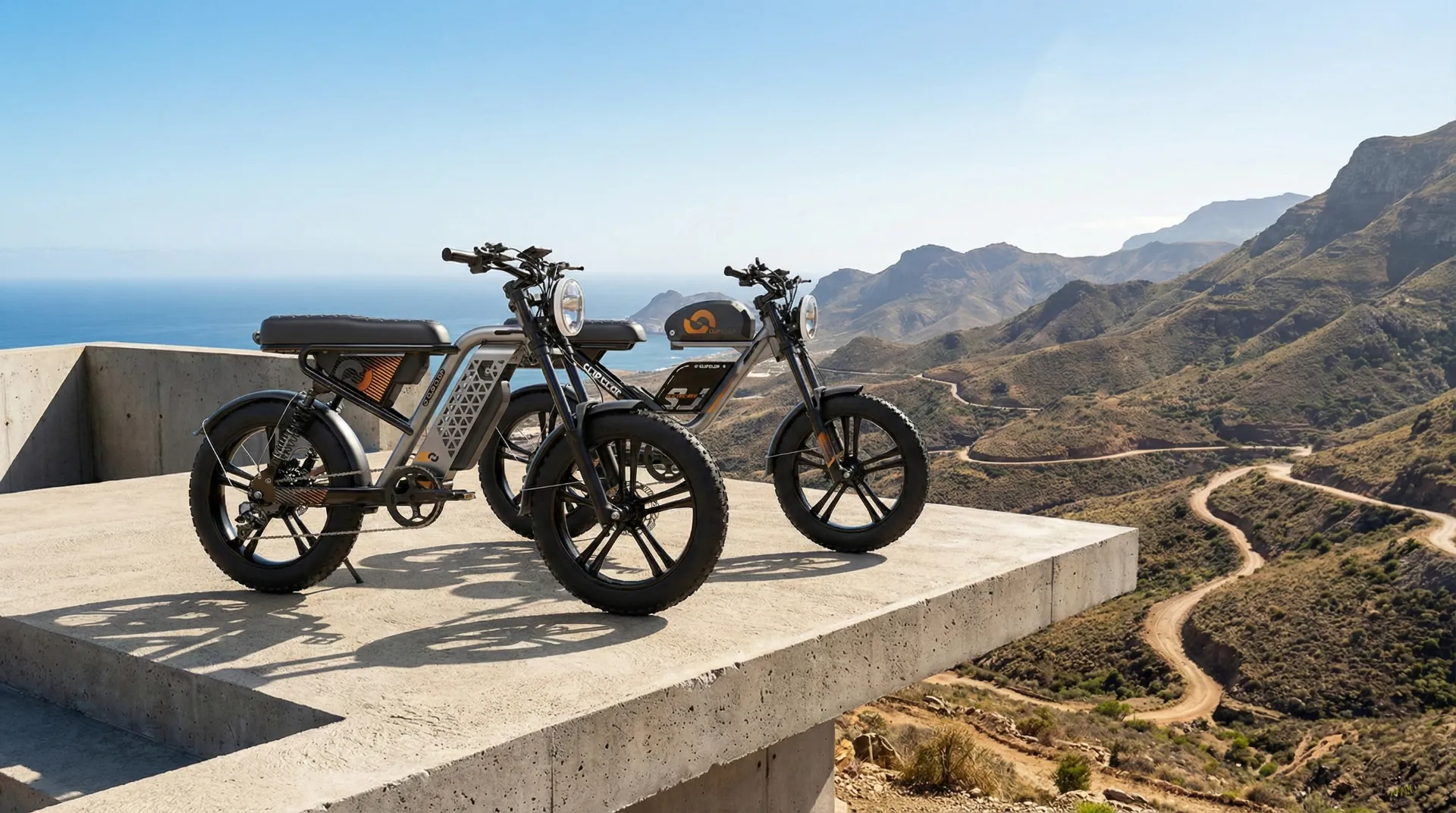
Innovation is the driving force of our industry. Today’s e-bike is a far cry from the models of five years ago, and this rapid evolution is one of the main drivers for the market. The most important innovations are happening at the core component level. Battery technology-essentially Lithium-Ion Battery systems-continues to evolve with extended ranges and faster charging times, which overcomes “range anxiety,” one of the greatest operational obstacles to commercial acceptance. For a rental business, this equates to a bike that can go all day without needing to be recharged-a major operational benefit. Our L1 model is fitted with a durable 48V 15AH lithium battery for an assured range per charge of 30-60KM according to the riding mode and quick 5H charging time. Motor technology has also undergone remarkable development. The debate between hub and mid-drive motors continues, but the performance gain is beyond doubt. Modern brushless motors such as the 48V 750W brushless motor fitted to our L1 deliver phenomenal power and efficiency: torque is 70Nm, enough to sail up steep slopes. This level of performance will be essential for both the e-MTB and off-road utility markets. Beyond the powertrain, we’re seeing smarter, more integrated systems. IoT connectivity, offering GPS tracking and remote diagnostic capability, for example, is increasingly standard, providing fleet managers with data and security that is invaluable.
Why is Frame Material and Design such a critical B2B consideration?
For a B2B buyer, an e-bike is an asset that needs to deliver on an investment; it must therefore be strong and reliable with low maintenance. A common pain point we hear from our clients, in particular, those managing rental fleets or offering e-bikes for tours, is the immense stress placed on the bike’s chassis day in and day out. It’s here that the choice of material and frame engineering becomes non-negotiable. The industry standard for high-performance e-bikes is aluminum alloy, but not all alloys are born equal. We use a 6061 Aluminum Alloy Frame for models like the L1. This particular grade is chosen for its superior strength-to-weight ratio, corrosion resistance, and workability, enabling us to create a frame that’s lightweight for maneuverability yet phenomenally strong. This ensures it’s able to take some serious abuse, from rough trails to unforgiving urban environments, while supporting a max loading of 160kg/350lbs. Moreover, the frame geometry in itself has been a major determinant of the bike’s applicability to various scenarios. While a relaxed, upright geometry may work great for a city cruiser, an aggressive geometry would be in order if one wants to create an all-terrain model that remains stable and controllable at speed and on broken ground. For distributors, therefore, offering a range of frame sizes and specification is key to capturing more significant market share by catering for riders of all heights and preferences.
What are the dominant and emerging e-bike segments?
The e-bike market is not monolithic; instead, it’s made up of diverse segments that are dynamic. Currently, the largest share is occupied by the city/urban category, as more and more people are moving to cities. These bikes are designed for practicality and comfort. But the really exciting growth happens in the more specialized areas. The Segment e-MTB and trekking is developing at a rapid pace, enhanced by a growing appetite for adventure tourism and outdoor recreation. This is where high-performance components become essential. For these challenging rides, riders need powerful motors, long-travel suspension, and aggressive tires like on our L1 model, with 20″*4.0 fat tires giving them superior traction and stability over sand, snow, and rugged trails. Another up-and-coming segment is cargo and utility e-bikes, which are increasingly becoming indispensable for last-mile delivery and commercial logistics. These are workhorses that require powerful motors, high-capacity batteries, and exceptionally strong frames in order to perform under heavy loads. Being able to identify, for B2B clients, the fastest-growing segment in their specific region is important for inventory planning and targeted marketing efforts. The drivers of demand differ entirely for rental business in a mountain resort compared with food delivery service in a dense metropolis.
Which regions would be leading the E-Bike market growth?
Geographically, distinct patterns of the e-bike market’s adoption and growth persist. Europe has been traditionally considered the stronghold, leading the world with respect to market share. This can be attributed to a mature cycling culture and strong support from their governments. Countries such as Germany, the Netherlands, and France have indeed set the high bar for these countries with the provision of extensive infrastructure and generous purchase incentives. But the Asia-Pacific region, led by China, is both the largest market by volume and a production powerhouse, accounting for the vast majority of global e-bike manufacturing. Now, this region witnesses the surge in domestic demand for higher-quality, lithium-ion-powered models. The most significant future growth, however, is predicted in North America. While a later adopter, the U.S. market is witnessing a massive surge in interest, driven by a convergence of lifestyle changes, a growing fitness culture, and an increasing, albeit slower, investment in cycling-friendly infrastructure. For international B2B players like ourselves at Clipclop, here lies the tremendous opportunity. To execute a successful export strategy, it is very important to understand the unique regulatory landscapes, consumer preferences, and B2B market trends in each of these key regions. It’s not about just shipping a product, but finding a solution specifically tailored toward the local market’s needs.
How does a B2B partner navigate supply chains and customization?
For distributors, wholesalers, and OEM partners, the operational side of the e-bike business poses some unique challenges. A primary concern we consistently hear is supply chain reliability. The industry has faced significant disruptions, and to have a manufacturing partner ensure consistent quality and timely delivery is a massive competitive advantage. At Clipclop, we’ve invested heavily in streamlining our production and logistics to mitigate these risks for our clients. But beyond reliability, the real value of a B2B partner lies in being able to customize. Your market is unique, and a one-size-fits-all product is rarely optimal. This is where a deep partnership with a manufacturer pays dividends. We work closely with our clients to offer tailored configurations. Do you need a fleet of rental bikes that have a lower max speed setting for safety? Or perhaps you require specific branding and colorways for an OEM project? Maybe the terrain in your region demands a different tire tread or a more powerful brake system, such as our standard Hydraulic disc brake setup which offers superior stopping power. A successful B2B relationship is built on this flexibility, enabling our partners to order bikes that are precisely configured to meet their customers’ demands. Whether it be the adjustment of the motor power level or integration of specific accessories, such as our included Headlight, Rear signal taillights, and wheel reflectors.
What Does the Future Hold? E-Bike Industry Forecast 2025–2030
Looking ahead, the industry forecast for the rest of the decade is incredibly bright. We foresee that the lines between traditional bicycles and e-bikes will continue to blur as technology becomes lighter, more efficient, and more seamlessly integrated. Further advancements in battery technology are foreseen, with solid-state batteries probably entering the market, offering greater energy density and safety. Smart features will be everywhere, with AI-driven systems that automatically adjust motor output by terrain, rider input, and even biometric data. For the B2B sector, this means a move toward more data-driven fleet management and predictive maintenance, reducing downtime and operational costs. In addition, sustainability will also be emphasized, with manufacturers seeking more eco-friendly materials and production processes. The growth of the market will probably remain strong with e-bikes becoming an inseparable part of smart city ecosystems and multimodal transportation networks. For businesses in this space, agility will be everything. It’s about how one can adapt to new technologies, anticipate the shifting consumer demands, and forge strong partnerships with manufacturers that will define the leaders of the next decade. The global e-bike market is not growing; it’s evolving into a highly sophisticated and integral part of modern mobility.
At Clipclop, we’re more than just a manufacturer; we are your strategic partner in this dynamic market. We understand the challenges and opportunities you face, from optimizing fleet performance to managing inventory and meeting the specific technical demands of your customers.
For any inquiry on the selection of the correct electric off-road bikes, discussing configuration options, or fulfilling custom requirements for your dealership, wholesale business, or brand, do not hesitate to reach out to us. We are industry specialists in manufacturing and exporting electric off-road bicycles, providing end-to-end services-from technical support to complete vehicle solutions-to our global partners.
الأسئلة المتكررة (FAQ)
Q1: What is the projected CAGR for the global e-bike market leading up to 2030?
A1: Projections for the market growth CAGR vary among market analysis firms, but most forecasts indicate a strong and sustained growth pattern. Figures generally range from a conservative 3.56% to a more optimistic 12% for the period leading up to 2030. This robust growth reflects the increasing global adoption of e-bikes for commuting, recreation, and commercial purposes, driven by powerful macro trends in sustainability and urban mobility.
Q2: What are the primary demand drivers for the current surge in electric bike growth?
A2: The key demand drivers are multifaceted. They include a heightened global focus on environmental sustainability, the economic and convenience benefits of avoiding traffic congestion and high fuel costs, and significant policy incentives from governments promoting green transportation. Additionally, technological advancements in battery and motor efficiency are making e-bikes more practical and appealing, while a cultural shift towards health and outdoor activities is boosting segments like e-MTBs.
Q3: From a B2B perspective, what e-bike features are most critical for a rental or delivery fleet? A3: For commercial fleets, the most critical features are durability, reliability, and low maintenance. This translates to specific component choices: a strong هيكل سبائك الألومنيوم 6061 with a high max loading capacity (e.g., 160kg/350lbs), a reliable and powerful motor like a محرك بدون فرشات 48 فولت 750 واط, a high-capacity بطارية ليثيوم 48 فولت 15 أمبير ساعة for extended range, and robust braking systems like فرامل قرصية هيدروليكية. Features that simplify maintenance and ensure rider safety are paramount for maximizing ROI.
Q4: Which global regions are expected to show the most significant e-bike market growth?
A4: While Europe currently leads in market share and Asia-Pacific dominates in production volume, North America is widely expected to witness the fastest electric bike growth in the coming years. This is due to a rapidly growing consumer interest, improving infrastructure, and a largely untapped market potential compared to the more mature European and Asian markets.
Q5: How important is customization for B2B e-bike orders?
A5: Customization is extremely important. B2B clients like dealers, rental companies, or OEM partners often face unique market demands. The ability to specify components—such as adjusting motor power levels, selecting specific tire types for local التضاريس, incorporating company branding, or adding safety features—is a key pain point. A manufacturing partner that offers flexible and tailored solutions can provide a significant competitive advantage, ensuring the final product is perfectly aligned with the client’s business needs.
المراجع:
- OKAI B2B. “The Global E-Bike Market in 2025: Growth Projections & Key Trends.“
- Persistence Market Research. “E-bike Market Trends 2025: What Every Investor and Manufacturer Needs to Know.“
- Mordor Intelligence. “E-bike Market Size, Growth, Trend Report & Drivers, 2030.“



 English
  Spanish
  Portuguese
  Russian
  Arabic
  French
  Dutch
Dutch  German
  Danish
