

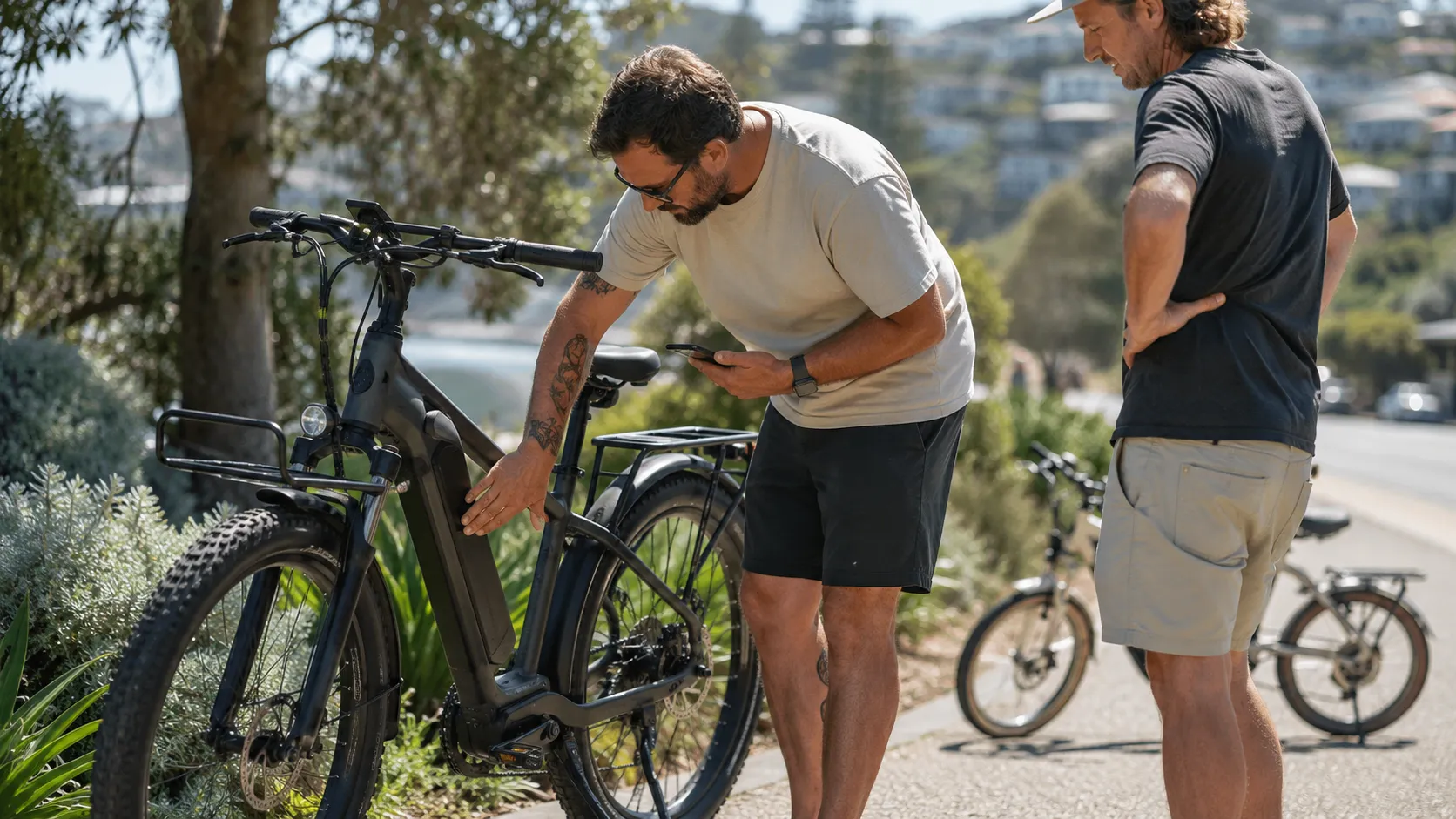
Мне часто задают этот вопрос: “Сколько я должен тратить на электровелосипед?”
И честно говоря, раздражающий ответ: это зависит.
Не тот ответ, который хотят слышать люди, знаете. Но в Австралии 2026 года покупка электровелосипеда — это не просто поиск дешёвого велосипеда с большой батареей и пугающим мотором. Это работало лучше несколько лет назад. Теперь? Не так уж и хорошо. Правила становятся строже, покупатели более внимательны, и много тех “слишком хорош, чтобы быть правдой” велосипедов в интернете начинает выглядеть рискованно, особенно если вы планируете ездить на публичных дорогах.
Статья 2024 года от Samebike говорила о ценах на электровелосипеды от дешёвых базовых моделей до высоких концевых, и эта структура всё ещё имеет смысл. Городские велосипеды, складные велосипеды, велосипеды с широкими шинами, горные электровелосипеды — все разные ц.
First, the boring legal bit. Sorry, but it matters.
If you are selling or riding e-bikes in Australia, don’t ignore the rules. In NSW, legal e-bikes need motor assistance to cut out at 25 km/h or when pedalling stops, and throttle/walk assist must cut out at 6 km/h. NSW is also moving toward the 250W EN15194 standard, with non-compliant high-powered bikes facing much stricter enforcement. (NSW Government)
Victoria says it pretty clearly too: a legal e-bike has no more than 250W continuous rated power, motor assistance cuts off after 25 km/h, and it must have working pedals. If it goes beyond that, it may be treated more like a motor vehicle than a bicycle. (Victoria Police)
My view? For Australian public-road use, don’t play games. Configure the bike properly. For private land, farms, trails, resorts, or off-road rental use, higher power can make sense. But for city commuting in Sydney, Melbourne, Brisbane, Perth — I would keep it clean and compliant.
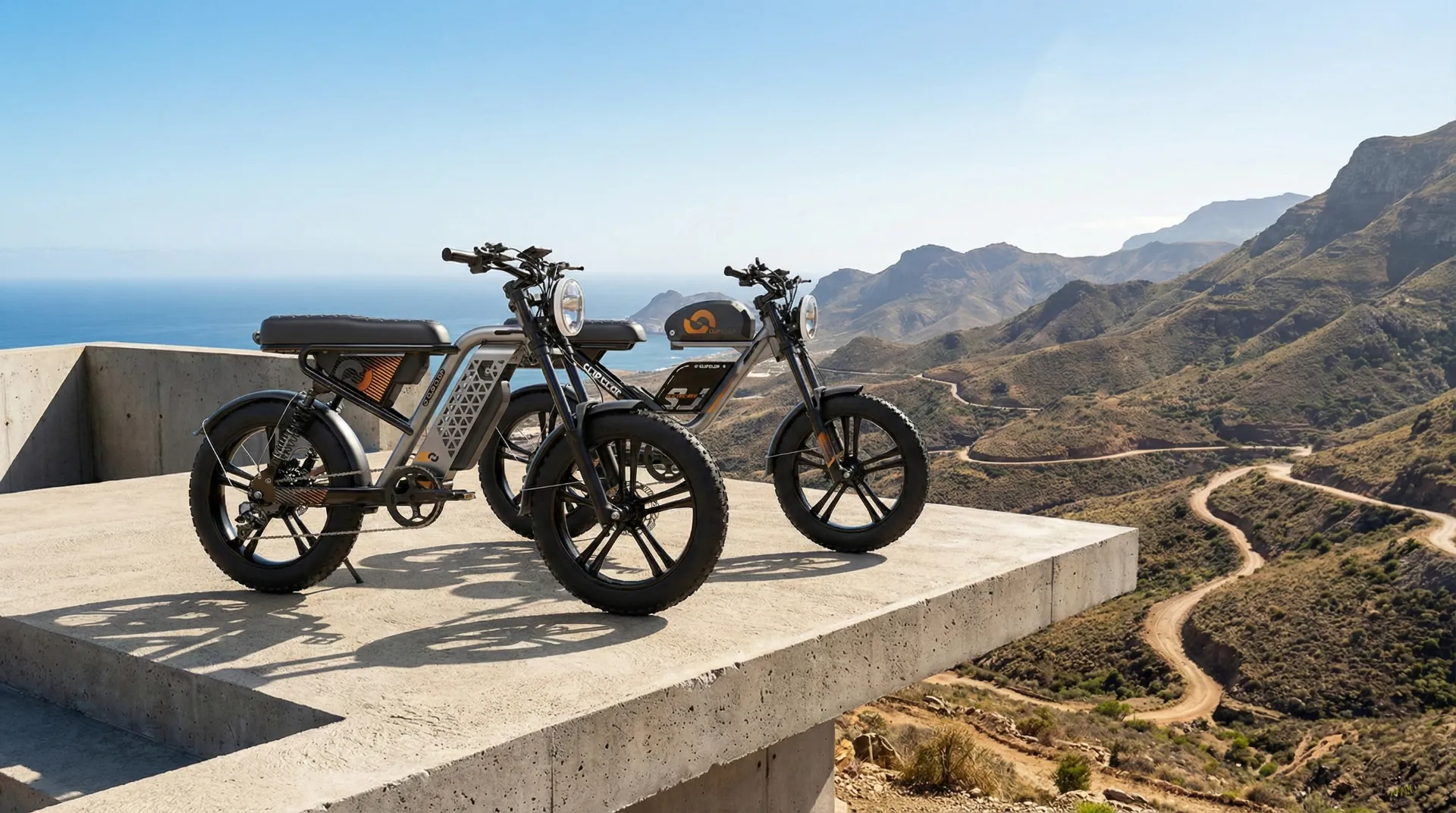
This is why at ClipClop Bike, I prefer giving buyers configuration options instead of pretending one spec fits every market. Our L1, for example, has been positioned around flexible motor configurations, with the 25 km/h setup available for legal markets and higher-output versions for suitable private/off-road use cases. (Электровелосипед ClipClop)
So, how much does a decent e-bike cost in Australia?
Here’s my rough 2026 view.
If you see something under AUD 1,000, be careful. Not always bad, but I start asking questions. What battery cells? What charger? What brakes? Can I get parts? Is the frame tested? Is there a real warranty, or just a nice-looking product page?
Between AUD 1,500 and AUD 2,500, you can find basic commuter e-bikes. These are usually okay for short rides, flat roads, and people who just want help getting to work without sweating through a shirt. Nothing wrong with that.
From AUD 2,500 to AUD 4,500, things get more serious. Better battery, better brakes, better frame, more comfort, sometimes fat tyres, suspension, stronger racks, and a bike that feels less like a toy. Some 2026 Australia market commentary puts the average e-bike cost around AUD 2,500, which feels believable to me, although many good bikes sit above that once service and compliance are included. (Accio)
Выше AUD 4,500, you are often paying for premium mid-drive systems, cargo platforms, big-brand retail support, or very polished design. Sometimes worth it. Sometimes you are paying a brand tax. I know, not everyone likes when manufacturers say this, but it is true.
The cheap bike problem
I am not against cheap e-bikes. I am against fake cheap.
A cheap bike is fine if it is honest. Small battery, basic brakes, simple display, short commute. Good. No problem.
A fake cheap bike is different. It says 100 km range, 1000W motor, huge speed, tiny price, free shipping, magical everything. Then the buyer gets it and the brakes feel weak, the controller overheats, the battery range drops after two months, and nobody replies after the sale.
One Australian buyer once told me, “I saved $600 and spent three weekends fixing the thing.” That sentence stayed in my head. Because that is the real price. Not the checkout price — the headache price.
Many Australian e-bike guides tell buyers to start with riding style, battery range, motor type, frame design, and tyres. I agree with that. But I’d add one more: ask who helps you when the bike is not perfect. Because every bike, even a good one, eventually needs parts. (Ride Electric)
What I would pay extra for
I would pay extra for hydraulic disc brakes. Easy.
Australia has hills, heat, rain, rough bike paths, delivery riders, weekend trails, beach roads, and a lot of stop-start riding. If the bike is heavier, faster, or carrying cargo, brakes are not the place to save money.
I would also pay for a proper 48V system if the bike is not just a flat-road commuter. For example, the ClipClop L1 uses a 48V 15Ah lithium battery, 20×4.0 fat tyres, Shimano 7-speed, dual suspension, and hydraulic disc brakes. That is not the lightest setup, but it gives the bike the kind of stable, chunky feel some riders actually want. (Электровелосипед ClipClop)
For dealers, I think this matters. Australian buyers are not all looking for tiny city bikes. Some want something that can handle mixed roads, gravel, beach areas, caravan parks, delivery routes, and weekend riding. Fat tyre e-bikes are not for everyone, but I do think they are underrated in Australia.
Yes, they are heavier. Yes, they are not as elegant as slim city bikes. I don’t care that much. If the buyer wants comfort, traction, and confidence, fat tyres make sense.
What about bigger batteries?
Bigger battery usually means more money. Also more weight. So don’t just chase battery size blindly.
For long-range use, the ClipClop L3 is closer to what I would show a buyer who says, “I don’t want to charge every day.” It uses a 48V 30Ah battery, 20×4.0 fat tyres, Shimano 7-speed, hydraulic disc brakes, and offers 80–120 km range depending on setup and riding conditions. (Электровелосипед ClipClop)
Would I recommend that to everyone? No.
If someone rides 5 km to the train station, a huge battery is overkill. Heavy, expensive, unnecessary.
But for rental operators, countryside tourism, farms, private trails, resort fleets, or delivery-style use, bigger battery capacity is not a luxury. It is uptime. And uptime is money.
City, folding, fat tyre, mountain — which one is worth it?
For city commuters, I’d keep it simple. Comfortable riding position, legal 250W setup, lights, mudguards, rack, easy charging. Don’t overbuy.
For apartment riders, folding bikes are still useful, but I’m picky. Some folding e-bikes feel loose after months of use. Check the hinge, frame, latch, and battery placement.
For fat tyre bikes, I’m biased. I admit it. I like them for Australia because the roads and paths are not always as smooth as product photos pretend. A 20×4.0 tyre gives comfort and grip. It also looks more fun, which does matter. People buy with their eyes too.
For mountain-style e-bikes, don’t confuse “looks like a mountain bike” with “ready for real mountain riding.” Real off-road riding needs brakes, suspension, frame strength, tyres, and after-sales support. Not just a big motor sticker.
My honest price advice
If you are an Australian consumer, I would rather you buy a slightly less powerful but legal, serviceable, well-built bike than a monster-spec bike you are scared to ride in public.
If you are a dealer, I would not build your whole 2026 range around the cheapest model. It attracts clicks, but it also attracts support problems. Put one entry model in the range, sure. But your real business is probably in the middle: decent battery, compliant configuration, strong frame, good brakes, and clear warranty.
That is where ClipClop Bike is trying to sit. Not the cheapest. Not pretending to be a European luxury brand either. More like: strong practical e-bikes for people who actually ride them, with OEM and ODM options for dealers who know their local market. ClipClop lists product lines across city, folding, mountain, and fat tyre e-bikes, with international standards including EN15194, RoHS, ISO4210, LVD, and EMC noted on its product page. (Электровелосипед ClipClop)
Final thought
A good e-bike in Australia in 2026 is not just a battery and two wheels.
It is a legal product. A transport tool. A weekend toy. Sometimes a delivery machine. Sometimes the thing that replaces a second car.
So when someone asks me, “How much is an electric bike?” I usually say this:
Pay enough to avoid regret. Not enough to show off.
That number is different for everyone, but for most serious Australian buyers, I think the sweet spot sits somewhere between AUD 2,500 and AUD 4,500. Below that, check carefully. Above that, ask what you are really paying for.
And please, before you fall in love with the fastest bike on the page, ask one boring question:
Can I ride this legally where I live?
Not sexy. But very useful.



 English
  Spanish
  Portuguese
  Russian
  Arabic
  French
  Dutch
Dutch  German
  Danish
