

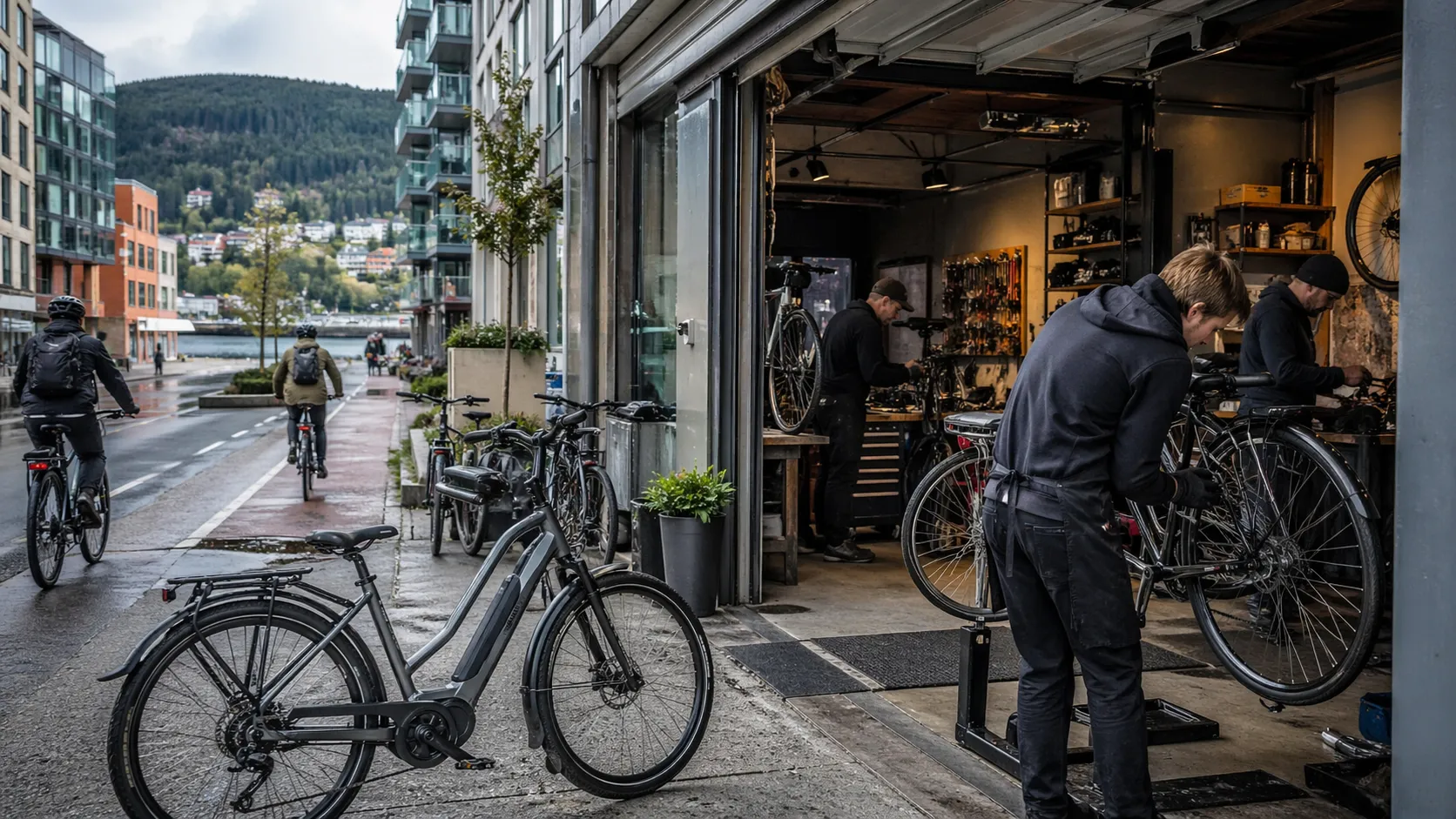
Когда я впервые начал изучать норвежский рынок велосипедов, я ожидал найти нишевого игрока — что-то компактное и провинциальное. Вместо этого я обнаружил то, что по-настоящему меня удивило. В Норвегии работает около 181 активных веломагазина в стране с населением всего 5,4 миллиона человек, и структура этого рынка рассказывает историю, которая выходит далеко за рамки велосипедов. Она говорит о том, как география, климат и потребительское поведение пересекаются, чтобы создать что-то по-настоящему отличное от того, что вы найдете в Северной Америке или даже соседних европейских рынках.
Норвежская ритейл-среда: почему многоспортивные магазины доминируют
Если вы следите за веломагазинами в США, структура норвежского рынка будет казаться иностранной — в лучшем смысле. В отличие от США, где специализированные веломагазины являются основой рынка, норвежская ритейл-среда доминируется многоспортивными магазинами, составляя полные 68% всех веломагазинов. Специализированные веломагазины составляют оставшиеся 32%.
Я все время возвращаюсь к этому моменту, думая о стратегиях входа на рынок. Географическая реальность — длинные снежные зимы, короткие дни — толкает норвежцев к ритейлерам, которые могут обслуживать множество спортивных потребностей круглогодично. Это делает некоторое sense, когда вы об этом думаете: велогонщик в Осло — это не просто велогонщик. Он также, вероятно, является лыжником в условиях лёгкой горы, возможно, пешистом, потенциально бегуном. Многоспортивные ритейлеры соответствуют этой сочетанной стилю жизни способами, которых просто не может предложить специализированный веломагазин.
При этом это не только про погоду. Это про то, как норвежцы думают об активности и отдыхе. Специализированные магазины, хотя и меньше числом, образуют неотъемлемую часть экосистемы — они являются теми, у кого глубокая экспертиза, теми, кто серьезные велогонщики обращаются за конкретными рекомендациями. Они демонстрируют большую влияние, даже если их доля в выручке не велика.
Проникновение в электронную коммерцию: Норвегия ведет мир по онлайн-продажам велосипедов
Вот что остановило меня в деталях: более 80% традиционных веломагазинов и многоспортивных ритейлеров в Норвегии предоставили всеобъемлющие системы онлайн-продаж. Честно признаюсь, я бы не ожидал этого — вероятно, мой образ норвежской велосипедной ритейла был слишком ориентирован на физические магазины, слишком традиционный. Что ещё более важно, это показывает, как сильно стереотипы искажают восприятие рынка.
Эта цифра 80% редка по глобальному масштабу. Большинство рынков — даже зрелых европейских — не достигли этого порога. Оставшиеся точки ритейла в основном представляют собой небольшие индивидуальные операторы, которые компенсируют ограниченную цифровую инфраструктуру через связи с сообществом и высоко персонализированный сервис. Это классическая драма Давида против Голиаты, и честно говоря, данные указывают на то, что маленькие операторы справляются неплохо.
Это вызывает интересный вопрос: если 80% игроков имеют онлайн-системы, значит ли это, что оставшиеся 20% стратегически выбирают сообщество против масштаба? Или они отстают? Данные не полностью отвечают на этот вопрос, но я готов поставить пари, что это сочетание обоих.
Доход рынка и рост: цифры за норвежскую велосипедную страсть
Благодаря публично доступным данным, я смог получить довольно чистую картину выручки норвежских веломагазинов. Общая выручка специализированных веломагазинов составила около 800 миллионов крон в 2023 году. Вот где это интересно: когда вы добавляете многоспортивные ритейлеры и моделируете долю выручки, связанную с велосипедами — около 30%, основанных на анализе потребительского поведения — общий рынок велосипедов в Норвегии в 2023 году составил слегка менее 2 миллиардов крон.
Оглядываясь на недавние тенденции, рынок достиг удивительного роста 40–60% к 2019 году, выделяясь даже среди многих европейских стран. Такой рост за такой короткий период замечателен. Рост был сосредоточен в основном в специализированных веломагазинах — хотя данные пока не полностью захватывают влияние изменений в комбинациях продуктов в многоспортивных ритейлерах, что усложняет картину.
То, что меня по-настоящему вдохновляет, так это разница в выручке на душу населения. Выручка на душу населения в велосипедах составила около 35 долларов США в Норвегии по сравнению с 24 долларами США в США — это 46% больше. Учитывая то, что цены на велосипеды широко равны между двумя странами при текущих курсах обмена, эта разница действительно поражает. Это показывает, что норвежцы не просто больше ездят на велосипедах — они инвестируют больше в велосипед как в активность, lifestyle и транспортную опцию. Здесь есть что-то значимое о том, как велосипед вписывается в норвежскую культуру и образ жизни.
По объему единиц, скорректировав за соотношением велосипедов для взрослых и детей, я оцениваю, что общее количество велосипедов, проданных в Норвегии в 2023 году, составило около 185 000 единиц. Для контекста это примерно один велосипед на каждых 29 человей в стране — невероятно высокий коэфициент продаж на душу населения.
Волна ремонта: отрасль велосипедного ремонта в Европе противоречит гравитации
Вот где это становится по-настоящему интересно с точки зрения отрасли. Даже с сильными объемами продаж велосипедов есть контрарийная тенденция, перерабатывающая рынок: отрась ремонта бьется в рост. И честно говоря, в текущой экономической среде это немного контринтуитивно — именно поэтому это стоит внимания.
В условиях инфляции и роста жизненных расходов большее число потребителей пересматривает свои расходы. Настройка “ремонтируем вместо замены” приобретает реальную значимость, и это прямым образом стимулирует ремонтный бизнес. Мой первоначальный ответ на это был скептицизмом — surely people are still buying new bikes? Но цифры не лгут.
Данные показывают, что 42% ремонтных магазинов увидели рост выручки от 10% до 50% в течение последнего года. Давайте это оценим: это не крайний рост, а значимое расширение. Три четверти ритейлеров по ремонту сообщили о стабильной или возрастающей выручке. В контексте общих экономических недостатков это честно говоря потрясающе. Сервисы ремонта стали, по сути, способом, которым потребители управляют затратами на велосипеды, сохраняя их в рабочем состоянии.
Та волна, о которой я упоминал ранее, связанная с пандемическим ростом продаж велосипедов? Она прямо связана с этим. Многие семьи, купившие новые велосипеды во время пандемии — как предпочтительный способ активности на улице в период блокад — теперь входят в циклы обслуживания. Я почувствовал этот давление в рынке: волна покупателей велосипедов 2020–2021 годов всегда должна была нуждаться в обслуживании. Вопрос был в том, когда, и ответ очевиден: сейчас.
Стоит отметить нюанс. Хотя общая отрась ремонта растет, 17% маленьких ремонтных магазинов испытывают падение выручки. Эта диспропорция в отрасли требует более внимательного внимания. Честно говоря, если вы владелец маленького ремонтного магазина, макро-тренд не автоматически переводится в ваш баланс. Более тщательное управление и стратегические корректировки, похоже, отделяют победителей от отстающих внутри этой более широкой истории роста.
Для меня рост велосипедного ремонта — это не просто рыночное явление. Он демонстрирует способность отрасли адаптироваться к экономическим изменениям, корректироваться и повышать уровень. В этом смысле это полезный индикатор зрелости более широкой велосипедной экономики — и напоминание, что иногда самые интересные возможности находятся в пространствах между заглавными историями о росте.
Часто задаваемые вопросы
Какой процент норвежских ритейлеров продают велосипеды онлайн?
Более 80% традиционных веломагазинов и многоспортивных ритейлеров в Норвегии предоставили всеобъемлющие системы онлайн-продаж — один из самых высоких уровней проникновения электронной коммерцией в глобальном секторе велосипедной ритейла. Это отражает продвинутую цифровую инфраструктуру Норвегии и высокий комфорт потребителей с онлайн-покупками практически во всех категориях продуктов, не только велосипедов. Для сравнения многие европейские рынки до сих пор находятся ниже 60% продаж велосипедов онлайн.
Как норвежские расходы на велосипеды на душу населения сравниваются с США?
Выручка на душу населения в велосипедах в Норвегии составляет около 35 долларов США, в США — 24 доллара США — это 46% больше. Эта разница сохраняется даже при широко равных ценах на велосипеды между двумя странами при текущих курсах обмена. Последствие заключается в том, что норвежцы придают значительно большую ценность велосипедности как активности, lifestyle и транспортной опции. Часть этого отражает более высокую общую покупательную способность Норвегии, но аналитики отрасли считают, что культурные факторы — более сильное экологическое сознание, лучшая инфраструктура для велосипедов и глубоко корененные традиции путешествий на природе — также играют значимую роль.
Электровелосипеды популярны в Норвегии, и как это влияет на ремонтный рынок?
Хотя конкретные данные о доле рынка электровелосипедов в Норвегии в последних отчетах не были приведены, общая европейская тенденция роста электровелосипедов ясно отражена в норвежских ритейлерных паттернах. Страна с разнообразной местностью — включая значительные холмы и горы в многих населенных районах — и сильное экологическое сознание и большая покупательная способность делают Норвегию крайне привлекательным рынком для электровелосипедов. Многоспортивные ритейлеры, которые доминируют в 68% рынка, быстро расширили ассортимент электровелосипедов по мере смещения потребительского спроса. Для ремонтных магазинов это создает растущий специализированный сегмент услуг: обслуживание аккумуляторов электровелосипедов, диагностика моторов и электронные компоненты представляют собой растущие источники дохода, с которыми многие магазины все еще строят возможности.
Эта статья написана Лео из Guangzhou Clipclop Technology Co. Ltd.




 English
  Spanish
  Portuguese
  Russian
  Arabic
  French
  Dutch
Dutch  German
  Danish
