

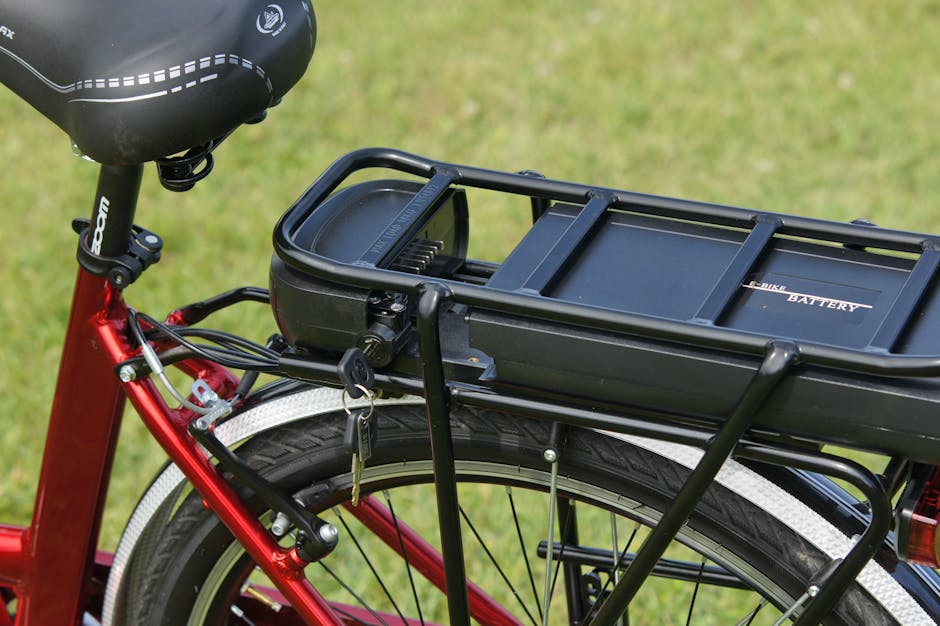
Introduction
I still remember the sinking feeling when my first e-bike’s battery gave out after just eighteen months. The range had been dwindling for weeks, but I ignored the signs. Then one morning, the display showed a full charge that evaporated halfway up a modest hill. That battery cost me more than half what I’d paid for the whole bike. Ever since, I’ve treated every e-bike battery like my wallet depends on it — because it does.
Here’s what I wish I’d known from the start: your electric bike battery isn’t a tank that you fill and forget. It’s a sensitive piece of chemistry that responds to how you treat it. Get the basics right, and you’re looking at five years of reliable service, maybe more. Get them wrong, and you’ll be shopping for a replacement before your second anniversary.
This guide walks you through everything I’ve learned from maintaining e-bike batteries across personal use, demo fleets, and a few hundred hours of conversations with mechanics and engineers who actually build these things. No fluff, no vague recommendations — just the specific habits that make the difference between a battery that fades and one that holds strong year after year.
Understanding Your Electric Bike Battery
Before diving into maintenance, you need to know what you’re actually working with. The vast majority of electric bikes sold today use lithium-ion cells — the same basic technology as your laptop or smartphone, just scaled up. Most e-bike batteries are 36V or 48V systems with capacities ranging from 10Ah to 20Ah, and they contain dozens of individual cells arranged in series and parallel.
To me, the most important thing to understand is the battery management system, or BMS. This little circuit board sits inside the battery housing and does all the heavy lifting: it balances the charge across cells, prevents overcharging, shuts off the power if something goes wrong, and reports the state of charge to your display. You can’t touch the BMS, but you interact with it every time you charge. How you charge determines how hard it works.
From what I’ve seen, the two biggest factors that kill e-bike batteries prematurely are extreme states of charge (running it completely flat or keeping it at 100% for extended periods) and extreme temperatures. Everything in this guide is aimed at keeping your battery in that Goldilocks zone — not too full, not too empty, not too hot, not too cold. Sounds simple, and it actually is, once you build the right habits.
Proper Charging Techniques
Most people treat charging like filling a gas tank: plug it in, walk away, come back when it’s full. That approach isn’t disastrous, but it’s not doing your battery any favors either.
I started paying attention to my charging habits after talking to a battery engineer at a trade show who told me that lithium-ion batteries actually prefer partial cycles. A battery that’s kept between 20% and 80% most of the time will outlast one that’s regularly charged from 0% to 100%. This approach — keeping charge in the middle range — is sometimes called shallow cycling, and it’s the single most impactful habit you can adopt.
Now, I know what you’re thinking — I paid for the full range, I should use the full range. And yes, occasionally running to empty and back to 100% isn’t going to destroy your battery overnight. But making it a habit? That’s where the damage compounds. What I’d suggest is this: charge to about 80% for your regular rides, and only do a full 100% charge when you actually need the maximum range for a specific trip. Your battery will thank you in three years.
Another thing I’m pretty adamant about: use the charger that came with your bike. I know third-party chargers are cheaper, and some of them are genuinely good. But the factory charger is matched to your specific battery’s chemistry and BMS. A charger that delivers slightly higher voltage than your battery expects might not cause immediate failure, but it can cause subtle degradation that accumulates over months. It’s not worth the risk in my experience.
Should you charge after every ride? It depends. If you’ve only used 20% of your capacity, I’d say leave it until you’re closer to 40-50% depleted. But if you’ve hammered the battery hard — lots of throttle, steep hills, heavy load — then charging relatively promptly helps keep the cells balanced. I’ve noticed that batteries that sit discharged for days after a hard ride seem to recover less well than ones I topped off within a few hours. That’s just my observation, but the chemistry backs it up: lithium-ion cells degrade faster when left at low charge.
One more thing worth mentioning: I stopped plugging in my e-bike immediately after getting home from a ride. Let it cool down for thirty minutes or so first. A hot battery charging is a stressed battery, even if the BMS allows it. If your battery is integrated into the frame and hard to remove, at least give the bike five or ten minutes to come down from its operating temperature before you plug it in.
Optimal Storage Practices
I’ll be honest: I used to just leave my e-bike in the garage with whatever charge was in it, sometimes for weeks at a time during slower months. I thought the battery would be fine. It wasn’t fine. Not catastrophic, but I definitely lost some capacity that I didn’t need to lose.
What I’ve learned is that storage charge level is absolutely critical. Lithium-ion batteries stored at 100% charge experience more stress than ones stored around 40-60%. The reason gets into electrochemistry that I won’t pretend to fully understand, but the practical recommendation is clear: if you’re putting your e-bike away for more than a couple of weeks, aim for roughly half charge. Many BMS systems have a storage mode for exactly this reason — if yours has one, use it.
The garage scenario deserves its own discussion. In summer, an unventilated garage in direct sunlight can easily hit 40°C (104°F) or higher. At that temperature, a fully charged battery sitting idle will degrade noticeably faster than one stored at room temperature. I’ve moved my bikes indoors into a climate-controlled space, and while it’s not always convenient, the battery longevity makes it worthwhile.
If you can’t remove the battery, at least keep the bike out of direct sunlight and extreme cold. And if you can remove it — which you can on most e-bikes with external batteries — take it off and bring it inside during winter or peak summer. A battery that’s been stored at room temperature at 50% charge will be in much better shape after six months than one that’s been baking in a hot garage at full charge.
For long-term storage — say, over winter — I’d suggest checking the battery every four to six weeks. If it’s dropped below 30%, give it a top-up to about 50%. This isn’t because the battery will suddenly die otherwise, but because lithium-ion cells can experience subtle imbalances if left at very low charge for extended periods. A brief maintenance charge every month or two keeps everything settled and ready.
Temperature Management
Temperature might be the most underappreciated factor in e-bike battery life. I’ve seen people treat their battery like any other bike component — leaving it in the rain, storing it in freezing sheds, even pressure-washing near the battery mount. And then they’re surprised when the range drops.
Here’s what I tell anyone who asks: lithium-ion batteries are happiest between about 15°C and 25°C (59°F to 77°F). Below freezing, capacity can be temporarily reduced by 20% or more. Above 35°C (95°F), the degradation reactions that normally slowly drain your battery start accelerating significantly. Neither kills your battery instantly, but both add up over time.
I’ve ridden in winter conditions, and the first thing I noticed was the display showing lower range than I’d calculated from the remaining charge. What I didn’t realize at the time was that the cold wasn’t just reducing available capacity — it was also making the charging process less efficient and potentially more damaging if I immediately tried to charge a cold battery. Now I let the bike warm up naturally indoors for at least an hour before charging in winter.
Summer riding presents the opposite challenge. Long climbs on hot days can bring your battery well above its comfortable operating range. I started paying attention to this after noticing my range dropping noticeably on long summer rides compared to the same routes in cooler weather. What I do now on hot days: if I’m doing a long ride, I try to plan a shaded rest stop where the battery can cool down for a few minutes. Not a long break, just enough to bring the temperature back down. It makes a real difference to both performance and long-term health.
On that note — don’t store your e-bike battery in a car trunk during summer. I know someone who did this for a single afternoon and lost about 5% of his total capacity permanently. Cars in direct sunlight become ovens, easily exceeding 50°C (122°F). The battery will survive, but it won’t forget.
Regular Maintenance and Cleaning
Maintenance might sound like a chore, but for e-bike batteries it’s mostly about keeping the connections clean and the housing intact. I check my battery mount and connector roughly once a month — takes about two minutes and has saved me from potential issues more than once.
What I look for: any corrosion on the metal contacts, any signs of moisture getting into the connector, any cracks in the plastic housing. Corrosion is the big one. If you ride in wet conditions — and honestly, most of us do at some point — moisture can get into the connector and cause oxidation on the metal pins. This increases resistance, generates heat, and can lead to charging problems or uneven cell wear. A quick spray of electrical contact cleaner and a clean dry cloth every few weeks keeps things pristine.
For the battery housing itself, I use a slightly damp cloth and nothing else. No detergent, no pressure washer, no aggressive scrubbing. The housing is usually IPX4 or IPX5 rated for water splash resistance, but that rating assumes the connectors are properly seated and the seals are intact. Pressure washing or submerging the battery can compromise those seals, and water inside a battery housing is not a cheap problem to fix.
Something that took me embarrassingly long to figure out: check that the battery is properly seated in its mount before every ride. I developed a habit of rocking the battery back and forth slightly to feel for the click into place. A battery that appears to be seated but isn’t making full contact can cause intermittent power delivery, unexpected cutouts, and unusual strain on the BMS. It’s one of those things that’s obvious once you think about it, but easy to forget.
I’ve also started checking the mounting bolts or quick-release mechanisms on the battery mount every few weeks. Vibration from riding can loosen them over time, and a loose battery mount doesn’t just risk your battery — it risks your safety. I keep a small torque wrench in my bike kit specifically for this purpose.
Signs of Battery Degradation
Here’s something I think a lot of e-bike owners don’t realize: some battery degradation is completely normal and expected. A lithium-ion battery that loses about 5% of its capacity in the first year and then 2-3% per year thereafter is operating normally. If your range drops slightly over time, that doesn’t mean something is broken — it means the chemistry is aging, which it will do whether you ride the bike or not.
What isn’t normal: sudden drops in range, the battery shutting off at a higher charge level than before, the BMS reporting errors, or the battery refusing to charge past a certain point. These are signs of a real problem, not normal degradation.
I’ve developed a simple test that I do every few months: I fully charge the battery, do a known route that I ride regularly, and compare the energy used against my records from when the bike was new. If I’m using significantly more energy to cover the same distance, it usually means either the battery is degrading, the tires need attention, or there’s unnecessary friction somewhere in the drivetrain. Usually it’s the battery, but not always — which is why I check the other factors first.
Another sign I watch for is charging behavior. If a battery that used to take three hours to charge is now done in ninety minutes, that sounds like a good thing, but it might actually mean the BMS is reporting a full charge when the cells aren’t actually balanced. Similarly, a battery that charges faster than the specifications say it should is sometimes a sign that the BMS isn’t doing its balancing job properly.
Physical signs matter too. Any swelling of the battery housing is a serious red flag that requires immediate attention. Swelling indicates gas generation inside the cells, which can progress to thermal runaway in extreme cases. If your battery housing looks puffier than it used to, stop using it immediately and contact the manufacturer. I’ve seen swelling dismissed as “just cosmetic” — that’s dangerously wrong. A swollen battery is a potential fire hazard, no matter how tempting it is to keep riding.
Professional Servicing vs DIY
This is where I have a nuanced take that I’ve changed over the years. Early on, I was a “never pay for servicing you can do yourself” type. But with e-bike batteries, I’ve come to appreciate the value of professional intervention at specific points in a battery’s life.
What you can safely do yourself: all the maintenance described in this article. Cleaning connectors, monitoring charge habits, checking for physical damage, managing storage — these are all well within the capability of any e-bike owner with basic tools and a careful approach. There’s no reason to pay someone to do what you’re doing every month anyway.
What you should probably leave to a professional: anything that involves opening the battery housing, replacing cells, or recalibrating the BMS. I’ve seen YouTube tutorials on e-bike battery rebuilding that make it look straightforward. It is not. Working with lithium-ion cells requires specific tools, safety equipment, and expertise in handling potentially hazardous materials. A poorly assembled battery pack can catch fire — and your living space is not the place to find out what that looks like.
What I’d recommend for most owners: find a reputable e-bike service shop in your area and establish a relationship with them before you actually need them. When something goes wrong — and at some point, something probably will — you’ll want to know exactly who to call. Many shops offer battery diagnostics that can read cell voltages and BMS logs to identify problems before they become critical. I’ve had batteries rescued from premature death by a good diagnostic check that found an imbalanced cell group early.
The cost-benefit equation is worth thinking about explicitly. A professional battery diagnostic might run you $50-100. A replacement battery for a quality e-bike can easily cost $500-800 or more. Spending $100 every two years on professional diagnostics seems like an obvious investment to me now, even if it felt like overkill when I was younger and thought I knew better.
Часто задаваемые вопросы
Q: How often should I charge my electric bike battery?
A: For daily use, aim to keep your battery between 20% and 80% charge. There’s no need to charge after every short ride if you’ve only used a small amount of capacity. What matters more is avoiding deep discharges (below 10%) on a regular basis. If you’ve had a hard ride, topping up within a few hours helps the cells stay balanced.
Q: Should I charge my ebike after every ride?
A: Not necessarily. If you’ve used less than 30-40% of your capacity, it’s generally fine to wait until you’re closer to depletion before charging. However, lithium-ion batteries degrade faster when left at low charge for extended periods, so don’t leave it sitting at 5% for days. And never store a deeply discharged battery — that’s one of the fastest ways to damage it permanently.
Q: What is the best way to store an electric bike battery?
A: Store at roughly 40-60% charge in a cool, dry place at room temperature (15-25°C). If you’re not riding for more than a few weeks, check the charge level monthly and top it up to around 50% if it drops below 30%. Avoid leaving it in direct sunlight, a hot car, or a freezing shed. Many BMS systems have a storage mode — use it if yours supports it.
Q: Can I leave my ebike battery on the charger overnight?
A: Modern e-bike batteries with a quality BMS will typically stop accepting charge once they’re full, so leaving them on the charger overnight occasionally isn’t catastrophic. That said, it’s not ideal as a habit. A battery sitting at 100% charge for long periods experiences more stress than one at 50-60%. If you’re charging overnight out of convenience, try to use a timer or unplug it once it’s full.
Q: How long does an electric bike battery last?
A: Most quality e-bike batteries will deliver meaningful service for three to five years, sometimes longer with good care. Expect roughly 5% capacity loss in year one, then 2-3% per year thereafter as normal calendar aging. Factors like extreme temperatures, deep discharges, and prolonged storage at full charge will accelerate degradation. The habits in this guide can meaningfully extend that lifespan.
Заключение
Ваш аккумулятор электросамоката — это инвестиция, и отдача от неё полностью зависит от того, как вы к нему относитесь. Привычки, которые продлевают срок службы аккумулятора, не сложны и не требуют много времени — они просто специфичны. Заряжайте до 80% для повседневного использования. Храните при 50%, если вы не будете кататься несколько недель. Держите его при комнатной температуре. Очищайте разъёмы. Проверяйте на вздутие.
Ничего из этого не требует специального оборудования или технических знаний. Это просто требует формирования нескольких привычек и небольшого внимания. Взамен вы получаете аккумулятор, который служит дольше, работает лучше и обходится дешевле за километр, чем тот, который обращаются беспечно. У меня текущий аккумулятор электросамоката уже три года, и он всё ещё обеспечивает около 90% от своего первоначального заявленного запаса хода. И это не случайность.
Считайте обслуживание аккумулятора частью опыта катания, а не дополнительной рутиной. Те несколько минут, которые вы тратите на это каждый месяц, ничто по сравнению с днём, когда вам придётся искать замену. И честно говоря, как только вы войдёте в ритм регулярной проверки аккумулятора, это станет второй натурой. Вы уже проверяете давление в шинах. Вы уже проверяете цепь. Теперь добавьте аккумулятор в этот мысленный чек-лист. Он заслуживает внимания.




 English
  Spanish
  Portuguese
  Russian
  Arabic
  French
  Dutch
Dutch  German
  Danish
