

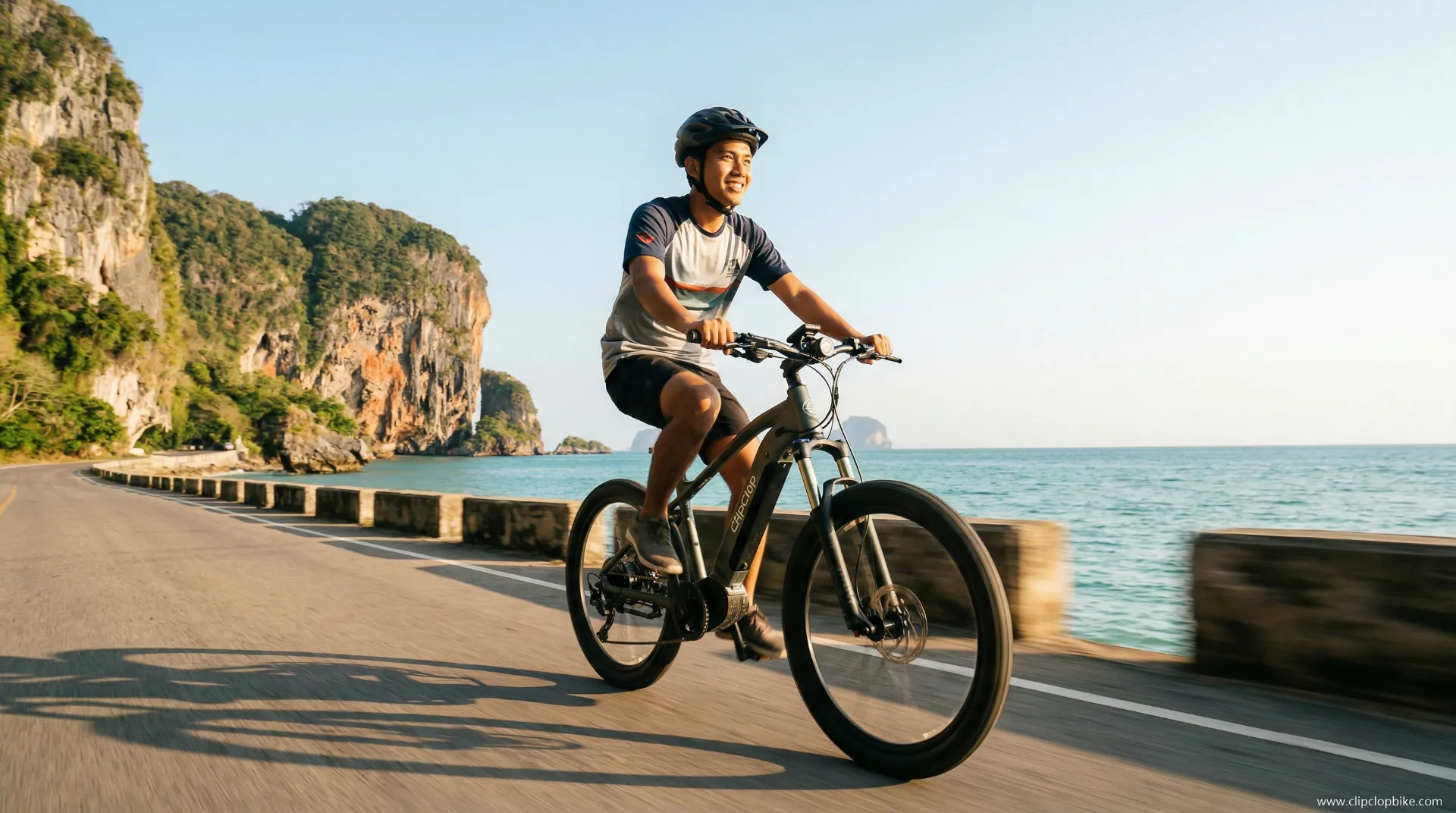
Pourquoi l'Asie du Sud-Est vit un moment des vélos électriques en 2026
J'ai suivi le marché des vélos électriques de l'Asie du Sud-Est depuis environ trois ans, et honnêtement — rien n'a préparé mon expectation à ce qui se passe en 2026. Oui, je sais que ça ressemble à ce genre de discours dans les rapports de marché, mais le changement que je constate actuellement est différent en nature, non seulement en degré. L'infrastructure rattrape enfin son retard. Le comportement des consommateurs évolue. Et surtout, pour quiconque dans cette salle — les dynamiques de gros changent de manière à créer de vraies opportunités, si vous savez où regarder.
Alors laissez-moi vous expliquer ce que je pense réellement se passer. Je serai honnête sur les aspects qui me confusent aussi, car il y a quelques marchés où les données ne s'alignent pas tout à fait. Ce n'est pas un texte de soutien. C'est ce que je dirais à un distributeur qui hésite à engager un capital important en inventaire pour l'Asie du Sud-Est en ce moment.
L'alignement des politiques, de l'économie et de l'infrastructure
La version courte est : les politiques, l'économie et l'infrastructure se sont alignées à peu près en même temps. Mais la version longue est plus intéressante, du moins.
La Thaïlande a appliqué son programme de stimulans des VE au cours de la fin de l'année 2025, et les vélos électriques y ont été inclus de manière à surprindre plusieurs personnes. Je pense même que le gouvernement thaïlandais était un peu surpris par la rapidité dont la courbe d'adoption s'est raidie. Ce que j'entends de la part de contacts à Bangkok, c'est que la structure des subventions rend un vélo électrique compétitif avec un motocycle de 110cc en coût total de possession sur environ 18 mois. Ces chiffres n'existaient pas il y a deux ans. Un véritable tournant pour les familles urbaines thaïlandaises à revenu moyen, le segment idéal pour l'adoption des VE à deux roues.
L'Indonésie fait quelque chose de différent — plus basé sur le terrain, peut-être. La réforme des subventions carburant appliquée au cours de l'année 2025 a fortement impacté les coûts de fonctionnement des motos, et honnêtement, cette pression est réelle pour des millions de Jakartans qui utilisent leurs bikes pour se déplacer au quotidien. Je ne suis pas sûr d'avoir prédits cela, mais le marché d'occasion des vélos électriques en Java est apparemment en plein essor. Les gens achètent des vélos électriques d'occasion en réponse directe aux hausses de prix du carburant. C'est un comportement des consommateurs qui évolue du bas en haut, ce que je trouve plus durable qu'une adoption pilotée par des subventions du haut, vous savez ?
Le Vietnam est peut-être le cas le plus intéressant, honnêtement. Le cadre réglementaire était flou depuis des années — personne n'était sûr que les vélos électriques soient classés comme des bicycles ou des motocyclès, ce qui a créé cette étrange limbo où ni l'infrastructure ni la confiance des consommateurs ne pouvaient vraiment se développer. D'après ce que je peux reconstituer, le ministère vietnamien des Transports a publié de nouvelles directives de classification au début de l'année 2026, et le résultat a été une sorte de situation de demande accumulée. Plutôt, il est plus exact de dire que le marché était prêt et que la réglementation a enfin rattrapé.
Qui achète vraiment : la composition du marché
Voici où ça devient compliqué pour les distributeurs, car la composition du marché évolue de manière à ne pas correspondre aux récits nets, sort of.
Mon instinct me dit que le segment B2B est où se trouve l'histoire du volume réel en 2026, et je suis plus confiant thecelà que sur le marché consommateur, honnêtement. Les plateformes de livraison de repas à travers la région ont électrifié leurs flottes en douceur. Grab, qui avait testé l'adoption de vélos électriques aux Singapour et en Malaisie depuis près de deux ans, a apparemment déplacé une partie significative de sa flotte asiatique du Sud-Est vers des vélos électriques au Q1 2026. Je reviens souvent sur ce point quand je réfléchis à l'endroit où se trouve le volume — ce n'est pas le consommateur individuel, c'est l'opérateur de flotte. Et les opérateurs de flotte ont une logique d'achat complètement différente des consommateurs, probablement.
Pour un distributeur, cette évolution importe beaucoup. Les acheteurs professionnels veulent un support de garantie cohérent — pas quelque chose que chaque marque de vélo électrique peut offrir. Ils veulent une disponibilité de pièces de rechange — critique, car le temps d'arrêt équivaut à un revenu perdu pour les livreurs. Et Ils veulent une infrastructure de service. Honnêtement, je pense que les marques qui vont gagner le marché de gros en ASE au cours des deux à trois prochaines années sont celles qui arrivent à construire des réseaux de service réels, non pas seulement vendre des unités. Je ne suis pas sûr que cette information soit largement comprise dans le marché encore, ce qui signifie qu'il reste une fenêtre pour les distributeurs qui réussissent à créer des relations solides avant que le marché ne devienne plus dense.
Les principaux marchés d'Asie du Sud-Est : un aperçu rapide
Thaïlande
La Thaïlande est probablement le marché de vélos électriques le plus mature de l'ASE actuellement. Les incitations gouvernementales aux VE ont duré assez longtemps que la familiarité des consommateurs est authentiquement élevée. Je me suis dit ça l'autre jour — en 2024, les consommateurs thaïlandais demandaient encore aux détaillants des questions de base sur la portée et le temps de charge. Aujourd'hui, ces questions ont évolué vers des sujets comme la compatibilité du réseau d'échange de batteries et les normes de charge rapide. C'est un acheteur fondamentalement plus sophistiqué. Une différence entre le premier adoptant et la majorité des premiers, si vous êtes familier avec la courbe de Rogers.
Opportunité de gros : Élevée. Le paysage concurrentiel s'épaissit cependant, et je ne suis pas sûr qu'il soit facile d'entrer sur ce marché fraîchement. Mais pour les relations établies, il y a un vrai potentiel d'expansion, peut-être.
Indonésie
L'Indonésie reste fragmentée d'une manière qui crée à la fois opportunité et défi. Le marché de Java est la cible évidente, mais je ne suis pas sûr qu'il soit le seul intéressant. Sulawesi et Sumatra ont des centres urbains émergents où les deux-roues sont le mode de transport principal, et la pénétration des vélos électriques y est extrêmement faible — probablement moins de 51 TP3T des trajets urbains à deux roues. Le problème est que rejoindre ces marchés logistiquement est vraiment difficile, et personne n'a vraiment résolu l'économie de la distribution pour les villes de taille 2 et 3 en Indonésie.
Pour un grossiste, je pense que l'Indonésie est un risque-recompense élevé. Sort of comme entrer sur le marché indien il y a dix ans — le potentiel est énorme, mais la complexité de la distribution à travers 17 000 îles n'est pas pour les faibles cœurs, honnêtement.
Vietnam
Comme je l'ai mentionné, le Vietnam ressent une situation de demande accumulée. Mon corps s'est tendu en lisant les premières directives vietnamiennes de classification, parce qu'elles étaient plus strictes que ce à quoi certaines personnes s'attendaient — exigences de casque, immatriculation, limites de vitesse. Mais la réponse du marché a été surprenamment mature. Les consommateurs vietnamiens, du moins, traitent la réglementation comme un signal de qualité. Plus la réglementation est stricte, plus c'est sûr, et la sécurité compte quand on roule dans le trafic de Ho Chi Minh, vous savez ?.
Opportunité de gros : Très élevée. Je mettrais le Vietnam parmi les premiers marchés à prioriser pour 2026-2027. Je ne suis pas sûr que la densité de concurrence ait suivi le signal de demande, mais je pense qu'elle le fera bientôt.
Philippines
Je suis moins confiant sur les dynamiques du marché philippin, pour être complètement honnête. L'environnement réglementaire est encore quelque peu flou, et l'écart d'infrastructure — l'accès à la charge en particulier — est une barrière réelle. Cependant, le gouvernement philippin a annoncé de nouvelles initiatives en matière de mobilité urbaine à la fin de l'année 2025 qui valent la peine d'être surveillées. Je ne miserais pas un capital d'inventaire sérieux sur les Philippines en 2026 sans plus de données, mais c'est un marché à surveiller de près.
Malaisie et Singapour
Ce sont des marchés matures avec un faible potentiel de croissance pour les nouveaux entrants, probablement. Singapour est essentiellement un marché premium maintenant — le volume n'est pas là pour les distributeurs de marché grand public. La Malaisie a quelques dynamiques intéressantes autour de la poussée gouvernementale de fabrication locale de VE, mais pour un grossiste étranger, l'opportunité est plus axée sur les composants et les pièces de rechange que sur les unités finies, je dirais.
Ce que les grossistes font de travers sur ce marché
Je veux être honnête ici, car je pense que certaines des sagesse conventionnelles sur les marchés de vélos électriques en ASE sont trompeuses, ou plutôt, elles sont techniquement exactes mais pratiquement incomplètes.
La plupart des rapports de marché se concentrent sur les courbes d'adoption des consommateurs. C'est utile, mais ce n'est pas toute la picture pour un grossiste. La vraie question est : où l'inventaire se vend vraiment ? Et l'inventaire se vend le plus vite dans les marchés où le crédit aux consommateurs est accessible, où l'infrastructure de service existe, et où le marché d'occasion est liquide. Ce dernier point — je travaille encore pour comprendre à quel point le marché d'occasion est important en Asie du Sud-Est spécifiquement, mais mon analyse actuelle est qu'il est significatif.
Sur le point du marché d'occasion, je pense que la plupart des grossistes sous-estiment son importance. En Thaïlande et au Vietnam en particulier, un marché d'occasion liquide de vélos électriques accélère la demande, car il réduit le risque perçu d'achat. Si je peux revendre mon vélo électrique en 18 mois à 501 TP3T de sa valeur d'origine, le coût effectif de possession diminue considérablement. C'est quelque chose que je vois influencer les décisions d'achat qui ne apparaît pas dans la plupart des rapports de marché, honnêtement.
La question de l'approvisionnement chinois : complications et opportunités
Voici où je dois faire attention à ce que je dis publiquement, mais je vous donne mon analyse honnête.
Les marques chinoises de vélos électriques ont été agressives en Asie du Sud-Est pendant les deux dernières années, et certaines ont gagné une part de marché significative. AOV et Yadea ont particulièrement agi en Thaïlande et au Vietnam avec des prix agressifs. L'écart de qualité entre les marques chinoises et non chinoises s'est réduit considérablement — je dirais qu'il est vraiment étroit maintenant pour les produits de milieu de gamme, bien que le segment premium ait encore des leaders clairs. Bosch systems, par exemple, sont largement considérés comme le benchmark de qualité dans le segment 40-60km/h.
Pour un distributeur travaillant avec des marques non chinoises, cela crée à la fois pression et opportunité. Pression : les marques chinoises sous-cuttent sur les prix d'une manière qui rend la comparaison basée uniquement sur le prix difficile à gagner. Opportunité : les marques avec les meilleurs réseaux de service et l'infrastructure de garantie la plus solide gagnent sur le coût total de possession plutôt que sur le prix initial. Je pense que la leçon du marché des motocyclès en Asie du Sud-Est — où les marques japonaises ont dominé pendant des décennies malgré la concurrence chinoise — est que le service et la fiabilité l'emportent à moyen et long terme.
Prix et marges : les chiffres
Une question que je reçois souvent : quel type de marge peut espérer un distributeur sur le marché de gros de vélos électriques en ASE en 2026 ?
Honnêtement, la réponse honnête est : ça dépend fortement du marché et du segment, et je ne vous donnerais pas un seul chiffre, car ce serait trompeur. Laissez-moi le décomposer, sort of.
Thaïlande : Les marges se sont comprimées au cours des 18 derniers mois en raison d'une concurrence accrue, notamment des marques chinoises. Les vélos électriques de milieu de gamme dans la gamme de 750W-1500W qui se vendent au détail entre 45 000 et 75 000 THB offrent généralement aux distributeurs une marge de 12-181 TP3T. Le segment premium — au-dessus de 100 000 THB — peut atteindre 20-251 TP3T de marge, mais le volume est plus faible. Vietnam : Les marges sont actuellement plus favorables aux distributeurs, en partie parce que le marché est moins mature et en partie parce que les coûts logistiques pour les pièces de rechange sont encore relativement élevés. J'ai entendu parler de distributeurs au Vietnam obtenant des marges de 22-281 TP3T sur des produits de milieu de gamme, bien que je ne sois pas sûr que ces chiffres tiennent compte de la concurrence croissante.
Indonésie : Le picture des marges est complexe en raison du défi logistique archipelagique. Pour les distributeurs javanais avec une bonne infrastructure logistique, 18-241 TP3T sur les produits de milieu de gamme est réalisable. Pour les distributeurs tentant d'atteindre les îles extérieures, la structure coût logistique change la donne, sort of.
Risques clés pour 2026-2027.
Je ne suis pas sûr que chaque distributeur prenne en compte les risques que je pense être les plus matériels en ce moment. Alors laissez-moi les nommer explicitement, ou plutôt autant que possible honnêtement.
Le risque de change est réel. Le dong vietnamien, le baht thaïlandais et le rupiah indonésien ont tous montré une volatilité accrue en 2026, en partie en raison des dynamiques commerciales mondiales plus larges. Un distributeur qui importe en USD ou EUR et vend en devise locale est exposé, et je pense que cette exposition est sous-estimée. Mon instinct me dit que nous allons voir une consolidation du paysage des distributeurs due à des fluctuations de change au cours des 12-18 prochains mois.
Le risque réglementaire varie d'un marché à l'autre mais est matériel en Philippines et en Indonésie en particulier. Les deux marchés ont des conversations réglementaires actives sur la classification des vélos électriques et les normes de sécurité. Si de nouvelles normes sont introduites exigeant une ré-certification des inventaires existants, l'impact financier pourrait être significatif. Je ne suis pas sûr que ce soit une raison d'éviter ces marchés, mais c'est certainement une raison de gérer l'inventaire avec prudence et de ne pas surcharger.
Le risque de transition technologique est le plus intéressant, honnêtement. Les batteries solides ont été "dans les deux à trois ans" depuis environ cinq ans. Je ne suis pas sûr qu'elles arriveront à l'échelle commerciale pour les vélos électriques en 2026-2027, mais si elles le font, les améliorations de portée et de temps de charge seraient significatives. Pour un grossiste qui stocke des batteries à accumulateur de plomb ou de première génération de lithium, cette transition pourrait être disruptive.
Ce que je ferais si je commençais frais en 2026.
Si je étais un distributeur entrant sur le marché de vélos électriques en ASE en 2026 — et je réfléchis souvent à cela sous divers angles — je pense que ma stratégie serait quelque chose comme ceci.
D'abord, choisir le Vietnam comme marché d'entrée. La clarté réglementaire est nouvelle, la densité de concurrence n'a pas encore rempli, et la courbe d'adoption des consommateurs s'accélère. Les défis logistiques sont réels mais gérables pour un opérateur focalisé.
Deuxièmement, je prioriserais une marque avec une infrastructure de service réelle plutôt que la option au prix le plus bas. Je sais que ça sonne comme évident, mais en pratique, je vois les distributeurs se laisser attirer par la concurrence sur les prix de manière à underminer leur position à long terme. Les marques qui construisent vraiment des réseaux de service en ASE en ce moment — ces relations seront extrêmement précieuses dans trois à cinq ans, quand le marché sera plus mature et compétitif.
Troisièmement, je réfléchirais soigneusement au segment professionnel B2B comme moteur de volume. Oui, les marges sur les ventes professionnelles sont généralement inférieures aux ventes au détail, mais le volume est plus élevé, le cycle d'achat répété est plus court, et les opérateurs professionnels sont généralement des acheteurs plus sophistiqués qui apprécient la fiabilité plutôt que les aspects visuels. Je reviens souvent au.
récit de l'électrification de la flotte Grab car je pense qu'il s'agit d'un indicateur de tendance de l'endroit où se dirige le marché plus large. Quelles sont les tendances de vélos électriques qui dominent l'Asie du Sud-Est en 2026 ?.
Questions fréquemment posées
Les principaux moteurs sont : les incitations gouvernementales aux VE en Thaïlande qui rendent les vélos électriques compétitifs avec les motocyclès en coût total de possession ; la pression sur les prix du carburant en Indonésie qui stimule une adoption de bas en haut ; et la clarté réglementaire au Vietnam qui débloque une demande accumulée. La tendance de l'électrification des flottes — en particulier des plateformes de livraison de repas — est également un moteur de volume majeur qui est moins visible dans les rapports de marché axés sur les consommateurs.
Comment la politique gouvernementale façonne-t-elle l'adoption des vélos électriques en Thaïlande, au Vietnam et en Indonésie ?.
La Thaïlande a le cadre politique le plus mature, avec des subventions aux VE qui ont duré plus de deux ans. Le Vietnam a publié de nouvelles directives de classification au début de l'année 2026, résolvant des années d'incertitude réglementaire. L'approche politique de l'Indonésie a été plus fragmentée, mais la réforme des subventions carburant en 2025 a indirectement accéléré l'adoption des vélos électriques. Les Philippines ont encore une incertitude réglementaire qui rend l'entrée sur le marché plus risquée.
Quels marchés d'Asie du Sud-Est offrent la meilleure opportunité pour les distributeurs de vélos électriques en 2026 ?.
Le Vietnam est actuellement le marché à plus haute opportunité en raison de la nouvelle clarté réglementaire et de la faible densité de concurrence. La Thaïlande est mature mais reste profitable pour les distributeurs bien positionnés avec des relations existantes. L'Indonésie offre un potentiel à long terme énorme mais présente une complexité logistique significative. Les Philippines et la Malaisie sont de moindores priorité pour les nouveaux entrants en 2026.
Vietnam is currently the highest-opportunity market due to new regulatory clarity and relatively low competitive density. Thailand is mature but still profitable for well-positioned distributors with existing relationships. Indonesia offers enormous long-term potential but has significant logistics complexity. Philippines and Malaysia are lower priority for new entrants in 2026.
Quels sont les principaux défis pour les grossistes de vélos électriques entrant sur le marché de l'Asie du Sud-Est ?
Les principaux défis sont : la volatilité des devises pour la plupart des monnaies de l'ASE en 2026 ; le risque réglementaire sur les marchés moins stables comme les Philippines et l'Indonésie ; la complexité logistique pour la distribution vers les îles périphériques sur les marchés archipélagiques ; et la nécessité de construire ou de s'associer à une infrastructure de service — ce qui est le facteur critique de succès que de nombreux distributeurs sous-estiment.
Dans quelle mesure les prix de gros des vélos électriques varient-ils selon les marchés de l'ASE ?
Les prix varient considérablement. La Thaïlande a connu une compression des marges à 12-18% sur les produits de milieu de gamme en raison de la concurrence des marques chinoises. Le Vietnam offre actuellement des marges distributeur plus favorables — 22-28% — car le marché est moins mature. Les marges en Indonésie vont de 18-24% pour les distributeurs bien positionnés à Java mais changent significativement pour la logistique des îles périphériques. Les fluctuations des devises en 2026 ont rendu la prévision précise des marges difficile sur tous les marchés.
Notes régionales : Les prix et la disponibilité varient selon les régions de l'Asie du Sud-Est. Renseignez-vous auprès des distributeurs locaux pour des informations spécifiques au marché. Les cadres réglementaires pour les vélos électriques diffèrent considérablement selon les marchés de l'ASE et sont susceptibles de changer. Cet article reflète les conditions telles qu'elles existaient en 2026. Le contenu est fourni à titre informatif uniquement et ne constitue pas un conseil en investissement ou en affaires.



 English
  Spanish
  Portuguese
  Russian
  Arabic
  French
  Dutch
Dutch  German
  Danish
