

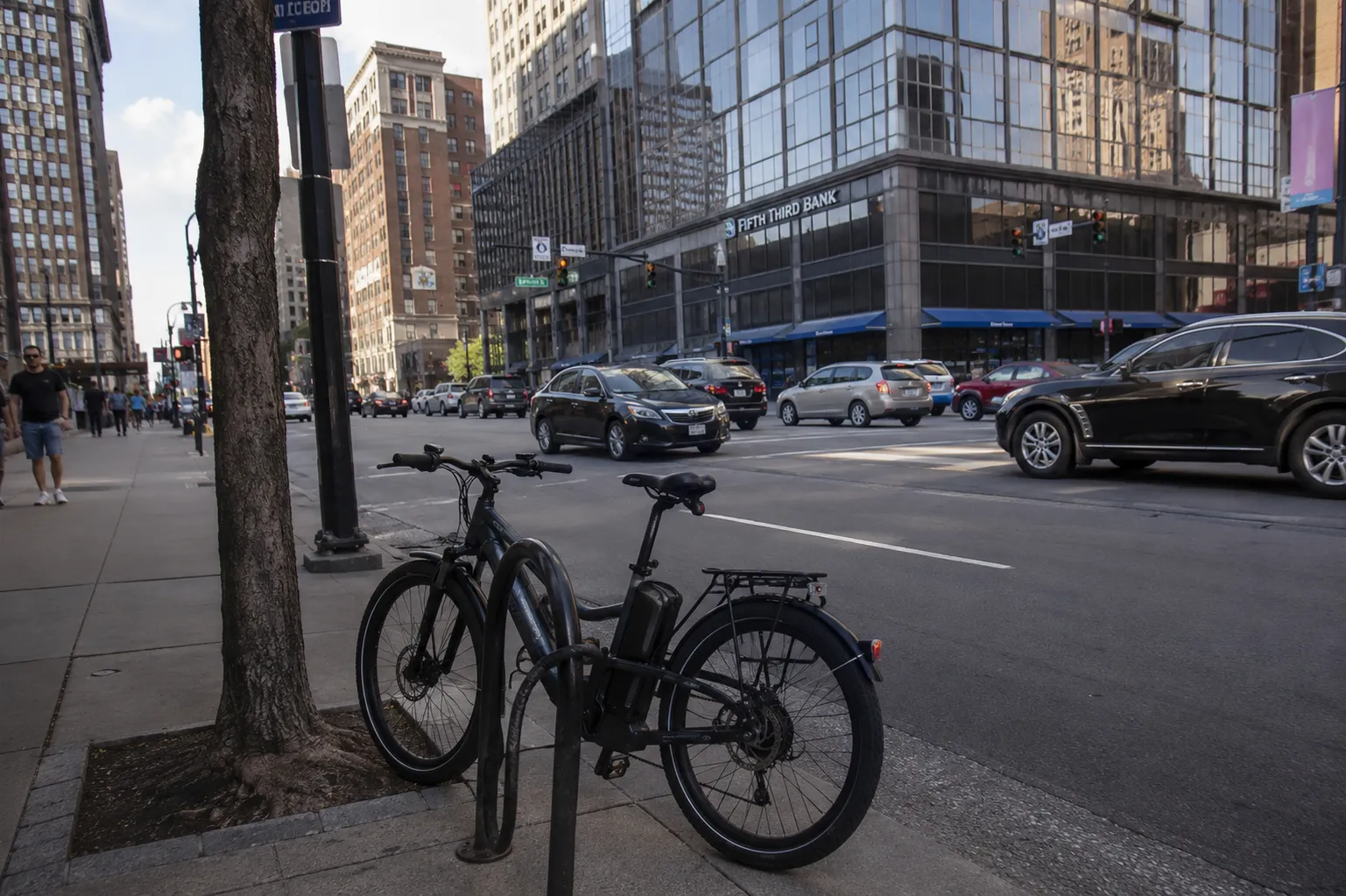
I’m Leo Liang. I work for ClipClop Bike out of Guangzhou, and I’ve been slapping motors onto bicycle wheels since 2017. If you’re reading this in 2026, you’ve probably already watched seventeen YouTube videos arguing about hub motors versus mid-drives. Some guy with a $7,000 German bike yells that mid-drives are “the only proper solution.” Another blogger—let’s call him Mike from Colorado—posts a teardown and says hub motors are “dead technology.” I read that stuff while drinking my morning coffee, and honestly? I laugh. Not because they’re stupid. Because they’re selling a story that makes them money, not because it fits your life.
Here’s my messy, biased, factory-floor opinion: for most American riders in 2026, a quality hub motor gets you 90% of the joy with about 40% of the headache. And yeah, I’m talking about our L1, but I’m also talking about the whole category. Let me explain why I think this, and where I’m probably wrong.
What a Hub Motor Actually Is (Without the Textbook Boring You)
Look, a hub motor is just an electric motor stuffed into the center of your wheel. That’s it. No fancy chain integration. No weird bottom-bracket wizardry. The motor lives in the hub—front or rear—and when you twist the throttle or pedal, it spins the wheel. Directly.
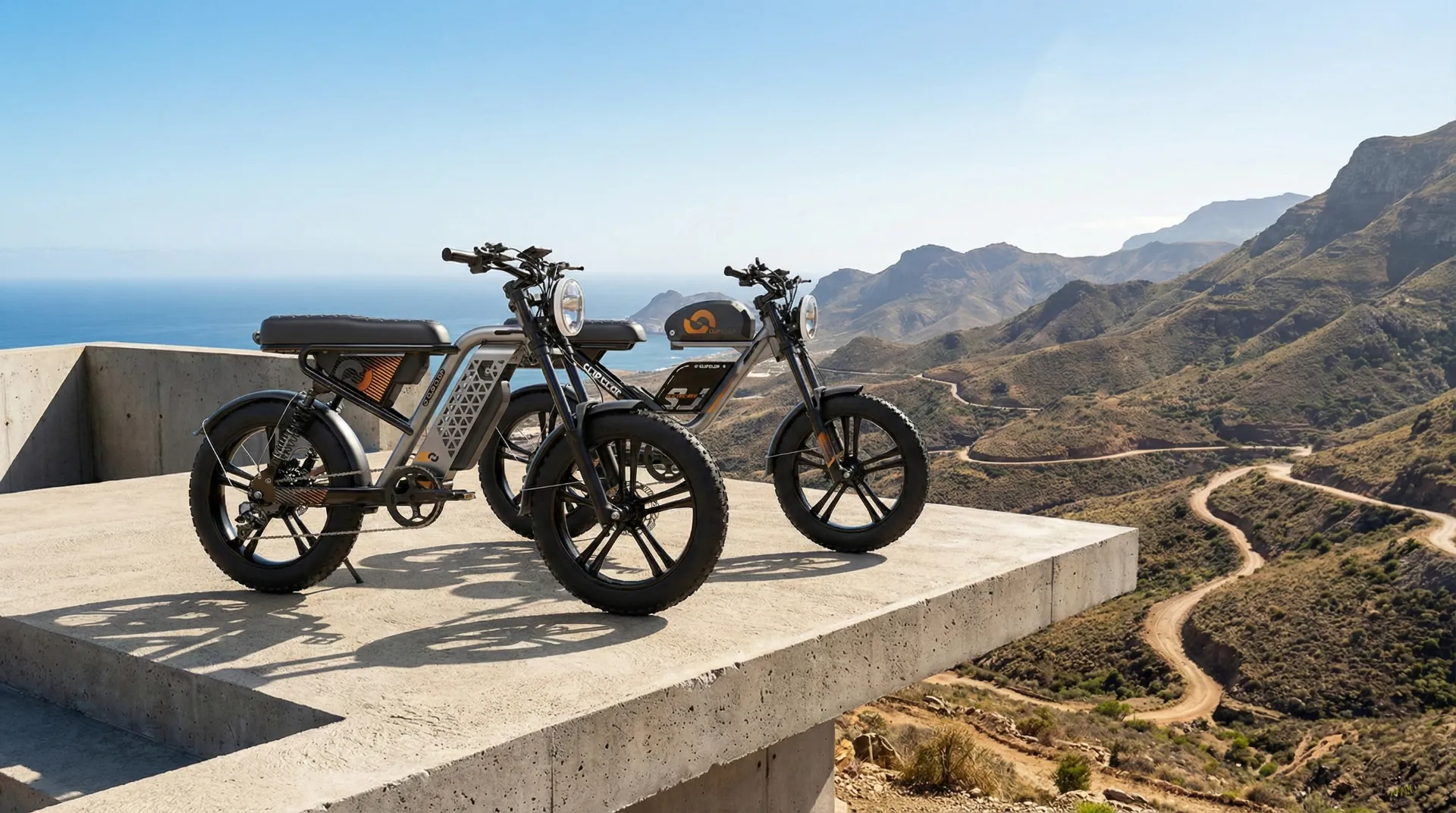
On our ClipClop L1, we use a 48V 750W rear hub motor that peaks at 1200W. Some engineers at competing factories tell me I should switch to a mid-drive for the US market because “Americans want premium.” I nod politely, then ignore them. Why? Because I’ve shipped thousands of L1 units to California, Texas, Florida, and New York, and the feedback I get isn’t about “motor placement philosophy.” It’s about whether the bike climbs the damn hill and whether the rider can fix it when something breaks.
Mike from Colorado argues that mid-drives “preserve the natural feel of pedaling.” Sure. I get it. But here’s what he doesn’t mention in his affiliate-link-heavy review: when that mid-drive motor burns out, you’re shipping the whole bike to a specialty shop. When a hub motor has issues? Any bike mechanic in America can yank the wheel off and swap it. Or you can do it yourself with basic tools. I had a customer in Austin—let’s call him “J”—who bought an L1 in 2024. He emailed me last month saying he hit a pothole so hard he bent the rim. He bought a replacement wheel from us, watched a 12-minute video, and had it running again by Sunday afternoon. Try doing that with a mid-drive system integrated into your frame. Good luck.
Why I Still Pick Hub Motors for the L1 in 2026
First, simplicity. Hub motors don’t mess with your drivetrain. The L1 runs a 7-speed Shimano system completely independent of the motor. That means when your battery dies—and it will, because Americans love running things to zero—you’re pedaling a normal bike. Not a 60-pound anchor with a locked-up motor dragging your chain.
Second, noise. Or rather, the lack of it. Direct drive hub motors are basically silent. Geared hubs have a slight whine, but it’s nothing compared to the mechanical clatter of a mid-drive under load. One blogger—Sarah from Oregon, she runs a small channel with maybe 8,000 subscribers—actually tested decibel levels last year. She found that most hub motors run 6 to 10 dB quieter than mid-drives at cruising speed. Is that a dealbreaker? No. But when you’re riding through a quiet neighborhood at 6 AM, you notice.
Third, and this is where I get slightly defensive: cost. I know Americans are tired of hearing about value. Everyone wants to pretend they buy “premium.” But let’s be real. The L1 ships with a 48V 15Ah battery (720Wh), hydraulic disc brakes with 180mm rotors, a color LCD display, IPX6 waterproofing, and that 750W motor. We sell it at a price point that would barely cover the motor+battery combo on a mid-drive equivalent. A reviewer in Michigan—he goes by “EBikeJim”—calculated that to get equivalent specs from a mid-drive brand, you’re looking at $2,800 minimum in 2026. Our L1? Less than half that. Jim called it “the most honest spec sheet in the budget-fat-tire category.” I printed that email and taped it to my office wall.
The Two Flavors: Direct Drive vs. Geared Hub Motors
Not all hub motors are the same, and this is where I think a lot of buyers get confused in 2026.
Direct drive hub motors are big, heavy, and simple. No internal gears. The motor itself is the wheel hub. They’re incredibly durable because there’s almost nothing to break. They also offer regenerative braking, which sounds cool until you realize it gives you back maybe 3-5% of your battery on a typical ride. Big whoop. The downside? They’re inefficient at low speeds and they weigh a ton. If you live in San Francisco and you’re climbing 20% grades daily, a direct drive hub motor without massive wattage is going to struggle and overheat.
Geared hub motors, which is what we use on the L1, have internal planetary gears. The motor spins fast, the gears step it down, and you get massive torque from a relatively small package. Our L1 motor kicks out enough torque to push a 250-pound rider up a moderate hill at 15 mph without the motor crying for mercy. The tradeoff? Those internal gears mean slightly more noise and, theoretically, wear over time. But here’s the thing: we’ve been producing this motor design since 2019. I have fleet customers in Florida—one rental company, let’s not name them, but they run about 40 L1s on beach paths—who’ve logged over 4,000 miles per bike with zero motor failures. The gears are sealed. They’re bathed in grease. They don’t die if you build them right.
A blogger named “TechCycle” did a teardown of a 2025 geared hub motor last year and found that the nylon planetary gears showed minimal wear after 2,000 miles. He wrote, and I’m quoting loosely here, “The death of geared hub motors has been greatly exaggerated by mid-drive evangelists.” I agree. Aggressively.
How to Actually Choose: Stop Looking at Spec Sheets Like They’re Bible
Americans love big numbers. I get it. You see “1000W” on one bike and “750W” on another, and your brain says bigger is better. But that’s not how this works in real life.
Our L1 is rated 750W continuous with a 1200W peak. In 2026, that puts it comfortably into Class 3 territory in most US states, meaning it’ll hit 28 mph with pedal assist. But the real question isn’t watts—it’s how you ride. Are you commuting 8 miles on flat Chicago streets? A 350W hub motor would handle that fine. Are you hauling groceries up hills in Seattle? You want torque, not just top speed. That’s why we paired the L1 motor with a 25A controller and fat 20×4.0 tires. The tires absorb punishment and maintain traction, while the motor has enough headroom that it’s not running at 100% capacity all the time. Motors last longer when they’re not redlining.
Another thing Americans ignore: weight distribution. Rear hub motors put weight on the back wheel. That’s actually great for traction, especially with our fat tires. But if you load up a rear rack with 50 pounds of cargo and you’re already heavy, you might feel the front end get light on steep climbs. One customer in Denver—let’s call her “M”—told me she solved this by moving her battery to a frame bag instead of the rear rack. Smart. We didn’t design the L1 with that specific hack in mind, but it worked. That’s the kind of real-world adaptation you don’t see in polished marketing videos.
The Maintenance Reality Nobody Wants to Talk About
Here’s where I get genuinely biased. In 2026, the US e-bike market is flooded with brands that have beautiful websites and zero spare parts infrastructure. They sell you a $3,500 mid-drive bike, and when the proprietary controller dies in 18 months, you’re told the part is “backordered indefinitely.” I see this in my inbox weekly. People email ClipClop asking if we can fix bikes we didn’t even make, because the original brand ghosted them.
Hub motors? They’re stupidly serviceable. The L1 uses a standard rear hub with a cassette mount. If the motor fails—which, honestly, is rare—we can ship you a complete replacement wheel. You don’t need a Bosch-certified technician. You don’t need diagnostic software. You need a wrench and maybe 30 minutes.
A YouTuber I follow, “FixItFrank” from Ohio, put it perfectly in his 2025 review of a budget hub motor bike: “This thing is boringly reliable, and in the e-bike world, boring is a compliment.” I want our bikes to be boringly reliable. That’s the goal. Not exciting. Not “revolutionary.” Just… there. Working. Every morning.
But Okay, I’ll Admit Where Hub Motors Lose
I’m not a fanatic. I have a brain. There are absolutely situations where I’d tell you to buy a mid-drive instead of our L1.
If you’re doing serious mountain biking on technical trails? Mid-drives win. They use your bike’s gears, so the motor stays in its efficient RPM range while you downshift for climbs. Hub motors can’t do that. They have one gear ratio. If you’re trying to crawl up a rock garden at 3 mph, a hub motor will overheat and complain.
If you’re a purist who wants the bike to feel exactly like a acoustic bicycle when the motor is off? Mid-drives are better. Hub motors add unsprung weight to the wheel. On the L1, that rear wheel is heavy. You feel it when you’re lifting the bike onto a rack or bunny-hopping a curb. At 39 kg (about 86 pounds), the L1 is not light. I don’t pretend it is.
And if you’re in Europe, where laws cap motors at 250W? Mid-drives make more sense because they’re more efficient at low power. But this article is for Americans, and Americans—bless your hearts—love power.
Real Talk on Range and Battery in 2026
The L1 carries a 48V 15Ah lithium battery. We rate it at 50-60 miles per charge, but that’s a fantasy number if you’re running full throttle everywhere. A blogger called “RangeTestRob” (I swear these names get worse every year) tested a similar 720Wh hub motor bike in 2025 and got 38 miles at 20 mph on mixed terrain with throttle-only. With pedal assist at level 2? He pushed past 55 miles.
I tell customers: expect 35-45 real-world miles if you’re actually using the bike like a motorcycle. Less in winter. Cold murders lithium batteries. We had a fleet buyer in Minnesota who learned this the hard way in January 2025. Their range dropped 30%. They emailed me angry. I explained that physics doesn’t care about their feelings. They bought battery warmers. Problem mostly solved.
The battery on the L1 is removable, which I insist on. If you live in an apartment in Brooklyn or Portland, you’re not hauling 86 pounds up four flights of stairs. You pop the battery out, carry that 8-pound brick inside, and leave the bike locked downstairs. This seems obvious, but you’d be shocked how many “premium” brands in 2026 still integrate batteries into the frame. Why? Because it looks sleek. Great. Enjoy your sleek bike with a dead battery you can’t charge indoors.
The “Chinese Factory” Elephant in the Room
I know some American buyers in 2026 are still skeptical of Chinese e-bike brands. Fair. There’s a lot of junk out there. I’ve seen factories in my own province slap 1000W stickers on 350W motors, use fake battery cells, and ship brakes that barely stop a skateboard. It embarrasses me.
But here’s what I’ll say: ClipClop has been building the L1 platform since 2019. We iterate. We listen. When a customer in Arizona told us the stock seat was torture on 20-mile rides, we switched suppliers. When another rider in North Carolina said the headlight wasn’t bright enough for unlit rural roads, we upgraded to an adaptive high/low beam setup for 2026. These aren’t revolutionary changes. They’re boring, incremental improvements. That’s how you build something decent. Not by launching a new “generation” every year with a fresh marketing campaign, but by fixing the small stuff that annoys people.
A small-time reviewer—”UrbanRideZach,” maybe 5,000 Instagram followers—tested our L1 against a $2,200 competitor last summer. He wrote: “The ClipClop feels like it was designed by people who actually ride bikes, not by a marketing team trying to win design awards.” That might be the nicest thing anyone’s ever said about us. I screenshot it.
So Who Is the L1 Actually For?
I’m not going to tell you it’s for everyone. It’s not.
If you’re a spandex-clad road cyclist training for a century ride? Get out of here. The L1 weighs 86 pounds. It has 4-inch fat tires. It’s not a road bike.
If you want a stealthy urban commuter that looks like a regular bicycle? The L1 is not subtle. It’s got a big battery, a color LCD, and tires that scream “I’m here.”
But if you’re a delivery driver in LA who needs to run 40 miles a day without breaking the bank? If you’re a campground host in Montana who wants to check trail cameras without starting a truck? If you’re a retiree in Florida who just wants to cruise to the grocery store and back without sweating through your shirt? The L1 makes sense. The hub motor makes sense. The simplicity makes sense.
One of my favorite customers—let’s call him “R” in Texas—bought three L1s. One for himself, one for his wife, one for his adult son. He emailed me a photo of them riding on Galveston beach at sunset. He said, and I’m paraphrasing from memory, “We’ve had two mid-drives in this family. Both spent more time in the shop than on the road. These just work.” That’s the review that matters to me. Not the spec sheet comparison. The sunset photo.
Frequently Asked Questions (Because I Know You’re Thinking Them)
Can a hub motor really handle hills?
Yes. No. Depends. The L1 climbs 10-15% grades fine with a rider under 220 pounds. If you’re 300 pounds and trying to summit a mountain pass? It’ll struggle. Any 750W system would. Use pedal assist. Shift down. Don’t expect magic.
Is maintenance really that much easier?
Yes. Change a tire? Standard procedure. Adjust brakes? Normal bike stuff. The motor either works or it doesn’t. If it doesn’t, you replace the wheel. You don’t need a computer to diagnose it.
Why 20×4.0 fat tires?
Because American roads are terrible. Potholes, cracks, gravel, surprise curbs. The fat tires eat that stuff. They also float over sand and snow better than skinny tires. The tradeoff is rolling resistance, which hurts efficiency slightly. I think it’s worth it. You might not.
What about the 2026 regulations?
As of early 2026, most states still classify 750W bikes as Class 2 or 3, depending on throttle vs. pedal-assist top speed. The L1 can be configured to meet local limits. We ship with documentation. But honestly? Enforcement is patchy. I’m not telling you to break laws. I’m telling you that a 750W hub motor is not a motorcycle, and treating it like one in legislation is silly.
Will you ever make a mid-drive?
Maybe. If enough customers demand it and I can source a reliable motor at a price that doesn’t insult my conscience. But in 2026? No. I’m not jumping on that bandwagon just to charge you an extra $1,500 for complexity you don’t need.
My Final, Messy Thoughts
I’ve been in this industry long enough to see trends come and go. In 2020, everyone wanted foldable bikes. In 2022, it was dual batteries. In 2024, mid-drives were the “future.” Now in 2026, I’m seeing a weird backlash where people are realizing that simple, fixable, affordable bikes are… actually pretty good.
The hub motor is not sexy. It’s not going to get breathless coverage from tech blogs. It’s not “AI-powered” or “smart” or whatever buzzword is hot this quarter. It’s just a motor in a wheel. It pushes you forward. It doesn’t ask for much. When it eventually dies, you swap it without crying.
That’s why I still build the L1 around a rear hub motor in 2026. Not because I’m ignorant of mid-drive technology. Because I’ve watched too many customers get burned by complexity they were sold but never needed.
If you want a bike that makes you feel like a tech pioneer, buy something else. If you want a bike that starts every morning, carries your groceries, and doesn’t require a second mortgage? Maybe give the L1 a look. Or don’t. I’m not your dad. I’m just a guy in Guangzhou who thinks Americans are overpaying for mid-drive hype, and I’m tired of pretending otherwise.
Ride safe. Or don’t. But if you break something, at least make sure you can fix it.



 English
  Spanish
  Portuguese
  Russian
  Arabic
  French
  Dutch
Dutch  German
  Danish
