

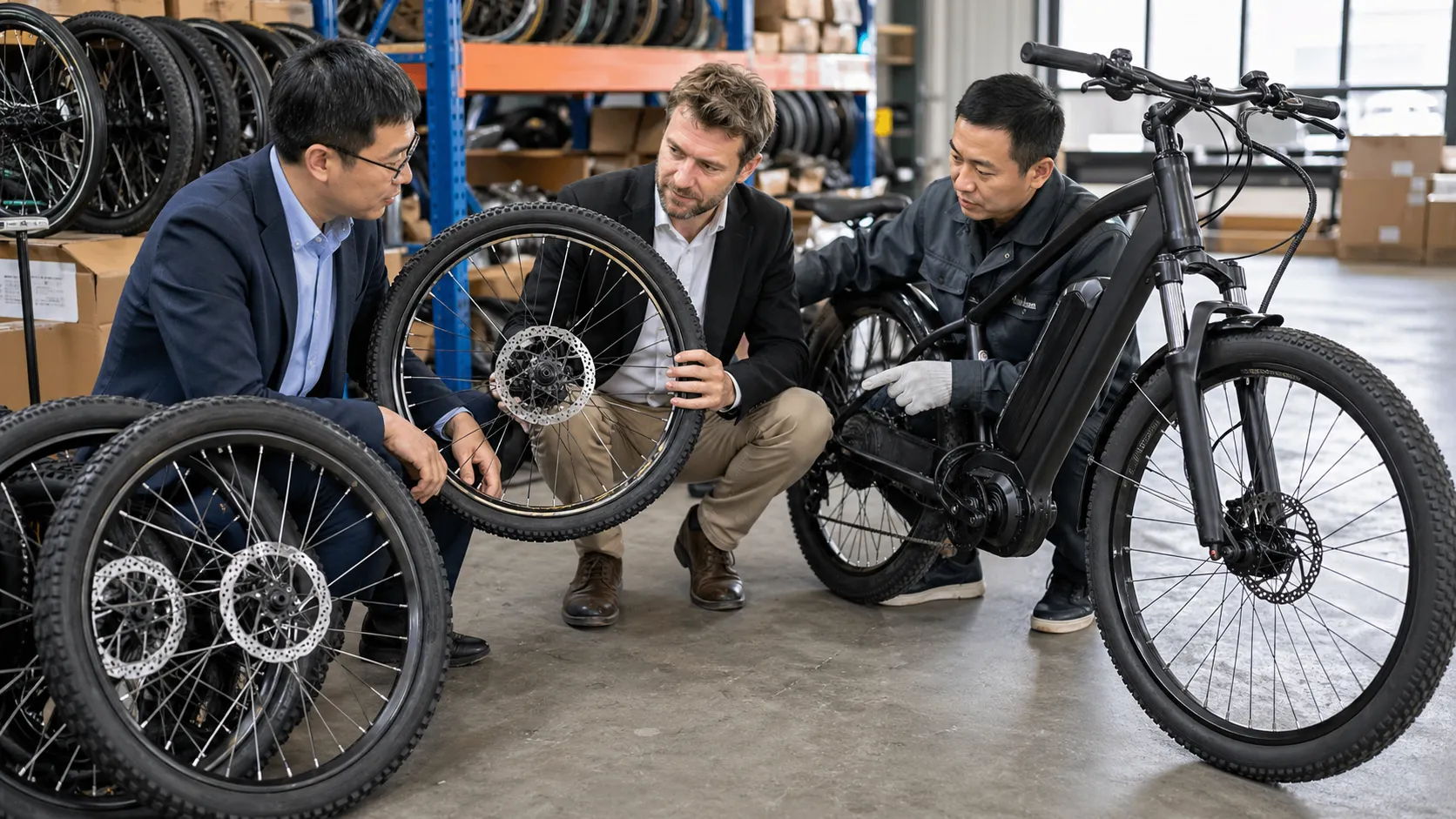
Auf einem Elektrofahrrad erledigt der Fahrradsatz mehr als das einfache Rollenhalten. Er muss das Gewicht des Rahmens, der Batterie, des Motors, des Fahrers und manchmal auch der Fracht tragen, während er höhere durchschnittliche Geschwindigkeiten und Motor-Drehmomente handhaben muss.
Für Importeure, Händler und OEM-Käufer ist die Fahrradsatzqualität direkt mit Sicherheit, Fahrkomfort, Wartungshäufigkeit und Nachgabekundenanfragen verbunden. Lockere Speichen, schwache Reifen oder eine schlechte Kegelabdichtung können sich schnell nach der Lieferung zu Kundenbeschwerden auswirken.
Dieser Leitfaden erklärt, was einen Elektrofahrradfahrradsatz von einem Standardfahrradsatz unterscheidet, wie Reifen, Speichen, Kegel und Reifen zusammenarbeiten, und was Käufer vor dem Wählen eines E-Bike-Lieferanten oder Bestätigen einer Produktionsspezifikation prüfen sollten.
Warum Fahrräder auf Elektrofahrräder mehr Bedeutung haben
Elektrofahrräder stellen einzigartige Anforderungen an Fahrradsätze, die traditionelle Fahrräder nicht erfahren:
- Höheres Systemgewicht: Der Rahmen, die Batterie, der Motor und der Fahrer verbinden sich zu einer signifikant höheren statischen und dynamischer Belastung.
- Motor-Drehmoment: Hub-Motoren wirken direkt auf das Hinterrad, was Speichen, Reifenösen und Kegelflansche über menschliche Pedalkräfte hinaus belastet.
- Höhere durchschnittliche Geschwindigkeit: E-Bikes halten 25–45 km/h routinemäßig, was die Dreistress und Wärmeabgabe in Kegeln und Lagern erhöht.
- Stärkere Bremskraft: Scheibenbremsen an schwereren Fahrrädern erzeugen mehr Wärme und Stress im Kegelanschluss.
- Häufigere Lastvariationen: Throttle- oder Pedal-Unterstützungs-Eingaben erzeugen plötzliche Drehmoment-Spitzen anstelle einer graduellen Leistungsübertragung.
- Höheres After-Sales-Risiko: Reifen-bedingte Ausfälle gehören zu den häufigsten Garantieanfragen für E-Bike-Importeure, oft nach dem Versand oder im ersten Monat der Kundennutzung.
Für B2B-Käufer bedeuten diese Faktoren, dass die Fahrradsatz-Spezifikation während der Lieferantenauswahl und vor der Produktionsbestätigung geprüft werden sollte, nicht erst, wenn Probleme auf dem Markt auftreten.
Was ist ein Elektofahrradfahrradsatz?
Ein Fahrradsatz ist die komplette Paarung von Vorder- und Hinterrädern. Bei einem Elektofahrrad gehört dazu:
- Reifen: Der äußere Ring, der den Reifen hält und die Speichen befestigt.
- Speichen: Verbinden Reifen und Kegel und verteilen die Belastung, während sie die Fahrradform halten.
- Kegel: Die zentrale Komponente mit Lagern; bei Hinterrädern kann dieser den Motor enthalten.
- Nippel: Kleine Gewinde-Verbindungen am Reifen, die die Speichenspannung einstellen können.
- Reifen: Der Kontaktpunkt mit der Straße, der grip, Komfort und Rollwiderstand beeinflusst.
- Motor-Kegel (ggf.): Bei Hub-Motor-E-Bikes enthält der Hinterradkegel den Antriebsmotor und fügt sich technische Anschlüsse hinzu.
- Kassetten/Freilauf-Kompatibilität: Der hintere Kegel muss mit der Antriebseinrichtung übereinstimmen.
Jede Komponente interagiert mit den anderen. Ein stabiler Reifen mit schwachen Speichen wird trotzdem versagen. Ein qualitativer Kegel mit schlechten Lagern entwickelt Spiel. Daher sollten Fahrradsätze als System geprüft werden, nicht als Einzelelemente.
Standard-Fahrradsatz vs. Elektofahrradfahrradsatz
Die Unterschiede zwischen Standard- und E-Bike-Fahrradsätzen sind so groß, dass sie sich auf Beschaffungsentscheidungen auswirken sollten:
| Faktor | Standard-Fahrradsatz | Elektofahrradfahrradsatz |
|---|---|---|
| Last | Geringeres Systemgewicht | Höheres Rahmen-, Batterie-, Motor- und Fahrer-Gewicht |
| Drehmoment | Nur menschliche Pedalkräfte | Motor-Drehmoment plus Pedalkräfte |
| Speichen | Normale Speichenanzahl möglicherweise ausreichend | Oft stärkere Speichen oder höhere Speichenanzahl erforderlich |
| Reifen | Leichtgewichtsoptionen üblich | Geprüfte Aluminium-Legierungen praktischer |
| Standard-Keel | Motor-Keel oder verstärkte Keel-Struktur | Normale Spannchecks |
| Wartung | Häufigere Speichen- und Reifeninspections | Für Importeure ist diese Tabelle ein praktischer Referenzpunkt bei der Bewertung von Lieferantenspezifikationen. Wenn ein Lieferant Standard-Fahrradsätze für E-Bike-Bestellungen ohne Verstärkungsanpassungen anbietet, ist das ein Warnsignal. |
Reifenmaterialien für Elektofahrräder.
Die Materialwahl beeinflusst Gewicht, Steifigkeit, Haltbarkeit und Kosten. Bei Elektofahrrädern verschiebt sich das Gleichgewicht zu Stärke und Reparierbarkeit.
Material.
| Am besten geeignet für | Gewicht | Die Festigkeit | Kosten | Aluminium-Legierung |
|---|---|---|---|---|
| Gut | Moderat | Niedrig bis mittel | Low to medium | Die meisten Pendler-, Falträder- und Nutzene-Bikes |
| Kohlenstofffaser | Leicht | Hoch, aber schlagempfindlich | Hoch | Premium-Leistungs-Builds |
Aluminium-Lenker
sind die praktische Wahl für die meisten Elektrofahrräder. Sie bieten das beste Verhältnis zwischen Stärke, Kosten, Reparierbarkeit und Gewicht. Doppelwand-Lenker bieten zusätzliche strukturelle Stabilität für schwere Lasten. Aluminium-Lenker sind auch einfacher zu verwinden und im Feld zu ersetzen, was für Händler und Servicezentren wichtig ist.
.Kohlenstofffaser-Lenker
können für High-End-Leistungs-Elektrofahrräder nützlich sein, bei denen die Gewichtsreduktion Priorität hat. Sie sind jedoch schlagempfindlich und teurer zu reparieren oder zu ersetzen. Bei Pendler-, Faltrad-, Lasten- oder Nutzene-Bikes, bei denen Robustheit und Servicebarkeit wichtiger sind als Racing-Gewicht, ist Kohlenstoff selten die erste Wahl.
.Stahl- und Titanlenker gibt es, aber sie sind Nischenoptionen für Spezial- oder Maßanfertigungen. Sie sind für die Standard-Elektrofahrrad-Beschaffenheit nicht relevant.
.Anzahl der Speichen, Speichendicke und Verbindungsmuster
Speichen sind entscheidend für die Haltbarkeit von Elektrofahrrädern, aber die Anzahl der Speichen verrät nicht das volle Bild.
.- Anzahl der Speichen:
Standardfahrräder verwenden oft 24–32 Speichen. E-Bikes benötigen häufig 32–36 Speichen, besonders auf dem Hinterrad, um Motor-Drehmoment und schwere Lasten zu tragen. Lasten- und Fahrradmodelle mit breiten Reifen benötigen möglicherweise noch stärkere Bauten.
. - Speichendicke:
Dicker Speichen (niedrigere Nummer) halten höhere Spannung und Drehmomente besser. Bei Naben-Motor-Rädern sind die Speichendicke und die Spannungskontrolle besonders wichtig.
. - Verbindungsmuster:
Gekreuzte Muster (2-cross, 3-cross) verteilen Drehmoment und seitliche Lasten besser als radiale Verbindungen. Die meisten E-Bike-Hinterräder verwenden gekreuzte Muster.
. - Rear Wheel Stress:
Das Hinterrad trägt mehr Gewicht und erhält das Motor-Drehmoment. Es sollte immer das stärkere der beiden Räder sein.
. - Spoke tension consistency:
Ungleichmäßige Spannung führt zu Warping, vorzeitigem Ermüdung und Lenker-Verformung. Die Spannung sollte nach der Erstauslieferung, nach dem Versand und bei regelmäßiger Wartung geprüft werden.
.
Für E-Bike-Käufer sollte die Anzahl der Speichen nicht nur als Zahl bewertet werden. Die Speichendicke, das Verbindungsmuster, die Ritzqualität des Lenkers, die Naben-Flanzstabilität und die endgültige Speichenspannung beeinflussen die Langzeit-Haltbarkeit. Ein Rad mit mehr Speichen, aber schlechter Spannungskontrolle, kann dennoch früh ausfallen.
.Hub Design and Motor Wheel Considerations
Die Nabe ist das Zentrum des Rades und beherbergt die Lager. Bei Elektrofahrrädern wird das Nabendesign komplexer:
- Fronthub:
Meist einfacher, mit Standardlagern und Achse. Muss kompatibel mit Scheibenbremsen sein, falls zutreffend.
. - Rear hub:
Beherbergt den Kassetten- oder Freilauf und muss Kraftübertragung des Antriebsstands widerstehen. Bei E-Bikes interagiert sie zudem mit dem Motorsystem.
. - Hub motor wheel:
Bei Naben-Motor-E-Bikes ist das Hinterrad nicht nur ein Rad – es ist Teil des Antriebssystems. Die Motorleistung, die Achsfitfit, die Kabelführung und die Qualität der wasserdichten Verbinder sind wichtig.
. - Bearing quality:
Verschlossene Kugellager sind Standard. Sie sollten glatt, leise und ordnungsgemäß gegen Wasser und Staub gedichtet sein.
. - Waterproofing:
Die Motor-Kabelausgänge und Verbindergehäuse müssen dicht sein. Wasser in Motor-Naben ist ein häufiger Ausfallmodus.
. - Axle strength and dropout fit:
Motor-Achsen sind dicker und müssen sicher in den Rahmen-Dropouts passen. Fehlende Passform kann Achsenrotation, Rahmenschäden oder Leistungsverlust verursachen.
.
Bei Naben-Motor-E-Bikes ist das Hinterrad nicht nur ein Rad. Es ist auch Teil des Antriebssystems. Käufer sollten die Motorleistung, Achsfitfit, Kabelführung, die Qualität der wasserdichten Verbinder und prüfen, ob das Rad mit verstärkten Speichen und einem für die erwartete Last geeigneten Lenker gebaut ist.
.Tire and Rim Width Compatibility
Rimweite und Reifenwahl sollten der bestimmten Nutzung des E-Bikes entsprechen:
| E-Bike Type | Common Wheel/Tire Focus |
|---|---|
| Folding e-bike | Kompakte Radgröße, Robustheit, Pendlerkomfort |
| City e-bike | Glattlaufender Reifen, Stichfestigkeit, Komfort |
| Fat tire e-bike | Breitere Rim-Unterstützung, Traktion, Offroad-Stabilität |
| Cargo e-bike | Höhere Lasttragfähigkeit, stärkere Speichen, verstärkte Räder |
| Mountain e-bike | Schlagfestigkeit, breitere Reifen, stärkere Nabenstruktur |
Breitere Räder ermöglichen niedrigere Reifendrücke ohne Reifen-Schwankungen oder -Lüftung vom Band. Das bedeutet bessere Traktion, geringere Reibungsverluste auf unebenen Flächen und ein komfortableres Fahrbild. Die Tendenz in alle Disziplinen hin zu breiteren Rädern ist allgemein, und moderne Rahmen haben sich darauf angepasst.
.Common Wheelset Problems on Electric Bikes
Rad-bezogene Probleme zählen zu den häufigsten Nachverschreibungsproblemen für E-Bike-Händler. Hier sind die wichtigsten Punkte:
| Problem | Possible Cause | Why It Matters | Suggested Action |
|---|---|---|---|
| Loose spokes | Poor tension or heavy load | Wheel may go out of true | Check and retension |
| Wobbly wheel | Uneven spoke tension or rim impact | Beeinflusst Sicherheit und Komfort | Rad truehen |
| Radspeichenrisse | Überlastung, Schlag, Ermüdung | Schwere Sicherheitsgefahr | Sofort ersetzen |
| Lagergeräusche | Lagerverschleiß oder schlechte Dichtung | Höheres Wartungsrisiko | Lager prüfen oder ersetzen |
| Motorkabelbeschädigung | Schlechte Führung oder Versandsschäden | Kann Stromausfall verursachen | Kabelschutz verbessern |
| Häufige Reifendurchschläge | Reifen-Rahmen-Mismatch oder schlechte Reifenqualität | Mehr Nachsaale- Beschwerden | Reifenspec und Rahmentape prüfen |
Für Importeure treten diese Probleme oft nach dem Versand, der Montage oder der ersten Kundennutzung auf. Deshalb sollte die Radset-Spezifikation vor dem Auftraggeben von Großbestellungen überprüft werden, nicht nur, wenn Probleme auf dem Markt auftreten.
Checkliste für die Qualität von Radsets für Importeure und Händler
Bei Vergleich von E-Bike-Radsets sollten Käufer prüfen:
- Reimmaterial und Wandstruktur (bevorzugt Doppelwand)
- Anzahl der Speichen und Speichenstärke
- Speichenspannungskonsistenz
- Qualität des Legers oder Motorlegers
- Lagerglätte und Dichtung
- Reifen- und Rahmenkompatibilität
- Bremskompatibilität (Scheiben- oder Felgenbremse)
- Achsstandard und Dropout-Passform
- Belastungskapazitätsangabe
- Wasserdichtigkeit um die Motorkabel herum
- Ersatzteillagerung
- Verpackungsschutz während des Versands
Diese Checkliste hilft, Lieferantenbewertungen zu standardisieren und das Risiko von Radset-bedingten Nachsaueproblemen zu reduzieren.
Wie ClipClop vorgeht bei der Spezifikation von E-Bike-Radsets
Bei ClipClop-E-Bike-Projekten wird die Radset-Auswahl an den tatsächlichen Einsatzfall des Fahrrads angepasst. Ein kompaktes Faltschmuck-E-Bike, ein fat-tire-Offroad-Modell und ein lastenorientiertes E-Bike sollten nicht dieselbe Radset-Logik verwenden.
Bei Fahrrädern für den Alltag und das Falten werden in der Regel stabile Aluminiumrahmen, zuverlässige Speichenspannung, komfortable Reifenbreite und einfache Wartung priorisiert. Bei Offroad- oder fat-tire-Modellen wird mehr Wert auf Reimbreite, Speichenstärke, Schlagfestigkeit und Reifenunterstützung gelegt.
Ziel ist nicht, das leichteste mögliche Radset zu kaufen. Ein praktisches E-Bike-Radset sollte sich stabil halten, den Fahrer bequem unterstützen, Wartungsaufwand reduzieren und für Händler und Endnutzer wartbar sein. Dieser Ansatz hilft, Radset-bedingte Nachsaueprobleme zu verringern und das Fahrzeug unter realen Fahrschlüssen stabil zu halten, nicht nur unter Ausstellensituationen.
FAQ
Unterscheiden sich E-Bike-Radsets wirklich von normalen Fahrrad-Radsets?
Ja. E-Bikes platzieren aufgrund schwererer Rahmen, Akkus, Motoren und höherer Durchschnittsgeschwindigkeiten höhere Belastungen auf den Radsets. Der Motor-Torsionsmoment fügt dem hinteren Radset Speichen und Lagern zusätzlichen Stress hinzu. E-Bike-Radsets verwenden oft stärkere Speichen, mehr Speichen und verstärkte Lagerstrukturen im Vergleich zu Standard-Fahrradrädern.
Wie viele Speichen sollte ein E-Bike-Rad haben?
Es hängt vom Fahrradtyp und der erwarteten Last ab. Die meisten Commuter-E-Bikes verwenden 32–36 Speichen. Lasten-, fat-tire- oder schwerlastige Modelle benötigen möglicherweise stärkere Bauten mit höherer Speichenanzahl oder dickeren Speichen. Speichenqualität und Spannungskonsistenz sind wichtiger als die Anzahl allein.
Sind Carbon-Radsets gut für E-Bikes?
Carbonfaserräder können bei Premium-Leichtgewichts-E-Bikes nützlich sein, sind aber nicht immer die beste Wahl für Commuter-, Nutzungs- oder Lastenmodelle. Aluminium-Legierungsrahmen sind oft praktischer, da sie stärker, einfacher zu reparieren und kostengünstiger für Großbestellungen sind.
Warum werden E-Bike-Speichen locker?
Höhere Lasten, Motor-Torsionsmoment, rauhe Straßen und schlechte Anfangspannung tragen zum Lockerwerden bei. Versand und Montage können die Spannung beeinflussen. E-Bike-Radsets sollten nach der ersten Inbetriebnahme überprüft und bei regelmäßigen Wartungen geprüft werden.
Was sollten Importeure vor dem Bestellen von E-Bike-Radsets prüfen?
Prüfen Sie Reimfestigkeit, Speichenanzahl und -stärke, Lagerqualität, Motorkabel-Führung und -Wasserdichtigkeit, Reifen- und Rahmenkompatibilität, Bremskompatibilität, Achsstandard, Belastungskapazität und Verfügbarkeit von Ersatzteilen. Die Überprüfung dieser Faktoren vor der Produktion reduziert Nachsaue-Risiken.
Fazit
Ein gutes E-Bike-Radset ist nicht einfach das Leichteste oder Teuerste. Es sollte zum Motor-System, Fahrerlast, Reifengröße, Bremskonfiguration und Einsatzzeitfenster des Fahrrads passen.
Für E-Bike-Importeure und Händler sollte die Radset-Qualität vor der Produktion überprüft werden, nicht nur, wenn Nachsaueprobleme auftreten. Starke Reime, konsistente Speichenspannung, zuverlässige Lager und geeignete Reifen können Wartungsprobleme verringern und das Fahrerlebnis verbessern.
Bei ClipClop ist die Radset-Spezifikation Teil des gesamten E-Bike-Systems. Das richtige Radset hilft, das Fahrzeug stabil, bequem und robust unter realen Fahrschlüssen zu machen.
Dieser Artikel wurde von Leo Liang von Guangzhou Clipclop Technology Co. Ltd. geschrieben. Leo arbeitet im internationalen E-Bike-Verkauf und Beschaffung mit praktischer Erfahrung in Produktspezifikation, Käuferkommunikation und E-Bike-Konfigurationsvergleich für überseeische Märkte.



 English
  Spanish
  Portuguese
  Russian
  Arabic
  French
  Dutch
Dutch  German
  Danish
