


Ich bin Leo Liang und habe in den letzten zehn Jahren quasi im Inneren der Welt der elektrischen Offroad-Bikes gelebt. Bei ClipClop in Guangzhou verschiffen wir nicht nur Container, sondern bauen langfristige Partnerschaften mit Distributoren, Mietflotten und OEM-Partnern auf. Tag für Tag spreche ich mit Menschen, die versuchen, Politik, Frachtkosten und Metallrahmen in echten Profit zu verwandeln.
Im Laufe der Jahre habe ich beobachtet, wie Märkte explodierten, abkühlten und dann alle wieder überraschten. Aber Brasilien fühlt sich anders an. Wenn ich mit unseren Partnern dort spreche, ist es sehr klar: Das ist kein niedliches “grüner Trend”, es ist ein struktureller Wandel. Die gesamte Diskussion um Dekarbonisierung, Verkehr und Lebensqualität verändert, wie Menschen sich bewegen und wie Städte gebaut werden.
Wenn Sie als B2B-Akteur nach Brasilien schauen, sind Sie wahrscheinlich bereits an derselben Mauer gescheitert, die ich in meinem Postfach sehe: “Gibt es direkte E-Bike-Subventionen? Was ist mit Zöllen? Kann mein Geschäft diese Anreize überhaupt nutzen oder ist das alles nur PR?” Das sind keine kleinen Details; sie können Ihre Marge und Ihren Cashflow machen oder brechen.
In diesem Leitfaden versuche ich also nicht, wie ein Anwalt oder eine Regierungsbroschüre zu klingen. Ich möchte Ihnen nur vermitteln, was ich aus realen Projekten, echten Sendungen und viel zu vielen späten Nächten gelernt habe. Ich mische ein, was einige kluge Branchenblogger uns immer wieder raten: das Modell vereinfachen, den Anreizen folgen und mit dem langfristigen Spiel im Hinterkopf bauen.
Warum Brasilien zu einem E-Mobilitäts-Hotspot wird
Aus meiner Perspektive, im Gespräch mit Partnern in Europa, Nordamerika und Lateinamerika, sticht Brasilien gerade hervor. Das Land “testet” grüne Mobilität nicht nur; es setzt langfristige Zeichen. Es gibt Emissionsziele, Druck von den Städten und eine Öffentlichkeit, die ehrlich müde ist, jeden Tag stundenlang im Verkehr zu stehen.
Die meisten Prognosen, die ich verfolge, zeigen, dass der brasilianische E-Bike-Markt in den kommenden Jahren mit einer CAGR von über 15% wachsen wird. Das ist keine aufgeblähte Zahl aus Präsentationen; man spürt es in den Fragen, die die Leute stellen, und in den Projekten, die sie planen. Mehr Menschen in den Städten, mehr Autos auf den Straßen und mehr Bewusstsein für Umweltverschmutzung drängen alle in dieselbe Richtung.
Interessant ist, dass Brasilien immer noch kein einheitliches nationales “E-Bike-Gesetz” mit einem riesigen roten Sticker hat. Stattdessen gibt es dieses Flickwerk an Maßnahmen, die zusammen ein ziemlich freundliches Umfeld schaffen. Große Städte pumpen Geld in Radwege, Fahrradkorridore und Pläne für nicht-motorisierten Verkehr. Jeder neue Radweg ist im Grunde eine zusätzliche Einladung für jemanden, Auto oder Motorrad abzuschaffen.
Für uns im B2B bedeutet das, dass die Zielgruppe nicht nur hippe urbane Fahrer sind. Es sind Pendler, Kurierdienste, Lebensmittellieferflotten und kleine Unternehmen, die einfach einen günstigeren, vorhersehbareren Weg brauchen, um sich zu bewegen. Ein paar Mobilitätsblogger, denen ich folge, sagen immer wieder: “Folge dem Stau und du wirst Nachfrage finden.” Brasiliens São Paulo und Rio sind Lehrbuchbeispiele dafür.
Zusätzlich zu den lokalen Schmerzpunkten nimmt eine nationale Geschichte Gestalt an. Programme wie das “Kraftstoff der Zukunft”-Gesetz und Brasiliens Zusage, die Emissionen bis 2030 um 50% zu senken, senden ein sehr starkes Signal an Investoren und Betreiber aus. Wenn eine Regierung immer wieder dieselbe grüne Erzählung wiederholt, ist das der Hinweis, dass die politische Richtung nicht über Nacht kippen wird.
Das MOVER-Programm ohne Fachjargon aufschlüsseln
Wenn mich jemand fragt: “Okay Leo, was macht Brasilien eigentlich konkret für grüne Mobilität auf B2B-Ebene?”, lande ich immer beim MOVER-Programm. Der vollständige Name ist *Programa Nacional de Mobilidade Verde e Inovação*, gestartet 2024. Man kann es als Rückgrat von Brasiliens langfristiger sauberer Verkehrsstrategie betrachten.
Auf den ersten Blick sieht MOVER wie ein Programm aus, das fast ausschließlich für Autos, Busse und große Fahrzeuge gebaut wurde. Viele Leute überfliegen die offiziellen Dokumente und sagen: “Sieht cool aus, aber hat nichts mit meiner E-Bike-Flotte zu tun.” Ehrlich gesagt, das ist ein Fehler. Die Kernprioritäten des Programms – Energieeffizienz, lokale Produktion und strengere Umweltstandards – schaffen eine Art “grünen Heiligenschein” um alle elektrische Mobilität.
Für internationale E-Bike-Hersteller und brasilianische Distributoren liegt der größte Wert von MOVER in der damit freigesetzten Mentalitätsverschiebung. Es sagt Fabriken, Banken und Verbrauchern, dass elektrische Energie kein Nischenexperiment ist; es ist der neue Normalzustand. Wenn die Menschen sich erst einmal mit Elektrofahrzeugen im großen Maßstab wohlfühlen, ist es viel einfacher für sie, E-Bikes als praktisches Alltagswerkzeug zu akzeptieren, nicht nur als Wochenendspielzeug.
Der Fokus auf mit F&E verbundene Steuergutschriften ist ebenfalls wichtig. Er drängt Unternehmen, in bessere Batterien, intelligentere Controller und effizientere Motoren zu investieren. Selbst wenn die Anreize auf größere Fahrzeugplattformen abzielen, verbessert sich ein Großteil dieser Technologie am Ende auch die E-Bike-Komponenten. Einige Ingenieursblogs, die ich lese, hammern diesen Punkt immer wieder: “Folge dem F&E-Geld, dort kommt die Innovation zum Überschwappen.”
Die andere große Lehre aus MOVER ist struktureller Natur. Es belohnt Unternehmen, die Geld, Personal und Technologie direkt in Brasilien investieren. Wenn Ihr B2B-Modell also lokale Montage, After-Sales-Service und echte Zusammenarbeit mit brasilianischen Partnern umfasst, spielen Sie sehr nah an der langfristigen Vision der Regierung. Diese Ausrichtung bedeutet nicht immer, dass heute Geld in Ihre Tasche fließt – aber sie öffnet später Türen.
Zölle und Steuergutschriften verstehen (ohne den Verstand zu verlieren)
Sprechen wir über den Teil, der normalerweise jedem Kopfschmerzen bereitet: Importzölle. Wenn meine Partner fragen: “Leo, was ist das größte Risiko beim Einstieg in Brasilien?”, beginne ich selten mit Marketing oder Wettbewerb. Ich beginne mit Zollsätzen und Produktkonfiguration. Wenn Sie diese falsch interpretieren, wird Ihre Preisgestaltung ruiniert, bevor Ihre erste Sendung anlandet.
Brasilien hat Zölle als Lenkrad genutzt, um den Markt von importlastig zu mehr lokaler Produktion zu schieben. Eine Weile lang bekamen Elektrofahrzeuge sehr niedrige oder null Zölle, um die Adoption anzukurbeln. Diese anfängliche Schonzeit geht zu Ende. Der Plan ist jetzt, die Zölle auf vollständig montierte Fahrzeuge schrittweise zu erhöhen, mit dem Ziel, in einigen Fällen bis 2026–2027 auf etwa 35% zu kommen.
Für vollständig montierte E-Bikes ist dieser Trend ein Warnsignal. Wenn Sie weiterhin nur Komplettgeräte verschiffen, könnte Ihr Preisniveau für viele B2B-Käufer unerreichbar werden. Deshalb verbringen wir bei ClipClop viel Zeit mit Partnern, um HS-Codes, Kit-Formate und die Produktstrukturierung zu prüfen. Es ist keine glamouröse Arbeit, aber sie spart echtes Geld und Stress.
Die Regierung hat ihre Signale ziemlich klar gemacht: CKD (Completely Knocked Down) und SKD (Semi-Knocked Down) -Bausätze können niedrigere Zölle oder spezielle temporäre Kontingente genießen. Das ist im Grunde eine höfliche Notiz, die sagt: “Hey, bringt eure Komponenten rein und baut mehr hier.” Also verschiffen wir statt eines fertigen Fahrrads hochwertige Kerne – wie unseren 6061-Aluminiumlegierungsrahmen und den 48V 750W bürstenlosen Motor – und lassen die Endmontage lokal durchführen.
Richtig aufgesetzt, senkt dieser Ansatz Ihre Zollrechnung, hilft Ihnen, lokale industrielle Ziele zu erreichen, und gibt Ihnen mehr Flexibilität bei der Anpassung. Ein paar Handelsblogger, die ich respektiere, raten immer wieder: “Kämpfe nicht gegen den Zolltrend. Gestalte deine Lieferkette drumherum.” Brasilien ist ein Lehrbuchbeispiel, wo diese Denkweise sich wirklich auszahlt.
Strategischer Importvergleich: Komplettgeräte vs. Lokale Montage-Bausätze
| Feature / Consideration | Strategie 1: Import von Komplettgeräten (FBU – Fully Built Units) | Strategie 2: Import von CKD/SKD-Bausätzen für lokale Montage |
| Importzölle | Hoch und progressiv steigend (geplant, bis 2026–2027 in einigen Fällen 35% zu erreichen). | Deutlich niedrigere Zollsätze, ausgelegt, um die lokale Industrie zu fördern. |
| Gesamtkosteneffizienz | Wird im Laufe der Zeit durch steigende Zölle weniger profitabel und riskiert die Marktkonkurrenzfähigkeit. | Hochgradig kosteneffizient, verringert die Zollbelastung und senkt die Endproduktkosten. |
| Ausrichtung auf brasilianische Politik | Nicht ausgerichtet auf das langfristige Ziel der Regierung, die inländische Produktion zu fördern. | Perfekt ausgerichtet auf die nationale Industriestrategie (z.B. Prinzipien des MOVER-Programms). |
| Lieferkette & Logistik | Einfachere anfängliche Logistik, aber weniger effiziente Containerraumauslastung. Höheres Risiko von Transportschäden an fertigen Produkten. | Komplexerer anfänglicher Aufbau, der einen lokalen Partner erfordert, aber optimiert die Versanddichte und senkt die Frachtkosten pro Einheit. |
| Marktanpassungsfähigkeit | Niedrig. Produktspezifikationen sind vor dem Versand festgelegt und bieten wenig Spielraum für lokale Anpassungen. | Hoch. Ermöglicht agile Anpassungen, lokale Komponentenbeschaffung und maßgeschneiderte Konfigurationen für spezifische B2B-Kundenbedürfnisse. |
| Langfristige Tragfähigkeit | Eine kurzfristige, hochriskante Strategie, anfällig für zukünftige politische Änderungen und steigende Kosten. | A Nachhaltige, zukunftssichere Strategie , die eine lokale Präsenz aufbaut und die Marktposition stärkt. |
| **Fazit für B2B | Ihr Unternehmen trägt die steigenden Kosten, was die Margen zusammendrückt und Sie möglicherweise gegen agilere Wettbewerber verlieren lässt. | Ihr Unternehmen erlangt einen erheblichen Wettbewerbsvorteil durch niedrigere Kosten, politische Ausrichtung und Marktflexibilität. |
Die Macht der IPI-Befreiungen und anderer Steuervorteile
Zölle sind nur die halbe Miete. Die andere Hälfte sind Steuern, die entweder Ihre Marge töten oder sie stillschweigend steigern können – je nachdem, wie gut Sie das Spiel spielen. Einer der wichtigsten bundesweiten Anreize ist die IPI-Befreiung (Steuer auf industrialisierte Produkte) für Elektrofahrzeuge. Wenn Ihr Produkt qualifiziert ist, hilft es direkt, den Endverkaufspreis zu senken.
Im B2B ist diese Preisflexibilität Gold wert. Ein paar Prozentpunkte weniger können der Unterschied zwischen dem Gewinnen eines Flottengeschäfts und dem Verlieren an einen günstigeren, qualitativ schlechteren Wettbewerber sein. Und wenn Sie diese IPI-Entlastung mit klügeren Importstrukturen wie CKD/SKD-Betrieben kombinieren, stapeln Sie Vorteile, anstatt ständig bergauf zu kämpfen.
Zusätzlich zu den bundesweiten Regeln kann jeder Bundesstaat mit seiner eigenen ICMS (im Grunde eine bundesstaatliche Mehrwertsteuer) herumspielen. Einige Bundesstaaten bieten Reduzierungen oder Befreiungen für elektrische Mobilität an, aber die Details ändern sich von Region zu Region. Hier sind lokale Buchhalter und Steuerberater ihr Gewicht in Lithiumzellen wert. Die richtige Produktklassifizierung kann Einsparungen freischalten, von denen viele ausländische Neueinsteiger nicht einmal wissen, dass sie existieren.
Um ehrlich zu sein, dieser Teil ist nicht “plug-and-play”. Es ist Papierkram, Anrufe und manchmal ein bisschen kreative Problemlösung. Aber genau hier können Sie Bürokratie in einen Wettbewerbsvorteil verwandeln. Während andere sich beschweren, dass “Brasilien zu kompliziert” sei, können Sie leise eine Struktur aufbauen, die Ihre Margen schützt und Ihren Partnern mehr Spielraum für aggressive Preisgestaltung gibt.
Also… Gibt es direkte E-Bike-Rabatte in Brasilien?
Das ist die Frage, die ich wahrscheinlich am häufigsten in WhatsApp-Gruppen und Zoom-Calls bekomme: “Leo, können meine Käufer einen direkten Gutschein oder Rabatt beim Kauf eines E-Bikes bekommen, wie in Europa?” Kurze Antwort: nicht auf einfache, landesweite Weise – zumindest noch nicht. Brasiliens Ansatz ist systemischer und weniger “hier ist ein Gutschein an der Kasse” (Stand 2025).
Das bedeutet nicht, dass kein Geld auf dem Tisch liegt. Es bedeutet nur, dass die Anreize gezielter sind und oft an bestimmte Sektoren oder lokale Programme gekn.
Some municipalities are starting to experiment with benefits for companies using e-bikes for last-mile delivery or other logistics. The support may not always be labeled as “e-bike subsidies”. Instead, it shows up as tax advantages for green logistics, grants for sustainability projects, or better access to public tenders if you run a low-emission fleet.
Wenn Sie in B2B-Kanäle verkaufen – Lieferplattformen, Corporate-Mobility-Programme, Tourismusbetreiber – ist das enorm wichtig. Ihre Endkunden könnten Zugang zu lokaler Förderung erhalten, selbst wenn es kein großes bundesweites Gutscheinprogramm gibt. Einige brasilianische Mobility-Blogger wiederholen immer wieder denselben Rat: “Beobachten Sie Ihr Rathaus, nicht nur Brasília, wenn Sie echte Chancen erkennen”
The catch is that these programs are often fragmented and not always well-publicized. That’s why having a strong local partner matters so much. They can spot a new delivery pilot in a mid-size city or a green grant in an industrial zone while you’re asleep in another time zone. You can’t automate that with a spreadsheet; you need relationships.
Turning Policy Into a Real B2B Business Model
Knowing the rules is great, but it doesn’t automatically turn into revenue. The real work is connecting policy trends with business models that actually sell bikes and services. When we support ClipClop partners in Brazil, we try to start with one question: “Which national or city-level goal does your offer help achieve?”
Right now, two of the biggest pain points are urban congestion and emissions. That’s why last-mile delivery and urban logistics are such strong bets. A tough, reliable e-bike fleet that replaces scooters or small vans can be a clear win: lower fuel costs, easier parking, and a better public image. You’re not just selling bikes; you’re helping your customers tick ESG boxes and cut operating expenses at the same time.
Corporate mobility is another interesting angle. More companies want to encourage staff to commute in a cleaner, healthier way. They talk about wellness, carbon footprints, and employee perks. Offering fleet leasing, salary-sacrifice plans, or simple pool-bike programs puts you right at the center of that trend. Even though an official “mileage allowance for cyclists” is still not mainstream in Brazil, it’s a logical next step.
Some HR and sustainability bloggers are already pushing this idea: “Pay people to ride, not just to park.” If you’re in early and you can offer a turnkey solution—bikes, maintenance, maybe software—you’ll be ahead of the curve when those policies become more common. Being slightly early is where the best B2B margins usually live.
Tourism is the third big piece. Brazil’s natural and cultural attractions are world-class, and tourists love experiences that feel eco-friendly but still convenient. For rental businesses in Rio, Florianópolis, or the historic towns of Minas Gerais, a strong e-bike fleet is a way to stand out without reinventing their entire business. They just upgrade the “how” of local exploration.
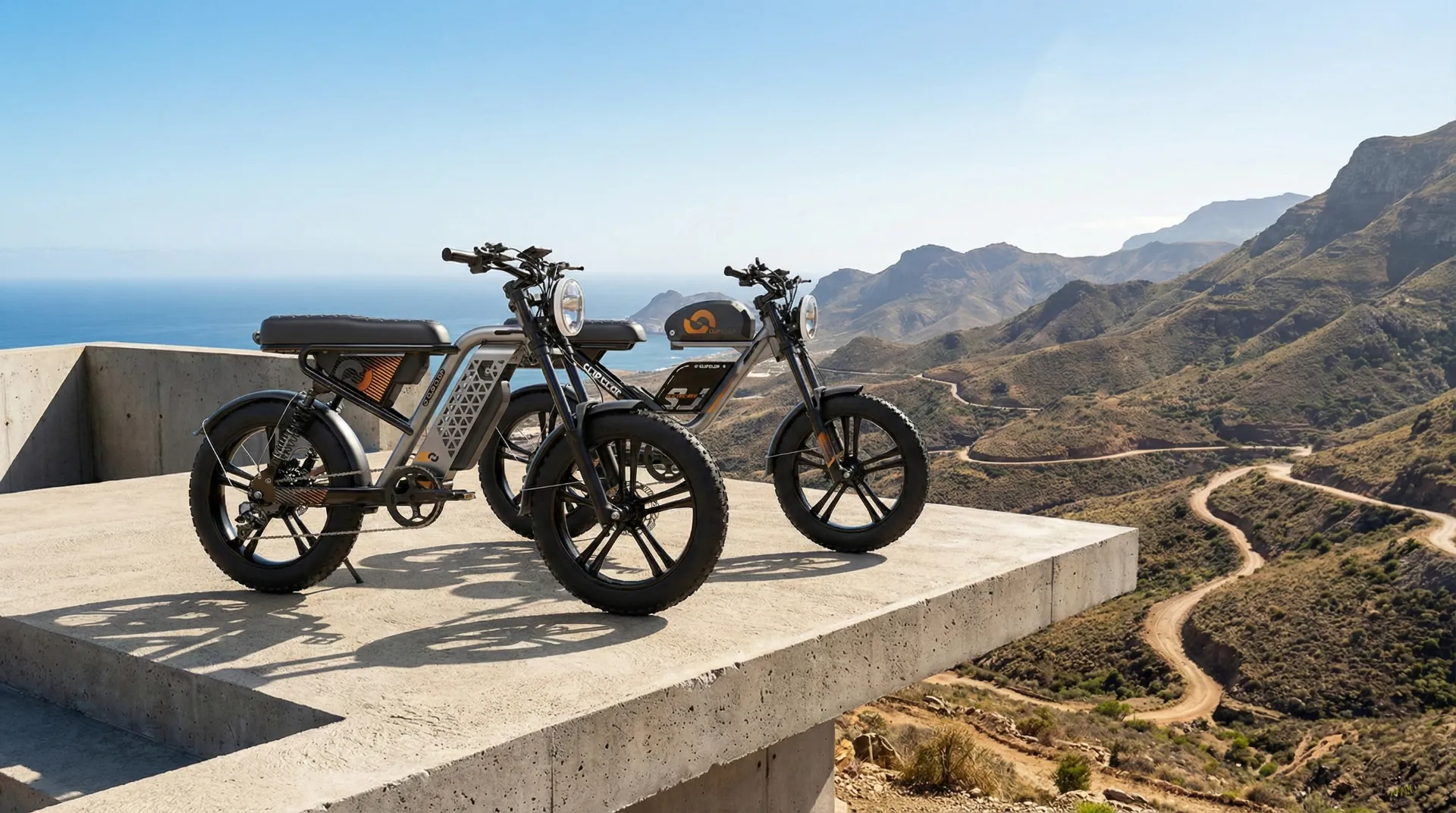
In that rental context, your product has to take abuse and keep rolling. That’s where bikes like our Model L2 come in, with features like a Shimano 7-speed derailleur and hydraulic disc brakes. High uptime and low maintenance cost are more important than fancy marketing names. Fleet operators care about downtime and repair bills, not spec sheets alone.
Picking the Right E-Bike Specs for Brazilian Terrain
Let me be blunt: if your bikes can’t handle Brazilian roads, policy incentives won’t save you. I’ve seen containers arrive with products that look great in a catalog but crumble under real usage. Brazil’s mix of smooth avenues, broken pavement, cobblestones, and steep hills can expose weak design very quickly.
That’s why we obsess over core components. We stick with a 6061 Aluminum Alloy Frame for a reason. It hits that sweet spot: strong, relatively light, and corrosion-resistant. For coastal cities where sea air is a daily reality, that corrosion resistance is not optional—it’s survival. A lot of frame failures I hear about in the market are simply from cutting corners here.
Power is another non-negotiable. On paper, a lower wattage motor might look “efficient”, but put it on the hills of Belo Horizonte or Salvador with cargo on the rack and you quickly see the problem. Our Model L2 runs a 48V 750W brushless motor delivering about 70Nm of torque, and that’s the level that actually makes riders smile instead of curse on steep climbs.
Some tech bloggers love to talk only in numbers, but I always tell partners to ask a simpler question: “Can this bike climb a hill, with a heavy rider plus cargo, without drama?” If the answer is no, it doesn’t matter how cute the UI on the display looks. Riders in Brazil need genuine pulling power, not marketing fluff.
Tire choice is where comfort meets practicality. We use 20″*4.0 fat tires on this platform because they smooth out rough surfaces, handle curbs and mixed terrain better, and give riders a sense of stability.[no ref in original, but keep idea] For a courier hopping between bike lanes and side streets, that extra grip and cushioning reduces fatigue and crashes.
Brakes are another area where I refuse to compromise. Hydraulic disc brakes simply perform better than mechanical ones, especially in wet or dirty conditions. In chaotic city traffic, stopping power is not a luxury. Pair that with a max load capacity of around 160kg/350lbs, and you get a bike that fits real life: heavy riders, cargo, child seats, you name it.
Local Infrastructure and Manufacturing: Your Hidden Force Multipliers
E-mobility doesn’t grow in a vacuum. It grows where people can ride safely and where products can be built or assembled efficiently. Brazil is slowly but steadily moving in that direction. You can see it in the kilometers of new bike lanes, the integrated bike-sharing systems, and the way cities are redesigning some streets to favor lighter vehicles.
Every new piece of cycling infrastructure basically widens your potential user base. People who were scared to ride on car-heavy avenues suddenly feel comfortable trying an e-bike. For B2B, that means higher utilization for fleets, more repeat rentals, and happier corporate users. A lot of urban-planning blogs keep showing the same pattern: as infrastructure improves, cycling mode share rises.
On the manufacturing side, the tariff strategy we talked about earlier is pushing brands toward local assembly. Instead of fighting that, I recommend leaning into it. A solid Brazilian assembly partner can become one of your biggest assets. They help you navigate regulations, improve lead times, and fine-tune configurations for local tastes and needs.
At ClipClop, we see ourselves as a component and technology provider as much as a finished-bike supplier. We ship the precision-engineered bits—frames, motors, controllers, batteries—and our partners handle local assembly and distribution. This split model fits nicely with Brazil’s industrial goals and sends a clear message: we’re not just dipping in and out of the market.
For large corporate and government clients, that local presence matters a lot. It shows commitment, helps with service-level agreements, and often makes them more comfortable signing bigger or longer contracts. You can talk about “partnership” all day, but having a local assembly line and service network proves it better than any PowerPoint slide.
How to Actually Capitalize on Brazil’s Green Shift
We’ve covered a lot—MOVER, tariffs, incentives, infrastructure, and specs. So what do you actually do with all this as a dealer, distributor, or rental operator? Let me give you a simple three-step way I like to think about it when planning with partners.
First, choose your main battlefield: last-mile logistics, corporate mobility, tourism, or a smart mix of two. Don’t try to be everything to everyone from day one. Pick the segment that lines up best with what the government wants—less congestion, fewer emissions, more efficient urban movement—and build your story around that.
Second, design your supply chain for Brazil, not for a generic “global market”. That probably means using CKD or SKD kits, partnering locally, and taking advantage of tariff structures and IPI exemptions. A couple of trade bloggers say this a lot: “Localize your supply chain or prepare to donate your margin to taxes.” It sounds harsh, but they’re not wrong.
Third, lead with reliability and total cost of ownership. In a young market, trust is everything. Your customers want to know that the bikes won’t die after a year of hard use and that parts and service will be available. This is where solid specs—6061 Aluminum Alloy Frame, 750W motor, hydraulic disc brakes, high load capacity—turn from marketing bullets into real-world proof.
If you line up those three pieces—market focus, localized supply chain, and durable product—you’re not just reacting to Brazil’s green transition. You’re riding the wave in a controlled way. And honestly, that’s when the business becomes fun: when incentives and reality work in the same direction instead of pulling you apart.
Ready to Talk About Your Brazil Play?
Navigating Brazil’s e-bike landscape can feel messy from the outside: laws changing, tariffs shifting, different rules in every state. But with the right structure and partners, it stops being a maze and starts looking like a pretty clear growth path. That’s the part of the job I enjoy most—helping partners connect the dots between policy and product.
At ClipClop, we’re not just a factory stamping frames. We design and manufacture electric off-road bikes and fleets for global B2B use, and we’ve built our export process around working with dealers, wholesalers, and brand owners who need reliable support from concept to after-sales. Brazil is one of the markets where this approach really shines.
If you’re trying to figure out which e-bike models to bring in, how to configure a fleet for delivery or tourism, or how to structure an OEM project that fits Brazilian incentives, I’m happy to dig into the details with you. Tell me your budget, your target customers, and your timeline, and we can map out something that actually works on the ground.
Reach out, and let’s sketch your Brazil plan together. The green mobility wave is already moving—this is a good moment to paddle in, not watch from the beach.
Häufig gestellte Fragen (FAQ)
Q1: What is the most significant B2B policy for electric bikes in Brazil for 2025?
The most significant policy framework is a combination of the MOVER Program, which promotes overall green mobility investment, and the strategic use of import tariffs. For B2B, the key is leveraging the lower tariffs on SKD/CKD (semi-knocked-down/completely-knocked-down) kits to facilitate local assembly, which is being heavily encouraged over importing fully built units.
Q2: Are there any direct electric bike subsidies for businesses to purchase fleets?
Currently, there are no nationwide, direct electric bike subsidies for fleet purchases. However, incentives are emerging at the state and municipal levels, often in the form of tax breaks, grants for sustainable logistics, or as part of specific urban mobility projects. Businesses should research local subsidy programs in their target cities.
Q3: How do the new import tax credits affect the cost of importing e-bikes to Brazil?
The main federal tax credit is the exemption from the IPI (Tax on Industrialized Products) for electric vehicles. This significantly lowers the tax burden. However, this is counterbalanced by rising import tariffs on fully assembled bikes. The most cost-effective strategy is to import components for local assembly to benefit from both the IPI exemption and lower import duties on kits.
Q4: What kind of sustainable transport incentive is most beneficial for a rental or delivery company?
For rental or delivery companies, the most beneficial sustainable transport incentive is often indirect. The government’s investment in dedicated cycling infrastructure (bike lanes) makes operations safer and more efficient. Additionally, these companies may be eligible for local green business grants or favorable terms on public contracts, positioning them as key partners in achieving municipal sustainability goals.
Q5: Is there any form of employer mileage allowance for using e-bikes for commuting?
The concept of a formal employer mileage allowance for e-bike commuting is not yet a widespread, government-mandated policy in Brazil. However, it is a growing trend in corporate wellness and sustainability programs. B2B suppliers can promote this by offering fleet solutions to companies that want to pioneer such incentives for their employees.
.
- Latam Mobility: “Electromobility Law in Brazil: Federal, State and Municipal Progress” – Provides insight into the legislative bills and multi-level governance shaping EV policy.
- U.S. International Trade Administration: “Brazil – Automotive Industry” – Offers official perspectives on Brazil’s automotive sector, including policies like the MOVER program.
- IMARC Group: “Brazil E-bike Market Size, Trends and Analysis” – A market research report detailing growth drivers, market size, and key trends in the Brazilian e-bike sector.



 English
  Spanish
  Portuguese
  Russian
  Arabic
  French
  Dutch
Dutch  German
  Danish
